Table of Contents
- The Deadly Dawn: October 18, 1356
- Basel on the Eve of Disaster: A Thriving Medieval City
- The Thundering Earth: The Magnitude and Immediate Effects
- The Heart of the Disaster: Key Areas Devastated by the Quake
- Voices from the Rubble: Eyewitness Accounts and Chronicles
- Seismic Science in the Middle Ages: Perceptions and Misinterpretations
- Religious Interpretations: Earthquake as Divine Wrath
- Social Upheaval: The Impact on Basel’s Population and Governance
- Economic Aftershocks: Commerce, Trade, and Reconstruction
- Architectural Consequences: From Ruin to Resilience
- Regional Tremors: The Earthquake’s Reach Beyond Basel
- The Political Reverberations in Medieval Switzerland
- The Legacy of the 1356 Basel Earthquake on Seismology
- Modern Basel: Remembering and Commemorating the Catastrophe
- The Basel Earthquake in Collective Memory and Culture
- Lessons Learned: How the 1356 Disaster Shapes Today’s Earthquake Preparedness
- Conclusion: The Earth Shook a City, But Basel Rose Again
- FAQs: Answering Your Burning Questions on the Basel Earthquake
- External Resource: Wikipedia Link
- Internal Link: Visit History Sphere
1. The Deadly Dawn: October 18, 1356
A pale fog clung to the banks of the Rhine as the first faint tremors whispered beneath the stones of Basel just after dawn on the chilly morning of October 18, 1356. For a city nestled amid the protective folds of the Jura Mountains and the dense forests that cradled medieval Europe’s crossroads, life had gone about its usual rhythms. The market thronged with merchants bartering wares, and the distant peal of church bells tolled to summon the faithful for morning prayers.
Suddenly, the earth groaned and convulsed beneath the cobbled streets — a deafening roar shattered the morning calm, casting walls down, rattling rafters, and turning voices into screams of terror. Houses, churches, and towers, ancient and stalwart, crumbled in moments. The very ground fractured like parchment beneath the inhabitants’ feet. The earthquake that struck Basel that day was not just a mere natural event; it was an upheaval that would shape the city’s fate and echo through medieval Europe’s fragile history.
2. Basel on the Eve of Disaster: A Thriving Medieval City
To grasp the full magnitude of the catastrophe, we first must understand Basel itself in the mid-14th century. Nestled where Switzerland, France, and Germany meet — a strategic confluence — Basel was prospering as a hub of trade, culture, and ecclesiastical importance. The city’s lively markets bustled with spices, textiles, and metals brought by the Rhine, Europe's vital artery for commerce.
The cityscape was a patchwork of Roman remnants and medieval stone walls, punctuated by Gothic spires reaching skyward with solemn grandeur. Basel was a center of learning and piety; the cathedral, then still standing in its medieval form, dominated the skyline, and the bishopric wielded both spiritual and temporal authority.
Yet beneath the bustling prosperity lay underlying tensions — the fragile alliances that typified feudal Europe, economic rivalry with neighboring city-states, and an ever-present sense of vulnerability to nature’s whims.
3. The Thundering Earth: The Magnitude and Immediate Effects
Modern geological studies estimate the Basel earthquake’s magnitude at a staggering 6.6 to 7.1 on the Richter scale — a colossal force for central Europe. This makes it one of the most powerful seismic events recorded in the region’s history.
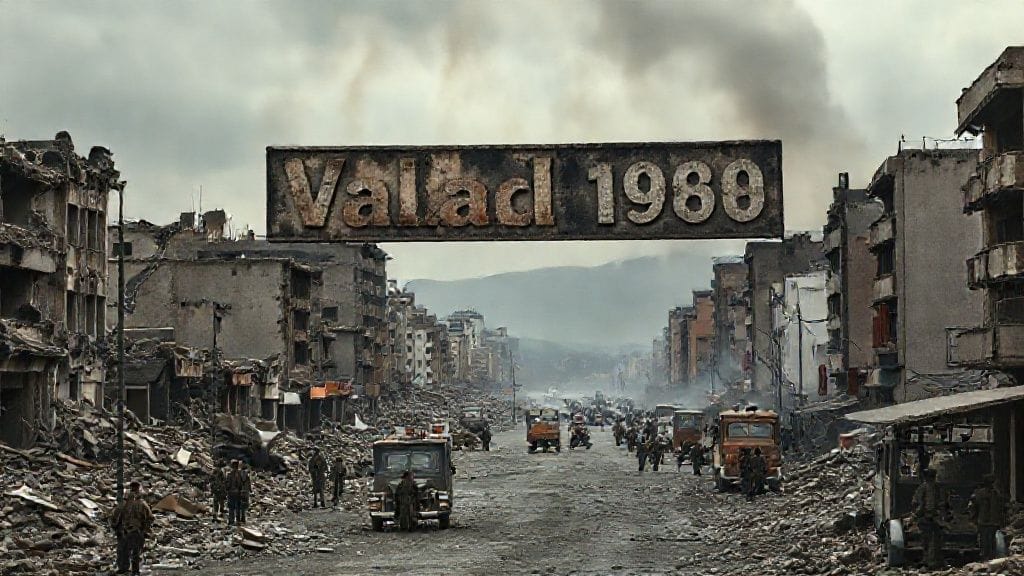
The quake lasted several minutes, an eternity for those caught in its grip. Tremors shattered the calm, as walls buckled and roofs collapsed. Entire parts of the city were razed to rubble; the Rhine itself seemed to ripple, unsettling boats and bridges alike.
Casualties were horrific. Contemporary chroniclers speak of thousands dead, though precise numbers lost in time remain speculative. The impact wasn’t limited to structural damage: fires erupted amid the devastation, consuming what survived the earthquake's fury.
But the earthquake’s terror extended beyond destruction—it ruptured the social and spiritual fabric of Basel, shaking its very identity.
4. The Heart of the Disaster: Key Areas Devastated by the Quake
The densely built medieval quarter bore the brunt of the quake's wrath. Narrow alleys packed with timber-framed houses turned death traps as their fragile structures disintegrated. The bishop’s palace, a symbol of religious and political power, suffered severe damage.
The city’s iconic cathedral, still centuries away from its current Gothic grandeur, sustained cracks that foreshadowed centuries of architectural transformation spurred by the disaster’s demands.
Public infrastructure—mills, bridges, aqueducts—toppled into ruins, halting daily life and commerce. The once-bustling marketplaces transformed into scenes of chaos, rubble, and mourning, as survivors struggled to comprehend the scope of devastation.
5. Voices from the Rubble: Eyewitness Accounts and Chronicles
Though the 14th century lacked modern journalism, several chroniclers recorded the quake’s shockwaves with piercing immediacy. One anonymous monk described the sky darkening as the earth shook, “as though the world itself was tearing apart.”
Another account tells of a merchant who, witnessing the destruction, lamented: “My house, where my children played but days before, lies beneath the stones, and my heart is broken much like the walls.”
These testimonial fragments reveal more than facts — they unspool human grief and terror, capturing a moment where history is lived rather than merely recorded.
6. Seismic Science in the Middle Ages: Perceptions and Misinterpretations
In the 1350s, scientific understanding of earthquakes was virtually nonexistent. Medieval scholars interpreted the shaking earth through the lens of theology and philosophy.
Many believed the quake was a punishment from God, a heavenly admonishment for humanity’s sins. Natural philosophy posited that vapors trapped beneath the earth’s surface exploded, but this was a mere guess in a world yet untouched by modern geology.
This spiritual interpretation dominated societal reactions, influencing not only coping strategies but also policy and rebuilding efforts.
7. Religious Interpretations: Earthquake as Divine Wrath
Basel’s dominant narrative turned to penance and prayer. Religious leaders delivered fiery sermons urging the populace to repent. Pilgrimages and mass gatherings invoked divine mercy.
It was a world where natural calamities were inseparable from spiritual destiny. The quake’s devastation was seen as a moral reckoning, a celestial call to humility.
Such views fostered a social cohesion, rallying communities in mourning yet preparing them to rebuild under the watchful gaze of the Almighty.
8. Social Upheaval: The Impact on Basel’s Population and Governance
The earthquake shattered more than stone — it undermined social order. The death toll included nobles, clergy, merchants, and common folk alike.
Displacement was massive, with thousands left homeless. The ruling bishop’s authority was challenged as he struggled to provide relief amid the chaos. Some local factions vied to assume control, while neighboring territories eyed Basel’s weakened state.
Communities banded together, forming mutual aid networks to survive the crisis. A new social contract, born of shared trauma, emerged from the ruins.
9. Economic Aftershocks: Commerce, Trade, and Reconstruction
Basel’s economy, heavily reliant on trade along the Rhine, suffered critical setbacks. Bridges and roads were destroyed, interrupting vital commercial routes. Merchants faced losses in goods and infrastructure, threatening livelihoods.
Yet Basel’s strategic importance spurred investment in reconstruction. Craftsmen, architects, and laborers worked feverishly to restore the city’s functions.
The disaster catalyzed economic transformations, with some new trade alliances formed, and others lost forever. The ripple effects altered regional commerce for decades.
10. Architectural Consequences: From Ruin to Resilience
The earthquake marked a turning point in Basel’s architectural history. Reconstruction adopted new building techniques, influenced both by necessity and emerging Gothic styles sweeping Europe.
The damaged cathedral was gradually transformed, incorporating sturdier structures and soaring vaults that symbolized both faith and endurance.
Medieval builders learned from the quake’s lessons, experimenting with foundations and materials to enhance resilience.
11. Regional Tremors: The Earthquake’s Reach Beyond Basel
While Basel was the epicenter, tremors and damage extended through what is now Switzerland, Alsace, and southwestern Germany.
Villages and towns reported cracked walls and collapsed buildings; rivers were disturbed, and landslides triggered in surrounding hills.
The widespread nature of the quake created a network of shared experience across political boundaries, knitting disparate communities in collective trauma.
12. The Political Reverberations in Medieval Switzerland
Basel’s earthquake struck at a delicate political moment. The Holy Roman Empire’s decentralized structure meant that city-states like Basel operated semi-autonomously, balancing between imperial authority and local power brokers.
The disaster weakened Basel’s influence temporarily, inviting rivals to press claims. Yet, the city’s determined response to rebuild reinforced its position.
Interestingly, the quake influenced negotiations and alliances, altering the political landscape in subtle but enduring ways.
13. The Legacy of the 1356 Basel Earthquake on Seismology
Centuries later, the Basel earthquake became a cornerstone in European seismic studies. It remains the most powerful recorded earthquake in central Europe since Roman times.
Modern scientists rely on chronicles, geological surveys, and archeological layers tracing the quake’s footprint to understand seismic risks in a seemingly stable region.
The event underscores the underappreciated vulnerability of European heartlands to natural disasters.
14. Modern Basel: Remembering and Commemorating the Catastrophe
Today, Basel honors the resilience of ancestors who faced calamity. Plaques, exhibitions, and cultural narratives evoke the earthquake’s memory.
The city’s urban fabric still bears scars and repairs from centuries past. Festivals and educational programs engage new generations in reflecting on the interplay of nature, history, and human perseverance.
Basel’s identity is inseparable from its triumph over Catastrophe.
15. The Basel Earthquake in Collective Memory and Culture
Beyond walls and stones, the earthquake entered folklore, literature, and local consciousness. It symbolizes both disruption and renewal—a reminder of human fragility and strength.
Artists, writers, and historians have continually revisited the event, interpreting it through shifting cultural lenses.
The quake’s echo resonates as a metaphor for change, loss, and hope.
16. Lessons Learned: How the 1356 Disaster Shapes Today’s Earthquake Preparedness
Though medieval Basel rebuilt from ashes, its history informs modern Switzerland’s approach to seismic risk. Contemporary building codes, emergency protocols, and public awareness campaigns acknowledge the geological realities first faced in 1356.
The earthquake serves as a somber reminder that no society, no matter how advanced, is immune to nature’s force.
Preparedness today is built on the foundation of memory and science combined.
17. Conclusion: The Earth Shook a City, But Basel Rose Again
The morning of October 18, 1356, tore through Basel’s life with a violence unseen in centuries. Yet from the wreckage arose a story of endurance, adaptability, and hope.
Basel’s people rebuilt their city, reinvented their institutions, and nurtured a community that honored its past while looking forward.
The 1356 earthquake remains a powerful testament to human resilience amid the unpredictability of a trembling earth.
18. FAQs: Answering Your Burning Questions on the Basel Earthquake
Q1: What caused the 1356 Basel earthquake?
A1: The quake resulted from tectonic stresses along the Rhine Graben, a rift valley created by the movement of Earth's crust beneath central Europe. The collision and shifting of plates induced seismic activity long underestimated in this region.
Q2: How many people died in the earthquake?
A2: Precise numbers are unknown, but estimates suggest thousands perished given the extensive destruction and population density of Basel.
Q3: How did medieval people explain the earthquake?
A3: Most saw the quake as an act of divine punishment, a test for sinners to repent. Scientific explanations were rudimentary, often involving trapped vapors or imbalances in natural humors.
Q4: Did the earthquake affect political structures?
A4: Yes, the disaster weakened Basel’s temporary political standing, triggering power struggles and influencing regional alliances within the Holy Roman Empire’s complex tapestry.
Q5: How is the earthquake remembered today in Basel?
A5: Memorials, educational programs, and cultural events commemorate the quake’s impact, emphasizing resilience and awareness of geological risks.
Q6: Was the earthquake unique in European history?
A6: It is the most powerful known central European quake since Roman times, highlighting that even stable continental interiors can experience severe seismic events.
Q7: Has the 1356 earthquake influenced modern seismology?
A7: Absolutely. It provides historical data for seismic hazard assessments in Europe and underscores the need for continued vigilance and preparedness.
Q8: Did the earthquake change Basel’s architecture?
A8: Yes, rebuilding after the quake incorporated stronger materials and Gothic innovations, setting a new standard in regional architecture.
19. External Resource: Wikipedia Link
20. Internal Link: Visit History Sphere
🏠 Visit History Sphere → https://historysphere.com/