Table of Contents
- The Morning of Horror: January 25, 1348, Unleashed
- The Heart of Friuli and Carinthia: A Region Between Worlds
- Europe on the Brink: Political and Social Backdrop of the Mid-14th Century
- The Geology Beneath the Alps: A Tectonic Precariousness
- First Tremors and The Shattered Silence of Dawn
- Destruction across Borders: Villages and Towns Crushed by the Rumble
- Human Stories Amidst Ruins: Fear, Courage, and Survival
- Responses from the Holy Roman Empire and Local Lords
- The Mysterious Role of the Church in Interpreting the Disaster
- Economic Shockwaves: Trade Routes Severed and Markets in Turmoil
- The Earthquake and the Black Death: A Twisted Tale of Calamities
- Architectural Changes: From Timber to Stone, A New Building Consciousness
- Oral Traditions and the Birth of Friulian and Carinthian Legends
- Diplomatic Frictions and Cooperation Across the Alpine Divide
- Memory Preserved: Chronicles and Manuscripts That Tell the Tale
- Geological Lessons and Modern Science Reevaluating the 1348 Event
- The Earthquake’s Place in Early Modern European Disaster History
- Echoes Today: How Friuli and Carinthia Remember Their Cataclysm
- The Broader European Context: Natural Disasters as Agents of Change
- Closing Reflections: Nature’s Wild Power and Human Resilience
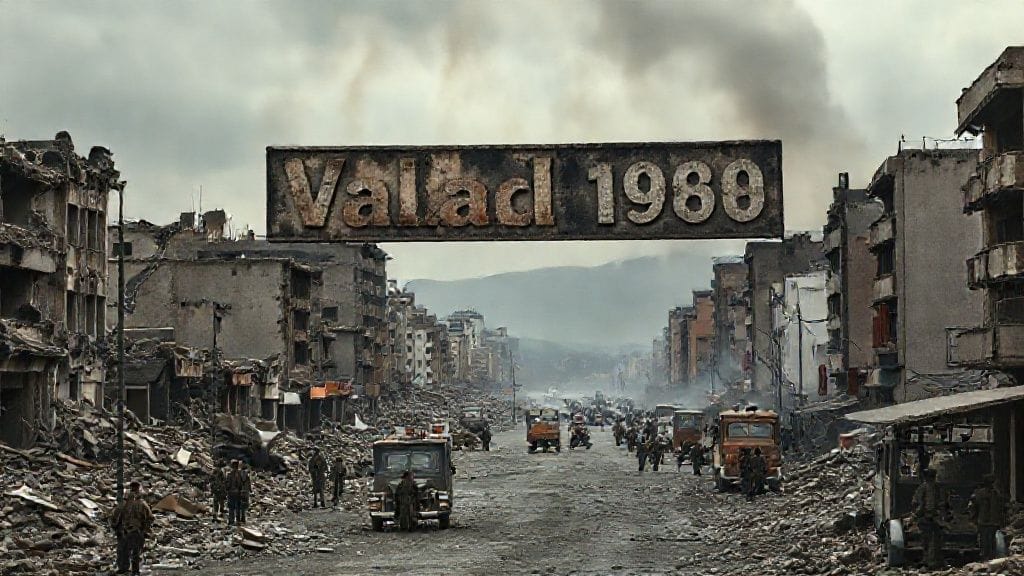
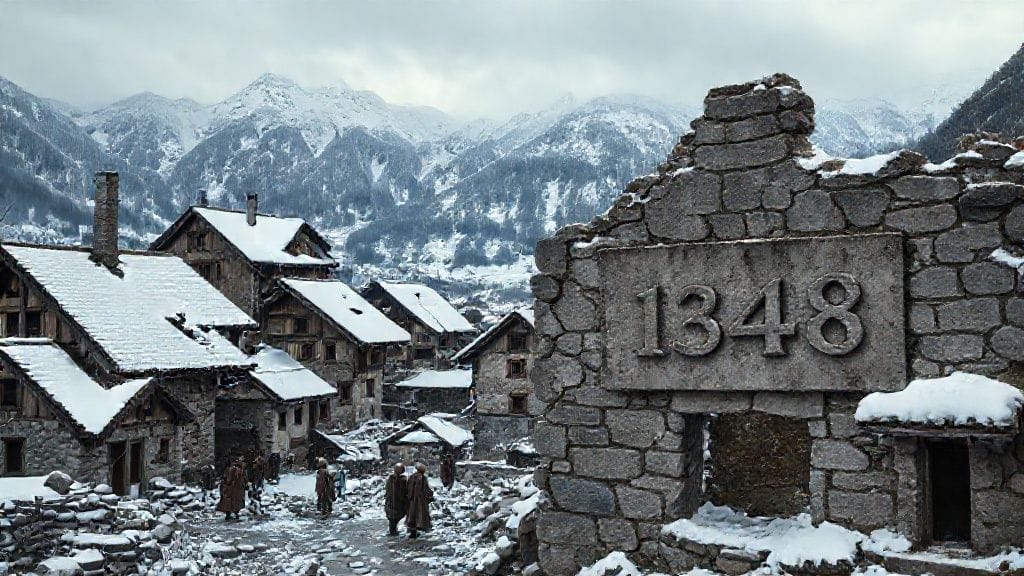
On the morning of January 25, 1348, a terrifying force shattered the peaceful silence that rested over the dramatic Alpine landscapes of Friuli and Carinthia—lands straddling what is today northern Italy and Austria. Imagine the icy air thick with expectant calm, shepherds tending their flocks, merchants preparing their caravans, townsfolk stirring with the dawn. Suddenly, the earth began to roar, buildings trembled, walls cracked, and the ground itself seemed to writhe.
This was a moment when the world, as those people knew it, changed forever—a savage reminder of nature's raw and unpredictable strength. The Friuli–Carinthia earthquake carved a scar not just on the mountains and villages but on the soul of an entire region and, indirectly, on the path of European history.
The Heart of Friuli and Carinthia: A Region Between Worlds
Nestled at the crossroads of Latin, Germanic, and Slavic cultures, the Friuli and Carinthia regions were more than just territories on a medieval map. They were vibrant centers of trade, dialogue, and cultural synthesis, located in a strategic Alpine corridor bridging the northern and southern reaches of Europe. The year 1348, however, found these communities at a delicate flashpoint—not just geographically but politically.
The Holy Roman Empire's grip over Carinthia was challenged by local nobles, while Friuli was influenced by the Republic of Venice’s growing ambitions. Famous markets thrived on wool, salt, and rare goods traveling through mountain passes. The earthquake struck a place humming with life and tension, a place where centuries-old traditions coexisted uneasily with emerging powers.
Europe on the Brink: Political and Social Backdrop of the Mid-14th Century
Just before the earthquake, Europe was a patchwork of feudal states, ecclesiastical principalities, and budding city republics. The mid-14th century felt volatile: feuds simmered, power struggles loomed, and the peasantry lived under constant pressure from taxation and war. The papacy was based in Avignon, far from the throbbing political heartbeat of Rome, contributing to an atmosphere of uncertainty.
The devastating earthquake would arrive as no more than a prelude to an even deeper catastrophe—the Black Death, which would sweep Europe mere months later. But in January 1348, the people of Friuli and Carinthia were grappling with immediate horror, not yet aware of the pestilence looming on the horizon.
The Geology Beneath the Alps: A Tectonic Precariousness
The Alps, that majestic spine of Europe, are no stranger to tension. They are born of tectonic plates grinding and colliding over millions of years—a slow but unyielding force. Friuli and Carinthia occupy zones near the Periadriatic fracture system, a major fault line where the African plate meets the Eurasian. The 1348 earthquake released centuries of accumulated strain in a single violent burst.
In geological terms, this event ranks among the most powerful in central Europe’s medieval history, estimated between magnitude 6.9 to 7.1 today. Yet the medieval chroniclers could only describe what they felt: earth rolling like sea waves, pillars collapsing, and ground opening like a beast’s maw.
First Tremors and The Shattered Silence of Dawn
The dawn was breaking when the first shockwaves tore through the quiet alpine air. Chroniclers later wrote with a mixture of horror and disbelief—people recalled how the earth “shook as if the very pillars of Heaven were breaking.” The tremor lasted several minutes—a torturously long time for those desperate to flee collapsing homes and falling stones.
Villages like Gemona, Tolmezzo, and Villach suffered catastrophic damage. Entire hamlets were obliterated, churches crumbled, and the vital infrastructure that knit these communities together was wrecked beyond recognition. For many survivors, the ground itself became an enemy, unreliable and fatal.
Destruction across Borders: Villages and Towns Crushed by the Rumble
The earthquake did not heed political boundaries. From Italy’s Friuli to Austria’s Carinthia, the devastation was comprehensive. Gemona, in particular, became a symbol of the disaster, with its medieval walls reduced to rubble. In some places, landslides accompanied the shaking, burying farms and roads beneath tons of rock and soil.
The economic heart of the region was deeply bruised. Markets and monasteries—both economic and social hubs—were wrecked. Entire families were lost, crops destroyed, and livestock perished. The destruction was felt immediately, but its ripples would challenge survival for decades.
Human Stories Amidst Ruins: Fear, Courage, and Survival
Behind every crumbled stone and shattered window lay stories of anguish and heroism. A shepherd caught outside his village ran for hours through dark woods to warn nearby hamlets. A priest, trapped under a fallen arch, reportedly saved fellow parishioners by guiding them through a maze of rubble. Children huddled with terrified elders, many haunted for life by the sudden severance of their familiar world.
The earthquake did not just shake the earth—it shook the human spirit. Yet amid devastation, communities began to dig, rebuild, and tend to the wounded and the grieving, displaying a resilience that still inspires.
Responses from the Holy Roman Empire and Local Lords
The political aftermath was complex. The Holy Roman Emperor and regional lords issued mandates to mobilize aid and reconstruction funds—though the ability to enforce relief was limited by the era’s logistical constraints. Some nobles saw the disaster as divine punishment against enemies; others sought to use rebuilding efforts to solidify control, redistributing lands of those who died.
The fragmented political landscape made coordinated responses difficult, yet it sowed the seeds for evolving governance in the region and increased demands for more organized administration and disaster preparedness.
The Mysterious Role of the Church in Interpreting the Disaster
Medieval Christians often read calamities through the lens of divine will. The Church interpreted the earthquake as a sign of God’s wrath against sin, calling for repentance, prayer, and penance. Sermons spread fear but also hopes of redemption.
Religious institutions both suffered physical losses and became centers of relief and spiritual consolation. Monasteries reopened their hospices, while pilgrims flocked to sites reputed to have been spared or miraculously protected, kindling new traditions and sacred memories tied to the catastrophe.
Economic Shockwaves: Trade Routes Severed and Markets in Turmoil
The earthquake ruptured vital Alpine passes that channeled commerce between the Mediterranean and Central Europe. Roads were blocked by landslides, bridges destroyed, and caravan traffic halted. Merchants faced heavy losses, raw materials could not move, and regional economies nosedived.
Friuli’s wool and salt trade—long a lifeline for northern markets—was particularly affected. Markets in Venice and Vienna felt the downstream effects, revealing how intricately linked even medieval economies were. Recovery stretched over years, hindered further by ensuing famines and plague.
The Earthquake and the Black Death: A Twisted Tale of Calamities
Just months after the destruction and social chaos wrought by the quake, an even darker specter appeared: the Black Death. The plague’s horrific toll compounded the trauma, with many historians arguing that natural disasters like earthquakes may have influenced migration patterns and the spread of disease.
The confluence of the two tragedies amplified suffering and social upheaval—sealing this period as one of Europe’s most harrowing chapters.
Architectural Changes: From Timber to Stone, A New Building Consciousness
One striking legacy of the quake was the transformation of building techniques. Survivors learned painfully that timber and poorly joined stone walls could not withstand nature’s fury. Rebuilding efforts favored thicker masonry, stronger foundations, and more pragmatic architectural designs.
This disaster thus contributed indirectly to the evolution of Alpine architecture, foreshadowing early Renaissance advances in engineering and urban planning.
Oral Traditions and the Birth of Friulian and Carinthian Legends
The earthquake passed from history into collective memory through stories, songs, and legends. Friulian and Carinthian folklore incorporates motifs of wrathful gods, shaking mountains, and miraculous survivals.
These oral traditions helped communities make sense of trauma, weaving a cultural fabric that turned catastrophe into cautionary tales and heroic epics passed from generation to generation.
Diplomatic Frictions and Cooperation Across the Alpine Divide
The shared experience of disaster also forged new bonds. With friuli and Carinthia suffering collectively, diplomatic channels, previously marked by competition and suspicion, saw moments of cooperation.
Treaties over border controls and trade routes were renegotiated, highlighting how calamity can sometimes be a catalyst for peace and collaboration, even amid the political complexities of the Holy Roman Empire and Italian city-states.
Memory Preserved: Chronicles and Manuscripts That Tell the Tale
Few medieval disasters boast such extensive contemporary documentation. Chroniclers in monasteries and cities recorded the quake’s violence in annals, letters, and ecclesiastical records. Some even attempted crude epic poems or sermons conveying the devastation’s moral weight.
These texts allow historians not only to reconstruct the physical event but also to glimpse the human emotions—the terror, faith, and hope—embodied in those dark January days.
Geological Lessons and Modern Science Reevaluating the 1348 Event
Centuries later, modern geology and seismology have revisited the 1348 earthquake with new tools—mapping landslides, dating collapsed structures, analyzing fault lines. The event is now recognized as a benchmark in understanding Alpine tectonics.
Such interdisciplinary studies illuminate the risks that remain today in these regions still vulnerable to seismic activity, bridging past and present concerns.
The Earthquake’s Place in Early Modern European Disaster History
While overshadowed by the Black Death in popular memory, the Friuli–Carinthia earthquake stands as a major natural catastrophe of medieval Europe. It marked a turning point where devastating natural events began to be viewed as integral parts of history, influencing governance, culture, and science.
It forced a reckoning with nature’s power that would resonate throughout the Renaissance and into modernity.
Echoes Today: How Friuli and Carinthia Remember Their Cataclysm
In towns across northern Italy and southern Austria, the 1348 earthquake remains part of local identity. Monuments, museums, festivals, and academic commemorations keep alive stories of resilience and renewal.
These memories foster a shared heritage and a cautionary respect for the living Earth beneath the mountains.
The Broader European Context: Natural Disasters as Agents of Change
The 1348 earthquake is one thread in medieval Europe’s tapestry of natural calamities—floods, famines, fires—that reshaped societies. These disasters tested political regimes, altered demographics, accelerated technological advancements, and provoked shifts in religious attitudes.
Recognizing the earthquake’s place within this wider context enriches our understanding of how human history intertwines with the unpredictable rhythms of nature.
Closing Reflections: Nature’s Wild Power and Human Resilience
The Friuli–Carinthia earthquake of January 1348 was more than a geological event; it was a grand, tragic human drama—marked by loss, fear, but also by endurance and rebirth. It tested medieval society’s limits but also revealed its capacity to adapt, rebuild, and reinterpret catastrophe itself.
Today, as we confront our own environmental uncertainties, the echoes of that long-ago morning remind us that the Earth continues to move, to shake, and that human courage remains a vital force in the face of nature’s wild power.
Conclusion
The violent rumble that tore through Friuli and Carinthia on that fateful January day in 1348 remains etched not only in stone and earth but in the collective memory of a region perched on the edge of worlds. Beyond just a seismic event, it was a profound human experience—one that tested faith, resilience, and the will to survive. It challenged medieval societies to rethink their relationship with nature and one another, spurring political, architectural, and cultural transformations.
That earthquake—both feared and mourned—stands as a powerful testament to the timeless truth that human history and natural forces are forever intertwined. The survivors’ story is one of enduring hope amid despair; their legacy speaks across centuries to all who seek to understand the fragile dance between the earth’s might and humanity’s spirit.
FAQs
Q1: What caused the Friuli–Carinthia earthquake of 1348?
A1: The earthquake was caused by tectonic movements along the Periadriatic fault line, where the African and Eurasian plates converge. Accumulated geological stress released suddenly, producing a powerful seismic event.
Q2: How strong was the earthquake in today’s measurements?
A2: Modern estimates place the earthquake’s magnitude between 6.9 and 7.1, making it one of the most significant medieval earthquakes in central Europe.
Q3: Which areas were most affected by the quake?
A3: The regions of Friuli in northern Italy and Carinthia in southern Austria suffered the most extensive damage, with entire towns such as Gemona and Villach severely destroyed.
Q4: How did medieval society interpret such a disaster?
A4: The Church and local authorities often saw the earthquake as divine punishment for sins, prompting calls for repentance. It was also framed as a test of faith and a spiritual trial.
Q5: Did the earthquake influence the spread or impact of the Black Death?
A5: While direct causal links are debated, the destruction and social disruption caused by the quake likely facilitated population movements and weakened communities, potentially exacerbating the plague’s deadly effects.
Q6: What was the political aftermath of the earthquake?
A6: The disaster led to increased cooperation among local lords and the Holy Roman Empire, but also saw rivalries exploited during rebuilding. It prompted early calls for better governance and disaster response.
Q7: How is the earthquake remembered today?
A7: The earthquake remains an important cultural memory in Friuli and Carinthia, commemorated in local festivals, historical research, museums, and public monuments.
Q8: What is the significance of the earthquake in European history?
A8: The 1348 earthquake is a landmark event demonstrating how natural disasters shaped medieval European societies politically, economically, and culturally, setting precedents for modern disaster awareness.