Table of Contents
- The Dawn of Disaster: Vienna Basin on September 15, 1590
- The Tectonic Roots: Understanding the Geology Behind the Earthquake
- Vienna and Its Basin: A City Poised on a Fault Line
- The Socio-Political Milieu of Late 16th Century Austria
- The Morning Tremors and the Catalyst Moment
- Chaos in the Streets: Witnesses to the Shaking Earth
- Architectural Vulnerabilities: How Buildings Faced the Quake
- Immediate Human Toll: Casualties and Survivor Experiences
- The Role of Religion: Interpreting the Disaster Spiritually
- Relief and Reconstruction: Efforts to Rebuild Vienna
- The Economic Fallout: Trade, Agriculture, and Urban Life Disrupted
- Seismic Science in the 16th Century: How the Event Challenged Understanding
- Legacy in Folk Memory: Stories and Myths Born from the Earthquake
- The Earthquake's Place in Habsburg Politics and Policy
- Comparing the 1590 Earthquake to Later Viennese Seismic Events
- Modern Archaeological and Geological Insights into the 1590 Disaster
- How the Vienna Basin Earthquake Shaped the Region’s Urban Planning
- The Psychological Impact: Collective Trauma in Early Modern Vienna
- Lessons Learned: The Evolution of Earthquake Preparedness in Austria
- Conclusion: Reflecting on the Enduring Echoes of 1590
- FAQs: Understanding the Vienna Basin Earthquake
- External Resource
- Internal Link
1. The Dawn of Disaster: Vienna Basin on September 15, 1590
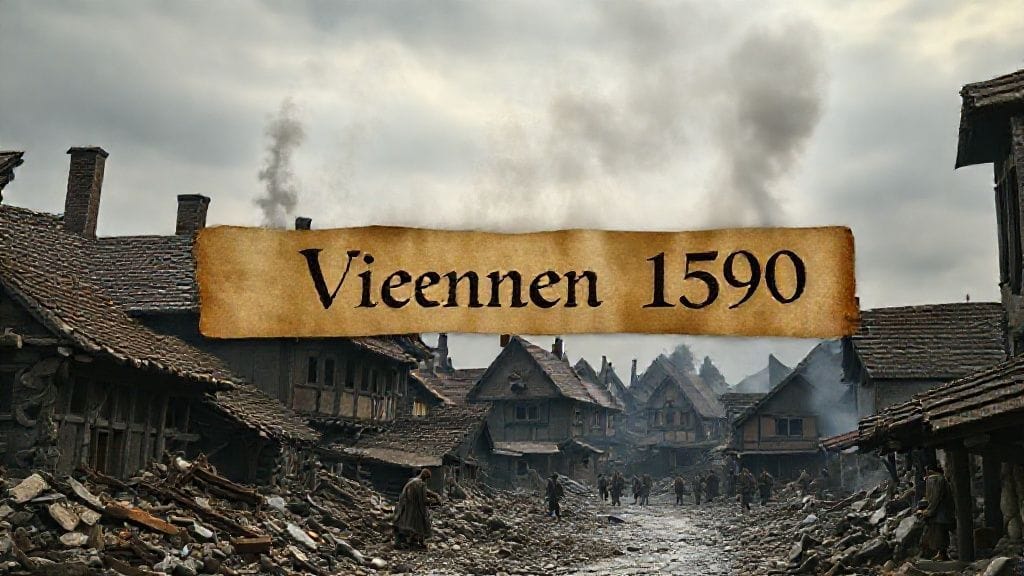
That morning was unlike any other. The sun rose over the mist-laden hills surrounding the Vienna Basin, casting a pale yellow glow on the rooftops of a city bustling with early autumn activity. Farmers were unloading the day's harvest, merchants preparing for market, children weaving through the narrow alleyways cloaked in their hempen garments. But beneath their feet, deep in the earth’s crust, a tectonic tension had been building for centuries—a silent prelude to chaos.
At precisely this moment on September 15, 1590, a violent rupture tore through the ground. The earth trembled, shuddered, and roared as if the very foundations of Europe’s heartland were being ripped apart. Windows shattered like brittle crystal, walls buckled, and the cobblestone streets fractured in serpentine cracks. Panic soared as people grappled with the unforeseen disaster—that earthquake which would haunt Vienna and its basin forever.
2. The Tectonic Roots: Understanding the Geology Behind the Earthquake
Beneath the serene landscape of the Vienna Basin lies a complex web of fault lines and seismic stresses. The basin itself is a sedimentary depression formed over millions of years by the gradual subsidence of crustal blocks flanked by the Eastern Alps and the Carpathians. This geodynamic interplay generates multiple fault zones capable of producing earthquakes.
The 1590 earthquake stemmed from movements along one of these concealed faults. Long dormant, the accumulated strain eventually exceeded the rock’s resistance, releasing energy abruptly. The seismicity of this region is less dramatic than that of, say, Italy or Turkey, but history shows that the Vienna Basin is far from immune to danger. This event served as a stark reminder of nature’s invisible clockwork, ticking quietly beneath urban life.
3. Vienna and Its Basin: A City Poised on a Fault Line
In the late 16th century, Vienna was a burgeoning hub within the Habsburg monarchy, a city straddling the cultural and commercial crossroads of Central Europe. Nestled at the edge of the expansive basin, it was a mosaic of timber-framed homes, stone churches, fortified walls, and burgeoning marketplaces. The city’s layout had scarcely evolved to account for seismic threats. Foundations were shallow, construction materials vulnerable, and urban density rising—all ingredients for a deadly cocktail once the earth began to shake.
Beyond its physical susceptibility, Vienna stood as a metaphorical fault line between traditions and modernity, faith and science, stability and upheaval—making the earthquake's timing all the more poignant.
4. The Socio-Political Milieu of Late 16th Century Austria
The decade preceding 1590 was marked by tension and transformation. The Habsburg Empire, governing a patchwork of diverse territories, was facing external threats from the Ottoman Empire’s expansion and internal challenges of religious reformation following the Protestant Rebellion. Vienna itself was a frontline city both militarily and ideologically, striving to maintain Catholic dominance amid growing calls for reform across its territories.
Economically, the region was recovering from harsh winters and poor harvests, adding strain to already fragile communities. In such a volatile climate, the earthquake would become more than a natural disaster—it would test the very fabric of society and governance.
5. The Morning Tremors and the Catalyst Moment
Eyewitness accounts, preserved in city chronicles and personal correspondence, describe a series of low rumbles preceding the main shock—a subtle warning many failed to register. Then, with shocking immediacy, the earth convulsed violently. The shaking lasted from several seconds to over a minute, depending on the location. The cathedral bells rang on their own accord as masonry crumbled.
People fled into the open, their faces pale and eyes wide with terror. Above the din, the cries of children, the shouts of merchants, and the grinding of collapsing timber filled the air. Some near the Danube river bank reported water movements—waves rolling and splashing against quays, highlighting the quake’s differential effects.
6. Chaos in the Streets: Witnesses to the Shaking Earth
In the narrow lanes of the Old City, chaos reigned. The marketplace where vendors shouted their wares suddenly became a scene of confusion. Stories tell of merchants holding onto their wares tightly, their carts toppled and spilling grain and cloth. A baker, whose brick oven collapsed, was caught beneath the debris but survived thanks to a pile of loaves cushioning his fall—a strange beacon of hope amid ruin.
One chronicler noted, “The sky darkened with dust, and the air was thick with cries, despair mixing with prayers, as Vienna fought the wrath of the earth.” Churches, central to communal life, saw their steeples cracked, some ominously leaning like skewed sentinels warning of future danger.
7. Architectural Vulnerabilities: How Buildings Faced the Quake
The built environment bore the brunt of the earthquake’s fury. Stone walls, heavy roofs, and chimneys, often poorly anchored, were particularly vulnerable. The medieval fortifications around Vienna, although designed to resist sieges, crumbled in places under seismic stress. Timber-framed houses swayed and twisted, some collapsing entirely, trapping inhabitants.
The event exposed the lack of understanding of seismic building principles at the time. No reinforcement techniques existed, and layering stone without flexible joints turned out to be a recipe for disaster. This tragic lesson would reverberate through architectural practices for generations.
8. Immediate Human Toll: Casualties and Survivor Experiences
Precise death tolls are difficult to ascertain, but estimates suggest several hundred perished, with many more injured. The poor and working classes suffered disproportionately, relegated to less sturdy dwellings. Families were shattered, entire neighborhoods left empty or in mourning.
Survivor narratives convey not only the physical devastation but the psychological trauma. Sleep eluded many for weeks. A baker’s wife, for example, described how even after the tremors stopped, the ground seemed “alive and angry,” and how nightly vigils became common to ward off aftershocks.
9. The Role of Religion: Interpreting the Disaster Spiritually
In a deeply religious society, the earthquake was often seen as a divine message—punishment for sins, a call for repentance. Sermons in Vienna’s pulpits invoked biblical catastrophes; priests led processions through broken streets, reciting prayers for mercy.
This spiritual framing helped communities make sense of inexplicable destruction, yet sometimes slowed scientific inquiry. One anonymous pamphlet declared the disaster “God’s fiery hand smiting a pagan earth,” reflecting the mingling of faith and fear that coloured public reactions.
10. Relief and Reconstruction: Efforts to Rebuild Vienna
Despite limited resources, efforts to restore Vienna began swiftly. City authorities organized labor gangs, salvaged materials, and coordinated aid. Wealthy patrons donated funds, and guilds played a pivotal role in rebuilding trade workshops and homes.
Reconstruction was gradual and uneven, hampered by ongoing economic difficulties and political tensions. Yet, the earthquake spurred an early awareness of urban planning and construction quality. Some new buildings incorporated thicker walls and lower profiles, foreshadowing future building codes.
11. The Economic Fallout: Trade, Agriculture, and Urban Life Disrupted
Vienna’s economy felt the aftershock for years. Markets shuttered temporarily, and the loss of craftsmen and merchants hampered production. The fertile lands of the basin, disturbed by seismic shifts, showed signs of subsidence affecting irrigation and crop yields.
Plus, trade routes that passed through Vienna diverted, fearing instability. Yet, the resilience of the city’s populace shone through, as they gradually restored commerce. This recovery, though painful, reflected Vienna’s crucial position in Central Europe.
12. Seismic Science in the 16th Century: How the Event Challenged Understanding
At the close of the 16th century, Europe lacked a coherent scientific framework to explain earthquakes. The Vienna Basin event challenged existing theological explanations and curious scholars began compiling observations. Despite the absence of modern seismology, records taken during and after 1590 contributed to early hypotheses about earth movements.
It inspired cautious inquiry—letters among natural philosophers questioned whether subterranean movements could be natural rather than divine acts, planting seeds for future scientific revolutions.
13. Legacy in Folk Memory: Stories and Myths Born from the Earthquake
Over generations, the earthquake seeped into Vienna’s collective memory as much through myths as facts. Tales of “the shaking earth” protecting the city from enemies or divine wrath grew. Some legends even spoke of hidden subterranean creatures awakening beneath the basin.
These cultural imprints kept the disaster alive in the city’s psyche, passed down in songs, folktales, and artworks—turning tragedy into timeless narrative.
14. The Earthquake's Place in Habsburg Politics and Policy
Politically, the earthquake underscored vulnerabilities within the Habsburg administration. Resources shifted toward disaster relief and urban stability, momentarily distracting from external conflicts with the Ottoman Empire.
Additionally, the event influenced infrastructure investments and urban fortification upgrades. Disaster management began permeating imperial policy, albeit incrementally, marking the earthquake as a catalyst for bureaucratic adaptation.
15. Comparing the 1590 Earthquake to Later Viennese Seismic Events
While smaller quakes rattled Vienna later, none matched the severity of 1590 until the 20th century. Comparing these seismic events reveals changing responses—early modern terror gave way to measured preparation backed by scientific understanding.
The 1590 event remains a pivotal reference in Vienna’s seismic history, a benchmark against which later disasters were measured in both physical impact and societal reckoning.
16. Modern Archaeological and Geological Insights into the 1590 Disaster
Recent studies employing modern techniques such as ground-penetrating radar, sediment analysis, and archival exploration have shed new light on the quake’s scope. Archaeologists uncovered collapsed buildings buried under later developments, confirming written records.
Geologists mapped subtle fault scarps and sediment disturbances aligned with the 1590 event, enriching the seismic hazard dataset today used to protect Vienna.
17. How the Vienna Basin Earthquake Shaped the Region’s Urban Planning
The crisis initiated a slow but lasting shift in urban planning philosophies. Subsequent expansions of Vienna considered fault lines, soil stability, and water management more carefully.
Though rudimentary by today’s standards, these early lessons in resilience helped shape the city’s growth and foreshadowed modern disaster risk reduction priorities.
18. The Psychological Impact: Collective Trauma in Early Modern Vienna
Beyond physical destruction, the earthquake introduced a psychological pall over Vienna’s citizenry. Letters written years later reveal post-traumatic stress: recurring nightmares, social withdrawal, and a pervasive sense of insecurity.
Communal rituals, shared stories, and rebuilding efforts served as coping mechanisms, emphasizing the human dimension of a natural disaster often lost in technical accounts.
19. Lessons Learned: The Evolution of Earthquake Preparedness in Austria
The 1590 earthquake planted a seed for evolving awareness across the Habsburg lands. Over centuries, this grew into incremental building regulations, mapping seismic risk zones, and educating the population.
While the path to comprehensive preparedness was long, the Vienna Basin quake remains a foundational chapter in Austria’s journey toward resilient societies.
20. Conclusion: Reflecting on the Enduring Echoes of 1590
The Vienna Basin earthquake of September 15, 1590 was more than just a convulsion of the earth—it was a profound rupture in the human experience. It confronted a city at the nexus of empires, faiths, and emerging modernity with raw nature’s unpredictable force.
Its legacy endures not only beneath Vienna’s streets—etched into stones and sediment—but also within the psyche of its people and the frameworks of science and governance that followed. A reminder that history is not only shaped by human ambition, but also constantly rewritten by nature’s unseen hands.
Conclusion
The earthquake that shook Vienna in 1590 serves as a haunting chapter in European history, a moment when the edge of the civilized world trembled both literally and figuratively. It was a test of human resilience, faith, and ingenuity in the face of unyielding natural forces. The disaster challenged contemporary worldviews, disrupted societal norms, and compelled the city and empire to evolve.
In examining this event through the intertwined lenses of geology, politics, culture, and memory, we glimpse the human stories beneath the rubble—the terror, the hope, and the relentless effort to rise again. As modern Vienna thrives on the same grounds, the echoes of that September day whisper enduring lessons about vulnerability, adaptation, and the profound interplay between man and earth.
FAQs
Q1: What caused the 1590 Vienna Basin earthquake?
A1: The earthquake was caused by movement along fault lines beneath the Vienna Basin, a sedimentary depression formed by tectonic movements between the Alps and Carpathians. Accumulated strain released abruptly, producing the seismic event.
Q2: How severe was the damage caused by the earthquake?
A2: The earthquake caused widespread structural damage across Vienna, collapsing walls, churches, and homes, and leading to several hundred estimated casualties. The damage extended to infrastructure and agricultural lands nearby.
Q3: How did people in 1590 interpret the earthquake?
A3: Many saw it as a divine punishment or a spiritual warning. Religious authorities invoked sermons and prayers, and the disaster was framed within contemporary theological understandings, blending fear with faith.
Q4: What were the immediate political effects of the earthquake in Austria?
A4: The quake shifted imperial priorities toward disaster relief and urban reconstruction, affecting resources and attention during a tense period of military and religious conflict in the Habsburg Empire.
Q5: Did the earthquake influence scientific thought on seismic events?
A5: Yes, while still early for systematic seismology, the event prompted scholars to record observations and question purely religious explanations, laying groundwork for future scientific inquiry.
Q6: How is the 1590 earthquake remembered today?
A6: The earthquake is part of Vienna’s historical and cultural memory, represented in folklore, city archives, and archaeological findings, serving as a milestone in the city's seismic history.
Q7: What modern techniques have helped uncover more about this earthquake?
A7: Geological surveys, sediment analysis, and modern archaeology have revealed fault lines and building collapse patterns linked to the 1590 event, enriching knowledge of early earthquakes.
Q8: How did Vienna’s urban planning change after the disaster?
A8: Reconstruction introduced awareness of building stability and urban resilience, informing slow reforms in architecture and city planning that evolved over subsequent centuries.