Table of Contents
- A Night Shaken to Its Core: The First Tremors of February 24, 1981
- The Geography Behind the Fury: Corinth Gulf and the Alkyonides Islands
- Greece on the Brink: Political and Social Backdrop of the Early 1980s
- The Science of the Shudder: Understanding the Seismology of the Region
- The Moment the Earth Roared: The Mainshock and Its Immediate Aftermath
- Communities Crumbled: The Human Toll and Stories of Survival
- Architecture Against Nature: Building Standards in Crisis
- Emergency Response Under Pressure: Rescue Efforts and Challenges
- The Domino Effect: Aftershocks and Their Persistent Fear
- Media Echoes: Reporting the Disaster Amidst National Anxiety
- Local Heroes: Individuals and Groups Who Made a Difference
- The Government’s Dilemma: Balancing Crisis Management and Public Trust
- Economic Shockwaves: Damage Assessment and Long-term Repercussions
- Lessons Written in the Rubble: Changes in Seismic Policy and Urban Planning
- Memory Carved in Stone: Commemorations and Collective Memory
- International Aid and Cooperation: Greece’s Appeal Beyond Its Borders
- Scientific Advances Born From Tragedy: The Earthquake’s Role in Seismology
- Comparing the Past: Other Notable Earthquakes in Greece’s History
- The Alkyonides Earthquake in Global Context: What Made It Unique?
- Perspectives from Survivors: Oral Histories and Emotional Legacies
- Myth and Reality: How Ancient Greek Culture Interpreted Earthquakes
- The Earth Still Moves: How Greece Lives with Seismic Risk Today
- Reconstruction and Renewal: Stories of Hope After the Ruins
- Cultural Imprint: Art, Literature, and Film Inspired by the 1981 Disaster
- Looking Forward: Greece’s Ongoing Battle with Nature’s Power
1. A Night Shaken to Its Core: The First Tremors of February 24, 1981
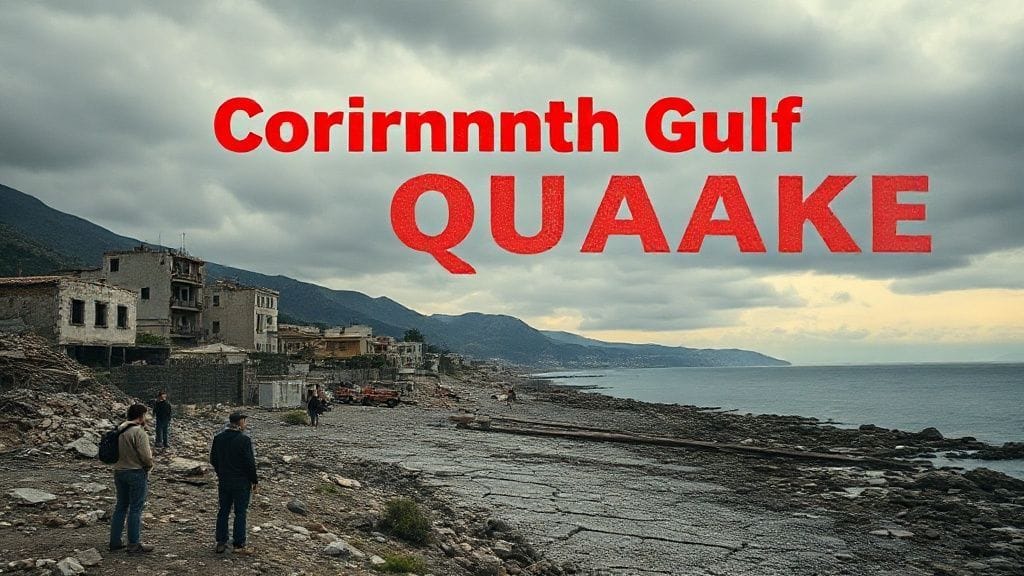
It was just after 11 p.m. in the quiet winter of late February when the earth beneath Greece chose to remind its inhabitants of an ancient, inescapable truth. Suddenly, the stillness shattered. The ground roared, buildings trembled, and hearts raced. On the night of February 24, 1981, the Corinth Gulf earthquake struck, sending a powerful shockwave through the Alkyonides islands and the surrounding mainland. The night sky seemed to echo the chaos below, with power outages plunging towns into darkness and residents fleeing into the cold, uncertain night.
This was not just a natural event; it was a visceral rupture in everyday life, a harsh awakening of a land steeped in mythology yet very much subject to modern forces of geology. Inside homes, in quiet streets, life was abruptly interrupted, as the earth shifted violently beneath feet, shaking confidence as profoundly as it shook foundations.
2. The Geography Behind the Fury: Corinth Gulf and the Alkyonides Islands
The Corinth Gulf, a narrow yet strategically vital body of water dividing the Peloponnese peninsula from mainland Greece, is surrounded by steep hills and dotted with small islands collectively known as the Alkyonides. This striking landscape is not only a beautiful tableau but also a notoriously active seismic zone. The region sits on the boundary between the Eurasian and African tectonic plates, where tremendous forces build strain along fault lines.
The Alkyonides islands — named after the mythic Halcyon days of calm seas — ironically lie in a place where the earth demonstrates little mercy. The geology of this confined gulf is a tangled web of faults, making the area especially prone to earthquakes. Yet, despite its risks, this region remains populated, beloved for its rich history and natural beauty.
3. Greece on the Brink: Political and Social Backdrop of the Early 1980s
To grasp the full import of this disaster, one must frame the earthquake within Greece’s early 1980s landscape. The country was emerging from a turbulent decade marked by political instability, a military dictatorship ending in 1974, and the fledgling attempts to build a stable democratic state. Economic challenges loomed large, marked by inflation and unemployment.
Public infrastructure was often inadequate or outdated. Many buildings, especially in rural and suburban areas, had been erected without strict enforcement of seismic codes. The earthquake revealed vulnerabilities not only in the ground but in the social and institutional fabric of Greece. People across the nation watched with a mix of fear and solidarity, knowing the next calamity could strike anywhere.
4. The Science of the Shudder: Understanding the Seismology of the Region
Seismologists had long studied the Corinth Gulf region, aware of its volatile nature. The 1981 earthquake was a result of thrust faulting combined with complex tectonic interactions. Measuring a magnitude of approximately 6.7 on the Richter scale, the quake was powerful enough to cause severe shaking over a broad radius.
The particular mechanics involved a sudden release of accumulated strain along the Alkyonides fault system, which runs beneath the gulf and causes uplift or subsidence of the seabed — a feature that paradoxically timestamped both destruction and scientific interest. This earthquake added a crucial chapter to the understanding of how small fault systems can unleash unexpectedly severe damage in regional seismic events.
5. The Moment the Earth Roared: The Mainshock and Its Immediate Aftermath
At precisely 11:03 p.m., the main shock rippled through the Gulf. The initial jolt was followed by violent shaking lasting nearly 15 seconds — an eternity when buildings sway and lives are imperiled. Panic gripped towns such as Megara, Kineta, and the Alkyonides islands themselves. In some places, the ground cracked, homes collapsed, and the distressing cacophony of falling masonry mixed with human cries for help.
Power lines snapped; communication was instantly cut off in several areas. The lack of immediate information deepened uncertainty and fear. Families, already huddled indoors to escape the winter chill, found themselves on the streets at midnight, vulnerable under an ominous sky.
6. Communities Crumbled: The Human Toll and Stories of Survival
The human toll was profound—reported fatalities numbered in the dozens, with hundreds injured and thousands left homeless. In small villages, neighbors became rescuers, working through the night to pull survivors from rubble.
One poignant story comes from a family in Loutraki, where a young woman, trapped beneath collapsed debris, was found alive after 12 hours, her survival a miracle that rippled hope through the region. Elsewhere, elders who had lived through previous tremors shared their wisdom, guiding frightened children and recounting old survival strategies.
Yet grief was uncompromising. The loss of life and destruction of homes shattered communities. The earthquake exposed not only physical vulnerabilities but the acute emotional fracture such disasters leave behind.
7. Architecture Against Nature: Building Standards in Crisis
In the days following, investigations revealed something unsettling: many buildings that collapsed had been constructed without proper adherence to seismic codes developed in the aftermath of previous quakes in Greece.
Concrete structures, poorly reinforced masonry, and lack of retrofitting turned buildings into deadly traps. It became evident that despite lessons from earlier earthquakes in 1953 and 1978, implementation was uneven. This gap between scientific knowledge and practical application cost many lives.
The disaster prompted a nationwide reckoning with architectural practices and spurred efforts to enforce stronger regulations. The very stones that fell became testimonies demanding resilience in design.
8. Emergency Response Under Pressure: Rescue Efforts and Challenges
Emergency services mobilized swiftly but faced daunting hurdles: rugged terrain, damaged infrastructure, and severe weather compounded difficulties. Local firefighters, doctors, civil defense volunteers, and the military collaborated in a desperate race against time.
Hospitals in larger cities like Athens prepared to receive injured victims, while field units provided first aid on site. However, logistical constraints highlighted the need for better coordination and preparedness for such events.
Volunteers from all walks of life emerged, embodying a collective spirit that often shines brightest in the darkest hours. Yet the strain of the disaster exposed systemic weaknesses that Greece would address in coming decades.
9. The Domino Effect: Aftershocks and Their Persistent Fear
The main quake was only the opening act. Days and weeks of aftershocks followed, ranging in magnitude but potent enough to prevent true recovery. People grew reluctant to return to damaged homes; emergencies multiplied as already brittle structures sustained further harm.
This seismic echo exacerbated psychological trauma, as survivors lived in the shadow of a restless earth. Schools and businesses remained closed, and normal life was suspended. The aftershock sequence served as a cruel reminder of nature’s hand—unceasing and unpredictable.
10. Media Echoes: Reporting the Disaster Amidst National Anxiety
Greek newspapers and radio stations raced to relay information, relief efforts, and advice in a nation gripped by uncertainty. Images of ruined houses, frightened families, and heroic rescuers dominated headlines. The media played a crucial role in shaping public perception and mobilizing aid.
International outlets soon picked up the story, framing it within the ever-pressing global narrative of humanity’s struggle against natural disasters. In the glare of public attention, the government’s response, effectiveness, and shortcomings were scrutinized, fueling wider debates about governance and infrastructure investment.
11. Local Heroes: Individuals and Groups Who Made a Difference
Amid chaos, countless acts of courage emerged. A school teacher who organized evacuation drills before the quake was credited with saving dozens of children. Fishermen on the Alkyonides islands rushed boats to evacuate the injured. Medical staff worked around the clock despite limited resources.
These stories are woven into the fabric of the disaster’s memory, representing the resilience and solidarity of communities confronting devastation. Their selflessness, often overshadowed by statistics, remains a testament to human endurance.
12. The Government’s Dilemma: Balancing Crisis Management and Public Trust
The Greek government found itself grappling with the immense responsibility of crisis management against a backdrop of political sensitivities. The earthquake tested the state’s capacity to coordinate aid, enforce safety protocols, and maintain calm.
Efforts to provide compensation and rebuild infrastructure were complicated by budgetary constraints and bureaucratic hurdles. Yet, the event catalyzed the creation of more structured disaster response agencies, ultimately strengthening national preparedness.
13. Economic Shockwaves: Damage Assessment and Long-term Repercussions
The earthquake inflicted substantial damage on homes, businesses, roads, and ports. Estimates of financial cost ran into hundreds of millions of drachmas, a heavy blow for a country still vulnerable economically.
The disruption to shipping lanes, tourism in coastal towns, and local agriculture underscored the broader economic impact. Reconstruction became a vital priority, with funding sourced domestically and internationally to revive affected regions.
14. Lessons Written in the Rubble: Changes in Seismic Policy and Urban Planning
The 1981 catastrophe became a catalyst for change. New seismic zoning maps were drawn, construction codes were overhauled, and monitoring systems improved. Urban planners adopted a more cautious approach, integrating risk assessment into future development.
Greece began to cooperate more actively with international geological agencies to improve early warning systems and preparedness, learning crucial lessons that would save lives in future quakes.
15. Memory Carved in Stone: Commemorations and Collective Memory
To honor those who perished, memorials were erected in towns devastated by the quake. Annual ceremonies and cultural events keep alive the memory of loss and survival, embedding the earthquake in local identity.
For residents, the event is not a distant history but a living scar—an eternal reminder of vulnerability and resilience. Schools teach about the disaster, ensuring each new generation understands the dialogue between earth and humankind.
16. International Aid and Cooperation: Greece’s Appeal Beyond Its Borders
The disaster prompted an outpouring of international sympathy. Aid from European neighbors, relief materials, specialized teams, and financial assistance arrived to support Greece’s response.
This cooperation strengthened Greece’s ties with foreign partners and underscored the shared vulnerability humanity holds in the face of natural forces. It also paved the way for collaborative research and resource sharing in disaster management.
17. Scientific Advances Born From Tragedy: The Earthquake’s Role in Seismology
Scientists worldwide benefited from data gathered during and after the event. The unique tectonic setting provided a natural laboratory to study the behavior of faults beneath the gulf, improving models of earthquake prediction.
The earthquake’s analysis contributed to finer calibration of seismic instruments and enriched understanding of fault slip dynamics, benefiting not only Greece but seismic science globally.
18. Comparing the Past: Other Notable Earthquakes in Greece’s History
Greece’s history is punctuated by severe earthquakes — from ancient times to the modern era. The 1981 Corinth Gulf quake sits among events such as the 1953 Ionian earthquake or the 1978 Thessaloniki tremors, each with its own devastating imprint.
These cumulative disasters have shaped national consciousness, policies, and the ongoing attention to seismic safety in one of Europe’s most geologically active countries.
19. The Alkyonides Earthquake in Global Context: What Made It Unique?
Unlike many Mercalli scale shaking disasters that strike large urban areas, the 1981 earthquake’s epicenter beneath a gulf surrounded by populated islands gave it a distinctive character. The interaction of sea, land, and fault, and the resulting underwater uplift, is studied as a particular case of complex earthquake mechanics.
This event also highlighted the vulnerabilities faced by island communities, often isolated and harder to reach in emergencies — a challenge echoed worldwide.
20. Perspectives from Survivors: Oral Histories and Emotional Legacies
Survivors’ testimonies tell a more nuanced story than statistics allow. From sudden jolts waking families to nights spent huddled outdoors, the emotional landscape reveals fear, grief, hope, and solidarity.
These narratives have been collected in oral history projects, preserving the humanity behind the disaster for posterity and deepening appreciation of the human cost of geological upheaval.
21. Myth and Reality: How Ancient Greek Culture Interpreted Earthquakes
For millennia, Greeks interpreted earthquakes through myth: Poseidon, god of the sea and earthquakes, was believed to cause tremors when angered. The Alkyonides islands themselves are wrapped in legend, named after a mythic bird who calmed the seas in winter.
The 1981 earthquake rekindled reflections on these ancient stories, reminding modern Greece of its deep cultural ties to the earth's power and its own enduring resilience.
22. The Earth Still Moves: How Greece Lives with Seismic Risk Today
Today, the Corinth Gulf remains under watchful scientific and governmental eyes. Earthquake drills, public education campaigns, and technological investments aim to reduce future risks.
The earthquake served a grim but necessary reminder: preparation is an ongoing necessity where tectonic plates converge beneath human homes.
23. Reconstruction and Renewal: Stories of Hope After the Ruins
Amid destruction, stories of reconstruction inspire. Communities rebuilt homes, livelihoods resumed, and cultural life revived. Architectural innovations incorporated lessons from the disaster, ushering in a new era of safer living.
These acts of renewal echo the human capacity to rise from devastation, embedding hope in every stone laid anew.
24. Cultural Imprint: Art, Literature, and Film Inspired by the 1981 Disaster
The earthquake resonated beyond science and politics, inspiring artists, writers, and filmmakers who grappled with themes of loss, nature’s fury, and human endurance.
Exhibitions, poems, and documentaries continue to explore the emotional and social aftermath, weaving disaster into the fabric of Greek cultural expression.
25. Looking Forward: Greece’s Ongoing Battle with Nature’s Power
The 1981 Corinth Gulf earthquake remains a powerful chapter in Greece’s story — a stark reminder that beneath history and beauty lies an unpredictable force. The event galvanized advances in science, engineering, and civil resilience, but it also left an enduring legacy of vulnerability.
As new generations inherit this legacy, Greece walks the delicate line between reverence for its past and vigilance for its future, always mindful that the earth beneath may stir again.
Conclusion
The February 24, 1981, earthquake in the Corinth Gulf was far more than a geophysical phenomenon; it was a profound human event that tested resilience, exposed vulnerability, and propelled a nation toward greater preparedness. Amid the shattered homes and grieving families, stories of courage and community rose like phoenixes, affirming the enduring human spirit in the face of nature’s formidable power.
This disaster, etched forever in Greece’s collective memory, remains a poignant reminder: Earthquakes do not occur solely in the cracks beneath our feet but ripple through every aspect of human life — shaping history, culture, and identity. The lessons learned from that night continue to guide policies and hearts alike, balancing respect for the earth’s restless nature with hope for safer tomorrows.
FAQs
Q1: What caused the 1981 Corinth Gulf earthquake?
A1: It was caused by tectonic movement along fault lines beneath the Corinth Gulf, where the African and Eurasian plates converge, releasing built-up strain through a magnitude ~6.7 quake.
Q2: How many people were affected by the earthquake?
A2: Dozens lost their lives, hundreds were injured, and several thousand were displaced due to damaged or destroyed homes across the mainland and Alkyonides islands.
Q3: What was the government's response to the disaster?
A3: The government mobilized rescue and relief efforts, though faced challenges with infrastructure damage and coordination. The event also accelerated reforms in disaster preparedness and building regulations.
Q4: Did the earthquake lead to changes in building codes?
A4: Yes, severe damage highlighted the need for strict enforcement of seismic building codes, prompting revisions and better urban planning to mitigate future risks.
Q5: How did the local communities cope in the immediate aftermath?
A5: Communities showed remarkable solidarity; neighbors helped rescue trapped persons, shared resources, and supported each other during the crisis and rebuilding phases.
Q6: Why is the 1981 earthquake significant in seismic research?
A6: It provided valuable data on fault mechanics in complex tectonic settings and helped improve earthquake prediction and monitoring methods in Greece and globally.
Q7: What role did international aid play?
A7: International assistance brought funds, technical support, and relief resources, which were crucial for recovery and demonstrated global solidarity in times of disaster.
Q8: How is the event remembered today?
A8: Through memorials, annual commemorations, cultural works, and ongoing education, ensuring the earthquake's lessons and memories endure within Greek society.