Table of Contents
- A Shattering Sunrise: The Moment the Earth Moved in Aigio
- Greece’s Tectonic Landscape: A Prelude to Disaster
- The Day Before: Life in Aigio on June 14, 1995
- The Earthquake Strikes: 7:15 AM Tremors Shake the Peloponnese
- Panic and Destruction: The Immediate Aftermath
- Heroism Amidst Ruins: Stories of Rescue and Survival
- The Role of Seismic Science: Understanding Why Aigio Suffered
- Government and Emergency Response: Mobilizing in Crisis
- Structural Weaknesses Exposed: Buildings That Should Have Withstood the Quake
- The Human Toll: Casualties, Displacement, and Trauma
- Economic Reverberations: How the Earthquake Halted Aigio’s Progress
- Media Coverage and Public Awareness: Greece Watches Aigio Burn
- International Support and Solidarity: Aid from Neighbors and Nations
- Lessons Learned: Changes in Greek Seismic Regulations Post-1995
- The Long Road to Reconstruction: Rebuilding Aigio Brick by Brick
- Aigio Today: Memory, Memorials, and Resilience
- Earthquake Preparedness in Greece: Has Anything Really Changed?
- Scientific Advances Sparked by Tragedies like Aigio’s
- Stories That Moved a Nation: Personal Accounts from Survivors
- Reflections on Nature’s Fury and Human Vulnerability
- The 1995 Aigio Earthquake’s Place in Global Seismic History
1. A Shattering Sunrise: The Moment the Earth Moved in Aigio
The morning sun was just beginning to gild the red rooftops of Aigio, a quiet coastal town perched gracefully on the northern edge of Greece’s Peloponnese. The air was crisp, carrying hints of sea brine and olive groves. Children laughed, merchants prepared their stalls, and fishermen cast nets, unaware that in mere moments, their lives would be shattered.
At 7:15 AM on June 15, 1995, Aigio woke to a terrifying roar. The earth beneath their feet buckled and cracked in a violent convulsion. Walls rattled; ancient stone facades crumbled like sandcastles. Windows shattered into a million glistening shards, and the ground heaved with such force that the town’s very foundations seemed to tremble with agony. It was Greece’s strongest earthquake of the decade, a force of nature that left scars visible to all who witnessed its fury.
The Aigio Earthquake was not just a geological event; it was a human drama played out against a backdrop of history, culture, and vulnerability. It tore through families, ruins, and complacency. But it also unveiled stories of courage, resilience, and the indomitable spirit of a community refusing to bow to fate.
2. Greece’s Tectonic Landscape: A Prelude to Disaster
To fully grasp the aggression of the 1995 earthquake, one must first understand Greece’s restless geological soul. Nestled at the crossroads of the Eurasian and African tectonic plates, Greece is a land perpetually on the edge. The Hellenic Arc—an intricate system of faults and seismic zones—carves through the country, making it one of the most seismically active regions in Europe.
Aigio lies near the boundary of the Achaia fault line, a zone historically known for producing occasional but potent earthquakes. This is no land of gentle quakes; here, the earth’s fury can erupt without warning, a reminder of the ceaseless subterranean forces at play beneath the ancient olive trees and Byzantine ruins.
The region’s complex geology, layered with fragile sediment and limestone, predisposed its towns and villages to potential catastrophe. Even as scientists studied these patterns, the public largely remained unaware of the invisible dangers lurking beneath their feet.
3. The Day Before: Life in Aigio on June 14, 1995
In the humid June air on the eve of the earthquake, Aigio thrived in calm normality. Markets bustled with vendors selling tomatoes, figs, and freshly caught fish. The church bells rang out as townsfolk attended evening prayers, families poured into outdoor cafes, and children played hide and seek in shaded alleyways.
Local baker Alexandros remembers leaning against the counter that evening, exchanging small talk with customers, oblivious to the doom creeping closer in the form of shifting plates kilometers below the earth.
For many, June 14 was like any other day—patterned and predictable. Neighbors greeted each other with warm familiarity; tourists snapped photos of the azure sea. No premonition stirred the air, no warning whispered through the olive trees.
4. The Earthquake Strikes: 7:15 AM Tremors Shake the Peloponnese
Just as the sun peeked over the horizon, an unforgiving tremor raced through the town’s arteries. Clocking a magnitude of 6.5 on the Richter scale, the Aigio Earthquake’s epicenter lay just 10 kilometers to the northeast under the Gulf of Corinth.
The quake lasted barely 15 seconds—yet in that short span, it felt like an eternity of chaos. The ground’s violent oscillation hurled people from beds and crushed the fragile façades of centuries-old homes. Pavements cracked open in jagged wounds, swallowing cars and street signs alike.
In classrooms, children screamed as blackboards toppled. Mothers grabbed their infants, clutching their children's hands as walls cracked around them. Shops collapsed with the shatter of glass and the groans of timber struggling against gravity’s pull.
“It was like the earth had turned into a beast, roaring and shaking everything,” recalled Eleni, a schoolteacher. “I remember thinking, ‘this is the end’.”
5. Panic and Destruction: The Immediate Aftermath
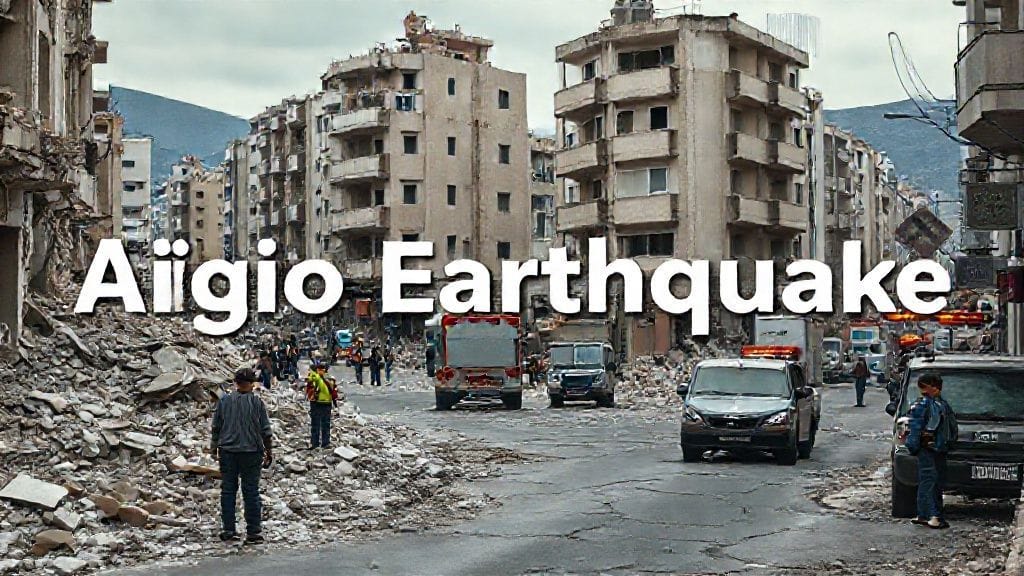
In the fragile seconds after the shaking ceased, a suffocating silence blanketed Aigio. Then came the panic—anguished cries echoed through the dust and debris as survivors emerged from shelters and ruined homes to assess the nightmare.
Street corners were blocked with rubble. Entire building sections had crumbled, leaving gaping holes. Fire broke out in several areas, adding smoke to the haze. Roads were fractured and impassable, complicating efforts to reach the injured.
Local hospitals, overwhelmed and understaffed, began to receive a deluge of trauma victims. With power cut and communications limited, many feared worse aftershocks could crush what was left standing.
6. Heroism Amidst Ruins: Stories of Rescue and Survival
Amidst devastation, humanity’s resilience shone brightest. Ordinary citizens rushed into danger to pull trapped neighbors from rubble, some risking their own lives to rescue children trapped beneath beams.
Firefighters, often working with limited equipment, coordinated search efforts amid collapsing buildings and aftershock fears. Stories of survivors clutching siblings in crumbled basements or strangers sharing meager food abound, painting a portrait of collective endurance.
One remarkable tale is that of Giorgos, a fisherman who escaped his collapsing home only to dive into the sea and navigate a makeshift raft to ferry stranded families to safety. His unyielding spirit epitomized Aigio’s determination.
7. The Role of Seismic Science: Understanding Why Aigio Suffered
Seismologists who analyzed the Aigio quake found it was caused by a sudden slip along a normal fault beneath the Gulf of Corinth. The region’s extensional tectonics—driven by the African plate’s gradual retreat—created conditions ripe for such ruptures.
But questions lingered: why did some parts of Aigio suffer catastrophic damage while others weathered the quake relatively unscathed? The answer lies in local geology and construction practices. Areas built on soft sedimentary layers amplified shaking, a phenomenon known as site effect, worsening destruction.
The Aigio Earthquake thus became an essential case study illustrating how geology, urban planning, and old architecture interact disastrously during seismic events.
8. Government and Emergency Response: Mobilizing in Crisis
The Greek government faced its first major seismic crisis since the devastating Athens earthquake in 1981. Emergency response teams were rapidly dispatched, but delays in communication, coupled with damaged infrastructure, hampered efforts.
The military was called in to assist with search-and-rescue and the distribution of supplies. Makeshift shelters filled quickly with displaced residents, while doctors and volunteers worked tirelessly amid the chaos.
While criticisms emerged regarding preparedness, the crisis also marked a turning point for Greece's emergency management policies, highlighting the need for better planning in seismic zones.
9. Structural Weaknesses Exposed: Buildings That Should Have Withstood the Quake
One of the stark tragedies of the Aigio earthquake was the failure of many supposedly reinforced concrete buildings. Though newer than the centuries-old stone houses, several collapsed or were severely damaged due to poor design or compromised construction standards.
Investigations revealed widespread noncompliance with seismic building codes, highlighting a culture of shortcuts and economic constraints that ignored safety. The quaking earth exposed not only physical cracks but societal ones—between ambition and regulation, prosperity and neglect.
This revelation sparked a nationwide debate on building safety, shaking public trust and spurring reforms.
10. The Human Toll: Casualties, Displacement, and Trauma
The earthquake claimed 26 lives and injured over 500 people, numbers that, while traceable, can never fully account for the psychological scars left behind. Families were shattered, children orphaned, elderly left alone amid ruins.
Thousands found themselves homeless overnight, forced into temporary shelters with scarce resources. Mental health was an unseen casualty, anxiety and post-traumatic stress silently woven into the community’s fabric.
“If the earth taught us anything,” said a local priest, “it was how fragile life is and how precious every moment together.”
11. Economic Reverberations: How the Earthquake Halted Aigio’s Progress
Beyond the immediate human suffering, the economic impact rippled deeply. Aigio's economy, rooted in agriculture, fishing, and small commerce, faced crippling blows. Crops and vineyards, vital to livelihoods, were damaged; shops were destroyed or inaccessible.
Insurance payouts were inadequate, and rebuilding funds slow to arrive. Many businesses shuttered temporarily or permanently, setting back growth for years.
The quake thus represented more than geological turmoil—it was an economic earthquake jolting the very foundations of local life.
12. Media Coverage and Public Awareness: Greece Watches Aigio Burn
The image of Aigio’s devastation unfolded on television screens across Greece and beyond. Journalists traveled swiftly to report on the unfolding disaster, capturing haunting visuals of collapsed buildings, tear-streaked faces, and rescue efforts.
This intense media presence amplified national solidarity but also placed scrutiny on governmental responses and infrastructural deficits. For many Greeks, the event was a sobering wake-up call to the fragility of the built environment and the perils hiding beneath the Mediterranean’s beauty.
13. International Support and Solidarity: Aid from Neighbors and Nations
Disaster in Aigio resonated far beyond Greek shores. Neighboring countries and international organizations swiftly offered aid—medical teams, relief supplies, and financial assistance.
The European Union coordinated efforts to rebuild infrastructure resilience, and debates began on cross-border collaboration in seismic monitoring and emergency preparedness.
This wave of global solidarity underscored an important truth: natural disasters respect no borders and often unite humanity in shared vulnerability.
14. Lessons Learned: Changes in Greek Seismic Regulations Post-1995
The Aigio earthquake was a catalyst for reform. In its aftermath, Greece embarked on revising its seismic building codes, tightening standards, and enhancing inspection regimes.
Public awareness campaigns educated citizens about earthquake preparedness. Technological advances in seismic monitoring were integrated into national defense strategies.
However, as experts later noted, full implementation remained a challenge, hampered by bureaucracy and economic pressures.
15. The Long Road to Reconstruction: Rebuilding Aigio Brick by Brick
Reconstructing Aigio was a marathon, not a sprint. The emotional weight of rebuilding homes topped the excruciating challenges of restoring infrastructure and livelihood.
Community workshops fostered collective participation in planning safer urban spaces. Traditional architects worked alongside engineers to blend cultural preservation with modern safety.
Years after the quake, the echoes of hammers and cranes still reverberated, stitching the town back together—not just stone by stone but heart by heart.
16. Aigio Today: Memory, Memorials, and Resilience
Today, Aigio stands as a testament both to nature’s power and human resilience. Monuments honor those who perished, while annual commemorations remind the community of the earthquake’s lessons.
Local schools incorporate earthquake drills; cultural narratives emphasize preparedness woven into identity. The town’s renaissance is both architectural and spiritual, a dialogue between past vulnerability and hopeful future.
In many ways, the earthquake lives on—not as a ghost but as a guardian of vigilance.
17. Earthquake Preparedness in Greece: Has Anything Really Changed?
Nearly three decades on, Greece continues to wrestle with the balance between economic development and safety. While regulations are stricter today, challenges remain, particularly in enforcing codes across rural and urban zones.
Public education has improved, yet the specter of complacency looms during quiet decades without major quakes. The Aigio earthquake remains a vital case study in how a nation prepares—or fails to prepare—for the inevitable.
18. Scientific Advances Sparked by Tragedies like Aigio’s
Natural disasters often accelerate scientific inquiry. The Aigio earthquake galvanized Greek seismologists and engineers to invest in better fault mapping, early warning systems, and seismic-resistant construction technologies.
It contributed valuable data to Mediterranean seismic catalogs and inspired international collaborations on earthquake risk reduction.
In that sense, the tragedy seeded progress—a harsh but necessary legacy.
19. Stories That Moved a Nation: Personal Accounts from Survivors
Human stories render history tangible. From Marika, who cradled her newborn beneath a collapsed church, to Dimitris, the firefighter who spent days searching through rubble, these narratives form the emotional core of the event.
Each account offers a unique lens on loss, hope, and the bond forged in adversity, reminding us that history is lived by individuals—ordinary people touched by extraordinary circumstances.
20. Reflections on Nature’s Fury and Human Vulnerability
The Aigio Earthquake is a powerful reminder of the fragile thread on which human life hangs. It exposes our limits against nature’s immense forces and challenges complacency born of routine.
Yet it also highlights our capacity to rebuild, to learn, and to carry scars not just as wounds but as marks of survival and wisdom passed to future generations.
21. The 1995 Aigio Earthquake’s Place in Global Seismic History
While not the deadliest or strongest earthquake globally, Aigio’s tremor holds an important place as a mid-1990s seismic event combining human tragedy with lessons in engineering, governance, and community resilience.
Its story feeds into a larger narrative of Mediterranean tectonics and becomes a chapter in the ongoing human quest to coexist with an unpredictable planet beneath our feet.
Conclusion
The June 15, 1995 Aigio Earthquake was more than just a geological event—it was a moment when the earth’s hidden veins pulsed violently beneath lives fastened too loosely to the ground. It shattered homes and hearts but also stitched new threads of courage, solidarity, and awakening.
As the dust settled and ruins were cleared, Aigio was left forever changed. Its people faced grief and loss, but also a renewed resolve to build safer, stronger, and more aware communities. This earthquake is a solemn teacher, whispering warnings and inspiring hope in equal measure.
The story of Aigio is the story of humanity’s enduring dance with nature—sometimes violent, sometimes tender, always profound.
FAQs
Q1: What caused the 1995 Aigio Earthquake?
The earthquake resulted from a sudden slip along a normal fault in the Gulf of Corinth region, part of Greece’s highly active tectonic setting due to the African and Eurasian plates’ interaction.
Q2: How strong was the earthquake?
It measured approximately 6.5 on the Richter scale, powerful enough to cause significant destruction in Aigio and surrounding areas.
Q3: How many people died or were injured?
Around 26 people lost their lives, and hundreds more were injured, with thousands displaced.
Q4: What role did building codes play in the damage?
Many buildings failed due to inadequate construction standards or noncompliance with seismic regulations, highlighting urgent needs for reform.
Q5: How did the Greek government respond to the disaster?
The government mobilized emergency services, military support, and later undertook regulatory reforms, though initial responses faced logistical obstacles.
Q6: Did the earthquake influence earthquake awareness in Greece?
Yes, it raised public and governmental consciousness about seismic risks and preparedness, contributing to improved but still evolving safety measures.
Q7: What lasting impact did the earthquake have on Aigio?
It physically reshaped the town and psychologically affected its residents, fostering a strong culture of resilience and remembrance.
Q8: Are earthquakes still a threat to Greece today?
Absolutely. Greece remains one of Europe’s most seismically active countries, making ongoing vigilance and preparedness essential.