Table of Contents
- The Morning the Earth Trembled: March 3, 2021, Thessaly’s Fateful Awakening
- Thessaly Before the Quake: A Region of Rich History and Quiet Routine
- The Geological Heartbeat: Understanding Greece’s Seismic Landscape
- The Precursors and the Unseen Warnings: Signs the Earth Was Stirring
- 06:16 AM: The First Shockwave Hits—Narratives from Ground Zero
- The Science of Rupture: What Made the Thessaly Earthquake So Unique?
- The Scattered Tremors: Aftershocks That Kept Fear Alive
- Human Stories in the Ruins: Eyewitness Accounts and Heroic Acts
- Government Response and Emergency Management: A Race Against Time
- Damage and Destruction: Greece’s Historic Towns Face the Wrath of the Earth
- The Emotional Toll: Grief, Resilience, and Communal Bonds Strengthened
- International Aid and Solidarity: The World’s Response to Thessaly’s Tragedy
- Political Repercussions: Shifts in Policy and Public Debate Post-Earthquake
- Long-Term Reconstruction: Rebuilding Lives and Landscapes
- Scientific Lessons Learned: Advances in Seismology Inspired by Thessaly
- Commemorations and Memory: How Thessaly Remembers March 3, 2021
- The Earthquake in the Cultural Imagination: Art, Literature, and Media
- Comparing Thessaly 2021 With Greece’s Historical Seismic Events
- The Role of Climate and Environment: Links and Misconceptions
- Thessaly Today: A Region Transformed, Yet Unbowed
- Concluding Reflections: The Earthquake as a Mirror to Human Tenacity
- FAQs: Unfolding the Mysteries of the Thessaly Earthquake
- External Resource
- Internal Link
1. The Morning the Earth Trembled: March 3, 2021, Thessaly’s Fateful Awakening
The dawn of March 3, 2021, in Thessaly, Greece, unfolded as any early spring morning might—quiet streets bathed in the pale light, birds chirping gently amid sighs of crisp air. But at precisely 06:16 AM local time, this peace shattered with a violent tremor, shaking the very foundations of a region steeped in millennia of history. For those awake, it was a surreal moment when the earth beneath their feet transformed from a familiar, stable ground into a living, restless force. Walls cracked, windows shattered, and lives were jolted awake in the truest sense. This was no ordinary natural event; it was a dramatic chapter etched into the collective memory of Thessaly’s inhabitants.
The initial shock was felt across the central plains and mountainous terrain surrounding the region. Schools, cafes, and market vendors quickly transitioned from daily normality to a state of alarm. Invisible seismic waves raced underground, tearing through soil and stone alike, tearing apart the fragile human-built environment in their wake. Yet, amid the chaos, stories of courage, desperation, and community resilience emerged, illuminating the human spirit’s ability to endure even nature’s most fearsome outbursts.
2. Thessaly Before the Quake: A Region of Rich History and Quiet Routine
To truly grasp the impact of the 2021 earthquake in Thessaly, one must first understand the region's profound historical and cultural backdrop. Thessaly, located in central Greece, is an expanse of fertile plains bordered by towering mountain ranges such as the Pindus to the west and the Ossa to the east. Known as the “Breadbasket of Greece,” its agriculture-based economy has sustained countless generations.
Historically, Thessaly played a pivotal role in ancient Greek civilization. It was home to legendary horse breeders, mythic heroes, and was featured in epic tales such as those of Jason and the Argonauts. Its villages and towns, many featuring architecture dating back centuries, tell stories through stone and wood—mosques, Byzantine churches, Ottoman-era bridges, and tavernas woven together in a tapestry of life enduring since antiquity.
By early 2021, Thessaly was marking a delicate post-pandemic recovery. Life had returned to its semblance of order after months of COVID-19 restrictions, with cafés opening, markets bustling, and families reconnecting. Against this backdrop, the earthquake struck with no warning, astounding residents who had only just begun to feel safe again.
3. The Geological Heartbeat: Understanding Greece’s Seismic Landscape
Greece finds itself in one of the most seismically active regions of Europe, sitting atop the complex boundary between the African and Eurasian tectonic plates. The subduction of the African Plate beneath the Eurasian Plate fuels a restless earth marked by frequent tremors, large and small, that punctuate daily life.
Thessaly’s geology is no exception. The region is cut through by a network of active faults, many invisible to the naked eye, stretching beneath the fertile plains and rugged mountains. The 2021 event was centered near the Trikala region, where a combination of strike-slip and thrust faulting movements converged—a reminder of the earth’s immense subterranean forces at play.
Seismologists had long studied these fault lines, aware they could unleash devastating quakes but unable to predict the exact timing or scale. This underground tension had been building silently, until March’s rupture abruptly released it.
4. The Precursors and the Unseen Warnings: Signs the Earth Was Stirring
In the weeks leading up to March 3, some locals reported a series of smaller tremors—so-called foreshocks that went mostly unnoticed or were dismissed as inconsequential. Minor cracks appeared in older buildings, sparking local curiosity but not alarm. These subtle signs were nature’s harbingers, reminders that even in familiar lands, stability is a fragile illusion.
Scientists monitoring seismic activity detected an increase in microquakes but offered little public warning, balancing the challenges of alarm versus accuracy in predictive seismology. Yet hindsight reveals these whispers from beneath the earth as ominous notes in the symphony of catastrophe.
5. 06:16 AM: The First Shockwave Hits—Narratives from Ground Zero
The quake struck suddenly at 06:16 AM, magnitude 6.3, an intense but not unprecedented force. For those caught in the shaking, time seemed to dilate—a chaotic mixture of fear and disbelief. Furniture toppled, windows exploded inward, and ancient stone walls moaned and crumbled.
Maria, a schoolteacher from Kalabaka, recalls, “I felt the floor move like a rolling sea. My heart jumped into my throat. Outside, people screamed and ran. It was the most terrifying moment of my life.” Across Thessaly, similar stories conjure a shared trauma: awakenings from benign slumber into a nightmare of destruction.
Emergency calls flooded local stations as the shaking subsided into tense silence, replaced quickly by the sounds of collapse, panicked voices, and the steady drip of falling debris. Ambulances and firefighters surged into action, racing against time.
6. The Science of Rupture: What Made the Thessaly Earthquake So Unique?
Unlike many Greek quakes which originate from more predictable fault lines, the Thessaly 2021 earthquake revealed a complex rupture involving both strike-slip and thrust faulting—movements where the ground slides horizontally and upwards simultaneously. This dual mechanism increased ground shaking severity and resulted in uneven damage patterns.
Seismographs recorded intense surface wave propagation, emphasizing the shallow focus of the quake at approximately 10 kilometers deep. This shallow epicenter magnified damage as energy dissipated closer to the surface, impacting towns like Trikala, Larissa, and Kalabaka with greater force.
Researchers noted an unusual propagation speed and direction of shockwaves, providing invaluable data contributing to future earthquake preparation models.
7. The Scattered Tremors: Aftershocks That Kept Fear Alive
The initial quake was merely the first act. Over the ensuing days and weeks, over a thousand aftershocks followed, some exceeding magnitude 4. These tremors prevented the region from settling, keeping residents fearful of returning home or engaging in normal activities.
For elderly Thessalians, long familiar with earthquakes but not recent violent ones, the aftershocks rekindled old anxieties. Stories emerged of families camping outdoors in freezing March nights, children clutching parents for comfort, and monks praying continuously at Meteora's monasteries perched precariously on cliffs—sites already famous for their geological precariousness.
8. Human Stories in the Ruins: Eyewitness Accounts and Heroic Acts
Among the rubble, human courage glimmered. Firefighters pulled elderly survivors from collapsed homes. Neighbors, strangers before, united in clearing debris and offering shelter.
In the mountain village of Elassona, school principal Dimitris Karras led a spontaneous evacuation of students. “There was no time for fear,” he explained. “Only calm action. The children looked to us to be strong.” His story echoed throughout national news, symbolizing community resilience.
Local clergy opened church doors to refugees of shattered homes. Volunteers created makeshift kitchens feeding hundreds daily. These personal narratives bridge the abstract tragedy with the warmth of shared humanity.
9. Government Response and Emergency Management: A Race Against Time
Greek authorities activated emergency protocols swiftly. The Civil Protection Agency mobilized rescue teams, medical units, and logistical support. Prime Minister Kyriakos Mitsotakis toured affected areas within days, promising swift reconstruction and support for victims.
However, critiques arose regarding preparedness: were Thessaly’s infrastructure and emergency services adequately equipped for such a disaster? Debates reignited about funding priorities, building codes, and the need for better public education on earthquake readiness.
Despite challenges, coordinated efforts managed to stabilize the region, deliver aid, and begin clearing the backlog of damage.
10. Damage and Destruction: Greece’s Historic Towns Face the Wrath of the Earth
The earthquake left a scar across Thessaly’s architectural heritage. Several churches dating back to the Byzantine era suffered structural damage or partial collapse. The famed Meteora monasteries, perched atop natural rock pillars, endured some minor fissures but remained fundamentally secure—a relief for the religious and cultural sectors.
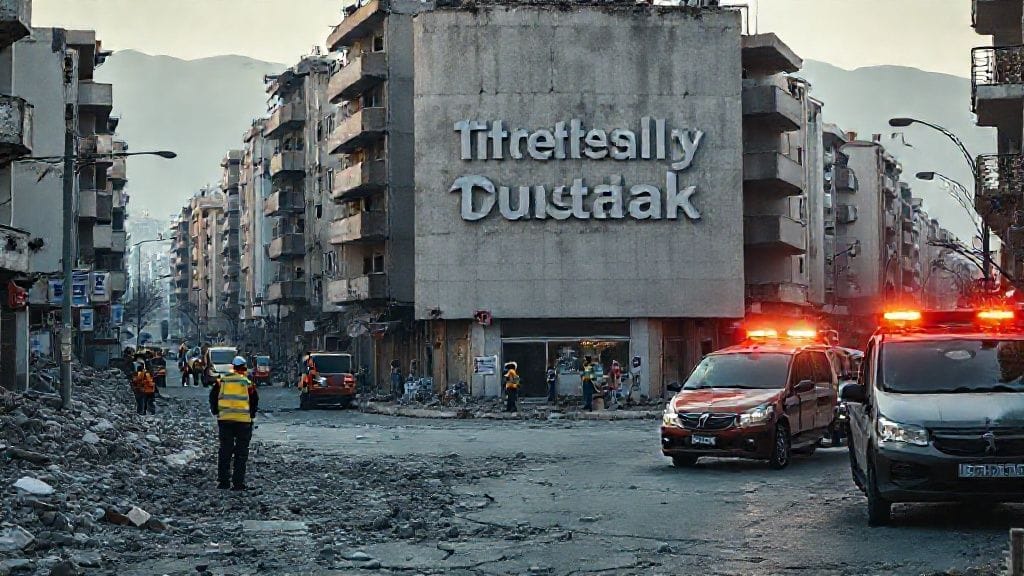
Public buildings, homes, and commercial centers in Trikala and surrounding towns saw cracked walls, fallen balconies, and shattered infrastructure. Power outages and water supply disruptions complicated daily survival in the immediate aftermath.
Estimates placed initial monetary damage in the hundreds of millions of euros, threatening local economies already strained by a global pandemic.
11. The Emotional Toll: Grief, Resilience, and Communal Bonds Strengthened
Beyond physical destruction, the psychological impact was profound. Families mourned lost possessions, disrupted lives, and, tragically, some casualties.
Psychologists noted a rise in post-traumatic stress symptoms, anxiety, and depression, emphasizing the need for community mental health services. Yet, adversity bred solidarity. Communal celebrations of survival and remembrance arose spontaneously in squares once bustling with commerce, now sites of collective healing.
Songs, poems, and local theater productions commemorated the event, transforming grief into coping and renewal.
12. International Aid and Solidarity: The World’s Response to Thessaly’s Tragedy
Though Greece is no stranger to earthquakes, the global community swiftly expressed solidarity. Neighboring countries sent rescue teams and supplies, while international agencies pledged support.
The European Union activated its Civil Protection Mechanism, facilitating cooperation, resource allocation, and reconstruction funding. Donations poured from the diaspora and charitable organizations.
This global embrace highlighted our interconnectedness in the face of natural disasters often indifferent to human borders.
13. Political Repercussions: Shifts in Policy and Public Debate Post-Earthquake
The Thessaly earthquake catalyzed political discourse on infrastructure safety and urban planning. Opposition parties criticized alleged lax enforcement of building codes while the government promised reforms.
Discussions about decentralizing emergency management authority to local municipalities gained traction. Parliamentary inquiries considered the adequacy of past investments in seismic research and public education.
This seismic event became not just a natural calamity but a catalyst for governance reflection.
14. Long-Term Reconstruction: Rebuilding Lives and Landscapes
Months after the shaking ceased, Thessaly faced the enormous task of reconstruction. This process was not limited to bricks and mortar but extended to restoring human confidence.
Architects and engineers worked to retrofit structures with modern seismic resilience, integrating traditional aesthetics with new technologies. Housing projects aimed to provide affordable and safe homes for displaced families.
The balance between preservation of heritage sites and ensuring safety became a central challenge, inspiring innovative restoration techniques.
15. Scientific Lessons Learned: Advances in Seismology Inspired by Thessaly
Data collected from the 2021 Thessaly earthquake enriched scientific understanding of Greece’s seismic risk. Researchers refined models predicting rupture dynamics and aftershock sequences.
The event underscored the importance of continuous monitoring and public real-time data dissemination. New partnerships formed between universities, government bodies, and international experts.
Technological advances, including remote sensing and AI-based early warning systems, accelerated in response.
16. Commemorations and Memory: How Thessaly Remembers March 3, 2021
Anniversaries of the earthquake became moments of solemn remembrance and community gathering. Memorials erected in central squares honor those who suffered loss.
Schools integrated earthquake preparedness into curricula, ensuring younger generations carry lessons forward. Local media productions re-tell survivor narratives, embedding personal memories into collective identity.
Such acts of memory weaving contribute to resilience beyond physical rebuilding.
17. The Earthquake in the Cultural Imagination: Art, Literature, and Media
Artists responded deeply to Thessaly’s ordeal. Painters captured shattered landscapes and human fragility in haunting canvases. Poets evoked the fragile dance between earth and humanity.
Documentaries and films recounted the event’s human drama, reaching national audiences and stimulating conversations about both vulnerability and strength.
Cultural expressions transformed the disaster into a shared story of endurance.
18. Comparing Thessaly 2021 With Greece’s Historical Seismic Events
Greece’s seismic history includes cataclysmic quakes—Athens 1999, Kalamata 1986, to name a few. Thessaly 2021 stands among these not only for its magnitude but for the particular geological complexity and social context.
Scholars place this event as a key data point in understanding regional risk patterns and historical seismic cycles.
Unlike prior quakes that hit urban centers, Thessaly’s blend of rural and semi-urban areas presented unique challenges and learnings.
19. The Role of Climate and Environment: Links and Misconceptions
In the age of climate change, some speculated on connections between environmental factors and seismicity. Scientists clarified that tectonic movements and climate shifts operate on different physical principles.
However, associated effects—landslides triggered by soil saturation from heavy rains, for example—highlight intersections worth monitoring.
Public communication efforts aimed to dispel myths, emphasizing evidence-based understanding without downplaying the severity of natural disasters.
20. Thessaly Today: A Region Transformed, Yet Unbowed
Two years later, Thessaly displays both scars and signs of renewal. Reconstruction has restored much of its landscape; villages are bustling once more.
Community initiatives focus on disaster preparedness, economic revitalization, and cultural preservation. The earthquake’s imprint endures, but so does the enduring spirit of its people.
Thessaly embodies resilience—a land where human hope meets an ever-changing earth.
21. Concluding Reflections: The Earthquake as a Mirror to Human Tenacity
The Thessaly earthquake of March 3, 2021, was not merely a geological event but a profound human experience. It exposed fragilities but also revealed reservoirs of courage, adaptability, and solidarity.
In a world increasingly aware of nature’s unpredictable power, Thessaly’s story offers hope—that even in the darkest moments, communities find ways to rebuild, to remember, and to persevere.
Nature’s tremors continue; so does human resolve.
Conclusion
The earthquake that shook Thessaly in early 2021 was a seismic jolt not just to the ground but to the fabric of a community steeped in history. It unfolded like a living narrative—a calamity etched with human faces, heroic acts, mourning, and eventual restoration. As the earth cracked, so too did the illusion of permanence, reminding us all of the delicate balance between mankind and the forces beneath our feet.
Yet, the region did not collapse under its fate. With resilience, ingenuity, and mutual compassion, Thessaly transformed tragedy into a powerful lesson in endurance. The people’s stories—woven through ancient stone and modern homes—continuously echo the timeless truth: in the face of nature’s fury, humanity’s spirit is an unyielding force.
FAQs
Q1: What caused the Thessaly earthquake in 2021?
The earthquake resulted from the complex movements along faults related to the collision of the African and Eurasian tectonic plates beneath Greece, involving a combination of strike-slip and thrust fault mechanisms.
Q2: How strong was the earthquake and how deep was its epicenter?
The main shock had a magnitude of 6.3 with a shallow depth of approximately 10 kilometers, which increased the severity of shaking at the surface.
Q3: Were there any fatalities or major injuries?
While the earthquake caused significant structural damage and injuries, the death toll remained low due to rapid evacuation and emergency response, though some casualties were reported.
Q4: How did the government respond to the disaster?
Greek authorities swiftly mobilized rescue, medical, and logistical support. Reconstruction plans were launched alongside commitments to improve building codes and disaster preparedness.
Q5: What are the long-term effects on Thessaly’s infrastructure and economy?
The earthquake led to substantial reconstruction efforts involving retrofitting and rebuilding, with economic challenges due to repair costs and temporary disruptions, but it also spurred modernization initiatives.
Q6: How has Thessaly commemorated the earthquake?
Memorials, educational programs, and cultural productions honor the event and its victims, embedding the earthquake into regional memory and fostering ongoing awareness.
Q7: What scientific advances resulted from studying this earthquake?
The event enhanced understanding of fault behavior and aftershock prediction, driving investments in seismic monitoring technology and early warning systems in Greece.
Q8: Is there any link between climate change and the earthquake?
No direct scientific link exists; however, environmental conditions can influence secondary events like landslides, but tectonic activity itself is driven by deep earth processes.