Table of Contents
- A Tremor Awakens the Alboran Sea: January 25, 2016
- The Alboran Sea: A Crossroads of Two Continents and Cultures
- Tectonic Tales: The Geological Forces beneath the Strait of Gibraltar
- The Night of the Earthquake: First Shakes and Immediate Reactions
- Seismic Waves Across Borders: Spain and Morocco Feeling the Quake
- The Epicenter Unveiled: Mapping the Pain under the Sea
- Stories from the Shore: Eyewitness Accounts and Community Responses
- The Role of Early Warning and Emergency Services in Spain and Morocco
- Structural Impacts: When Buildings and History Stand the Test of Nature
- Human Toll and the Immediate Aftermath: Casualties and Rescue Efforts
- Diplomatic Echoes: Cross-Border Collaboration in Crisis
- The Earthquake in the Context of Mediterranean Seismicity
- Scientific Insights Gained: Seismologists Study the Alboran Quake
- Long-Term Disaster Preparedness in Spain and Morocco Post-2016
- Cultural and Psychological Impact on Coastal Communities
- Lessons from the Sea: How the Earthquake Changed Regional Awareness
- The Global Perspective: Why Alboran’s Quake Matters Beyond Its Borders
- Epilogue: Remembering January 25, 2016, Through the Human Lens
A Tremor Awakens the Alboran Sea: January 25, 2016
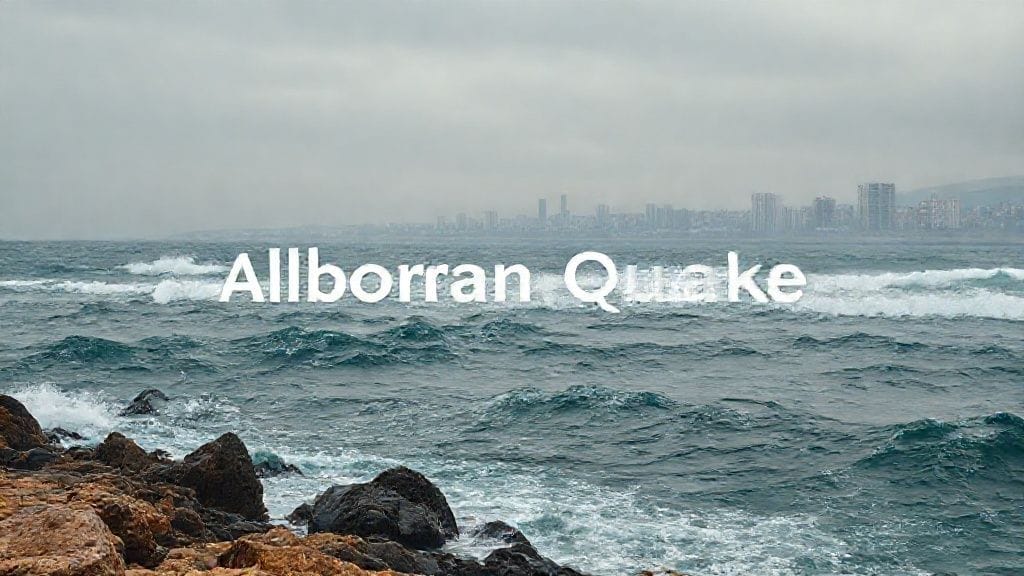
In the early hours of a chilly winter morning, the Black Alboran Sea, often serene and steeped in maritime lore, suddenly awakened with a force unseen for years. Just after midnight on January 25, 2016, the earth beneath the waters between southern Spain and northern Morocco shuddered. A powerful earthquake, registering 6.3 on the Richter scale, violently disrupted the ancient marine corridor linking Africa with Europe. The surface trembled, waves lapped irregularly against rocky shores, and distant villages were jolted awake in fear.
The Alboran Sea earthquake was not just a mere natural phenomenon; it was a moment when geology and human lives collided. The sudden roar from the deep rumbled through the Strait of Gibraltar, a bridge of nations and histories, delivering shockwaves felt across two continents—Europe and Africa. For many who lived near the Mediterranean’s narrowest gateway, it was the startling reminder of the untamed forces simmering beneath the surface.
Yet, the story of this earthquake stretches beyond a single night’s terror. To fully grasp its significance, one must navigate through layers of tectonic struggle beneath the sea, the vibrant cultures lining its shores, and the resilient spirit of the people it touched.
The Alboran Sea: A Crossroads of Two Continents and Cultures
The Alboran Sea is more than a watery expanse—it is a natural border and meeting point between two worlds. Nestled between the southern coast of Spain and the northern edges of Morocco, it marks the westernmost portion of the Mediterranean Sea. Historically, this region has been a crucible of interaction, commerce, and conflict among the Phoenicians, Romans, Moors, and beyond.
Here, the coasts pulse with cities rich in heritage: Málaga, Almería, Melilla on the European side; Tangier and Nador on the African. These places tell stories of vibrant trade routes, cultural exchanges, and sometimes fierce competition for control over the narrow maritime passage. The sea itself, relatively shallow and framed by rugged coastlines, has been deeply cherished by fishermen, sailors, and scholars alike.
However, the Alboran Sea is no mere tranquil backdrop—it sits in a seismically restless zone. This crossroad not only connects continents culturally and politically but also embodies the intricate and volatile interactions of tectonic plates beneath.
Tectonic Tales: The Geological Forces beneath the Strait of Gibraltar
Beneath the Alboran Sea’s spectral, shifting waters lies a narrative of relentless tectonic tension. The region is a geodynamic puzzle, where the African and Eurasian plates collide and interlock, creating a landscape continuously reshaped over millions of years. This is a place marked by complex fault lines, thrust zones, and subduction processes that periodically release pent-up seismic energy.
The earthquake of January 25, 2016, was a dramatic expression of this vast subterranean conflict. Approximately 15 kilometers beneath the sea surface, the crust ruptured along a fault concealed under sediment and oceanic pressure. The seismic moment was not only significant in magnitude but also emblematic of a history of moderate to strong earthquakes that have punctuated the Mediterranean’s geological timeline.
Geologists point to the Alboran basin as a key to understanding the westward roll-back of the subducting slab and the wider tectonic changes molding southern Europe and northwest Africa. In this ongoing dance of plates, stress accumulates silently—then, sometimes, it breaks through as violent tremors that ripple through life above.
The Night of the Earthquake: First Shakes and Immediate Reactions
As the clock ticked past midnight in the towns and villages hugging the Alboran Sea, the earth suddenly betrayed its calm. Residents awoke to violent shaking, furniture clattered, windows rattled, and the usual hum of nighttime quieting was shattered. The initial tremor lasted barely a minute but felt much longer to those caught in its grip.
In parts of southern Spain, especially Andalusia, experiences varied from mild shaking to intense rocking. Meanwhile, in northern Morocco, the quake was deeper and more pronounced, sparking disbelief and fear. Power outages flickered in some areas; cellphone networks momentarily overwhelmed by panicked calls.
Emergency hotlines lit up, and local authorities scrambled to gauge the situation. Many awoke thankful to have survived but deeply shaken—a raw confrontation with their vulnerability.
Seismic Waves Across Borders: Spain and Morocco Feeling the Quake
What made the Alboran Sea event especially memorable was its cross-border resonance. Unlike many earthquakes confined to a single country, this episode was felt robustly in two nations separated by less than 15 miles (24 kilometers) of water.
In Spain, the provinces of Málaga and Almería were hardest hit. Residents described the shaking as “a rollercoaster ride beneath the feet,” with some reporting seconds-long loss of balance. Buildings, mostly resilient to mild tremors, creaked under pressure; plaster cracked and old masonry showed signs of strain.
Across the Strait, in Moroccan cities like Al Hoceima and Nador, the quake unleashed greater anxiety. Many communities there faced older, less earthquake-resistant infrastructure. Children were pulled out of bed; villagers fled outdoors into the cold night fearing aftershocks.
This shared experience underscored the natural bridge between Spain and Morocco—not only a highway of trade and migration but also a shared arena for natural risks.
The Epicenter Unveiled: Mapping the Pain under the Sea
Seismologists worked swiftly to locate the epicenter beneath the dark waters of the Alboran Sea. Using data from regional seismic networks, they pinpointed the trembling roughly 25 kilometers southwest of Al Hoceima, Morocco, and close to the Spanish coast.
The earthquake was classified as shallow to intermediate depth, at around 15 km below sea level, increasing its potential for surface impact. The rupture propagated along a thrust fault—typical of compressive zones where one tectonic block is forced over another.
Mapping this event was crucial not only for immediate disaster response but to enrich long-term seismic risk assessments. It revealed the continuing activity of faults long known, but rarely so demonstrative.
Stories from the Shore: Eyewitness Accounts and Community Responses
In places like Motril in Spain and Bni Bouayach in Morocco, personal stories began to emerge amid the chaos. A fisherman described how his boat rocked wildly while moored at the harbor, convinced he was facing a storm rather than an earthquake. A grandmother in a small mountain town recounted waking up to the walls trembling and the fear that the house might collapse.
Local volunteers mobilized swiftly. In Spain, civil protection units patrolled streets, setting up makeshift shelters for families shaken from their homes. Moroccan neighbors gathered in communal centers, some lighting candles and singing prayers for safety. Despite the destruction looming, a spirit of solidarity and resilience shone brightly.
It was these human narratives—fear, courage, hope—that transformed the earthquake from a mere geological fact into a deeply felt shared ordeal.
The Role of Early Warning and Emergency Services in Spain and Morocco
The earthquake laid bare the contrasting emergency preparedness systems in Spain and Morocco. Spain, with well-established civil defense agencies and seismological monitoring, deployed rapid responses. Hospitals remained on high alert, while local police assisted in evacuations.
Morocco also mobilized quickly, though with more challenges due to limited resources in some northern regions. However, cooperation between regional authorities and international partners helped to coordinate relief and medical aid.
The event sparked discussions about improving cross-border early warning systems and joint crisis drills. Both countries recognized that earthquakes, unlike political borders, respect no human-made boundary.
Structural Impacts: When Buildings and History Stand the Test of Nature
Architecturally, the quake’s impact was complex. Many modern buildings built according to seismic codes endured the shaking relatively well. However, older structures—ancient churches, colonial-era homes, and vernacular masonry dwellings—showed visible damage: cracked walls, displaced tiles, and in some cases partial collapses.
In Al Hoceima, a 19th-century mosque sustained damage reminiscent of previous seismic events. Restoration experts emphasized the need to protect cultural heritage with stronger structural reinforcements without sacrificing historical authenticity.
This intersection of geology and human heritage raised timeless questions. How do communities preserve their past while preparing for future earth tremors?
Human Toll and the Immediate Aftermath: Casualties and Rescue Efforts
The January 25 earthquake thankfully stopped short of causing large-scale fatalities, but dozens suffered injuries ranging from minor bruises to broken limbs. Emergency rooms overflowed as rescue teams worked through the dawn to clear debris and assist the vulnerable—elderly residents, children, and those trapped temporarily.
Emergency response was hampered in some areas by damaged roads and intermittent power cuts, but the swift mobilization of military and civilian aid saved countless lives. Across the border, cooperation between Spain and Morocco enhanced these efforts, showing that humanitarian concerns trump political divides.
The psychological scars, however, lingered. Families recount sleepless nights, anxious over potential aftershocks in days to come.
Diplomatic Echoes: Cross-Border Collaboration in Crisis
In the quake’s wake, political figures on both shores issued statements emphasizing solidarity and cooperation. Spanish and Moroccan emergency agencies exchanged vital data and equipment, coordinating medical evacuations when necessary.
Behind the scenes, this natural disaster became a subtle diplomatic bridge—an instance where shared human vulnerability fostered goodwill amidst complex geopolitical realities. For a moment, a natural calamity transcended borders, promoting dialogue and mutual aid.
Such cooperation reinforced calls from experts for expanded joint disaster preparedness programs linking the two nations.
The Earthquake in the Context of Mediterranean Seismicity
The Alboran Sea earthquake was part of a broader pattern in the Mediterranean region, an area known for its complex seismicity dating back millennia. Historically, this corridor has experienced devastating quakes—like the 1755 Lisbon earthquake whose shocks were felt here.
Seismologists study the Alboran event alongside others to refine models predicting earthquake behavior in zones where the African plate collides with Europe. Each quake adds pieces to this geological puzzle—revealing stress distribution, fault activity, and seismic hazards.
Understanding these patterns is essential not just locally but for all Mediterranean nations vulnerable to earthquakes.
Scientific Insights Gained: Seismologists Study the Alboran Quake
Post-event, scientific teams worked to analyze aftershocks, fault-slip characteristics, and ground deformation. They deployed ocean-bottom seismometers and conducted satellite-based interferometry to measure how the earth moved.
Findings suggested a slip of several meters along a shallow thrust fault, pushing the Alboran basin upward slightly. This confirmed long-held assumptions about this tectonic setting and raised new hypotheses about future seismic probabilities.
Beyond raw data, this earthquake inspired multidisciplinary research involving geology, oceanography, and risk management—highlighting how even unexpected events spur knowledge.
Long-Term Disaster Preparedness in Spain and Morocco Post-2016
In response to the quake, both nations revisited disaster strategies. Spain accelerated updates to building codes in Andalusian coastal provinces and launched public education campaigns about earthquake readiness. Morocco, recognizing vulnerabilities in infrastructure, sought international partnerships to strengthen emergency systems in the north.
Community drills, modernized seismic networks, and cross-border communication channels became priorities. Authorities pledged to turn a natural calamity into a catalyst for resilience.
Echoes of January 25 live on in these ongoing efforts—proof that history teaches not just awe but actionable lessons.
Cultural and Psychological Impact on Coastal Communities
The quake’s imprint manifests not only in buildings but in hearts and minds. Coastal communities reported increases in anxiety disorders and PTSD symptoms among survivors. Rituals, prayers, and local storytelling adapted, incorporating this recent trauma.
Schools introduced lessons on natural hazard risks, and artistic expressions—paintings, poems, songs—captured the primal experience of being shaken from security.
This cultural memory ensures that the Alboran Sea earthquake remains a poignant chapter in collective identity, a reminder that nature’s power demands respect.
Lessons from the Sea: How the Earthquake Changed Regional Awareness
Perhaps the most profound legacy is heightened regional awareness. Governments, scientists, and citizens alike recognize the seismic dangers lurking beneath the Mediterranean basin. The 2016 event dispelled myths of immunity in this part of the world.
Adopting a mindset that balances caution with hope, the people around the Alboran embrace preparedness as a daily duty. It’s a new chapter in centuries-old coexistence with the earth’s dynamic crust.
As one Spanish seismologist put it: “The sea may look calm, but it tells a story of constant change—our challenge is to listen and adapt.”
The Global Perspective: Why Alboran’s Quake Matters Beyond Its Borders
Though centered between Spain and Morocco, the Alboran Sea earthquake resonates globally. It underscores the universality of seismic risks in crisscrossed tectonic zones worldwide—from the Pacific Ring of Fire to Himalayan mountain belts.
International scientists use such events to validate earthquake models, and humanitarian agencies observe cross-border collaboration to refine crisis responses.
In a shrinking world, natural disasters like Alboran’s remind us that no boundary is absolute, and global solidarity is more necessary than ever.
Epilogue: Remembering January 25, 2016, Through the Human Lens
Years after the tremor, the Alboran Sea earthquake remains etched in stories, in repaired homes, and in vigilant minds. It was a night when the earth spoke in raw urgency, reminding a region of deep interconnection—between land and sea, between neighbors, and between human and nature.
This event invites reflection on fragility and strength. It narrates not just a seismic rupture but a human saga: of fear turned into courage, division softened by empathy, and history witnessed in trembling earth and unwavering hearts.
Conclusion
The Alboran Sea earthquake of January 25, 2016, was more than a geophysical event; it was a profound moment of shared vulnerability and resilience straddling two continents. In the silent thrust beneath the waves erupted stories of fear, solidarity, and determination. Geological forces that have shaped the Mediterranean’s history once again reminded humanity of its fragile place within the earth’s restless crust.
But beyond the trembling ground, this earthquake awakened a mutual understanding between Spain and Morocco. It highlighted the necessity of collaboration—scientific, political, and humanitarian—and the urgency of preparing for the inevitable forces of nature. The coastal communities, though shaken, emerged with renewed commitment to safeguarding their heritage, their homes, and their future.
In remembering the seismic kiss between the African and Eurasian plates beneath the Alboran Sea, we glimpse a broader truth: that history is not only shaped by human hands but also by the invisible movements beneath our feet—a striking, enduring dialogue between earth and its inhabitants.
FAQs
Q1: What caused the 2016 Alboran Sea earthquake?
A1: The earthquake was caused by the tectonic collision and subduction between the African and Eurasian plates beneath the Alboran Sea, triggering a rupture along a thrust fault approximately 15km deep.
Q2: How strong was the earthquake and where was its epicenter?
A2: The earthquake measured 6.3 in magnitude with its epicenter located under the Alboran Sea, near the southern coast of Spain and northern Morocco, about 25 kilometers southwest of Al Hoceima.
Q3: Were there any fatalities from the earthquake?
A3: Fortunately, there were no large-scale fatalities, but several injuries were reported on both sides of the Strait. Rescue operations minimized human loss despite structural damage.
Q4: How did Spain and Morocco respond to the earthquake emergency?
A4: Both countries swiftly mobilized emergency services, coordinated rescue efforts, and exchanged information. The event strengthened calls for enhanced cross-border disaster preparedness and cooperation.
Q5: Has the Alboran Sea historically been seismically active?
A5: Yes, this region is part of a seismically active zone due to the convergence of major tectonic plates. The Mediterranean has a history of moderate to strong earthquakes linked to these dynamics.
Q6: What were the long-term effects on infrastructure and communities?
A6: The quake caused damage especially to older buildings, prompting revisions to building codes and public awareness campaigns. Psychologically, communities showed increased resilience but also trauma that shaped cultural memory.
Q7: Why is this earthquake significant beyond Spain and Morocco?
A7: Because the Alboran Sea lies at a major plate boundary, the earthquake provides vital scientific insights and exemplifies the importance of international cooperation in seismic risk management globally.
Q8: How has the earthquake influenced scientific research?
A8: The event spurred new studies on fault mechanics, seismic monitoring technologies, and ground deformation, contributing to enhanced understanding of complex Mediterranean tectonics.