Table of Contents
- The Dawn Shattered: January 1, 1980, and the Azores Wake
- The Azores Archipelago: Land of Fire and Sea
- Geological Prelude: The Tensions Beneath the Terceira Island
- Portugal on the Eve: Socio-political Context of 1980
- The First Tremors: Early Warnings and Public Awareness
- 2:40 in the Morning: The Earthquake Strikes Terceira
- The Rupture’s Reach: Intensity and Aftershocks Across the Archipelago
- Human Stories Amid Ruins: Witnesses, Survivors, and First Responders
- Emergency Response and Community Solidarity
- The Destruction Measured: Damage to Infrastructure and Heritage
- Economic Shockwaves: Impact on Local and Regional Economy
- Scientific Scrutiny: What the Earthquake Revealed About the Azores Seismicity
- The Portuguese Government’s Response and International Aid
- Cultural and Psychological Echoes: Trauma and Resilience on Terceira
- The Rebuilding Years: From Rubble to Reconstruction
- Lessons Learned: Changes in Seismic Preparedness and Urban Planning
- The Earthquake in Collective Memory and Commemoration
- Global Significance: How the 1980 Azores Earthquake Shaped Seismology
- Reflections from Survivors and Experts Today
- The Azores Earthquake and Portugal’s Identity Between Nature and Nation
The Dawn Shattered: January 1, 1980, and the Azores Wake
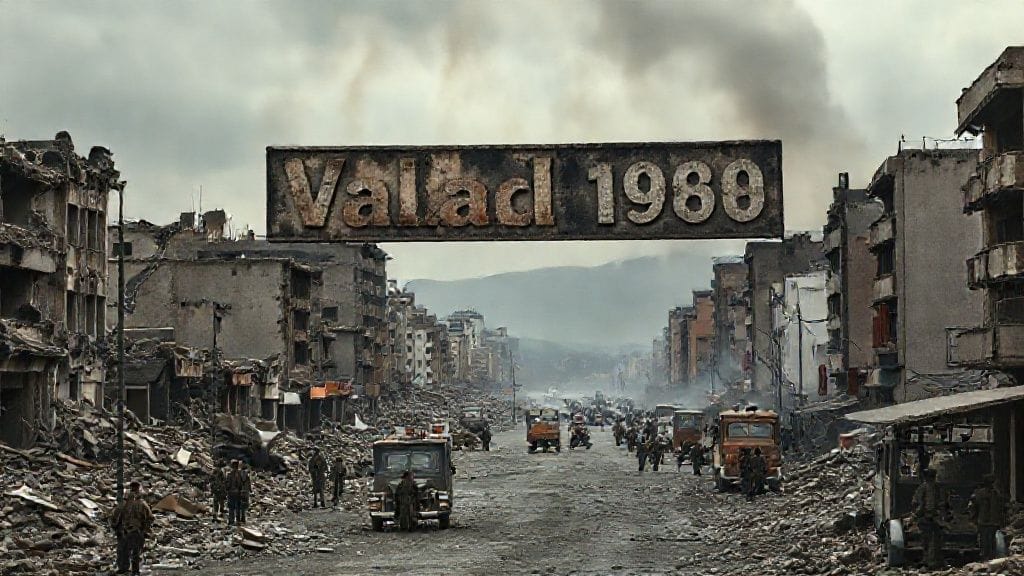
It was barely past two in the morning on New Year’s Day, 1980, when the serene quiet of the Atlantic suddenly gave way to a monstrous roar beneath the ocean waves. The island of Terceira, nestled in the heart of the Azores archipelago, convulsed violently as tectonic forces ripped through the earth’s crust. Homes trembled, ancient stone walls crumbled, and more than a thousand souls were shaken awake—some for the final time. In the fog of the disaster, the promise of a new year collided with fear and devastation, forever leaving a mark on the spirit of Portugal’s distant island jewels.
That night, the ground shifted not just physically but metaphorically—forcing the islanders and Portugal itself to confront nature’s might, fragility, and the unpredictability lurking beneath the tranquil oceanic horizon. The 1980 Terceira earthquake would ripple far beyond the immediate tremors; it would influence lives, science, governance, and the heritage of a people whose existence is intertwined with the restless earth.
The Azores Archipelago: Land of Fire and Sea
Stretching across the volatile seams of tectonic plates, the Azores archipelago is a string of volcanic islands perched where the North American, Eurasian, and African plates converge. Known for their lush landscapes, dramatic coastlines, and tempestuous weather, the islands have historically oscillated between bounty and peril. Terceira, the third largest island, is famed not only for its natural beauty but also for its strategic and cultural significance.
Formed by volcanic activity millennia ago, the island’s geology is a patchwork of basalt cliffs, volcanic cones, and fertile soils. But underlying this serenity is a restless underworld—a place where the Earth’s crust is stretched, pulled, and fractured. This tectonic dynamism has periodically given rise to earthquakes that remind inhabitants of their precarious place atop geological fault lines.
Geological Prelude: The Tensions Beneath the Terceira Island
Scientifically, the Azores sit at a triple junction, where the interaction of three tectonic plates generates a complex pattern of stresses and fractures. Terceira lies near the Terceira Rift, an active spreading center responsible for much of the region’s seismicity. Long before January 1980, geologists had identified the area as prone to seismic events, though predicting the timing or magnitude remained elusive.
Months before the quake, minor tremors had gently nudged the islanders’ collective consciousness, whispers of an underlying tension growing in the bowels of the earth. But the scale of impending upheaval was beyond anything anticipated; the earth was silently accumulating energy, later to be released in a seismic crescendo.
Portugal on the Eve: Socio-political Context of 1980
The earthquake did not occur in a vacuum. Portugal in the late 1970s was navigating profound transitions. Following the 1974 Carnation Revolution that overthrew decades of dictatorship, the country was rebuilding its democracy, grappling with economic challenges, and redefining its place on the world stage.
The Azores, geographically removed from mainland Portugal, were often overlooked in national policy but remained culturally integral. While the islands maintained a strong local identity, their infrastructure and disaster preparedness systems were less developed than those on the mainland. This vulnerability would soon be brutally exposed.
The First Tremors: Early Warnings and Public Awareness
In the days leading to the New Year, subtle tremors had stirred the island. These foreshocks, though weak, were noted by local seismometers and experienced by some residents as mild shakes in the dead of night. Such precursor events have long fascinated scientists and unsettled locals—nature’s cryptic warnings often go unheeded until catastrophe strikes.
On Terceira, however, the lack of widespread public awareness and limited preparedness meant these signals did little to prompt precautionary measures. Most islanders welcomed the New Year in hope, unaware of the destructive force about to be unleashed.
2:40 in the Morning: The Earthquake Strikes Terceira
Precisely at 2:40 a.m., the cacophony erupted. The earthquake registered a magnitude of 7.2—violent enough to twist the earth, damage buildings, and shatter nighttime calm. Seconds stretched into an eternity as the island trembled under the fierce strain.
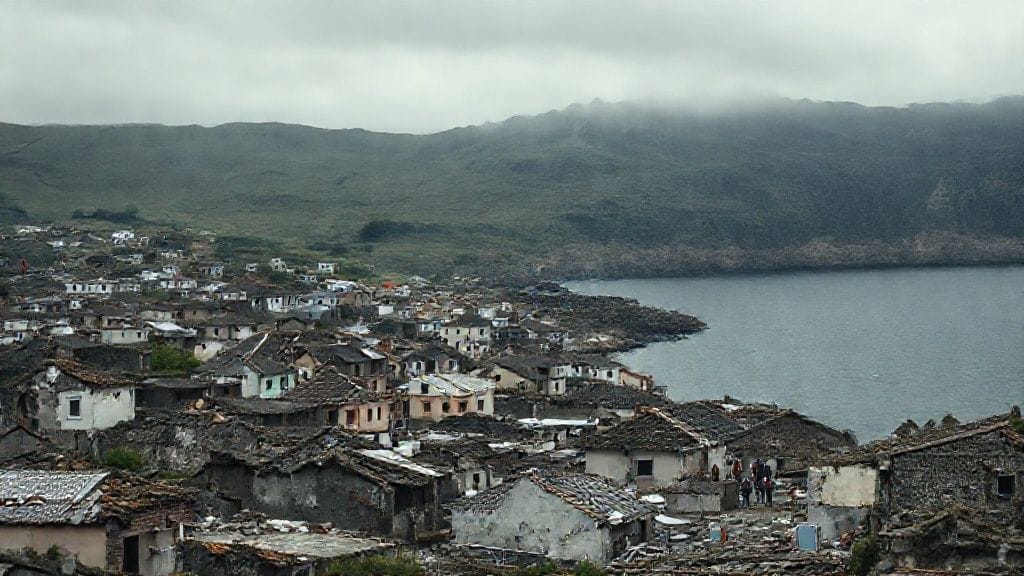
Homes built from centuries-old basalt stone cracked or collapsed, while those on less stable ground were swept away. The primal terror of shaking walls, falling debris, and the darkness outside unnerved every inhabitant. The infrastructure groaned and failed: electricity flickered and died, communication lines snapped, and roads split.
It was an apocalypse confined to a few moments, but one that would echo in the years to come.
The Rupture’s Reach: Intensity and Aftershocks Across the Archipelago
While Terceira bore the brunt, neighboring islands also felt the earthquake’s wrath. São Jorge, Graciosa, and São Miguel exhibited aftershocks—some significant enough to prevent sleep and prompt evacuations. The number of aftershocks reached into the hundreds over days and weeks, a relentless reminder of the earth’s unsettled state.
These tremors challenged rescue efforts and deepened public anxiety. For weeks, the islands lived in a fragile balance between vigilance and fatigue, as residents coped with the constant threat of further instability.
Human Stories Amid Ruins: Witnesses, Survivors, and First Responders
Amid the smashed walls and dust, human stories of courage, loss, and solidarity unfolded. One Terceira resident recalled the cataclysmic shaking as “like the earth had become a wild animal, thrashing beneath our feet.” Families scrambled from their homes, some sheltering in emergency tents, others clinging to neighbors.
First responders—firefighters, police, medical personnel—found themselves overwhelmed but undeterred, working through nights and scarce resources. Volunteers emerged naturally, pooling efforts to clear roads, provide shelter, and comfort the frightened.
Tragically, over 60 people lost their lives that night, and hundreds were injured or displaced. Yet, the communal spirit shone as a beacon of resilience.
Emergency Response and Community Solidarity
The immediate aftermath was chaotic, but the local government rapidly mobilized relief operations. Makeshift shelters sprang up in public squares, schools, and churches. Food and medical supplies trickled in aided by civilian donations.
International offers for assistance arrived, reflecting global solidarity with the Azorean plight. Portugal’s civil defense agencies, although stretched thin, coordinated efforts to manage resources and communicate with the mainland.
For the islanders, mutual aid became a lifeline—neighbors helped rebuild homes, shared stories, and navigated grief together.
The Destruction Measured: Damage to Infrastructure and Heritage
Estimates suggest over 70% of buildings on Terceira suffered damage, with many historic structures—churches, forts, and traditional houses—bearing scars. Public buildings, schools, and hospitals faced either total collapse or critical structural impairment.
Particularly tragic was the damage to Terceira’s Azorean Baroque churches, treasured symbols of cultural identity. The architectural loss deepened the psychological impact of the disaster, as landmarks tied to history and faith crumbled.
Roads and ports experienced interruptions, impeding supply lines and transport, while agricultural lands showed signs of fissures and instability, further threatening livelihoods.
Economic Shockwaves: Impact on Local and Regional Economy
The earthquake significantly disrupted the island’s economy. Agriculture, a mainstay of Terceira’s income—cattle grazing, dairy products, and subsistence farming—was hit by damaged land and stalled markets. Tourism, then a modest but growing sector, saw immediate declines due to safety concerns and infrastructure degradation.
Moreover, the financial burden of rebuilding, both for private citizens and government bodies, strained budgets. National and regional authorities faced challenging decisions balancing urgent reconstruction and long-term development, framed within Portugal’s broader economic constraints.
Scientific Scrutiny: What the Earthquake Revealed About the Azores Seismicity
For seismologists, the 1980 Terceira earthquake became a focal point in understanding the Azores tectonics. Detailed analysis of seismic waves, ground displacement, and aftershock patterns enriched research on the triple junction behavior.
The quake underscored the active nature of the Terceira Rift and highlighted gaps in regional seismic monitoring capabilities at the time. It catalyzed calls for improved instrumentation, early warning systems, and better geophysical mapping.
International collaboration increased as the event added data points essential for comprehending mid-Atlantic ridge dynamics.
The Portuguese Government’s Response and International Aid
In the weeks following the disaster, the Portuguese government launched an emergency reconstruction program. Financial aid, rebuilding plans, and infrastructure investment sought to restore normal life.
International assistance came from friendly nations and organizations, from monetary donations to technical expertise. The United Nations and Red Cross provided humanitarian support, underscoring the global dimension of disaster response.
The earthquake also prompted reforms in Portuguese civil defense policies, including improved coordination mechanisms between mainland authorities and insular administrations.
Cultural and Psychological Echoes: Trauma and Resilience on Terceira
The emotional aftershocks extended beyond physical damage. Survivors grappled with the trauma of sudden loss, displacement, and uncertainty. Mental health support remained scarce initially, but community rituals, religious faith, and social structures helped process grief.
Anniversaries of the earthquake became times of remembrance—ceremonies blending sorrow and hope. Oral histories and memoirs preserve the human dimension of the tragedy, a poignant testimony to the depth of collective endurance.
The Rebuilding Years: From Rubble to Reconstruction
Reconstruction was both a material and cultural endeavor. Architects and engineers balanced restoring traditional styles with introducing modern seismic safety standards. This fusion created a new islandscape, one that respected the past but looked toward resilience.
The rebuilding efforts also stimulated public works and employment, slowly revitalizing the economy. Schools reopened, hospitals were refurbished, and new housing rose from the rubble. Yet, the scars remained—visible reminders and silent witnesses embedded in the rebuilt fabric.
Lessons Learned: Changes in Seismic Preparedness and Urban Planning
The ordeal spurred institutional learning. Building codes were revised to incorporate seismic considerations, emergency drills became more frequent, and public education on earthquake risks gained emphasis.
The disaster revealed the necessity of integrating geological knowledge into urban planning—a process still evolving today. Terceira became a case study for disaster preparedness in insular and volcanic regions.
The Earthquake in Collective Memory and Commemoration
More than four decades later, the 1980 earthquake remains a defining moment in Terceira’s collective memory. Annual commemorations ensure that the lessons, losses, and heroism are not forgotten.
Museums and memorial sites document the event, inviting new generations to appreciate resilience amid adversity. This remembrance fosters a shared identity grounded in communion with the elemental forces that shaped the island’s destiny.
Global Significance: How the 1980 Azores Earthquake Shaped Seismology
Beyond local impact, the Terceira earthquake contributed to broader seismic science. It provided rare data from a triple plate junction environment, enriching models of tectonic dynamics.
Researchers worldwide have cited the quake in studies on plate boundary interactions, earthquake prediction, and risk mitigation. Its legacy is found in enhanced understanding of mid-ocean ridge seismicity and the risks for other island communities facing similar geological conditions.
Reflections from Survivors and Experts Today
Survivors recall not only fear but also the profound human connections forged amidst crisis. Their testimonies speak of loss, renewal, and an intimate relationship with the land.
Scientists, meanwhile, continue to study the region, blending historical data with modern technology like satellite geodesy and deep-sea instrumentation. The Azores remain a living laboratory where earth science and human history merge.
The Azores Earthquake and Portugal’s Identity Between Nature and Nation
At its heart, the 1980 Terceira earthquake encapsulates Portugal’s ongoing dialogue with its natural environment. It reminds us that nationhood is not only political but deeply ecological.
The Azorean experience evokes themes of vulnerability and strength, reminding mainland Portugal and the world of the intimate bond between people and the powerful Earth below. This duality—of awe and respect, challenge and hope—continues to shape narratives about identity, place, and resilience.
Conclusion
The 1980 Azores (Terceira) earthquake was more than a geological event—it was a profound human tragedy and a catalyst for growth. In the stillness after the shaking, the islanders confronted loss, fear, and uncertainty, only to rebuild with courage and determination.
This earthquake carved deep grooves into the island’s topography and its collective psyche, laying bare the raw vulnerability of life on the margins of tectonic forces. Yet it also illuminated the enduring spirit of community, the pursuit of knowledge, and the persistent hope that defines humanity’s response to nature’s fury.
As decades pass, the seismic tremors soften into memory but their lessons endure. The earthquake remains an indelible chapter in the Azores’ story—a testament to the intertwined fate of land, people, and the relentless rhythm of the earth.
FAQs
Q1: What caused the 1980 Azores earthquake?
The earthquake resulted from tectonic movements along the Terceira Rift, a spreading center near the junction of the North American, Eurasian, and African plates, which generated a 7.2 magnitude shock near Terceira Island.
Q2: How severe was the damage caused by the earthquake?
More than 70% of buildings on Terceira were damaged, with significant destruction of homes, public infrastructure, and cultural landmarks. Over 60 people died, and hundreds were injured or displaced.
Q3: What was Portugal’s response to the disaster?
The government initiated emergency aid and reconstruction programs, coordinated international assistance, and later reformed civil defense and urban planning policies to improve seismic preparedness.
Q4: How did the earthquake affect the local economy?
The quake disrupted agriculture, particularly dairy farming, damaged infrastructure essential for commerce and tourism, and imposed heavy financial burdens on residents and authorities for rebuilding.
Q5: Did the earthquake change scientific understanding of the Azores?
Yes, it provided valuable data on the seismicity associated with the triple plate junction and led to enhanced study and monitoring of tectonic behavior in the mid-Atlantic region.
Q6: How is the event remembered today?
Through annual commemorations, museums, memorials, and oral histories, the Azores maintain a collective memory of the earthquake, honoring those affected and reinforcing community resilience.
Q7: Were there any early warnings before the earthquake?
Some minor tremors or foreshocks were detected, but public awareness and preparedness were limited, so these did not lead to adequate precautionary actions.
Q8: What lessons were learned regarding earthquake preparedness?
The disaster prompted stronger building codes, improved emergency response protocols, public education, and integration of geological risk into urban development on the islands.