Table of Contents
- The Tremor that Shook the Atlantic: July 9, 1998
- The Azores in Context: Geography, Geology, and a History of Quakes
- Faial Island: A Jewel in Peril
- Before the Shaking: Precursors and Predictions
- The Moment of Impact: The Earthquake Unfolds
- Immediate Aftermath: Chaos and Courage on Faial
- Emergency Response: Local Heroes and International Aid
- The Human Toll: Lives Lost and Communities Changed
- Infrastructure in Ruins: The Physical Devastation Examined
- The Volcanic Connection: Geology Beyond the Quake
- Rescue Stories: Tales of Survival Amid the Rubble
- Media Coverage: Voices from the Island and Beyond
- Scientific Insights: What the 1998 Quake Taught Us
- Psychological Scars: Trauma and Resilience in Faial
- Economic Ripples: Rebuilding an Island Economy
- Long-Term Urban and Architectural Reforms
- Commemoration and Memory: Honoring the 1998 Disaster
- Azores’ Place in Global Seismic Studies
- Lessons Learnt: Disaster Preparedness and Community Awareness
- The Legacy of 1998: How Faial Transformed
- Contemporary Reflections: Seismic Risks Today
- Conclusion
- FAQs
- External Resource
- Internal Link
The Tremor that Shook the Atlantic: July 9, 1998
Mid-summer light dappled the tranquil streets of Horta, the main town on Faial Island. Tourists ambled along the marina, painters captured the vivid landscape, and fishermen prepared their nets for an ordinary evening at sea. Suddenly, the earth convulsed with a violence that shattered this peaceful scene. Buildings trembled, windows shattered, and the ground rippled as though alive beneath their feet. On July 9, 1998, a potent earthquake struck Faial, one of the central islands of the Azores archipelago, forever marking the lives of its inhabitants and drawing the gaze of the world to this remote corner of the Atlantic.
The shock was not merely physical—it tore through the social fabric, ambitions, and future plans of the island’s people. What began as a quiet summer evening became a dramatic chapter in the history of natural disasters in Portugal's island territories. The 1998 Azores earthquake remains etched as a powerful reminder of the fragile coexistence between humanity and the restless earth beneath us.
The Azores in Context: Geography, Geology, and a History of Quakes
The Azores are a string of nine volcanic islands scattered across the North Atlantic Ocean, over 1,500 kilometers from mainland Portugal. Nestled at the triple junction of the North American, Eurasian, and African tectonic plates, the archipelago forms a crucible of seismic and volcanic activity that has shaped its rugged landscapes and unpredictable climate.
Geologically, the islands are young—born from volcanic eruptions millions of years ago—yet their youth translates into geological restlessness. Earthquakes and eruptions have intermittently punctuated Azorean history, with notable seismic events recorded as far back as the 16th century. This axial tension between land and sea, rock and rupture, has shaped not only the physical terrain but also the cultural resilience of its inhabitants.
Faial Island: A Jewel in Peril
Faial, with its iconic Caldeira crater and the bustling port town of Horta, has long been a critical stopover for transatlantic navigation. Its fertile soils and vibrant community make it a gem within the central group of the Azores. Yet, the island’s position directly above tectonic boundaries makes it acutely vulnerable to seismic events.
In the decades preceding 1998, Faial experienced mild tremors, enough to remind residents of the ever-present geological uncertainty but stopping short of devastation. The island’s close-knit society had learned to interpret nature’s warnings and adopt cautious urban planning; however, nothing could fully prepare them for the ferocity that struck on that summer night.
Before the Shaking: Precursors and Predictions
Seismologists monitoring the region had detected heightened seismic activity in the weeks and months leading up to the quake. Small tremors—foreshocks—began rattling the area, unnerving locals but not raising widespread alarm. These precursor signals were subtle, and despite advances in earthquake prediction science, accurately forecasting the timing and magnitude of the coming disaster proved impossible.
The scientific community was acutely aware that the Azores sat atop one of the most complex tectonic intersections on Earth, but the 6.2 magnitude quake that would rupture beneath Faial caught most by surprise. In hindsight, the seismic “nervousness” had been an early sign, yet in a region where on-and-off tremors were common, it was impossible to discern which signaled greater danger.
The Moment of Impact: The Earthquake Unfolds
At exactly 21:20 local time on July 9, 1998, the earth beneath Faial convulsed violently. The epicenter lay just offshore, amplifying the quake’s force across the island. Lasting approximately 30 seconds, the shaking was intense enough to bring down chimneys, crack the old masonry of historic buildings, and send panic-stricken crowds running into the streets.
Eyewitnesses recalled the terrifying sounds—deep rumbles and the grinding of rock layers beneath their feet. Windows shattered in clouds of glittering glass, and streetlights swayed precariously. For many, the shock was more than a physical jolt: it was as if the island itself was issuing a primal scream.
Immediate Aftermath: Chaos and Courage on Faial
When the tremors ceased, a stunned silence hung over Horta. The immediate instinct was to check on family and neighbors; homes had cracked, roads were impassable, and communications lines faltered. Emergency services sprang into action but were quickly overwhelmed by the scale of destruction.
Yet, within this chaos, stories of community solidarity shone brightly. Neighbors opened their doors to strangers, makeshift first aid stations appeared, and those trapped in rubble were rescued by impromptu teams of volunteers. Faial’s resilience in the face of disaster was palpable—a testament to the human spirit when confronted by nature’s fury.
Emergency Response: Local Heroes and International Aid
Portugal’s government responded rapidly, deploying military and civil protection units to assist Faial’s overwhelmed local authorities. International aid followed as news spread, with rescue experts, medical teams, and supplies flying in from mainland Portugal and neighboring countries.
Despite logistical challenges—limited airport capacity, disrupted roads, and the island’s relative isolation—the ad hoc coalition of local and international responders managed to restore order and provide critical care. The 1998 earthquake demonstrated both the difficulties and potentials of disaster response in remote regions.
The Human Toll: Lives Lost and Communities Changed
Tragically, the earthquake resulted in 10 fatalities and over 100 injuries. While these numbers might seem low compared to larger continental disasters, for an island community numbering barely 15,000 residents, the impact was profound and deeply personal.
Beyond the immediate loss of life, the quake disrupted families and social networks. Many homes were irreparably damaged, forcing displacements and reshaping daily life. Schools and businesses closed temporarily or permanently. The trauma lingered, haunting memories of a night when a normal summer evening turned to nightmare.
Infrastructure in Ruins: The Physical Devastation Examined
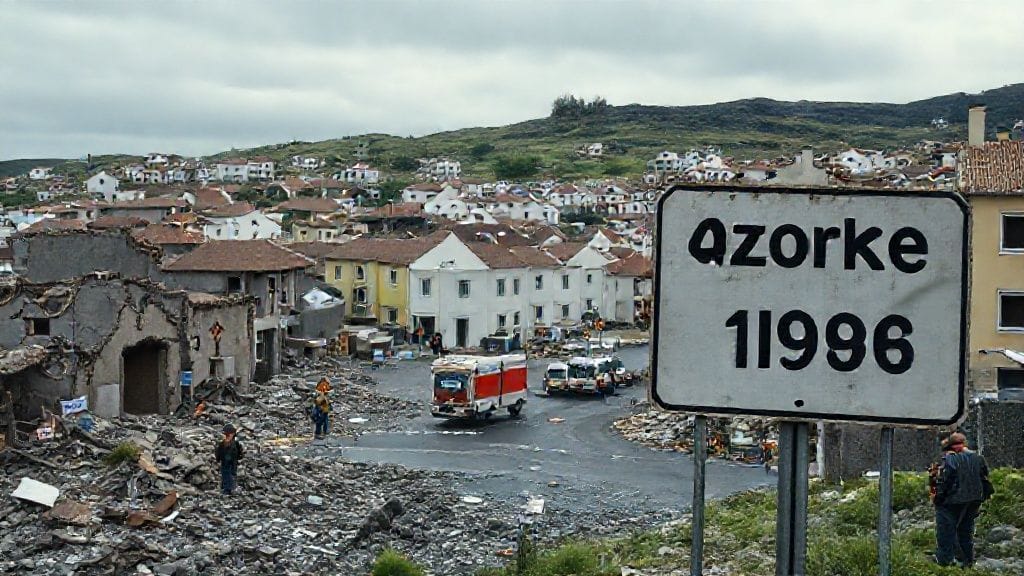
Faial's infrastructure suffered extensively: around 2,500 buildings were damaged or destroyed, including key public facilities such as the hospital, schools, and the port infrastructure. The historic center of Horta bore the scars of this destruction, with some buildings experiencing structural failures and others reduced to rubble.
Electricity and water supplies were intermittently disrupted, complicating rescue and recovery efforts. Damage estimation reached hundreds of millions of escudos (the Portuguese currency before the euro), making the 1998 event one of the costliest natural disasters in the Azores’ recent history.
The Volcanic Connection: Geology Beyond the Quake
The earthquake was not an isolated event but part of the complex tectonic dance that defines the Azores. Interestingly, seismic activity in the region often foreshadows volcanic eruptions. Though 1998’s quake did not directly trigger a volcanic eruption, it heightened scientific alertness to the underlying magmatic dynamics.
Faial’s closest volcano, Capelinhos, had famously erupted decades earlier in 1957-58, reshaping the island dramatically. The 1998 earthquake reminded geologists and locals alike that beneath their feet, the island remained alive, volatile, and unpredictable.
Rescue Stories: Tales of Survival Amid the Rubble
Among the rubble, heroic narratives emerged. One elderly couple trapped beneath collapsed walls were rescued after hours of frantic searching by neighbors armed with only flashlights and bare hands. Another story recounts how local fishermen, anchored offshore, risked returning through choppy waters to bring medical supplies back to Horta.
These tales of human endurance and sacrifice brought hope amidst hardship and underlined the importance of community bonds in natural disasters.
Media Coverage: Voices from the Island and Beyond
The quake drew intense media attention across Portugal and Europe. Reporters hurried to Faial, capturing images of shattered streets and emotional interviews with survivors. Newspapers and television broadcasts conveyed the scale of devastation but also framed the islanders as resilient and dignified.
This media spotlight spurred international sympathy and aid but also raised questions about the adequacy of disaster preparedness in even a developed nation like Portugal.
Scientific Insights: What the 1998 Quake Taught Us
Seismologists studied the event extensively to better understand the stresses at the Azores triple junction. The 1998 earthquake revealed previously unknown fault lines and contributed valuable data on rupture mechanics in oceanic island arcs.
It catalyzed improvements in seismic monitoring equipment in the Azores, ultimately enhancing early-warning capabilities. This event was a stark reminder of how even moderate earthquakes could cause outsized damage when coupled with vulnerable infrastructure.
Psychological Scars: Trauma and Resilience in Faial
Physical rebuilding was only one part of recovery; the emotional and psychological aftermath proved deeply challenging. Many survivors reported symptoms akin to what modern psychology recognizes as post-traumatic stress disorder (PTSD).
Community counseling initiatives and government mental health programs slowly emerged, focusing on restoration not just of buildings but of mind and spirit. The shared trauma paradoxically also strengthened communal identity, forging a renewed sense of collective perseverance.
Economic Ripples: Rebuilding an Island Economy
The earthquake disrupted Azores’ economy at a critical time. Tourism, a vital source of income, declined sharply in the months following the disaster as visitors stayed away. Fishing fleets were damaged, and agricultural lands encroached by debris saw diminished yields.
Recovery involved significant government investment and international support to rebuild infrastructure and incentivize tourism’s return. Faial embarked on a journey to transform its economy to withstand future shocks while preserving its cultural heritage.
Long-Term Urban and Architectural Reforms
In the quake’s wake, Faial reevaluated its architectural codes and urban planning. Building regulations were tightened, emphasizing earthquake-resistant design and materials. Public spaces were redesigned to serve as emergency gathering points, and communication infrastructure was modernized.
These reforms reflected a broader awareness that Faial could no longer afford to be vulnerable to seismic disasters.
Commemoration and Memory: Honoring the 1998 Disaster
Memorials and annual ceremonies remember those who perished and celebrate the resilience of survivors. These acts of remembrance serve as vital societal markers—both honoring loss and reaffirming a community’s capacity for renewal.
Schools incorporate lessons about the 1998 earthquake into curricula, ensuring younger generations appreciate their history and risks.
Azores’ Place in Global Seismic Studies
The 1998 Faial earthquake secured the Azores’ role as an important natural laboratory for understanding seismic phenomena in complex tectonic environments. Researchers from around the world study the islands to unravel the interplay between plate tectonics, volcanism, and earthquake hazards.
In the global discourse on disaster management, the Azores story underscores the importance of regional specificity in preparedness and response.
Lessons Learnt: Disaster Preparedness and Community Awareness
The quake illuminated gaps in emergency preparedness, from insufficient early-warning mechanisms to logistical bottlenecks in evacuation and aid distribution. Responding authorities revamped protocols, promoted community training, and invested in public education about seismic risks.
Today, the Azores boast one of Europe’s most comprehensive earthquake monitoring systems, paired with robust civil protection frameworks.
The Legacy of 1998: How Faial Transformed
More than two decades later, Faial stands transformed. Its landscapes bear scars but also signs of resilience: restored buildings, modern infrastructure, and a vibrant civil society keenly aware of natural risks.
The 1998 earthquake galvanized collaboration between scientists, policymakers, and citizens—a partnership aimed at building a safer future amid an uncertain geologic destiny.
Contemporary Reflections: Seismic Risks Today
Recent tremors remind the Azoreans that the earth’s restlessness continues. Advances in technology and knowledge have improved their ability to predict and mitigate disasters, yet the fundamental challenge remains.
For Faial and its sister islands, the 1998 earthquake is not just history—it is a cautionary tale and a source of enduring strength in navigating the volatile edge of the Atlantic.
Conclusion
The July 9, 1998 earthquake on Faial Island was more than a sudden jolt or a natural event; it was a defining moment that exposed vulnerabilities and awakened a community to the primordial forces shaping their existence. It tested human endurance, community bonds, and governmental capacity in the face of nature’s unpredictable power.
Yet, from destruction rose renewal. Faial’s story is one of resilience—a testament to how small communities, isolated yet interconnected, can confront calamity and rebuild with courage and wisdom. The earthquake remains a vivid reminder that the earth beneath us is alive and that our futures depend not merely on resisting nature’s upheavals but on learning and adapting alongside it.
In the quiet moments that now grace Horta’s streets, one hears echoes of that summer night’s tremor—not just in the stones or cracked walls but in the hearts of those who endured, survived, and emerged stronger.
FAQs
1. What caused the 1998 Faial earthquake?
The earthquake was caused by tectonic movements at the triple junction of the North American, Eurasian, and African plates under the Azores. Stress accumulation along local fault lines led to the 6.2 magnitude rupture offshore of Faial.
2. How many people died or were injured in the earthquake?
The earthquake resulted in 10 fatalities and over 100 injuries on Faial Island.
3. Was there a tsunami after the earthquake?
No significant tsunami followed the 1998 Faial earthquake, though the quake’s offshore epicenter briefly raised concerns.
4. How did the local government respond to the disaster?
The local and national governments mobilized emergency services quickly, calling in military assistance and international aid to provide rescue, medical attention, and rebuilding efforts.
5. What lessons were learned about disaster preparedness?
The event highlighted the need for better early-warning systems, stricter building codes, improved logistics for remote island emergencies, and enhanced community education about seismic risks.
6. How has Faial changed since the earthquake?
Faial undertook extensive reconstruction, updated urban planning policies, and invested in earthquake-resistant infrastructure, fostering a culture of resilience.
7. Are earthquakes common in the Azores?
Yes, due to the islands’ location at tectonic plate boundaries, seismic activity is frequent, though most are small. Larger, damaging earthquakes are rarer but possible.
8. How is the 1998 earthquake remembered today?
Through annual memorials, educational programs, and public conversations, the earthquake remains a central event in Faial’s communal identity and disaster preparedness strategy.