Table of Contents
- The Tremor That Tore the Night: The Algarve–Cape St. Vincent Earthquake of 1969
- Setting the Stage: Portugal and the Calm Before the Shaking
- Tectonic Tales: Why the Azores-Gibraltar Fault Lies Beneath
- The Night of February 28th: A Silent Build-up and Sudden Fury
- Recording the Roar: Measuring the Earth’s Rage
- Communities Shaken: Immediate Human Impact Along the Algarve Coast
- Nature’s Wrath Beyond the Quake: Tsunamis and Aftershocks
- Government Response: From Mourning to Mobilization
- Rescue and Relief: Stories of Heroism Amid Ruins
- Damage and Destruction: The Cost in Buildings and Lives
- Scientific Revelations: What This Quake Taught Seismologists
- Portugal’s Geological Awareness: A Paradigm Shift
- Cultural Memory: How the Earthquake Entered Local History
- International Reactions and Aid: Solidarity Across Borders
- Long-Term Impacts: Urban Planning and Earthquake Preparedness
- Comparing the Algarve Earthquake to Past Seismic Events
- Personal Accounts: Voices from the Epicenter
- The Earthquake’s Role in Shaping Portuguese Modernization
- Geological Mysteries Remaining: Unanswered Questions
- The Algarve Today: Resilience in the Shadow of the 1969 Quake
- Conclusion: The Lasting Echo Under the Sunlit Coast
- FAQs: Understanding the Algarve–Cape St. Vincent Earthquake
- External Resource
- Internal Link
The Tremor That Tore the Night: The Algarve–Cape St. Vincent Earthquake of 1969
It was a cold, clear night on February 28, 1969, when the earth whispered warnings—and then roared its fury along Portugal’s southernmost shores. The Algarve region, famed for its sunlit cliffs and tranquil seas, was about to undergo one of its most harrowing natural tests. The ground beneath the coastal towns groaned, the buildings shuddered, and in that fleeting, terrifying moment, countless lives were shaken to their core.
The Algarve–Cape St. Vincent earthquake was not merely a geological event; it was a human drama unfolding against the backdrop of seismic unpredictability. As homes collapsed and families fled into the night, the tremor etched itself into the collective memory of Portugal, marking a defining moment in the nation’s relationship with the restless earth beneath.
But this was no isolated phenomenon born out of nowhere. The earthquake carried the weight of ancient tectonic forces and the accumulated anxieties of a region perched on an active fault line. To understand the full magnitude of that fateful night, we must delve beneath the surface—into the earth’s crust, the political landscape of Portugal in 1969, and the stories of those who endured nature’s unforgiving hand.
Setting the Stage: Portugal and the Calm Before the Shaking
In 1969, Portugal was under the Estado Novo regime, a conservative dictatorship that had held firm since the 1930s. The country’s southern coast, particularly the Algarve region, was sparsely populated compared to urban centers like Lisbon and Porto. Agriculture, fishing, and emerging tourism defined everyday life.
The Algarve was known for its Mediterranean charm: small fishing villages, whitewashed houses, and a way of life attuned to the rhythms of ocean tides and agricultural seasons. It was a place where geological restlessness was rarely a consideration—seismic activity was seen as an anomaly, a distant rumble rather than an immediate peril.
Yet beneath the tranquil surface of this idyllic landscape lurked one of Europe’s most complicated tectonic junctions, quietly accumulating stress that would soon demand release.
Tectonic Tales: Why the Azores-Gibraltar Fault Lies Beneath
The southern Iberian Peninsula sits near the complex boundary where the African and Eurasian plates converge. The Azores-Gibraltar Fault Zone, running roughly northeast-southwest, is a major intracontinental deformation zone stretching from the Azores archipelago in the Atlantic all the way to the Mediterranean Sea near Gibraltar.
For centuries, the significance of this fault zone — its seismic potential and geological complexity — was only partially understood. Movements along this boundary have triggered some destructive earthquakes and tsunamis, shaping the physical and human geography of southern Portugal.
The interaction of plates here is slow but relentless, accumulating strain in the crust and preparing the stage for sudden releases of energy that manifest as powerful earthquakes. The Algarve–Cape St. Vincent event of 1969 was one such dramatic release.
The Night of February 28th: A Silent Build-up and Sudden Fury
February 28, 1969, began like any other cold winter day in the Algarve, with fishermen mending nets and families gathering around meager dinners. But as night deepened, the earth below was moving: imperceptible at first — a slow slip, a subtle shift. Residents later reported eerie sensations—slight trembling and low, distant rumbling like thunder rolling under the waves.
At precisely 11:40 pm, the earth unleashed its power. A powerful earthquake ripped through the region, lasting around 10 to 20 seconds but compressing decades of geological tension into a brief, unforgettable impact.
Buildings vibrated, windows shattered. The coastal cliffs, usually so stable and timeless, cracked open. People screamed, ran into the streets, seeking safety beneath the dark sky lit only by flickering street lamps and the occasional lightning flashes from the approaching storm.
The epicenter was located off the southwest coast of Portugal, near Cape St. Vincent, an area known historically for storms and shipwrecks, but now terrifyingly familiar as a site of natural disaster.
Recording the Roar: Measuring the Earth’s Rage
After the tremor, seismological stations around Europe and Africa scrambled to register the magnitude. Initial estimates placed the earthquake between 7.0 and 7.2 on the moment magnitude scale—a powerful quake capable of widespread destruction, especially in regions unprepared for such force.
The depth of the quake was relatively shallow, estimated at 10 to 20 kilometers below the seabed, intensifying the shaking felt on land. Moreover, the quake generated a tsunami observed along the southwestern Portuguese coast, adding sea-driven devastation to the already chaotic picture.
Seismologists at the time marveled at the energy release but grappled with the challenge of sparse monitoring equipment, especially in a country then relatively isolated internationally.
Communities Shaken: Immediate Human Impact Along the Algarve Coast
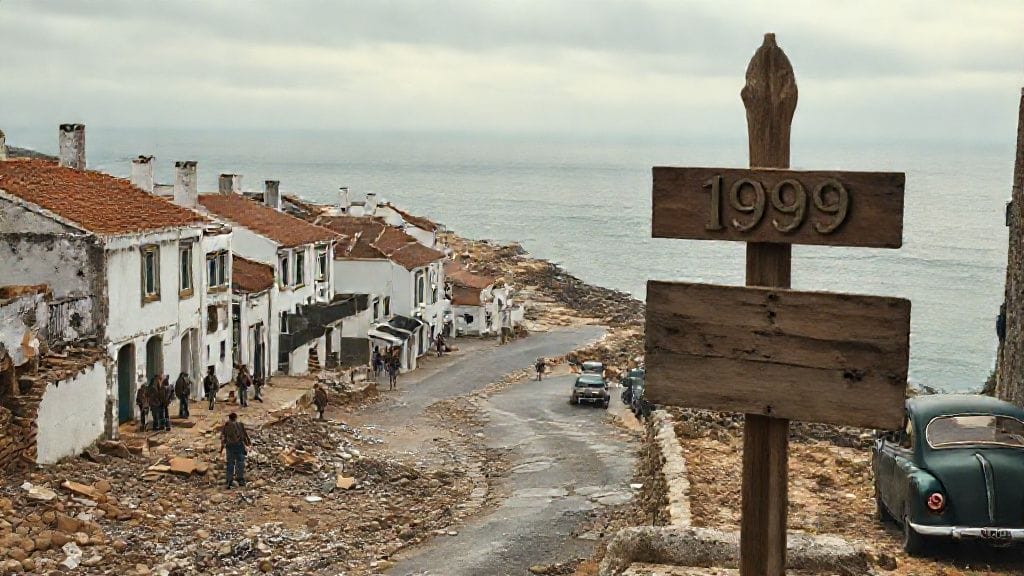
As dawn broke over the battered coastline, the true scope of human suffering became visible. Towns from Lagos to Sagres reported damage to homes, churches, and historic monuments. The quake struck hardest near Cape St. Vincent and Vila do Bispo, isolated communities where sturdy stone houses crumbled, trapping families beneath rubble.
Casualties were relatively limited compared to more densely populated urban earthquakes, but dozens were killed and hundreds injured. Many were left homeless. Fear lingered as aftershocks continued to rattle nerves and buildings, preventing residents from returning indoors.
The trauma was palpable: children cried, elders sobbed, and communities scrambled to help one another, united in grief but determined to recover.
Nature’s Wrath Beyond the Quake: Tsunamis and Aftershocks
The earthquake’s underwater epicenter triggered a small tsunami along the Algarve coast, waves rising several meters in places, sweeping inland and damaging fishing boats and waterfront properties. The rare combination of seismic and marine disruption was a double blow.
Aftershocks plagued the region for days, some potent enough to cause further structural damage. Locals reported nights spent sleeping outside in fear, the earth shaking beneath their feet when they tried to rest.
Satellite imagery wouldn’t exist for another decade, meaning much of these secondary effects remained unquantified; scientists relied on eyewitness accounts and damage reports to piece together the unfolding panorama.
Government Response: From Mourning to Mobilization
The Estado Novo government, cautious and tightly controlling information, initially downplayed the scale of the disaster. Still, the regional administration mobilized emergency services, military units, and civil defense groups to aid survivors.
Reconstruction efforts prioritized restoring transportation links and essential services, like water and electricity, which were disrupted by the quake. Field hospitals and temporary shelters sprang up amid the destruction.
Yet, the regime’s authoritarian nature limited international aid and open dialogue about the quake’s implications, preferring to present an image of control and resilience rather than vulnerability.
Rescue and Relief: Stories of Heroism Amid Ruins
Amid the rubble, countless acts of courage shone brightly. Fishermen braved the choppy, tsunami-threatened seas to save trapped neighbors. Medical workers labored tirelessly under difficult conditions, often without adequate supplies.
A memorable account tells of a young schoolteacher in Lagos who organized children and elderly to safety during aftershocks, her calm presence preventing further panic. These personal stories humanize the disaster’s cold statistics and reveal the enduring spirit of those who face natural calamities.
Damage and Destruction: The Cost in Buildings and Lives
Though no massive urban centers were flattened, the damage was severe for the villages and towns along the coast. Stone buildings, often historical and centuries old, collapsed or developed dangerous cracks.
Infrastructure like ports, roads, and communication lines suffered setbacks, complicating relief efforts. The cost of repair and reconstruction weighed heavily on the regional economy, itself still recovering from the strains of the previous decades’ political and social tensions.
Official death tolls varied between 10 to 20, but many believe the number was higher, obscured by underreporting and the rural nature of the affected areas.
Scientific Revelations: What This Quake Taught Seismologists
The 1969 Algarve earthquake became an important case study for seismologists studying the tectonics of the Western Mediterranean. It confirmed the ongoing activity of the Azores-Gibraltar Fault and highlighted the potential for powerful earthquakes in an often overlooked region.
Researchers gained insight into the fault behavior, the complexity of plate boundary interactions, and the mechanisms that generate tsunamis in this part of the Atlantic. These scientific revelations played a crucial role in shaping later seismic monitoring and risk assessment strategies.
Portugal’s Geological Awareness: A Paradigm Shift
Before 1969, Portugal’s approach to seismic risk was largely reactive, based on previous historic earthquakes like the devastating 1755 Lisbon earthquake. The Algarve event rekindled public awareness and scientific interest.
Educational campaigns, investment in seismic networks, and improved building codes gradually followed, spurred on by the memory of those few terrifying minutes in February. This earthquake initiated a slow but essential transformation in Portugal’s preparedness for natural disasters.
Cultural Memory: How the Earthquake Entered Local History
Among the coastal populations, the earthquake became woven into local folklore, a story passed down through generations. Songs, poems, and oral histories capture the shock and resilience of communities.
In museums and local records, photographs and relics from the event remind visitors and residents alike of nature’s unpredictable power, ensuring the earthquake remains more than just a scientific footnote.
International Reactions and Aid: Solidarity Across Borders
Although the Portuguese government limited international exposure, some foreign nations extended sympathetic support. The International Red Cross and neighboring Spain offered aid and technical expertise.
This event reminded the global scientific and humanitarian community that even relatively small populations in distant corners of Europe were vulnerable to seismic hazards, encouraging greater transnational collaboration in disaster response.
Long-Term Impacts: Urban Planning and Earthquake Preparedness
The earthquake emphasized the importance of earthquake-resistant construction, spurring changes in architectural designs and urban planning in the Algarve.
Modern buildings, especially those in tourist hubs, began integrating earthquake resilient features, balancing aesthetics with safety. Emergency protocols were developed, and research institutions established more rigorous monitoring systems.
These progressions chart a path from vulnerability to resilience—lessons hard learned at the cost of human suffering.
Comparing the Algarve Earthquake to Past Seismic Events
While overshadowed internationally by the infamous 1755 Lisbon earthquake, the 1969 event stands as one of Portugal’s most significant 20th-century seismic activities.
Unlike Lisbon’s catastrophic impact amplified by proximity to dense populations and older infrastructure, the Algarve quake served as a quieter but no less important reminder that earthquakes struck unpredictably along the country’s southern and southwestern coasts.
Personal Accounts: Voices from the Epicenter
Testimonies from survivors resonate decades later. Maria, then a young mother in Vila do Bispo, recounted “The house began to tremble like a child shaking a toy. We ran into the street, the sky grey with dust and fear. I held my daughter tight and prayed.”
Such narratives transcend data; they preserve the human heartbeat inside geological events, bridging past and present, science and soul.
The Earthquake’s Role in Shaping Portuguese Modernization
By exposing infrastructural weaknesses, the earthquake accelerated modernization efforts in a still-authoritarian Portugal. Investments trickled into emergency services and urban planning that would eventually benefit the post-1974 democratic era.
Thus, nature’s tremor not only shifted land but also nudged the nation towards greater self-awareness and preparedness in the face of uncontrollable forces.
Geological Mysteries Remaining: Unanswered Questions
Today, geologists continue to study the Azores-Gibraltar fault with modern equipment, probing the reasons for the irregular behaviors observed in 1969. What exactly triggered the rupture? Could a larger quake be lurking beneath the waves?
The earthquake is a chapter in an ongoing story of earth’s restless crust—a reminder that the planet beneath us is dynamic, mysterious, and eternally alive.
The Algarve Today: Resilience in the Shadow of the 1969 Quake
Decades later, the Algarve has blossomed into a top European tourist destination known for its scenic beauty and vibrant culture. Yet, the memory of 1969 lingers, shaping local identity and disaster preparedness.
Annual drills, educational programs, and preserved archives ensure that residents remain vigilant. The earthquake’s legacy is one of resilience—not only rebuilding from ruins but growing stronger because of them.
Conclusion: The Lasting Echo Under the Sunlit Coast
The Algarve–Cape St. Vincent earthquake of 1969 was more than a jolting disruption of stone and soil. It was a profound human moment—of fear, loss, courage, and rebirth.
While the earth beneath the southern Portuguese coast shook violently that February night, what emerged from the chaos was a renewed bond between people, place, and planet. For though the tremors fade, the stories endure—carrying lessons of vigilance and hope for generations still to come.
Through ruptures and restoration, the Algarve stands firm, a testament to the inescapable interplay between the forces of nature and the resilience of the human spirit.
FAQs: Understanding the Algarve–Cape St. Vincent Earthquake
Q1: What caused the Algarve–Cape St. Vincent earthquake of 1969?
A1: The quake was caused by a sudden release of tension along the Azores-Gibraltar Fault, where the African and Eurasian tectonic plates converge, leading to a strong seismic event offshore the southwestern coast of Portugal.
Q2: How strong was the earthquake?
A2: It is estimated to have measured between 7.0 and 7.2 on the moment magnitude scale, making it one of the most powerful quakes in Portugal during the 20th century.
Q3: Were there any tsunamis associated with this earthquake?
A3: Yes, the undersea quake generated a tsunami that caused moderate flooding and damage along the Algarve coast.
Q4: How did Portugal respond to the disaster?
A4: The Estado Novo government mobilized emergency services and military aid to assist survivors, though international aid was limited due to political constraints.
Q5: What impact did the earthquake have on scientific understanding?
A5: It reinforced the active seismicity of the Azores-Gibraltar Fault zone and spurred advancements in seismic monitoring and risk preparedness in Portugal.
Q6: How is the earthquake remembered today?
A6: Through local folklore, museums, educational initiatives, and disaster preparedness programs, the earthquake remains a vivid part of Algarve’s historical and cultural consciousness.
Q7: Did the earthquake influence Portuguese building codes?
A7: Yes, it prompted revisions aimed at improving earthquake resilience, especially in reconstruction and future urban planning.
Q8: Could a similar earthquake happen again?
A8: The region remains tectonically active, so a similar or even larger earthquake is possible, underscoring ongoing importance of preparedness and monitoring.