Table of Contents
- The Night the Island Trembled: An Immersive Prelude
- Madeira’s Geological Pulse: Understanding the Island’s Volcanic Roots
- February 24, 2024: The Moment the Earth Roared
- From Silence to Shaking: Early Signs and the Earthquake’s Birth
- The Epicenter’s Fury: Mapping the Seismic Wave Across Madeira
- Shattered Streets and Fractured Lives: Human Stories from the Quake
- Emergency Response: First Lines of Defense and Rescue Efforts
- The Role of Science: How Experts Deciphered the Seismic Activity
- Societal Shockwaves: Psychological and Cultural Impacts
- Economic Ruin or Renewal? The Immediate Financial Toll
- Infrastructure Under Siege: Bridges, Roads, and Historic Buildings
- International Aid and Solidarity: The World’s Response
- Media Coverage: Narratives, Images, and Public Awareness
- Political Aftershocks: Government Actions and Policy Shifts
- Community Resilience: Stories of Hope from the Rubble
- Lessons Learned: Advances in Preparedness and Risk Reduction
- Rebuilding Madeira: Architectural Innovations and Sustainable Recovery
- Cultural Memory: How the Earthquake Is Remembered Today
- The Island’s Future: Bridging Past Trauma and Tomorrow’s Promise
- Conclusion: A Story of Survival, Solidarity, and Strength
- FAQs: Answers to Your Most Pressing Questions
- External Resources: For Further Exploration
- Internal Link: Stay Connected with History Sphere
The Night the Island Trembled: An Immersive Prelude
It was a quiet evening on February 24, 2024, cloaked in the soft hum of the Atlantic’s coastal breeze and the rustling palms of Madeira’s lush hillsides. Families were settling into their homes, couples walked along promenades, and local cafés buzzed with convivial chatter. Suddenly, beneath the gentle surface, the earth began to shift.
At precisely 8:37 p.m., a deep rumble—foreign and frightening—shivered through the island’s bedrock. A violent pulse of energy, unleashed without warning, tore through the calm night. Walls cracked, the ground heaved, and the very soul of Madeira convulsed beneath a sky now punctuated by tremors. Panic flared like wildfire, sprawling through homes, streets, and hearts. The Madeira Region Earthquake had arrived, and nothing would ever be quite the same again.
Madeira’s Geological Pulse: Understanding the Island’s Volcanic Roots
Before diving into the seismic drama of that fateful night, we must explore the geological tapestry of Madeira. Nestled in the North Atlantic, this Portuguese archipelago emerged from fiery volcanic origins. Millions of years ago, tectonic activity shaped its rugged cliffs and verdant valleys.
Madeira lies near the complex boundary of the African and Eurasian plates, a tense line where landmasses grind and slip in subtle, often silent ways. Although volcanic and seismic activity on Madeira has always been relatively rare compared to other Atlantic hotspots, the history beneath its soil whispered possibilities of upheaval.
Scientists had long monitored the region’s seismic "heartbeat," noting mild tremors occasionally. Yet, nothing forecasted the intensity of February 24.
February 24, 2024: The Moment the Earth Roared
On that cold winter evening, the earthquake’s magnitude reached 6.5 on the Richter scale—a staggering force for Madeira’s seismic record. The quake’s epicenter was located just offshore near the southern coast, intensifying the shaking.
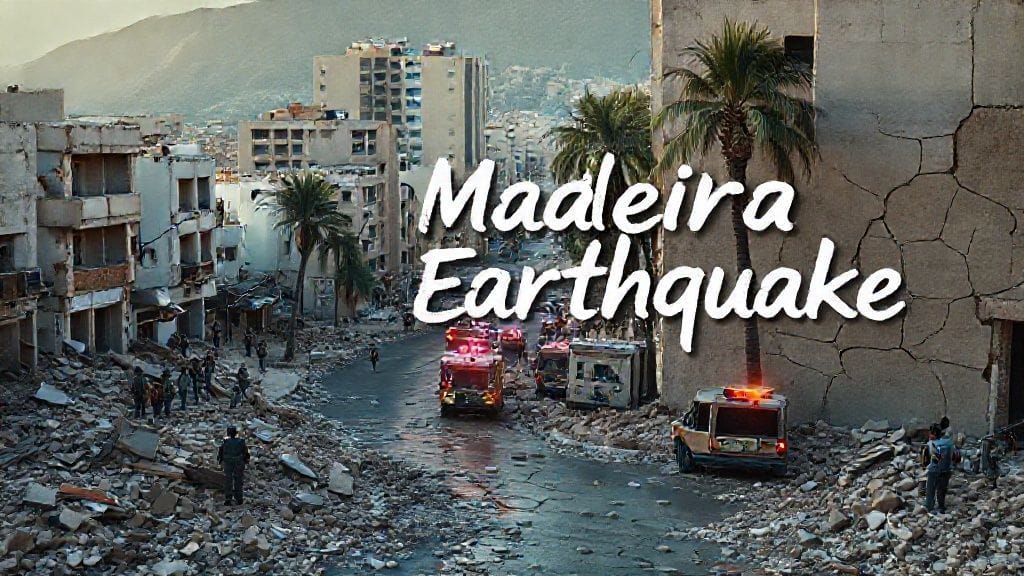
In seconds, buildings swayed, roads buckled, and the island’s infrastructure strained violently. For some, the quake lasted barely a minute, but that fleeting instant left an indelible mark. The roar of collapsing masonry, frantic alarms, and human cries echoed into the night, blurring fact with chaos.
From Silence to Shaking: Early Signs and the Earthquake’s Birth
Seismographs recorded a series of low foreshocks hours before the main tremor, subtle rumbles too faint for many residents to sense but enough to alert scientists. These gentle warnings, however, failed to trigger sufficient public preparedness.
The earthquake was the result of a sudden slip along a previously unstudied fault line connected to the island’s volcanic root system. This rupture unleashed elastic strain accumulated over decades, snapping with frightening speed.
The Epicenter’s Fury: Mapping the Seismic Wave Across Madeira
As the quake’s energy radiated from the epicenter, every corner of Madeira felt its wrath, albeit unevenly. The south coast villages bore the brunt, while the central highlands trembled with milder intensity.
Notably, damage was concentrated in historically dense urban zones such as Funchal, the capital. Here, centuries-old stone buildings where cobbled alleys crisscross the city faced overwhelming threat.
Shattered Streets and Fractured Lives: Human Stories from the Quake
Amid devastation, personal tales of fear, loss, and courage surfaced. Maria Pereira, a retired schoolteacher of 72, clung to her granddaughter as their apartment shook violently. “I never knew the earth could be so angry,” she would later say.
In Ribeira Brava, a young couple narrowly escaped the collapse of their family home. Firefighters rescued dozens trapped in debris, amid tearful reunions and silent grief for those lost.
Emergency Response: First Lines of Defense and Rescue Efforts
Portugal’s crisis management forces activated rapidly despite the island’s isolated geography. Emergency services mobilized evacuation centers, medical teams, and search-and-rescue units.
Yet, the rugged terrain and damaged roads delayed aid delivery, challenging responders to navigate fractured infrastructure. International aid offers poured in, underscoring global solidarity in crisis.
The Role of Science: How Experts Deciphered the Seismic Activity
Seismologists at the University of Lisbon and local observatories studied the event meticulously. Their analyses revealed unusual fault behavior, prompting a re-evaluation of Madeira’s seismic risks.
Remote sensing and satellite imagery complemented ground reports, enabling precise mapping of damaged zones. The earthquake spurred a renaissance in Portuguese geosciences, embracing new technologies and interdisciplinary approaches.
Societal Shockwaves: Psychological and Cultural Impacts
Beyond physical destruction, the earthquake instilled deep psychological tremors. Survivors reported persistent anxiety, insomnia, and a shattered sense of security. Community rituals and religious gatherings adapted, incorporating remembrance and collective healing.
Traditional music and poetry emerged as vehicles to process trauma, underscoring culture’s resilience amid catastrophe.
Economic Ruin or Renewal? The Immediate Financial Toll
Preliminary estimates indicated damages exceeding €300 million. Tourism, Madeira’s vital economic sector, suffered sharply in the wake. Hotels and resorts faced prolonged closures.
However, reconstruction efforts ignited employment and innovation opportunities. The disaster became a paradox—an economic wound also seeded with potential regeneration.
Infrastructure Under Siege: Bridges, Roads, and Historic Buildings
Vital arteries crumbled, isolating neighborhoods and hampering logistics. The suspension bridge over Ribeira da Janela—a key transit route—collapsed partially, sparking fears over broader infrastructural vulnerabilities.
Historic landmarks, symbols of Madeira’s identity, were rocked dangerously. Experts began urgent restoration campaigns to preserve architectural heritage.
International Aid and Solidarity: The World’s Response
Global humanitarian organizations dispatched teams and supplies. Neighboring European nations coordinated with Lisbon to ensure swift, effective assistance.
Fundraising campaigns worldwide galvanized donors, amplifying Madeira’s story far beyond its shores.
Media Coverage: Narratives, Images, and Public Awareness
Photographs of cracked earth and anguished faces circulated globally, telling raw stories that transcended borders. Journalists documented the unfolding crisis with empathy and rigor.
Social media amplified voices from the field, creating a digital fabric of shared empathy and real-time updates.
Political Aftershocks: Government Actions and Policy Shifts
Amid criticism over disaster preparedness, the Portuguese government pledged comprehensive reforms. New building codes, enhanced early-warning systems, and emergency education campaigns followed swiftly.
Moreover, political debates surfaced regarding investment priorities and climate resilience, illustrating how natural disasters influence governance.
Community Resilience: Stories of Hope from the Rubble
Despite trauma, numerous stories of solidarity arose. Neighbors formed grassroots support networks. Volunteers cleared debris, distributed food, and rebuilt communal spirit through acts of kindness.
A local singer composed a moving ballad that became a beacon of hope for islanders, epitomizing human strength amid adversity.
Lessons Learned: Advances in Preparedness and Risk Reduction
The Madeira earthquake highlighted gaps in seismic readiness. Authorities adopted proactive monitoring programs and public drills to mitigate future threats.
International seismic networks incorporated Madeira into their alert systems, redefining regional risk perceptions.
Rebuilding Madeira: Architectural Innovations and Sustainable Recovery
Post-quake reconstruction favored earthquake-resistant designs and eco-friendly materials. Architects fused traditional aesthetics with modern engineering, ensuring heritage preservation amid innovation.
Efforts also prioritized community spaces, fostering social cohesion and psychological recovery.
Cultural Memory: How the Earthquake Is Remembered Today
Annually, Madeira commemorates the event through ceremonies, exhibitions, and educational programs. Monuments dedicated to victims stand as silent testimonies.
Artists channel the experience into works that remind generations of nature’s power and humanity’s resilience.
The Island’s Future: Bridging Past Trauma and Tomorrow’s Promise
Madeira’s story is not one of devastation alone but of rebirth. The earthquake compelled reflection on human vulnerability and environmental stewardship.
As the island rebuilds, it charts a path toward sustainable coexistence with its dynamic geological setting.
Conclusion
The Madeira Region Earthquake of February 24, 2024, unfolded as a profound moment in the island’s history—a seismic event that rattled earth and spirit alike. Yet, embedded in the rubble lies a testament to survival, solidarity, and indefatigable hope. From the cracked streets to the hearts of its people, Madeira emerged not merely as a place marked by disaster, but as a beacon of human resilience.
Natural catastrophes remind us of the fragile bond between mankind and nature, challenging societies to listen, adapt, and unite. Madeira’s journey, rich with sorrow and strength, continues—a narrative that captures the timeless dance of destruction and renewal.
FAQs
Q1: What caused the Madeira Region Earthquake of 2024?
The earthquake originated from a sudden slip along a previously unstudied fault line near Madeira, linked to the island’s volcanic and tectonic context along the African-Eurasian plate boundary.
Q2: How strong was the earthquake?
It reached a magnitude of 6.5, the strongest recorded in Madeira’s modern history, causing significant structural damage and human impact.
Q3: Were there any early warnings before the earthquake?
Minor foreshocks were detected hours before, but these did not translate into widespread alerts for the population, limiting preemptive evacuations.
Q4: How did the local and national governments respond?
They mobilized emergency services promptly, deployed rescue operations, and later implemented reforms in disaster preparedness and infrastructure resilience.
Q5: What has been the long-term impact on Madeira’s economy?
While the immediate economic damage was severe, reconstruction efforts spurred job creation and modernization, particularly in tourism and public works sectors.
Q6: How has the earthquake influenced scientific understanding?
It prompted renewed seismic research in the region, revealing previously unknown geological risks and encouraging advances in monitoring technologies.
Q7: How is the earthquake commemorated today?
Annual events, monuments, artistic works, and educational programs honor both victims and survivors, embedding the event in Madeira’s cultural memory.
Q8: What lessons can other regions learn from Madeira’s experience?
The earthquake underscores the importance of seismic preparedness even in low-risk areas, investment in resilient infrastructure, and community solidarity in disaster recovery.