Table of Contents
- The Silent Morning Shattered: December 7, 1988
- Armenia on the Eve of Disaster: A Portrait of a Republic
- Tectonic Shadows: The Geology Behind the Spitak Earthquake
- Early Tremors and Warnings Muted by Fate
- The Unleashing of Catastrophe: The Day the Ground Collapsed
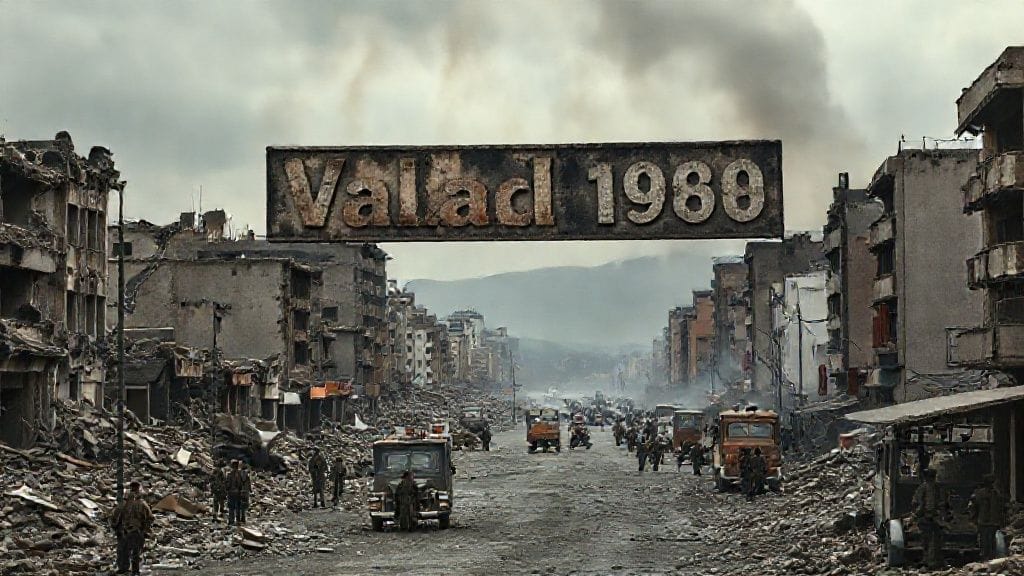
- Cities in Ruins: Spitak, Leninakan, and Beyond
- Voices from the Rubble: Survivor Stories and Human Resilience
- Soviet Response: Between Bureaucracy and Urgency
- International Aid and Global Solidarity: A Rare Cold War Collaboration
- The Role of Emergency Services and Volunteers Amidst Chaos
- The Hidden Toll: Human Losses and Psychological Scars
- Rebuilding a Nation: Armenia’s Long Road to Recovery
- Political Ripples: How the Earthquake Affected Armenian Identity and Soviet Policies
- Engineering Lessons: Changes in Seismic Practices After Spitak
- Memorialization: Remembering the Disaster Through Monuments and Memory
- Spitak Earthquake in Popular Culture and Literature
- Scientific Investigations: Understanding the Earthquake’s Mechanics
- The Earthquake’s Impact on Soviet Disaster Management Reforms
- The Earthquake as a Catalyst for Armenian Nationalism
- Personal Legacies: Lives Forever Changed
- Conclusion: The Enduring Echo of December 7, 1988
- FAQs: Key Questions About the Spitak Earthquake
- External Resource
- Internal Link
1. The Silent Morning Shattered: December 7, 1988
It was a cold December morning in the Armenian SSR—a time when people were still waking to the distant chiming of church bells and the soft conversations in kitchens preparing breakfast. The quiet of dawn wrapped the small cities nestled in the foothills of the Lesser Caucasus Mountains, as if nothing could disturb the serene slumber of an entire people. Then, without warning, the earth groaned and cracked beneath them. From the shadows of the night emerged a ruthless force, an invisible hand ripping through homes, schools, and lives with unrelenting fury.
At 11:41 a.m. local time, the ground shook with a ferocity that Armenian citizens had never before known. The magnitude 6.8 earthquake struck near the town of Spitak, unleashing devastating destruction over a stretch nearly 100 kilometers long. Buildings collapsed in an instant, and with them crumbled entire communities. In the blink of an eye, a moment of calm was extinguished, replaced by chaos, grief, and a profound sense of loss.
The Spitak earthquake is not merely a story of tectonic activity or a grim natural disaster; it is a story of human vulnerability, resilience, tragedy, and ultimately, hope. To understand its full magnitude, one must trace the lives caught in its trembling wake, the political and social aftermath in a Soviet Armenia on the edge of seismic as well as historical transformation, and the global outpouring of aid that transcended Cold War divisions.
2. Armenia on the Eve of Disaster: A Portrait of a Republic
In the late 1980s, Armenia was a constituent republic of the Soviet Union, a land boasting ancient history, rich culture, and a people fiercely proud of their heritage. Underneath the Soviet veneer, however, simmered deep societal challenges: economic stagnation, fraying infrastructure, and growing national consciousness that pushed subtly against Moscow’s tightening grip.
Leninakan (today’s Gyumri), Spitak, and Vanadzor were among the largest urban centers, home to hundreds of thousands. These cities, pillars of industry and culture, were marked by Soviet-era construction—residential blocks and public buildings erected with the ambition of rapid modernization but often compromised in quality by corruption and cost-cutting.
The Armenian landscape was dotted with relics of a painful past, from memories of the 1915 Armenian Genocide to decades of Soviet repression. For Armenians, the late 1980s were a time of awakening. The earthquake struck at a crossroads when political ferment and calls for glasnost and perestroika under Gorbachev rippled through society. It would not just shake stones and concrete but the very worldview of its people.
3. Tectonic Shadows: The Geology Behind the Spitak Earthquake
Armenia sits on a fragment of the complex collision zone where the Arabian plate pushes northward against the Eurasian plate. This geological crucible gives birth to a restless mountain range and places the entire region under continual seismic threat. The Spitak earthquake was triggered by a rupture along thrust faults that underlie the region’s topography.
Though modest in magnitude compared to some rare mega-earthquakes worldwide, the quake’s shallow depth—only about 5 kilometers underground—meant that the energy release violently jolted the surface. This near-surface focal point, combined with inadequate building design unsuited to seismic resilience, spelled disaster.
Scientists had long recognized Armenia as earthquake-prone, but the awareness often struggled against Soviet institutional inertia and lack of adequate preparedness.
4. Early Tremors and Warnings Muted by Fate
It’s chilling to realize that in the days and weeks preceding December 7, local residents had reported peculiar tremors and subtle warnings of geological unrest. Minor shakes known as foreshocks fluttered through the region, raising unease among those who understood their import.
Yet, in the absence of an advanced earthquake early-warning system and with a government reluctant to disturb public calm or acknowledge potential catastrophe, little action was taken. Predictive sciences were underfunded, and the final violent rupture detonated with full force, catching many off-guard.
The deafening silence that followed these early tremors was the calm before the storm—one that would forever alter Armenia’s physical and emotional landscape.
5. The Unleashing of Catastrophe: The Day the Ground Collapsed
At precisely 11:41:44 a.m., the fault slipped violently. A massive shock wave propagated through city centers, crushing apartment blocks built with substandard materials and shattering the fragile sense of safety. The ground seemed to breathe in convulsions, tossing people and objects alike into the air.
In Spitak, nearly 90% of buildings were severely damaged or destroyed. Leninakan, a city of more than 400,000 inhabitants, bore disproportionate destruction; its grand Soviet high-rises and older historic buildings alike crumbled. Schools, hospitals, and theaters turned to rubble. A school, the eighth high school of Spitak, saw its classrooms collapse on the children inside—harrowing images that would haunt the nation.
The air crackled with dust, screams, and disbelief. For many, a simple act of everyday life—a child walking to school, a mother cooking dinner—was turned into a fight for survival amid ruins. “It was like the sky was falling,” remembered one survivor, her voice trembling decades later.
6. Cities in Ruins: Spitak, Leninakan, and Beyond
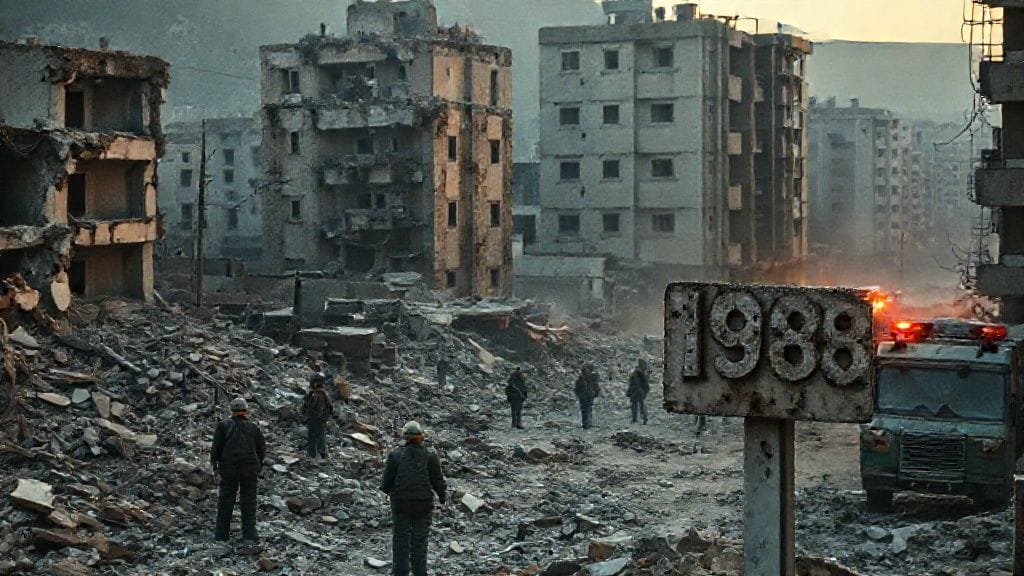
Visiting the ruins left in the quake’s wake, photographers and reporters captured a grim tableau: streets blocked by fallen debris, homes consumed under rubble, skeletal remains of buildings thrust against the winter sky. Entire neighborhoods vanished overnight.
Leninakan’s historic Central Park was littered with shattered concrete slabs; in Spitak, the heart of the town transformed into an enormous gravesite. Water and power supplies were severed, and winter’s bite complicated rescue operations.
Beyond the most damaged cities, other towns—Kirovakan (Vanadzor), Stepanavan, and smaller villages—also suffered heavy shaking and damage, amplifying the scale of disaster. The combined human toll surpassed 25,000 dead, tens of thousands injured, and over half a million displaced.
7. Voices from the Rubble: Survivor Stories and Human Resilience
Among the horror, human stories burst, shining through cracks like beacons. Mothers pulled their children from collapsing buildings just seconds before total collapse. Neighbors formed desperate chains to remove debris. Rescuers, volunteers, and even children labored through fear and cold to save lives.
One survivor recalled clutching a sibling’s hand through shattered flooring as the ceiling fell. Another described how a community cooked communal meals amid toppled stoves, sharing warmth and hope.
The shock and trauma were immense; many witnessed the loss of family, friends, and whole livelihoods. But amid the rubble rose a collective spirit—a determination not just to survive, but to rebuild, remember, and renew.
8. Soviet Response: Between Bureaucracy and Urgency
The Soviet government’s reaction was a complicated tapestry of quick mobilization and bureaucratic inertia. Moscow dispatched military units, emergency services, and medical personnel rapidly, seeking to contain the crisis. Yet, the scale of destruction strained resources and revealed systemic weaknesses.
Initial aid distribution was slow in some areas; outdated communication networks hindered coordination. Meanwhile, Soviet media initially downplayed the disaster’s scale, reflecting Cold War tendencies to conceal weakness.
Still, thousands of soldiers, engineers, and doctors worked alongside ordinary citizens. The military’s involvement was critical in debris removal and establishing temporary shelters. Gorbachev himself visited the devastated regions, declaring the disaster “a human tragedy of monumental proportions.”
9. International Aid and Global Solidarity: A Rare Cold War Collaboration
Perhaps one of the most remarkable aspects of the Spitak earthquake was how it summoned goodwill across the Iron Curtain. Nations from the West and East alike sent aid—rescue teams, medical supplies, tents, and equipment—to assist Soviet Armenia.
The United States, despite diplomatic tensions, deployed FEMA and Red Cross volunteers. France mobilized specialized disaster experts; Japan supplied high-tech rescue gear. The UN coordinated relief efforts, and the Soviet Union accepted unprecedented foreign intervention.
This humanitarian outpouring transcended geopolitical rivalries, highlighting shared humanity in the face of catastrophe. It was one of the few moments in Cold War history when cooperation outweighed confrontation, sowing seeds for later diplomatic openings.
10. The Role of Emergency Services and Volunteers Amidst Chaos
Amid professional responders, local volunteers emerged as heroes. People who had lost homes themselves took to the streets to dig out neighbors. Teachers rescued students; doctors improvised field hospitals.
The Armenian diaspora abroad galvanized support, organizing shipments and fundraising campaigns. In Soviet Armenia, spontaneous civil society groups formed, their efforts filling gaps left by official response.
Yet, challenges abounded: harsh winter conditions, the scarcity of heavy machinery, and logistical nightmares hampered rescue operations in the crucial first days.
11. The Hidden Toll: Human Losses and Psychological Scars
Beyond the 25,000 killed and double that injured, the earthquake inflicted deep psychological wounds. Entire families and communities were decimated. Survivors grappled with grief, survivor’s guilt, and lifelong trauma.
Mental health services were insufficient in the immediate aftermath. Post-traumatic stress disorder was widespread, compounded by the loss of cultural landmarks and a sense of security.
The disaster disproportionately affected children: thousands were orphaned or lost childhoods to the upheaval. This created a demographic and social challenge that Armenia felt for decades.
12. Rebuilding a Nation: Armenia’s Long Road to Recovery
Reconstruction was a marathon, not a sprint. Soviet authorities aimed to rebuild infrastructure, but limitations of resources, bureaucracy, and ongoing political turmoil slowed progress.
By the early 1990s, as the USSR roiled toward dissolution, Armenia faced renewed instability—economic crisis, war in Nagorno-Karabakh—but still endeavored to rebuild cities like Gyumri (former Leninakan) and Spitak.
International donors contributed to housing projects, schools, and hospitals, but many survivors endured prolonged displacement. The scars of the quake were etched into urban landscapes and collective memory.
13. Political Ripples: How the Earthquake Affected Armenian Identity and Soviet Policies
The earthquake occurred at a critical political juncture. It exposed weaknesses in Soviet governance and infrastructure, fueling debates about centralization and regional autonomy.
Local frustration with Moscow grew, strengthening nationalist movements that demanded cultural preservation and greater Armenian control. The tragedy became a rallying point for Armenian identity, intertwined with memory of past injustices.
On the Soviet side, the disaster prompted reforms in emergency management and urban planning, acknowledging that Soviet-era practices needed modernization.
14. Engineering Lessons: Changes in Seismic Practices After Spitak
Beyond politics, the earthquake forced seismic safety to the forefront. Investigations revealed that poor construction, noncompliance with seismic codes, and outdated materials magnified damage.
As a result, Armenia and Soviet engineers upgraded building codes, adopted new technologies, and initiated better zoning practices. Modern seismic monitoring systems developed as well.
Yet, full implementation lagged due to economic hardships, showing how disasters often force changes that take years to realize.
15. Memorialization: Remembering the Disaster Through Monuments and Memory
Armenia has ensured that the memory of the Spitak earthquake remains vivid. Monuments dot the landscape—sculptures of broken figures, walls engraved with victims’ names—serving as solemn reminders.
December 7 is observed as a day of mourning and reflection, honoring those lost and celebrating resilience. Museums and documentary projects preserve testimonies and archives.
The earthquake has become a symbol of national tragedy, but also endurance, threading through Armenian cultural consciousness.
16. Spitak Earthquake in Popular Culture and Literature
Artists and writers responded to the quake’s emotional gravity. Poetry, novels, and films emerged, grappling with trauma, loss, and survival.
One poignant collection of poems by Armenian author Silva Kaputikyan captures the fracture of a community’s spirit and its eventual repair. Documentaries blend stark visuals and personal narratives to educate younger generations.
Through art, the quake transcends statistics, becoming a human story forever etched into cultural memory.
17. Scientific Investigations: Understanding the Earthquake’s Mechanics
Geologists and seismologists conducted extensive studies post-disaster. Detailed mapping of fault lines, ground ruptures, and aftershock sequences informed broader understanding of thrust fault behavior.
Spitak became a case study for shallow, destructive earthquakes worldwide, enriching global seismic science.
Collaborations between Armenian, Soviet, and international scientists advanced risk assessment and earthquake preparedness protocols.
18. The Earthquake’s Impact on Soviet Disaster Management Reforms
The disaster catalyzed major reforms within Soviet emergency agencies (EMERCOM’s precursors). New protocols emphasized faster response, better coordination with civilian agencies, and integration of international assistance.
Training programs expanded, and investments in communication infrastructure aimed to prevent repeat scenarios of delayed response.
These changes had broader repercussions on disaster preparedness policy across the USSR.
19. The Earthquake as a Catalyst for Armenian Nationalism
Tragedy intensified feelings of national identity. Earthquake victims spoke of Moscow’s neglect; nationalists cited the disaster as symbolic of Soviet disregard for Armenian lives.
The subsequent independence movement found in Spitak’s devastation a manifestation of the republic’s desires to reclaim sovereignty and protect its people.
Thus, the earthquake was not only geological but profoundly political.
20. Personal Legacies: Lives Forever Changed
Countless families continue to live with the quake’s imprint: children who survived but lost parents, communities that rebuilt from ashes, volunteers who never forgot the calls for help.
Their stories persist as testimonies to endurance. Many survivors became activists, educators, and public servants dedicated to improving disaster readiness, turning personal tragedy into communal strength.
21. Conclusion: The Enduring Echo of December 7, 1988
The Spitak earthquake remains a haunting chapter of 20th-century history—an event where nature’s raw power collided with human frailty and determination. Though more than three decades have passed, the tremors continue to resonate through Armenia’s land and soul.
It was a moment when time stopped, yet life irreversibly shifted. Through rubble and ruin emerged a people’s resolve to heal, remember, and rise—an enduring testament to human spirit amid the most profound loss.
FAQs: Key Questions About the Spitak Earthquake
Q1: What caused the Spitak earthquake?
The earthquake resulted from the seismic activity of the thrust faults in the collision zone between the Arabian and Eurasian tectonic plates beneath Armenia, producing a shallow, high-impact quake.
Q2: How many people died in the Spitak earthquake?
Official estimates report approximately 25,000 deaths, with tens of thousands injured and hundreds of thousands displaced.
Q3: Why was the damage so severe?
Poor building standards, noncompliance with seismic codes, and shallow earthquake depth combined to devastate urban centers, worsening the impact.
Q4: How did the Soviet government respond?
The Soviet government mobilized military and emergency personnel quickly but struggled with bureaucratic delays and resource shortages early on.
Q5: What was the international community’s role?
For the first time during the Cold War, the Soviet Union welcomed extensive international aid from Western and Eastern bloc countries, reflecting a moment of humanitarian cooperation.
Q6: How did the earthquake influence Armenian nationalism?
The disaster exposed perceived neglect by Moscow, strengthening calls for greater autonomy and cultural identity, galvanizing the independence movement.
Q7: What advancements in earthquake preparedness came after Spitak?
Changes included improved building codes, emergency response reforms, enhanced seismic monitoring, and the incorporation of international collaboration in disaster management.
Q8: Is the Spitak earthquake commemorated today?
Yes, December 7 is a day of remembrance in Armenia, with monuments, museums, and public ceremonies honoring victims and survivors.