Table of Contents
- The Fateful Dawn: September 16, 1978
- Iran on the Eve: Political and Social Turmoil in 1978
- Geological Context: The Fault Lines Beneath Tabas
- The Shattering Impact: Immediate Aftermath of the Earthquake
- Human Stories Amid the Rubble: Survivors and Tragedies
- The Response of a Nation: Aid and Mobilization
- International Reactions: Solidarity and Assistance
- Scientific Investigations: Lessons from the Catastrophe
- The Death Toll and Destruction: Numbers That Stagger
- Infrastructure Devastation: Towns and Lifelines Broken
- The Role of Media: Broadcasting Disaster and Hope
- The Earthquake and Revolution: Chaos on Two Fronts
- Reconstruction Efforts: Trials of Rebuilding a Shattered Land
- Cultural Memories: How Tabas Lives in Iranian Collective Memory
- The Earthquake’s Place in Seismology History
- Long-Term Environmental Effects: Shifting Landscapes
- Lessons Learned: Building Codes and Disaster Preparedness in Iran
- Personal Accounts: Voices from the Rubble
- The Intersection of Natural Disaster and Political Upheaval
- Tabas Today: Remembrance and Resilience
- Conclusion
- FAQs
- External Resource
- Internal Link
1. The Fateful Dawn: September 16, 1978
The silence of the early morning was ruptured violently at precisely 10:37 AM local time on September 16, 1978. The earth beneath Tabas—a desert oasis town in central Iran—trembled and then exploded in a cataclysm that forever altered the lives of tens of thousands. From the shadows of otherwise calm mountain ranges, a monumental shockwave radiated outward. In cities and villages, homes crumbled, the ground heaved, and cries of panic echoed under great clouds of dust rising from the ruins. For many, that September day came to epitomize sudden devastation — a staggering natural force interrupting daily life, unrelenting in its destruction yet indifferent to human suffering.
The Tabas earthquake was not merely a geological event: it was an epic human tragedy, imprinting its agony on the collective psyche of Iran—and yet unfolding at a moment when the nation itself was teetering on the edge of revolutionary cataclysm.
2. Iran on the Eve: Political and Social Turmoil in 1978
To understand the earthquake’s profound impact, one must first glimpse the Iran of 1978. Under Shah Mohammad Reza Pahlavi’s rule, the country had experienced rapid modernization and westernization, yet this transformation was uneven and bred social tensions. The gap between the wealthy elite and the struggling rural masses widened, religious opposition swelled, and protests grew ever more frequent. The landscape was already charged with unrest—just one year before the Islamic Revolution would permanently reshape the nation’s political fabric.
In rural regions like Khorasan, where Tabas sits on the edge of the vast Dasht-e Kavir desert, traditional livelihoods were under pressure. Many villagers experienced poverty, limited access to health care, and isolation. The earthquake struck a population already vulnerable to hardship, magnifying the catastrophe into a broader human crisis.
This tense backdrop meant the disaster was not just physical but profoundly social: relief efforts and government responses would be viewed through the prism of political legitimacy or failure.
3. Geological Context: The Fault Lines Beneath Tabas
Tabas lies in one of the most seismically active regions of the Iranian plateau, which itself sits at the collision zone between the Arabian and Eurasian tectonic plates. The complexities of several fault systems crisscross the area, including the Nayband fault, known for its potential to unleash violent earthquakes.
The September 16 quake measured an estimated 7.4 on the moment magnitude scale, releasing an enormous amount of energy. The ground ruptured over hundreds of kilometers, with some measurements showing displacements of over 5 meters in certain fault segments.
Seismologists later identified this as one of the deadliest and most powerful intraplate earthquakes of the 20th century. The arid terrain, underlying geology, and construction styles all conspired to exacerbate the damage.
4. The Shattering Impact: Immediate Aftermath of the Earthquake
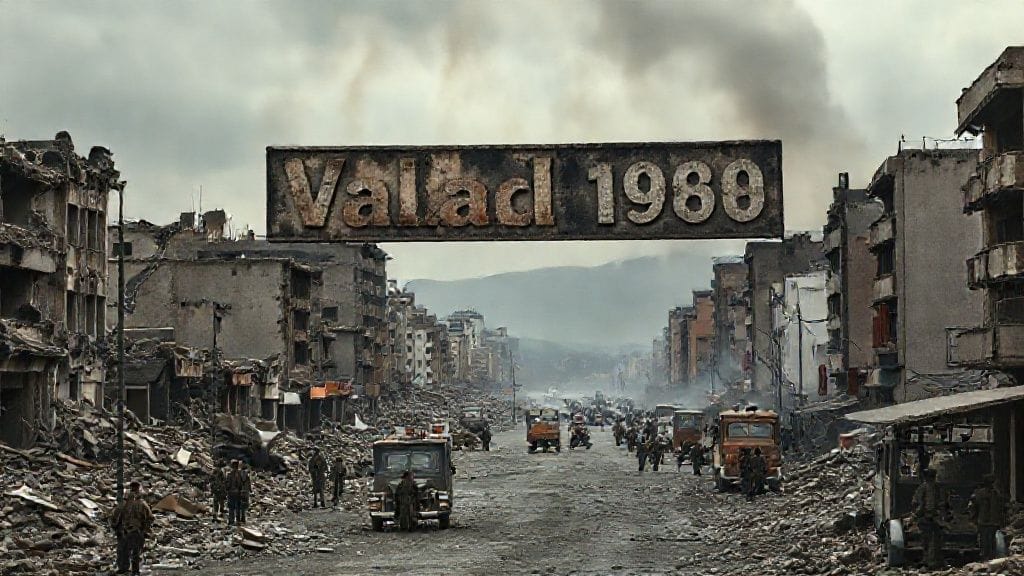
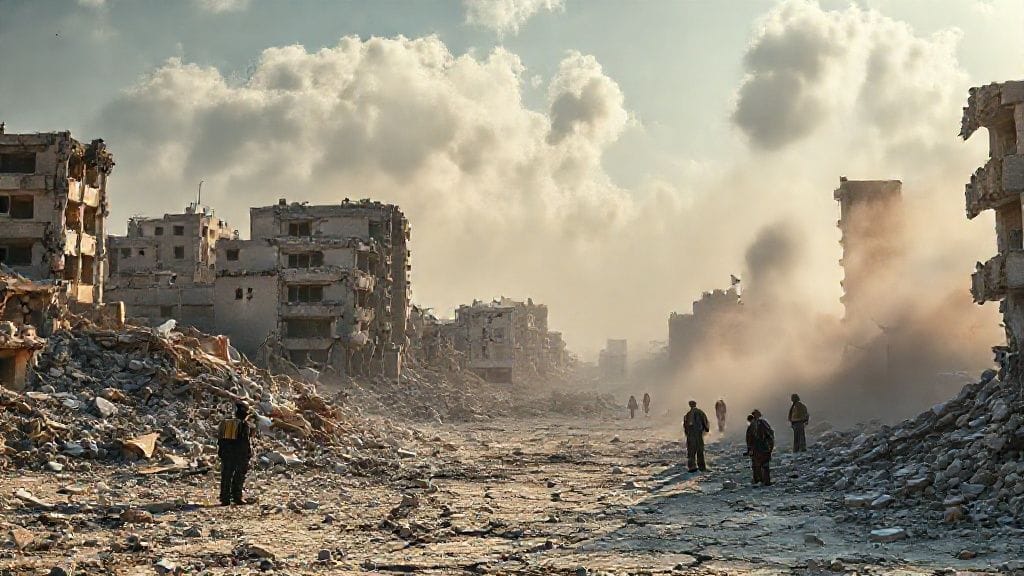
The moment of rupture forever split time for the inhabitants of Tabas and neighboring villages. Buildings that had stood for generations collapsed in an instant; adobe homes, fragile and unprepared for such forces, crumbled like dry clay. The town was transformed into a landscape of twisted metal, broken stone, and shattered glass.
For many, the quake arrived without warning, trapping families beneath roofs or sending them fleeing to the open desert—only to find themselves isolated from help. Roads were destroyed, communications severed, and the normal flow of life came to an abrupt halt.
Radio stations transmitted sporadically; the chaos was palpable. The death toll rose by the hour as rescue teams struggled to reach remote villages.
5. Human Stories Amid the Rubble: Survivors and Tragedies
Behind every statistic were stories of resilience, loss, and profound sorrow. Accounts tell of families huddled together in the darkness, the screams of those trapped beneath ruins merging with the fearful cries of children.
An elderly woman recalled how she survived by sheer luck, thrown clear of her collapsing home, only to wander lost for days before being found. A young teacher in the town described the surreal scenes—a street turned into a graveyard, neighbors transformed into strangers in shock, and the unbearable silence after initial screams.
Homes, mosques, schools—the heart of community life—were destroyed. In the sudden void, strangers became rescuers; grief bound survivors in shared, unspoken trauma.
6. The Response of a Nation: Aid and Mobilization
The Iranian government faced the immediate challenge of delivering aid and restoring basic services amid widespread destruction. Initial rescue operations were hampered by the sheer scale of devastation and poor infrastructure—roads had been shattered, and telecommunications were unreliable.
Yet, in the days following the quake, the nation witnessed remarkable acts of solidarity. Military units, Red Crescent volunteers, and local civilians converged on the area to provide food, medical aid, and shelter.
Temporary camps were established, though overcrowding and lack of sanitation posed critical risks. Medical teams battled to prevent disease outbreaks while tending to crush injuries and fractures that define earthquake medicine.
The government's efforts were scrutinized both domestically and abroad—some criticized delays and inadequate preparedness, while others praised the mobilization considering the challenging circumstances.
7. International Reactions: Solidarity and Assistance
News of the destruction in Tabas reverberated beyond Iran’s borders. Countries and relief organizations sent messages of condolence and offers of aid. Specialists in seismology, medicine, and humanitarian aid flew in, eager to assist.
The American, French, and Japanese governments, among others, contributed resources. International NGOs coordinated shipments of tents, blankets, and medical supplies. Iran’s open acceptance of foreign aid contrasted with later political isolation, highlighting a moment of global humanitarian solidarity.
Yet, the complex political climate limited some aspects of aid coordination. The earthquake became a stage upon which broader geopolitical tensions subtly played out.
8. Scientific Investigations: Lessons from the Catastrophe
The Tabas earthquake presented seismologists with rare opportunities to study fault behavior and earthquake mechanics. Field teams documented the extensive surface ruptures, fault displacements, and aftershock patterns.
Researchers published detailed maps and analyses that remain reference points for understanding intraplate seismicity in arid regions. The event underscored the crucial need for integrating seismic risk into urban planning—a lesson Iran would grapple with for decades.
Moreover, the documentation of building collapses provided data on vulnerabilities in traditional construction, spurring debates on modernizing building codes.
9. The Death Toll and Destruction: Numbers That Stagger
Estimates of casualties vary, but most sources agree that over 25,000 people were killed, with tens of thousands more injured or displaced. Entire villages vanished beneath the debris.
The loss was not merely numerical but human: families obliterated, generations wiped from the map. The sparse population density meant fewer victims than a metropolitan disaster would yield, yet the death toll remains one of Iran’s deadliest natural tragedies of the 20th century.
Economic damage also proved enormous, with homes, farms, irrigation systems, and key roads destroyed. Agriculture was disrupted for seasons, and trade routes slowed.
10. Infrastructure Devastation: Towns and Lifelines Broken
Tabas and the environs were left physically crippled. Wells were contaminated; irrigation canals cracked. The desert environment offered little natural shelter against the September sun and chilling nights.
Medical facilities collapsed or overwhelmed, communication lines were downed, and transportation routes fractured, compounding isolation.
This shattered infrastructure was both cause and consequence of the slow pace of relief, prolonging human suffering.
11. The Role of Media: Broadcasting Disaster and Hope
In 1978, Iran’s media network was state-controlled but nevertheless played a vital role in disseminating information. Radio programs broadcast urgent calls for assistance; newspapers published lists of missing people.
Despite censorship and political tensions, coverage of the earthquake evoked widespread empathy and a rare moment of national unity. Photographs of the destruction and stories of heroism helped personalize the catastrophe for Iranians far from the affected regions.
International press picked up reports, bringing broader attention to a country more often framed by its political unrest than its natural disasters.
12. The Earthquake and Revolution: Chaos on Two Fronts
The timing of the earthquake could not have been more poignant. Iran was already convulsed by protests, strikes, and repression—a nation hurtling toward the overthrow of the monarchy.
The earthquake further strained governmental resources and public confidence. Relief was seen by some as insufficient or politically motivated, feeding into the revolutionary fervor.
For survivors, the disaster fused with political disillusionment; for revolutionaries, it underscored systemic neglect. In a way, Tabas’s destruction was a mirror to the country’s internal fractures.
13. Reconstruction Efforts: Trials of Rebuilding a Shattered Land
Rebuilding Tabas proved a monumental challenge, requiring not only physical reconstruction but restoration of community and hope.
Government programs aimed at rebuilding houses, schools, and infrastructure were launched, though hindered by Iran’s growing political instability. International aid assisted, but the momentum of revolution soon overtook many long-term projects.
Nevertheless, survivors persisted, often rebuilding with greater seismic awareness. Villages that once lay in ruins gradually re-emerged, a testament to human tenacity.
14. Cultural Memories: How Tabas Lives in Iranian Collective Memory
The earthquake is deeply etched in Iranian collective memory, particularly among those living in and near Khorasan province.
Songs, stories, and poetry commemorate lost loved ones and miraculous survivals. Anniversaries of the quake are marked quietly by local communities, and memorials stand as sober reminders of vulnerability.
More broadly, Tabas remains a symbol — of the power of nature, the fragility of human existence, and the enduring spirit to rebuild amid despair.
15. The Earthquake’s Place in Seismology History
Within global seismological chronicles, Tabas ranks as a defining event of intraplate earthquakes. The magnitude, surface rupture length, and depth provided a case study enhancing understanding of earthquake hazards in desert mountain regions.
It’s frequently cited in academic literature on earthquake mitigation, influencing engineering practices—not only in Iran but across seismic zones worldwide.
16. Long-Term Environmental Effects: Shifting Landscapes
Beyond immediate devastation, Tabas’s earth continued to shift for months. Aftershocks altered groundwater flows; landslides blocked valleys.
These geological changes had lasting effects on agriculture and settlement patterns. In some cases, new springs emerged, while others dried up—forcing migrations and altering local economies.
17. Lessons Learned: Building Codes and Disaster Preparedness in Iran
One crucial legacy of the tragedy was a renewed emphasis on earthquake preparedness in Iran. Authorities recognized that many deaths were preventable with stronger construction standards.
Efforts to codify seismic-resistant building regulations commenced, although enforcement remained inconsistent.
Public education programs in disaster readiness also gained ground, a harbinger of modern civil defense initiatives.
18. Personal Accounts: Voices from the Rubble
Amid academic reports and official statements, it is the personal narratives that best convey the earthquake’s human face.
One survivor recounted how her small child’s cries saved them from a collapsing wall; a physician detailed the heartbreak of triaging endless injuries with limited resources.
Such testimonies breathe life into statistics, reminding us that history’s moments are collections of individual fates.
19. The Intersection of Natural Disaster and Political Upheaval
Tabas stands as a poignant example of how natural disasters can amplify existing social and political tensions.
The earthquake stressed a government already under siege, exposed infrastructural weaknesses, and influenced public perception of leadership.
It forces historians to consider the interwoven fabric of environmental and human factors shaping history.
20. Tabas Today: Remembrance and Resilience
More than four decades later, Tabas endures as a symbol of resilience. Modern buildings with seismic reinforcement stand alongside older structures, a visible timeline of lessons learned.
Cultural celebrations honor memory; schools teach about the disaster within broader histories.
The town is no longer a place frozen in tragedy but one of remembrance and hope.
Conclusion
The Tabas earthquake of September 16, 1978, unfolds as a narrative layered in shock, resilience, and historical complexity. It was a moment when the unyielding forces of nature brutally intersected with a society on the cusp of seismic political transformation.
Yet amidst ruin and sorrow, the human spirit flickered stubbornly—neighbors rising to aid one another, survivors recounting tales of courage, and a nation grappling to rebuild not just buildings but trust.
Tabas is a testament to how disaster is never just an event confined to a moment; it is an unfolding story of loss and renewal, an enduring chapter in the epic human saga.
FAQs
Q1: What caused the Tabas earthquake?
A1: The earthquake was caused by the movement along the Nayband fault, part of the tectonic collision zone between the Arabian and Eurasian plates, which creates significant seismic activity in central Iran.
Q2: How many people died in the Tabas earthquake?
A2: Estimates vary, but most agree that over 25,000 people lost their lives, making it one of the deadliest earthquakes in Iran during the 20th century.
Q3: How did the Iranian government respond to the disaster?
A3: The government mobilized military, medical, and Red Crescent resources to provide aid but faced logistical challenges due to destroyed infrastructure and political unrest that complicated relief efforts.
Q4: What was the significance of the earthquake occurring during the Iranian Revolution?
A4: The quake’s timing exacerbated social and political tensions, as many perceived relief efforts as insufficient or biased, reinforcing feelings of discontent that fed revolutionary momentum.
Q5: How did the Tabas earthquake influence seismic building codes in Iran?
A5: The disaster highlighted the vulnerability of traditional building methods, prompting Iranian authorities to begin developing and enforcing stricter seismic-resistant construction standards.
Q6: Are there memorials to the earthquake victims in Tabas?
A6: Yes, various memorials exist in and around Tabas to honor those who perished, and annual commemorations help maintain collective memory.
Q7: What scientific contributions arose from studying the Tabas earthquake?
A7: Seismologists gained valuable data on intraplate earthquake mechanisms, fault displacement, and aftershock patterns that informed global earthquake research.
Q8: How has Tabas changed since 1978?
A8: The town has rebuilt with improved infrastructure and remains a symbol of survival and resilience, blending remembrance of the past with hopes for a safer future.