Table of Contents
- The Calm Before the Quake: Life in Ottoman Syria’s Galilee
- January 1, 1837: Dawn Shattered by Tremors
- The Tremor’s Tale: How the Earth Opened up Beneath Safed
- Safed’s Destruction: A City Reduced to Rubble
- The Human Toll: Lives Lost and Communities Torn Apart
- Sister Cities in Ruin: Damage Across the Galilee and Beyond
- Ottoman Authority in Crisis: Response and Relief Efforts
- Eyewitness Accounts: Voices from the Shattered Landscape
- Navigating the Aftermath: Recovery Amidst Uncertainty
- Earthquake Science in the 19th Century: Understanding the Phenomenon
- Geological Underpinnings: The Dead Sea Transform Fault Explained
- The Regional Impact: Social and Economic Ripples in Ottoman Syria
- Religious and Cultural Heritage: What was Lost and What Endured
- Refuge and Migration: Shifts in Population Patterns Post-Disaster
- Memory and Myth: How the 1837 Earthquake Sank into Local Lore
- Lessons from the Past: The 1837 Quake’s Legacy for Modern Seismology
- Comparing Catastrophes: The 1837 Earthquake in Context with Later Quakes
- Preservation and Archaeology: Uncovering Safed’s Pre-1837 Heritage
- The Role of International Aid: A Glimpse into Early Humanitarian Responses
- The Quake’s Shadow over Ottoman Governance and Urban Planning
- Commemoration Today: How the Galilee Earthquake is Remembered
- Conclusion: Resilience Amidst Ruins
- FAQs: Questions Unveiling the 1837 Galilee Earthquake
- External Resource: Wikipedia Link on the Galilee Earthquake
- Internal Link: Visit History Sphere
On the morning of January 1, 1837, as the first light of a new year spilled softly over the rolling hills and ancient olive groves of the Galilee, an unforeseen cataclysm stealthily crept beneath the grounds of Ottoman Syria. The earth, that immutable foundation beneath countless generations, suddenly convulsed in a violent shudder that would forever transform the landscape, the hearts, and the histories of thousands. Safed—one of the oldest cities of the region, a beacon of religious significance and cultural life—was thrust into ruin, its stones pulverized, its streets veiled in dust and sorrow. In those moments, the very earth betrayed its custodians, pulling the past and present into a terrifying embrace of destruction and despair.
This was no ordinary calamity; the 1837 Galilee earthquake was a profound turning point whose reverberations extended far beyond the cracked adobe and splintered timber of destroyed homes. It was a testament to human endurance and frailty, a story of nature’s relentless power colliding with centuries-old civilizations. To understand the magnitude of what transpired, one must peer into the world that preceded the quake, into the lives that were irrevocably altered from that jolting dawn onwards.
The Calm Before the Quake: Life in Ottoman Syria’s Galilee
Before the earthquake upended the Galilee, this region was a tapestry of cultures, religions, and traditions deeply woven into the fabric of the Ottoman Empire. Safed, perched atop its rugged hill, held an almost mystical allure. It was renowned as a center for Jewish mysticism—the Kabbalah—and home to synagogues filled with centuries of prayers and wisdom. Amidst a mosaic of Muslims, Christians, and Jews, life exercised a rhythm born of tradition, trade, and faith. Olive groves stretched to the horizon, artisans peddled their crafts in bustling souks, and caravans threaded their way toward distant markets.
The Ottoman administration governed with a mix of imperial structure and local autonomy, often relying on influential families and religious leaders to maintain order. Despite challenges typical of the 19th century—such as bureaucratic stagnation and regional unrest—the Galilee showed remarkable resilience and vibrancy. But beneath this fragile normalcy lurked tectonic forces beyond human control, ready to rupture at any moment.
January 1, 1837: Dawn Shattered by Tremors
It was just after dawn when the earth began to rumble—a deep, menacing growl rising through the very bedrock underfoot. At first, the tremors were subtle, enough to cause unease but not outright alarm. But then the frequency and intensity escalated with terrifying speed. Walls that had stood for centuries groaned and buckled, roofs cracked open, and the ground heaved as if angry at the civilizations it bore.
During those terrifying minutes, the people of Safed and surrounding areas experienced nature’s fury firsthand. There would be no time to gather precious belongings, no way to outrun the unpredictable quakes. The city shook, its stones falling like rain, while cries of horror and despair filled the air.
The Tremor’s Tale: How the Earth Opened up Beneath Safed
What exactly caused this widespread devastation? The answer lies within the anatomy of the earth’s solid crust beneath the Eastern Mediterranean. Safed sits near the Dead Sea Transform Fault—a strike-slip fault running roughly north–south that separates the Arabian and African tectonic plates. Over millennia, stress had accumulated along this fault line until it was violently released on that cold January morning.
The seismic waves radiated outward, their power sheer enough to level towns, shatter infrastructure, and reshape the landscape itself. Contemporary reports described fissures opening in the ground; some wells and springs were altered or dried up entirely. The countryside bore scars that would take generations to heal.
Safed’s Destruction: A City Reduced to Rubble
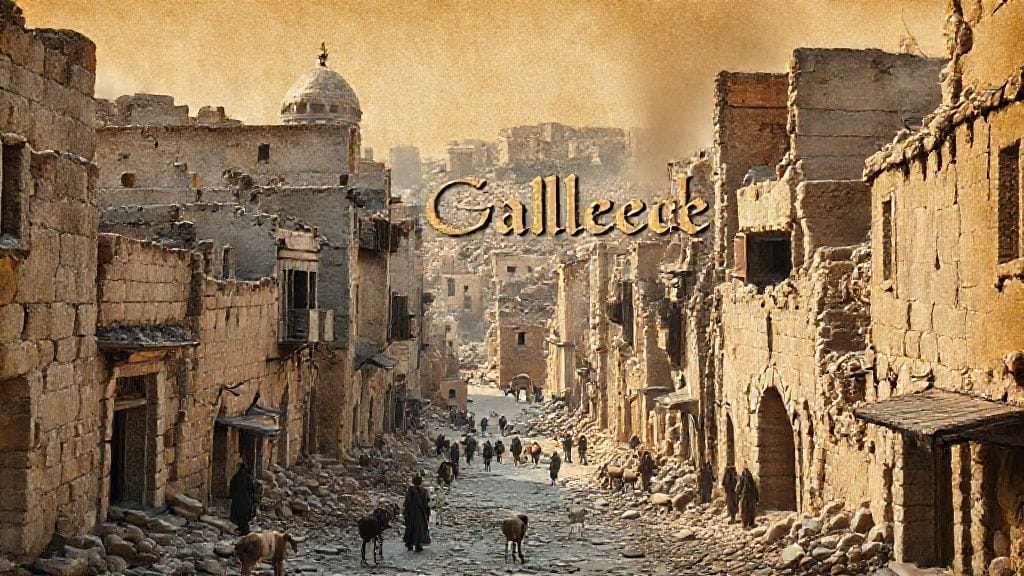
Safed, with its ancient stone houses and revered religious sites, was particularly hard-hit. Entire neighborhoods collapsed; buildings that had once echoed with laughter and worship were reduced to piles of dust and stone. The Grand Synagogue, a jewel of Jewish heritage, was devastated. Reports from survivors recount the chaos—the dust storms that blocked sunlight, the desperate attempts to save loved ones beneath the debris.
Contemporary observers described the city’s streets as unrecognizable, a “heap of ruins where life once thrived.” Worse, with the harsh Galilean winter, the survivors faced exposure and disease on top of their grief and loss.
The Human Toll: Lives Lost and Communities Torn Apart
The death toll remains difficult to pin down with absolute precision, but estimates suggest that the earthquake took the lives of at least 6,000 people across the Galilee and surrounding regions. In Safed alone, thousands perished or were grievously wounded. Entire families were wiped out. In agricultural villages, the loss of both lives and livestock spelled despair on a different scale—a threat to future survival.
For those who lived, the trauma lingered far beyond the moment of impact. The quake uprooted how families organized their existence: social support systems were stretched thin, and communal mourning became a shared experience etched deeply into collective memory.
Sister Cities in Ruin: Damage Across the Galilee and Beyond
Safed was not alone in its suffering. Tiberias, Acre, and Nazareth, among other towns, also bore the brunt of the seismic horror. Ancient city walls cracked, marketplaces crumbled, and homes collapsed. As news spread, a network of devastation revealed itself—a swath of destruction connecting communities bound by geography and history.
One remarkable aspect was the varying degrees of destruction, shaped by terrain, building techniques, and local responses. While Safed and Tiberias were devastated, cities farther from the epicenter experienced shaking but survived with less damage.
Ottoman Authority in Crisis: Response and Relief Efforts
The devastation forced the Ottoman administration into action, though bureaucratic inertia and limited resources complicated efforts. Relief was uneven, and the empire struggled to provide immediate assistance to the scattered population. At the same time, local leaders, religious institutions, and community networks mobilized to deliver aid and maintain order.
Despite delays and challenges, the quake marked a moment where imperial authority’s limits were starkly revealed in the face of natural disaster. Yet, this trial also spurred reforms aimed at improving infrastructure resilience and emergency preparedness, lessons hard learned but consequential.
Eyewitness Accounts: Voices from the Shattered Landscape
Personal testimonies—rare treasures in the 19th-century Ottoman archives—paint vivid pictures of the chaos. A Jewish merchant in Safed described the night “where the heavens and earth collided,” his words folding in fear and disbelief. A Muslim farmer outside Tiberias recalled how his home “opened like a book, spilling the contents of our lives to the wind.”
These narratives humanize the tragedy, bridging the centuries to connect us with the enduring emotions of loss, survival, and hope.
Navigating the Aftermath: Recovery Amidst Uncertainty
The months that followed were marked by a struggle to rebuild from the ruins. Displaced populations sought refuge in neighboring districts or fled abroad, creating waves of migration. Reconstruction was painstaking and slow, hampered by limited resources and ongoing geopolitical tensions within the Ottoman realm.
Interestingly, the earthquake also opened conversations about urban planning, with some advocating for more earthquake-resistant architecture and better organized cities to prevent future catastrophes.
Earthquake Science in the 19th Century: Understanding the Phenomenon
In a period when geosciences were still in their infancy, the 1837 Galilee earthquake contributed to the gradual development of seismology. Researchers in Europe and the Ottoman Empire analyzed reports, aftershocks, and geological changes, slowly piecing together theories about tectonic processes.
This event challenged prevailing ideas, encouraging a shift away from purely religious or superstitious explanations toward scientific inquiry—albeit in an era when many still wrestled with the tension between faith and empiricism.
Geological Underpinnings: The Dead Sea Transform Fault Explained
Today, modern geology confirms the Galilee earthquake’s cause: the movement along the Dead Sea Transform Fault, part of the larger tectonic boundary between the African and Arabian plates. This fault line remains one of the most seismically active in the region.
Understanding its mechanics helps explain why the area remains vulnerable and why historical earthquakes such as that of 1837 have had such catastrophic consequences.
The Regional Impact: Social and Economic Ripples in Ottoman Syria
The earthquake’s destruction reverberated beyond the immediate physical damage. Agricultural output dropped sharply, trade routes were disrupted, and local economies suffered. The demographic shifts—a combination of deaths and migrations—affected the social fabric, introducing new tensions and changing community dynamics.
Ottoman authorities had to address these challenges in a territory already grappling with internal divisions, poverty, and governance issues.
Religious and Cultural Heritage: What was Lost and What Endured
Safed, known as a hub of Jewish mysticism and religious scholarship, lost many ancient synagogues and monuments, along with irreplaceable manuscripts and artifacts. Muslim and Christian religious sites were also damaged, shaking the spiritual foundation of these communities.
Yet, remarkably, many traditions and cultural practices endured, testimony to the resilience and adaptive spirit of the Galilean people. The reconstruction of religious life became central to the healing process.
Refuge and Migration: Shifts in Population Patterns Post-Disaster
The earthquake transformed demographic patterns. Survivors sought new homes, moving internally within Ottoman Syria or emigrating, especially Jewish communities who would later settle in broader Palestine or even abroad. These migrations reinforced historical patterns of mobility fueled by both hardship and hope.
The reshaping of the population map influenced economic and social structures in the decades that followed.
Memory and Myth: How the 1837 Earthquake Sank into Local Lore
In the years and generations after, the 1837 earthquake assumed a place within the collective memory—sometimes clothed in religious interpretations, other times passed down through oral histories capturing the raw human sorrow and courage.
Folklore emerged, with stories of miraculous survival, divine punishment, or cosmic upheaval. Such narratives helped communities process the trauma and maintain a shared sense of identity.
Lessons from the Past: The 1837 Quake’s Legacy for Modern Seismology
Today, the 1837 earthquake remains a crucial data point for seismologists studying the Eastern Mediterranean’s seismic risks. Its aftermath underscores the importance of disaster preparedness, resilient infrastructure, and the perennial challenge of natural hazards in human history.
Modern engineering and urban planning in Israel, Palestine, Jordan, and Syria continue to draw lessons from past catastrophes, including this one.
Comparing Catastrophes: The 1837 Earthquake in Context with Later Quakes
The Galilee earthquake was among the deadliest in the region’s more recent history, but other seismic events would follow—such as the devastating 1927 Jericho earthquake. Comparing these disasters reveals patterns of vulnerability and responses, illustrating longer-term processes shaping the Levant.
Each quake, while unique, contributes to a cumulative understanding critical for future resilience.
Preservation and Archaeology: Uncovering Safed’s Pre-1837 Heritage
Archaeological efforts in Safed have unearthed layers predating the 1837 earthquake, illuminating what was lost beneath the rubble. These finds have enriched understanding of Ottoman and earlier periods in Galilee history.
Preserving what remains allows modern societies to connect to a past forever marked by both brilliance and catastrophe.
The Role of International Aid: A Glimpse into Early Humanitarian Responses
While the Ottoman Empire primarily managed relief, reports suggest some European consulates and religious missions provided assistance. This event offers an early example of cross-border humanitarian concern and the beginnings of international disaster aid frameworks.
Though limited and nascent, such efforts presaged the more organized responses of subsequent centuries.
The Quake’s Shadow over Ottoman Governance and Urban Planning
The disaster exposed weaknesses in imperial infrastructure and administration, propelling some reforms in building codes, urban regulation, and emergency protocols. It contributed to broader Ottoman modernization efforts in the mid-19th century.
The quake’s political impact was subtle but noteworthy, highlighting the interplay between natural disasters and state capacity.
Commemoration Today: How the Galilee Earthquake is Remembered
Though almost two centuries distant, the 1837 earthquake endures in local histories and commemorations. Museums, guided tours in Safed, and oral histories preserve its memory. Cultural revival efforts aim to honor those lost and educate visitors about the region’s layered past.
Such remembrance shapes contemporary understandings of identity and belonging in the Holy Land.
Conclusion
The Galilee earthquake of 1837 was more than a geological upheaval; it was a rupture in the human story of a land layered with faith, culture, and history. In the shuddering moments that tore Safed and the surrounding towns apart, centuries of architecture fell, lives were lost, and the earth’s ancient secrets spilled forth. Yet, from ruins rose remarkable resilience—as communities rebuilt homes, rekindled traditions, and reimagined their futures.
This disaster reminds us of nature’s indifferent power and the fragile beauty of human existence. It also calls on us to remember and learn. The shadows of that January morning still stretch across the Galilee, threading through memory, science, culture, and hope—a vivid testament to the intertwined fate of humanity and the earth beneath our feet.
FAQs
Q1: What caused the 1837 Galilee earthquake?
A1: The earthquake was caused by movement along the Dead Sea Transform Fault—a tectonic boundary separating the Arabian and African plates—resulting in a powerful seismic rupture beneath Ottoman Syria.
Q2: How severe was the damage in Safed?
A2: Safed was devastated; much of the city was destroyed, including important religious sites like synagogues, with thousands killed and many more injured or displaced.
Q3: How did the Ottoman authorities respond to the disaster?
A3: The Ottoman government struggled with immediate relief due to resource constraints but eventually coordinated reconstruction efforts. Local and religious leaders also played key roles in supporting survivors.
Q4: Were other cities affected besides Safed?
A4: Yes, several towns including Tiberias, Acre, and Nazareth experienced significant damage, though Safed was among the hardest hit.
Q5: What was the human impact of the earthquake?
A5: Thousands of lives were lost; entire families and communities were disrupted, triggering long-term social and demographic changes.
Q6: How did the earthquake influence scientific understanding?
A6: It contributed to early seismic studies in the region, helping shift from superstitious explanations toward more scientific approaches to earthquakes.
Q7: Is the 1837 earthquake remembered today?
A7: Yes, through local commemorations, museums, and cultural histories, the event remains an important part of regional memory.
Q8: What legacy did the earthquake leave on urban planning?
A8: The disaster highlighted the need for improved building standards and disaster preparedness, influencing Ottoman urban reforms in later years.