Table of Contents
- A Day Shattered: The Earthquake at Dawn
- The Hindu Kush: Geography of a Living Fault
- Historical Seismicity: The Earth’s Restless Breath in Afghanistan
- March 25, 2002: The Moment the Mountains Trembled
- The Human Toll: Stories from Crumbled Villages
- The Unseen Impact: Infrastructure and Isolation in the Hindu Kush
- Aid and Response: Hope Amidst the Rubble
- Geopolitical Complexities: The Challenge of Relief in a War-torn Land
- Cultural Resilience: How Communities Rebuilt Their Lives
- Science Meets Disaster: Understanding the Earthquake’s Mechanics
- The Role of International Organizations: Bridging the Gap
- Media and Memory: Reporting from the Edge of the World
- Aftershocks and Anxiety: Living with the Fear of Return
- The Earthquake in Afghan History: A Catalyst or a Footnote?
- Lessons Learned: Disaster Preparedness and Mitigation in Mountainous Regions
- Long-Term Consequences: Economy, Migration, and Development
- Voices from the Hindu Kush: Personal Testimonies of Survival
- Afghanistan’s Earthquake Legacy: From Tragedy to Transformation
- Conclusion: The Indomitable Spirit Beneath the Mountain’s Shadow
- FAQs: Understanding the 2002 Hindu Kush Earthquake
- External Resource
- Internal Link
1. A Day Shattered: The Earthquake at Dawn
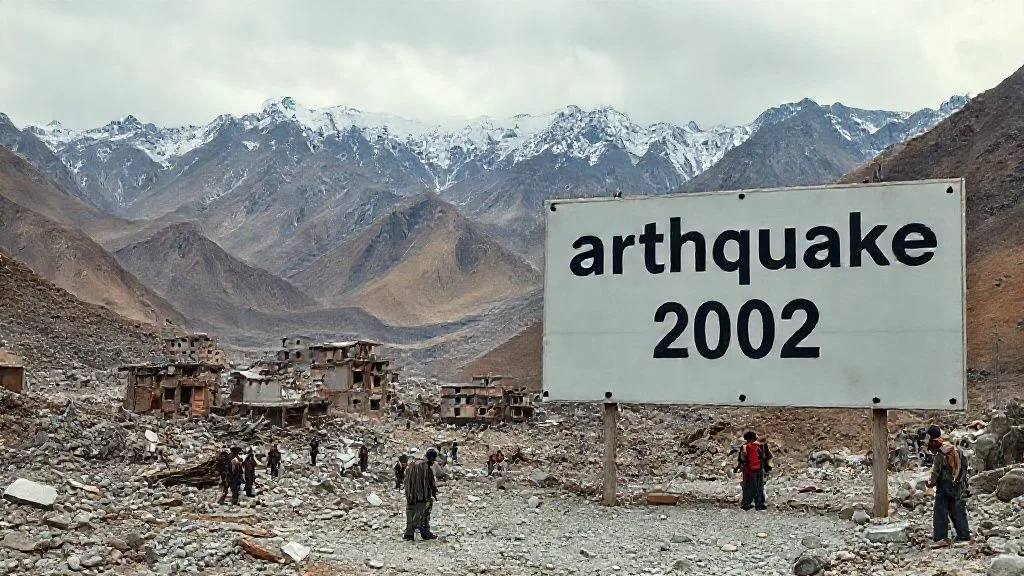
On the early morning of March 25, 2002, when the first light kissed the jagged peaks of the Hindu Kush mountains, an invisible force tore through the earth beneath. It was a breath, a sudden shift — but its impact was monumental, reshaping lives and landscapes in an instant. Villages that had stood for generations suddenly lay crippled, ancient stone walls reduced to rubble, and the mountainous silence shattered by the cries of the wounded. This was no ordinary tremor. It was a reminder of nature’s unpredictable wrath and a magnifier of human vulnerability in one of the world’s most challenging environments.
In a land already marked by decades of conflict and hardship, the earthquake added another layer of adversity to an impoverished population striving to survive in isolation. The Hindu Kush, with its formidable relief and sparse settlements, had become ground zero for a disaster that echoed far beyond pure geography.
2. The Hindu Kush: Geography of a Living Fault
The Hindu Kush mountain range, stretching across Afghanistan and parts of Pakistan, embodies one of the Earth’s most complex and volatile geological architectures. Its rugged peaks, often cloaked in snow, are formed by the ongoing collision of the Indian and Eurasian tectonic plates—a violent confrontation that has created the impressive Himalayan and Hindu Kush systems over millions of years.
Beneath these mountains lie fault lines charged with immense tectonic stress, constantly bending, fracturing, and reshaping the crust. Although seismic activity is not uncommon in this region, the remoteness and the nature of the terrain exacerbate the consequences of any earthquake. Accessibility is limited, and communication infrastructures are sparse, turning even modest tremors into potentially catastrophic events.
3. Historical Seismicity: The Earth’s Restless Breath in Afghanistan
Afghanistan’s seismic record, while less publicized than those of neighboring regions, reveals a pattern of significant earthquakes that have periodically rocked its population. Previous centuries bore witness to similar or more devastating events, with documented destructions dating as far back as medieval times. However, the lack of sophisticated monitoring and the country’s tumultuous history often relegated these episodes to local memory rather than global awareness.
The early 2000s were marked by a fragile peace after years of civil war and Taliban rule. The nation was still healing from political fragmentation when it faced this new natural hazard. The earthquake was a harsh reminder that even as wars calm, the planet’s geological forces continue indifferent to human suffering.
4. March 25, 2002: The Moment the Mountains Trembled
At 3:20 AM local time, the Hindu Kush region was struck by a magnitude 6.1 earthquake whose epicenter lay deep beneath the earth, approximately 75 kilometers northwest of Kabul. Despite the moderate magnitude, the quake was profoundly felt across several provinces, from Baghlan to Parwan, and as far away as the capital.
The shaking lasted mere seconds, but in those moments, homes crumbled, landslides cascaded down steep slopes, and historic structures, many centuries old and made of mud bricks and stone, collapsed. The depth of the earthquake — around 200 kilometers underground — contributed to its broad felt area but also somewhat limited surface rupture.
Still, the damage was severe. Remote communities awoke to devastation. The death toll was initially unclear due to the inaccessibility of affected zones. Estimates fluctuated, with later reports counting dozens of casualties and hundreds injured. For many, the quake was an abrupt, cruel force that neither history nor hardship had fully prepared them to endure.
5. The Human Toll: Stories from Crumbled Villages
Behind every collapsed house was a story of loss. In small mountain villages, families buried beneath rubble or huddled with nowhere to retreat touched the raw edges of disaster. Men who relied on subsistence farming watched their fields scarred by landslides. Children who had for years trudged narrow paths to school found themselves without shelter.
One poignant account emerged from a village near the epicenter. A woman, Fahima, recounted how she and her children escaped with only the clothes on their backs as the ground quaked. “The earth roared like a wild beast,” she said, “and my home became dust in moments.” Such narratives multiplied, weaving a tapestry of pain and resilience.
6. The Unseen Impact: Infrastructure and Isolation in the Hindu Kush
Damage to roads, bridges, and communications systems compounded the immediate tragedy. The Hindu Kush’s geography, already isolating communities, turned into a trap. Landslides severed the few narrow dirt roads that linked villages to larger towns. Telecommunication lines were damaged or destroyed.
Aid organizations and government efforts faced enormous obstacles reaching survivors. Some villages remained cut off for days, without access to medical help, clean water, or supplies. The earthquake exposed the fragility of Afghanistan’s infrastructure, much of which had suffered neglect and destruction from years of conflict.
7. Aid and Response: Hope Amidst the Rubble
International agencies and Afghan authorities scrambled to respond. The United Nations deployed teams to assess and deliver urgent assistance. The International Red Crescent Society played a pivotal role in providing first aid and temporary shelter. However, logistical challenges impeded rapid relief.
Local communities became first responders by necessity, pooling whatever resources they had. Traditional networks of mutual aid were reactivated, underscoring the social cohesion that would be vital in the months ahead.
8. Geopolitical Complexities: The Challenge of Relief in a War-torn Land
Afghanistan, in 2002, was a nation emerging from the shadows of Taliban rule, inundated with foreign military presence and political intrigue. This convoluted context posed unique barriers to effective disaster response. Security concerns dictated the flow and presence of aid workers.
Moreover, fractured governance structures struggled to coordinate logistics across provincial boundaries. The earthquake thus became not only a natural catastrophe but a reflection of the broader systemic fragilities in a fractured state.
9. Cultural Resilience: How Communities Rebuilt Their Lives
Though battered, the people of the Hindu Kush demonstrated an extraordinary capacity to rebuild. Homes were reconstructed in traditional styles adapted for greater earthquake resistance, blending ancient wisdom with new engineering advice from humanitarian groups.
Communities revived festivals, market days, and religious ceremonies that had been disrupted, signaling a return to normalcy. The earthquake nurtured not only a practical rebuilding but a social and cultural reaffirmation against the odds.
10. Science Meets Disaster: Understanding the Earthquake’s Mechanics
Seismologists studying the March 2002 earthquake noted its deep focal nature—uncommon for the area—and speculated that deep-seated processes in the subducting Indian plate were responsible. These deep events, while less violent at the surface, tend to shake widespread areas.
This quake was a reminder of the Hindu Kush’s role as a space of complex geodynamics, challenging both scientists and laypeople’s perceptions of seismic risk in the region.
11. The Role of International Organizations: Bridging the Gap
In the weeks following the earthquake, NGOs, the UN, and foreign governments coordinated relief efforts, delivering tents, medical aid, and rebuilding materials. Their work was a testament to the growing trends of humanitarian global engagement in Afghanistan.
Yet, their efforts underscored issues of sovereignty and trust, as Afghan authorities sought to manage the influx while maintaining control over their territories.
12. Media and Memory: Reporting from the Edge of the World
News coverage was scarce and sporadic, constrained by geography and political instability. Reporters who reached the region shared images of desolation and personal stories that resonated globally. These reports humanized a afflicted region often viewed through the lens of conflict and foreign policy.
Memory of the 2002 earthquake remains embedded in the oral histories of those who lived through it, even if absent from broader public consciousness.
13. Aftershocks and Anxiety: Living with the Fear of Return
In the weeks that followed, aftershocks unsettled multiple communities, each tremor a pulse of fear. Many families hesitated to return to their damaged homes, some choosing to camp outdoors despite harsh weather.
The psychological impact echoed long after the ground settled. Anxiety about future quakes shaped rebuilding choices and community dynamics.
14. The Earthquake in Afghan History: A Catalyst or a Footnote?
While overshadowed internationally by geopolitical events, the Hindu Kush earthquake represented a vital chapter in Afghanistan’s story of endurance. It highlighted vulnerabilities and strengths, forcing discourse on infrastructure, governance, and communal solidarity.
Though not a tectonic turning point for Afghan politics, it remains a scar and reminder of the country’s intimate relationship with nature’s forces.
15. Lessons Learned: Disaster Preparedness and Mitigation in Mountainous Regions
The 2002 earthquake exposed gaps in Afghanistan’s disaster preparedness, sparking initial discussions on integrating seismic risk into national policies. Mountainous regions worldwide face similar dilemmas: how to build resilient communities in the face of inevitable tremors and landslides.
Aid agencies advocated for community training, improved construction techniques, and early warning systems.
16. Long-Term Consequences: Economy, Migration, and Development
Beyond immediate destruction, the earthquake affected livelihoods by disrupting agriculture and trade. Some populations were forced to migrate, seeking safety and opportunity elsewhere.
Development aid increasingly recognized natural disaster risk as a component of rebuilding a sustainable Afghan economy.
17. Voices from the Hindu Kush: Personal Testimonies of Survival
Hakim, a shepherd from Baghlan province, recalled carrying his father from their collapsed home, flames licking the dark sky. “The earthquake took our house, but not our will,” he said. Such voices paint vivid pictures of courage against odds.
Testimonies like his enrich our understanding of the human dimension often lost in statistics.
18. Afghanistan’s Earthquake Legacy: From Tragedy to Transformation
Over the years, the 2002 Hindu Kush earthquake became a symbol of Afghanistan’s dual challenges: confronting natural hazards amid human-made turmoil. It spurred better cooperation between international partners and local agencies, laying groundwork for improved disaster management.
While not erasing hardship, it inspired innovation and hope in a land that perhaps needs it most.
19. Conclusion: The Indomitable Spirit Beneath the Mountain’s Shadow
The Hindu Kush earthquake of March 25, 2002, was more than a geophysical event; it was a human story writ large in stone and heartache. It revealed the fragility of life but also its resilience. As the mountains heal, so do their people — rebuilding homes, communities, and futures with an unwavering spirit.
This earthquake teaches us that even in the world’s most isolated regions, the dialogue between earth and humanity continues, shaped by forces beyond control but survived with courage. It beckons us not only to remember but to prepare, connect, and stand together when the ground beneath us shifts — as it inevitably will.
Conclusion
The 2002 Hindu Kush earthquake remains a stark testament to nature’s power and humanity’s resilience in one of the world’s most geopolitically complex and geographically challenging settings. It struck a population still recovering from decades of conflict with a raw reminder of fragility — yet also of endurance.
Despite harsh climates, political uncertainty, and infrastructural frailty, Afghan communities responded with unity and courage. Their stories echo beyond the rubble, inviting us to understand disaster not merely as tragic fate but as a complex interaction of environment, society, and history.
In the end, the earthquake beneath the Afghan mountains served as both a rupture and a renewal — a call to build safer futures rooted in respect for the land, awareness of vulnerability, and the indomitable human spirit.
FAQs
Q1: What caused the 2002 Hindu Kush earthquake?
A1: The earthquake was caused by tectonic activity related to the ongoing collision between the Indian and Eurasian plates. Its epicenter was deep within the Hindu Kush region, where complex faulting produces regular seismic events.
Q2: How many people were affected by the earthquake?
A2: The exact casualty numbers remain uncertain due to the affected region’s remoteness, but dozens of people died, and hundreds were injured. Thousands were displaced as villages were damaged or destroyed.
Q3: Why was the damage particularly severe despite a moderate magnitude?
A3: The mountainous terrain, poor structural resilience of buildings, and limited infrastructure for emergency response heightened the earthquake’s impact even though its magnitude was moderate.
Q4: How did political conditions affect relief efforts?
A4: Afghanistan’s fragile security situation and fractured governance in 2002 made aid delivery difficult, delaying assistance and complicating coordination among local and international actors.
Q5: What scientific insights did seismologists gain from this event?
A5: The quake was a deep-focus event, illuminating the dynamics of subduction and stress distribution in the region, offering valuable data for seismic risk analysis in Central Asia.
Q6: How have communities rebuilt since the earthquake?
A6: Many communities incorporated traditional building methods with modern earthquake-resistant techniques where possible, alongside a strong cultural emphasis on mutual aid and renewal.
Q7: Is Afghanistan prone to frequent earthquakes?
A7: Yes, due to its position along active tectonic boundaries, Afghanistan experiences periodic earthquakes, though accurate data is limited by its geography and socio-political conditions.
Q8: What lessons did this earthquake provide for future disaster preparedness?
A8: It highlighted the need for improved infrastructure, effective early warning systems, public education, and international cooperation tailored to Afghanistan’s unique challenges.