Table of Contents
- A Shattering Dawn: The Earthquake Strikes Farah
- The Hidden Fault Lines: Geological Roots of the Disaster
- Farah Province before the Quake: Life on the Edge
- October 7, 2023: Timeline of the Catastrophe
- Voices from the Rubble: Eyewitness Accounts and Human Stories
- The Immediate Aftermath: Rescue Efforts amid Chaos
- Afghanistan’s Fragile Infrastructure and Its Testing Moment
- The Role of International Aid: Offers, Challenges, and Politics
- The Taliban Administration’s Response: Governance amid Crisis
- The Plight of the Displaced: Camps, Cold, and Uncertainty
- Medical Crisis: Hospitals Overwhelmed and Health Risks
- Psychological Scars: Trauma in a Land Already Wounded
- Farah’s Cultural Heritage: Ancient Roots Threatened by Nature
- Regional Seismology: Why Afghanistan Remains Vulnerable
- The Earthquake’s Unexpected Global Impact
- Lessons in Preparedness: What Could Have Been Done?
- Rebuilding from the Rubble: Future Prospects for Farah
- Environmental Impacts: Landslides, Water, and Agriculture
- Civil Society Steps Up: Local NGOs and Community Resilience
- Media Coverage: Narrating Disaster in a Divided World
- The Earthquake in the Context of Afghanistan’s Ongoing Struggles
- Historical Earthquakes in Afghanistan: Patterns and Memories
- Architectural Traditions vs. Modern Vulnerability
- The Human Spirit Under Tremor: Stories of Courage and Loss
- Towards a Safer Tomorrow: Scientific Innovations and Hope
1. A Shattering Dawn: The Earthquake Strikes Farah
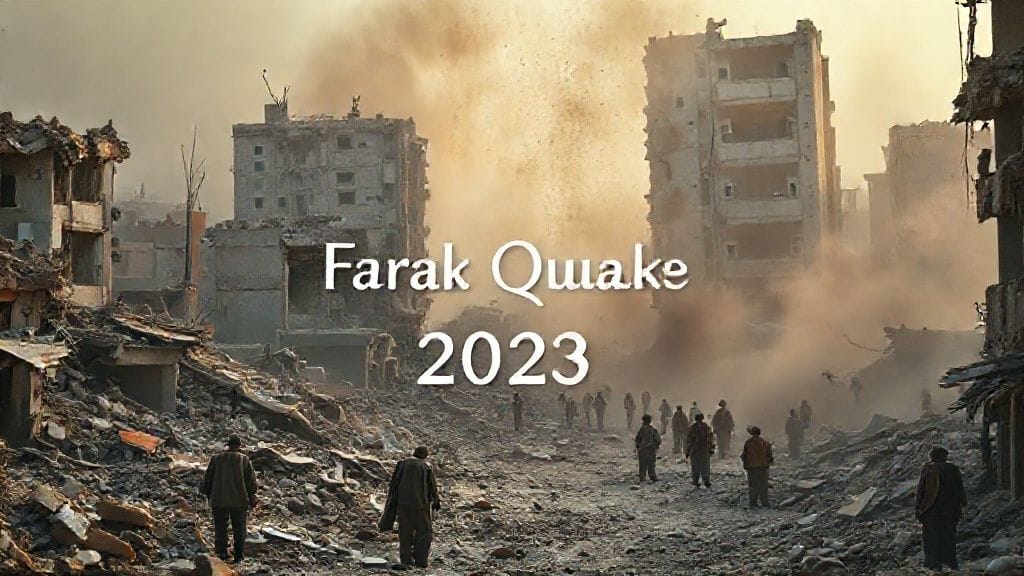
The sun rose lazily over the jagged mountain ridges of western Afghanistan on October 7, 2023, as if nothing unusual awaited the inhabitants of Farah province. Yet, beneath this serene morning, the Earth was about to unleash a violence unseen for decades, ripping through the fragile crust with a roar that echoed through valleys and shattered homes. In a matter of seconds, a powerful earthquake measuring 6.3 struck near Farah city, plunging a vast swath of the region into darkness, chaos, and despair. The ground trembled as mothers clutched their children, elders stumbled from crumbling dwellings, and streets disappeared beneath debris.
The initial shockwave sent panic rippling across a land already marked by years of conflict and hardship. But the earthquake was not just a natural event: it was the crucible revealing the fragility of human life in Afghanistan’s forgotten western frontier. The stories of survival, loss, and resilience that would emerge in the days and weeks following this tremor are both heartbreaking and inspiring, offering a vivid portrait of a community standing at the crossroads of nature’s fury and human endurance.
2. The Hidden Fault Lines: Geological Roots of the Disaster
Afghanistan sits at a tumultuous crossroad of the Indian, Eurasian, and Arabian tectonic plates, making it a hotspot for seismic activity. Farah, located near the western mountainous boundaries, is crisscrossed by fault lines largely unknown to much of the world. The Herat Basin’s geology, characterized by ancient rock formations folded over millions of years, hides a volatile seam beneath.
The devastating earthquake of 2023 was the result of the sudden slippage along a previously under-monitored fault line near the city of Herat, not far from Farah’s borders. Geologists would later describe this fault as "locked tension finally released," a slow build-up of energy dissolved in a brief but violent rupture. The magnitude 6.3 quake sent shockwaves hundreds of kilometers, rattling neighboring Iran and Pakistan and reminding the region of the ever-present geological threat.
This tectonic context is far from mere scientific curiosity; it intersects with the human geography of the area, where construction practices and infrastructure have failed to evolve alongside mounting seismic risks.
3. Farah Province before the Quake: Life on the Edge
Before the earthquake, Farah province was already an emblem of Afghanistan’s trials. Struggling with poverty, intermittent governance, and limited infrastructure, the rural communities here lived largely outside the gaze of central authorities and international media. Agriculture was the backbone of their subsistence, relying on the seasonal flow of the Farah River and fragile irrigation systems.
The economic and social fabrics of the province were worn thin by decades of war, droughts, and neglect. Villages nestled in remote valleys found themselves isolated, their roads often washed away, and access to hospitals and schools precarious. Many residents were internally displaced people, fleeing ongoing violence elsewhere, seeking refuge amid the horizon spanned by rugged mountains.
Despite hardship, vibrant markets, cultural rituals, and a deep sense of community shaped daily life. This land, ancient and turbulent, was home to hopeful families, farmers, and traders — now about to face a calamity not borne of human conflict.
4. October 7, 2023: Timeline of the Catastrophe
At exactly 9:27 AM local time, a violent tremor tore through Farah. Lasting barely twenty seconds, the quake’s intensity was enough to crumble houses built with mud bricks and cause extensive landslides in the surrounding hills. Windows shattered violently, doors warped under pressure, and everyday sounds of life gave way to screams and the crashing of falling debris.
Within minutes, aftershocks rattled nerves and structures alike, spreading panic through towns and villages. Communications were disrupted, roads cracked, and bridges risked collapse. By noon, reports filtered in of widespread destruction—dozens dead, hundreds injured, and many more trapped under rubble.
The provincial capital, Farah City, bore the brunt, with neighborhoods reduced to heaps of dust and wood. Yet in villages further from the epicenter, relief teams struggled to reach survivors, hampered by limited infrastructure and worsening weather.
5. Voices from the Rubble: Eyewitness Accounts and Human Stories
Among the chaos, personal stories humanized the disaster. Fatima, a mother of four in the village of Zaranj, recounted how she was pulled from beneath the collapsed roof of her home by neighbors — her youngest child safe in her arms. “I thought the earth was swallowing us whole,” she whispered, tears mixing with dust on her face.
In Farah City, a young teacher named Samir described rushing his students out of their collapsed school, only to realize dozens more families were left homeless. “There was no time to feel — just act,” he said, the exhaustion palpable in his voice.
These voices echoed across the province — men and women who, amid loss, found courage deep within. Stories of neighbors sharing dwindling food supplies, of strangers digging through rubble in search of life, underscored the essential humanity that emerged from the shadows of disaster.
6. The Immediate Aftermath: Rescue Efforts amid Chaos
The hours after the earthquake saw frantic attempts to organize rescue and relief operations. Local emergency services, though limited, mobilized volunteers, religious leaders, and community groups to dig through ruins. Lacking heavy machinery, many used bare hands to free trapped victims.
However, Afghanistan’s strained resources and the remote location of many affected communities hampered efficient response. Roads blocked by landslides, damaged infrastructure, and security concerns slowed the arrival of aid. The toll mounted as heat and exhaustion added to the physical dangers.
Despite this, resilience shone. Mosques became shelters and coordination hubs; field hospitals were set up in courtyards; and messages of hope spread through improvised radio broadcasts and mobile phones.
7. Afghanistan’s Fragile Infrastructure and Its Testing Moment
Farah’s tragedy exposed the stark inadequacies of Afghanistan’s infrastructure. Buildings, mainly constructed from locally sourced mud bricks, lacked the seismic fortifications necessary to withstand tremors. Hospitals, many understaffed and ill-equipped, strained under the sudden influx of casualties.
Electricity outages and damaged water supplies deepened the suffering, highlighting chronic gaps in basic services. This fragility was not new but starkly emphasized by the earthquake’s destruction, shaking the foundation of how physically and socially secure communities could be.
Experts pointed to a long-neglected need to invest in resilient infrastructure — a challenge compounded by political instability, economic sanctions, and internal conflict.
8. The Role of International Aid: Offers, Challenges, and Politics
As news of the earthquake spread globally, a chorus of international concern arose. Neighboring countries and global organizations pledged humanitarian aid: food, medical supplies, engineering teams, and financial support. The United Nations quickly activated emergency funds, while NGOs prepared to deploy staff.
Yet delivery faced significant hurdles. The political reality of Taliban rule complicated coordination, with many countries cautious about direct engagement. Sanctions and lack of official recognition created bureaucratic bottlenecks, delaying much-needed assistance.
Even where aid arrived, distribution was hampered by regional instability and security considerations. The situation underscored the intersection of diplomacy and humanitarianism in Afghanistan’s crisis management.
9. The Taliban Administration’s Response: Governance amid Crisis
The earthquake presented an unexpected test for the Taliban government, which had taken control in 2021. Initially criticized for lack of preparedness and transparency, the regime emphasized efforts to coordinate emergency relief, deploying militias and paramilitary forces for search and rescue.
The leadership’s use of religious rhetoric aimed to bolster morale among survivors, calling for unity and divine patience. Yet international observers noted shortcomings in communication, access to affected populations, and respect for women's participation in aid efforts.
These dynamics revealed contradictions in governance: a desire to assert control amid chaos, but limited capacity and trust from both the local population and the international community.
10. The Plight of the Displaced: Camps, Cold, and Uncertainty
Hundreds of families found themselves rendered homeless overnight, forced to gather in tent camps on rocky plains or makeshift shelters exposed to October’s chilling winds. Many survivors lacked access to clean water, warm clothing, or adequate food.
The humanitarian needs were vast: nutrition, sanitation, medicine, and protection from the encroaching cold. Children faced acute risk for respiratory diseases, while pregnant women and elderly struggled without proper care.
Beyond physical needs, displaced families grappled with psychological trauma and the trauma of lost livelihoods. Internal displacement compounded Afghanistan’s existing demographic challenges, straining regional resources unevenly.
11. Medical Crisis: Hospitals Overwhelmed and Health Risks
Farah’s already fragile health system buckled under the weight of the disaster. Hospitals flooded with injured victims, many suffering fractures, crush injuries, and wounds requiring surgery. Shortages in medicines and surgical supplies became critical.
Trained medical personnel—already limited due to years of conflict and brain drain—were overtaxed. The risk of infectious outbreaks loomed large in overcrowded displacement camps and among survivors lacking clean water.
International agencies scrambled to augment medical capacity through mobile clinics and emergency shipments, but the task was monumental in a region where medical access had always been a battle.
12. Psychological Scars: Trauma in a Land Already Wounded
Farah’s earthquake was not only a physical catastrophe but also a profound psychological one. The sudden loss of homes, loved ones, and the sense of safety tore into the collective psyche. In a province scarred by decades of war, this new trauma risked deepening wounds.
Mental health services hardly existed locally, and stigma around psychological care often prevented open discussion. Survivors reported nightmares, anxiety, and depression, compounded by the uncertainty of the future.
Humanitarian groups emphasized the urgent need for counseling and psychosocial support, recognizing that rebuilding hearts was as essential as rebuilding walls.
13. Farah’s Cultural Heritage: Ancient Roots Threatened by Nature
Farah province, historically a crossroads of ancient trade routes and civilizations, held a wealth of cultural heritage — archaeological sites, mosques, and traditional architecture reflecting centuries of history.
The earthquake damaged several such treasures, collapsing historic mud-built structures that embodied the identity of local communities. Loss of cultural heritage deepened the tragedy, symbolizing not just physical ruin but also rupture with the past.
Preserving and restoring these sites amid recovery efforts became a secondary but vital mission, linking resilience with memory.
14. Regional Seismology: Why Afghanistan Remains Vulnerable
Seismologists pointed to Afghanistan’s location along convergent plate boundaries as an unending risk factor. Not only Farah but other regions like Bamiyan and the Hindu Kush mountains had suffered destructive quakes historically.
Limited seismic monitoring and lack of public awareness increased vulnerability. Experts called for enhanced early warning systems and better construction codes adapted to seismic risks.
In a region where natural disasters intersected dangerously with geopolitical instability, improving preparedness was both a scientific and moral imperative.
15. The Earthquake’s Unexpected Global Impact
Though centered in remote western Afghanistan, the earthquake’s tremors were felt beyond borders—across the Iranian plateau, reaching as far as Pakistan’s Balochistan. The disaster raised awareness about Afghanistan’s isolation and humanitarian plight.
International media briefly focused on the province, highlighting its people’s resilience even as global attention soon shifted away. The quake spurred renewed discussions about disaster relief in conflict zones and the role of geopolitics in humanitarian access.
Aid flows, refugee movements, and diplomatic engagements around Farah echoed far beyond the mountains, reminding the world of interconnected vulnerabilities.
16. Lessons in Preparedness: What Could Have Been Done?
Analysis of the earthquake response revealed glaring gaps in disaster preparedness. Lack of enforcement of building codes, scarcity of emergency supplies, and weak communication systems prolonged suffering.
Experts suggested that decades of war and sanctions left Afghanistan ill-prepared for natural disasters. Training local responders, better mapping of fault lines, and raising public awareness were key recommendations.
But fiscal constraints, political instability, and limited governance capacity posed formidable barriers to such reforms.
17. Rebuilding from the Rubble: Future Prospects for Farah
As rubble was cleared and aid trickled in, the question shifted to reconstruction. The road ahead was steep: rebuilding homes, schools, and infrastructure to better withstand future quakes was an urgent priority.
International organizations advocated for a “build back better” approach integrating seismic resilience, local participation, and sustainable development. Yet funding, security, and political challenges complicated these efforts.
For the people of Farah, reconstruction was also a test of hope—a chance to reclaim their land and dignity after nature’s ruthless blow.
18. Environmental Impacts: Landslides, Water, and Agriculture
The earthquake triggered numerous landslides disrupting rivers and irrigation canals vital for farming. Soil instability threatened terraces and pastures, compounding the risk of food insecurity in a province already susceptible to drought.
Damage to water systems raised concerns over contamination and long-term ecological damage. Scientists warned that environmental degradation could persist beyond immediate destruction, deepening vulnerability.
Monitoring these impacts was crucial to environmental recovery and sustained livelihoods.
19. Civil Society Steps Up: Local NGOs and Community Resilience
In the midst of devastation, local civil society groups emerged as pivotal actors. Afghan NGOs, religious organizations, and community elders coordinated relief distribution, offered shelter, and advocated for survivors.
Their deep knowledge of local terrain and trust networks proved critical in reaching remote populations. Despite political constraints, these grassroots efforts underscored community resilience.
Their stories offer a powerful reminder that in disasters, local agency remains a cornerstone of recovery.
20. Media Coverage: Narrating Disaster in a Divided World
The earthquake’s media portrayal varied widely—from international outlets framing it as a humanitarian crisis to local media balancing hope and despair. Social media became a tool for sharing information but also rumors and misinformation.
Challenges in reporting included restricted access, censorship, and limited communication infrastructure. Nonetheless, journalists risked safety to bear witness and amplify survivors’ voices.
This coverage shaped both international aid flows and historical memory of the tragedy.
21. The Earthquake in the Context of Afghanistan’s Ongoing Struggles
Farah’s earthquake was a stark reminder that natural disasters compound the challenges of conflict, poverty, and governance in Afghanistan. Its people face a layered crisis — each element reinforcing the others in a cycle of vulnerability.
In many ways, the quake exposed fault lines far deeper than geology: social fractures, political stagnation, and economic exclusion.
Understanding this intersection is key to holistic recovery and sustainable peace.
22. Historical Earthquakes in Afghanistan: Patterns and Memories
Afghanistan’s history is punctuated by devastating earthquakes: notably in 1998 near the Hindu Kush and 2005 earthquakes affecting Bamiyan. Yet collective memory remains fragmented due to disrupted governance and displacement.
The 2023 Farah earthquake joins this lineage, urging renewed efforts to document seismic history and integrate lessons into public awareness and building codes.
Collective remembrance may yet become a tool for resilience.
23. Architectural Traditions vs. Modern Vulnerability
Traditional Afghan architecture, reliant on mud bricks known as adobe, has deep roots but is ill-suited to seismic shocks. Modern materials sometimes introduced without standards worsen risk.
There is potential in blending local craftsmanship with earthquake-resistant designs, but economic and educational barriers exist.
Reinvigorating safe building traditions offers a tangible path to reducing future casualties.
24. The Human Spirit Under Tremor: Stories of Courage and Loss
Amid the devastation, stories of quiet heroism emerged: neighbors risking life for neighbors, women organizing community kitchens, youth mobilizing relief convoys.
Loss was profound — grandparents, children, entire families wiped out in fleeting seconds. Yet human warmth and solidarity illuminated the darkness.
These narratives remind us that disasters do not erase humanity — they reveal its depths.
25. Towards a Safer Tomorrow: Scientific Innovations and Hope
Looking forward, advances in seismic monitoring, mobile technology, and construction science bring hope to Afghanistan’s disaster-prone regions. International collaborations offer knowledge transfer and funding opportunities.
Empowering local scientists, planners, and citizens to engage with risk management could transform futures.
The Farah earthquake, though a tragedy, may become a catalyst for change — a call to harness science, solidarity, and sovereignty to protect lives yet to come.
Conclusion
The earthquake that struck Farah province on October 7, 2023, was more than a geological rupture—it was a rupture in the fabric of a society already stretched thin by history, conflict, and neglect. In those terrifying moments beneath trembling skies and collapsing walls, the fragility of life was starkly revealed. Yet, in the faces of survivors, amid the ruins and despair, the indefatigable human spirit shone through.
This catastrophe laid bare the intricate interplay between natural forces and human vulnerabilities—how centuries-old geology, political isolation, economic hardship, and cultural legacies merged into one profound tragedy. The challenge now lies not only in rebuilding homes and infrastructure but in reconstructing hope, systems, and resilience.
For Farah and Afghanistan at large, the earthquake is a somber reminder of our shared humanity — fragile yet fiercely persistent — a testament to endurance amidst upheaval. It is a call to the world to bear witness, to act, and to commit to a future where nature’s fury meets prepared hearts and hands.
FAQs
Q1: What caused the Farah earthquake in 2023?
The earthquake was caused by sudden slippage along a previously under-monitored fault line near Farah, related to the tectonic interaction of the Indian and Eurasian plates. This geological tension built over decades until released in a magnitude 6.3 quake.
Q2: How severe was the human impact of the earthquake?
Hundreds of people died, thousands were injured, and many more displaced. Entire neighborhoods in Farah city and surrounding villages were destroyed, leading to a humanitarian crisis with urgent needs for shelter, medical care, and food.
Q3: How did the Taliban government respond to the disaster?
The Taliban deployed local forces for search and rescue, coordinated some relief efforts, and used religious messaging to encourage resilience. However, limited capacity, lack of transparency, and political isolation hindered full effectiveness.
Q4: What challenges did international aid face in reaching Farah?
Political barriers, sanctions, security concerns, and damaged infrastructure delayed aid delivery. Coordination was complicated by lack of formal recognition of the Taliban and ongoing regional instability.
Q5: Why is Afghanistan particularly vulnerable to earthquakes?
Positioned at the convergence of multiple tectonic plates, Afghanistan is seismically active. The country lacks widespread seismic monitoring and enforcement of earthquake-resistant construction, increasing risk.
Q6: What long-term consequences does the earthquake have for Farah?
Long-term impacts include displacement, damage to infrastructure and agriculture, psychological trauma, and challenges to economic recovery. It also highlighted the urgent need for disaster preparedness reforms.
Q7: How have local communities and NGOs contributed to relief efforts?
Local organizations and religious groups played vital roles in rescue, shelter provision, food distribution, and psychosocial support, often bridging gaps where government or international aid was slow or absent.
Q8: What lessons can be learned to mitigate future disasters in Afghanistan?
Essential lessons include improving building codes, expanding seismic monitoring, raising public awareness, enhancing emergency preparedness, and ensuring political stability to support sustained development.