Table of Contents
- The Calm Before the Storm: Baghdad at the Dawn of the 9th Century
- Seeds of Discord: The Abbasid Dynasty’s Fragile Unity
- The Fourth Fitna Unfolds: Origins of the Civil War
- Brothers at Arms and Rivals in Blood: al-Amin versus al-Ma’mun
- The Clash of Capitals: Baghdad and Samarra on the Brink
- The Siege of Baghdad: A City’s Endurance Tested
- Al-Ma’mun’s Strategic Genius and the Fall of al-Amin
- The Price of Victory: Destruction and Death in Iraq’s Heartland
- Religious and Ethnic Undercurrents: The Role of Factions and Tribal Loyalties
- The Impact on the Abbasid Caliphate’s Political Structure
- The Fragmentation of Power: Rise of Regional Governors and Decline of Central Authority
- Cultural and Economic Aftershocks in the Post-War Abbasid World
- The Fourth Fitna’s Influence on Islamic Theology and Scholarship
- From War to Stability: The Reign of al-Ma’mun and His Legacy
- Lessons from the Fourth Fitna: Power, Faith, and Fragility
- A Human Story: Voices and Anecdotes from the Civil War
- The Shifting Sands of Baghdad and Samarra: Urban Transformation after Conflict
- The Fourth Fitna in the Global Context of Early Medieval Politics
- The Memory of the Civil War in Later Islamic Historiography
- Conclusion
- FAQs
- External Resource
- Internal Link
1. The Calm Before the Storm: Baghdad at the Dawn of the 9th Century
In the early years of the ninth century, Baghdad stretched like a jewel upon the banks of the Tigris River—a radiant metropolis pulsing with culture, learning, and political dominance. Minarets pierced the sky, markets buzzed with merchants from distant lands, and scholars debated the mysteries of the cosmos within the House of Wisdom. The Abbasid Caliphate, then at the height of its intellectual and territorial reach, exuded confidence founded on centuries of tradition and religious legitimacy.
Yet, beneath the city’s gilded surface, shadows of discord lengthened. The palace corridors echoed with murmurs of rivalry; itself a tangle of family loyalties and ambitions. It was at this crossroads of immense cultural flourish and brewing political tension that the Abbasid Civil War—known as the Fourth Fitna—would soon ignite. The vibrant calm was deceptive: it masked a profoundly fragile dynasty teetering on the edge of fracture.
The year 811 would mark the beginning of a conflict that tore through the heart of the empire, marred Baghdad’s brilliance, and set the trajectory for Islamic governance and society for decades.
2. Seeds of Discord: The Abbasid Dynasty’s Fragile Unity
The Abbasids had ascended to power in 750 via a revolution against the Umayyads, promising justice, unity, and a return to Islamic principles. Yet by the early ninth century, their hold on an empire that stretched from North Africa to Central Asia was as intricate as it was tenuous.
Centered on the figure of the Caliph, ultimate political and spiritual authority blended with tribal alliances and ethnic identities, revealing a delicate balancing act. The heirs of Abdallah al-Mansur, the dynasty’s second caliph, grappled with the challenges of succession, governance, and legitimacy among a diverse population including Arabs, Persians, Turks, and various minority groups.
A particularly volatile ingredient was the rivalry between al-Amin and al-Ma’mun, sons of Caliph Harun al-Rashid, perhaps the most iconic Abbasid ruler. Harun’s death in 809 did not bring stability; instead, it ignited the toxic rivalry between the heirs destined to tear the empire apart.
3. The Fourth Fitna Unfolds: Origins of the Civil War
Fitna, meaning “trial” or “civil strife,” had haunted earlier Abbasid history, but none more impactful than the fourth—centered on succession disputes unleashed immediately upon Harun's death. Harun had attempted to forestall conflict by appointing al-Amin as caliph with Baghdad as capital and al-Ma'mun as governor of the eastern province of Khurasan, alongside the title of heir should al-Amin fail.
This arrangement, however, was rife for disaster. Al-Amin, rooted in Baghdad’s Arab elite and palace intrigues, viewed his half-brother al-Ma’mun — Persian-leaning, supported by Khurasani elites and fierce frontier warriors — as a threat. The fragile peace broke soon after, as al-Amin sought to depose al-Ma’mun from his governorship and strip his succession rights.
What followed was a brutal cascading conflict—rarely a clean, single battle but an agonizing struggle across landscapes political, military, and familial.
4. Brothers at Arms and Rivals in Blood: al-Amin versus al-Ma’mun
The story of the Fourth Fitna is above all that of two brothers caught in the merciless vortex of power, loyalty, faith, and betrayal. Al-Amin, with his courtly sophistication and capital-centered power base, exuded a regal flair inherited from his father, Harun al-Rashid. Al-Ma’mun, conversely, represented a different vision—rooted in the cultural influences of Persia and the military strength of Khurasan’s turbulent frontiers.
Their rivalry quickly evolved beyond personal ambition. Supporters crystallized along ethnic and regional lines: Baghdad’s Arab elites versus the Persian- and Khurasani-backed eastern provinces. This division foreshadowed not just a civil war but a profound shift in the empire's cultural and political axis.
5. The Clash of Capitals: Baghdad and Samarra on the Brink
While Baghdad remained the heart of the Abbasid Caliphate, al-Ma’mun’s power base in Khurasan and the city of Samarra signified the shifting tides. Samarra, a newer city founded by Harun, served as a military and administrative hub for loyalist troops, particularly Turkic slaves who formed an elite ruling guard.
As tensions flared into open conflict, Samarra's symbolic role as an alternative center of power challenged Baghdad’s superiority. It signaled the deepening divisions inside the empire’s fabric—symbolized by two cities, two armies, two visions for the caliphate’s future. What started as a disputed succession rapidly escalated into siege and slaughter.
6. The Siege of Baghdad: A City’s Endurance Tested
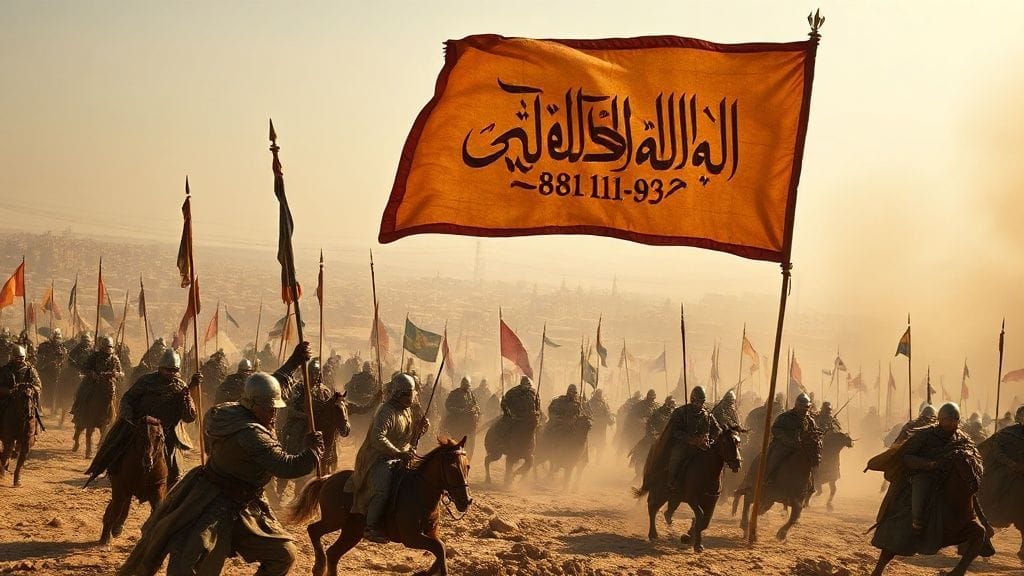
In 812, al-Ma’mun’s forces encircled Baghdad, triggering a protracted siege that would stretch the limits of the city’s endurance—and the human spirit. For over a year, Baghdad was locked in a brutal engulfment: siege engines battered its walls while famine and disease ravaged its citizens. The Tigris waters ran red with the blood spilled from skirmishes that infiltrated even the city’s innermost quarters.
Historical narrations evoke images of desperate defenders, barricades fashioned from scholars’ manuscripts, and families caught in the crossfire—a vivid tableau of a civilization bleeding from within. The siege was not only a military confrontation but a profound psychological and societal rupture, shattering the illusion of invincibility that had enveloped the capital.
7. Al-Ma’mun’s Strategic Genius and the Fall of al-Amin
Despite initial setbacks, al-Ma’mun’s commanders displayed astute strategies capitalizing on Khurasani cavalry superiority and the fracturing loyalties inside Baghdad’s walls. Their persistent pressure culminated on September 813, with the dramatic capture of al-Amin—a moment both tragic and symbolic.
Al-Amin’s execution, ordered by al-Ma’mun, marked an irreversible end of the dynastic conflict, solidifying al-Ma’mun as the uncontested Caliph. This ruthless calculus reflected not just a political imperative but the ruthless logic of dynastic survival, intertwined with religious authority.
8. The Price of Victory: Destruction and Death in Iraq’s Heartland
But victory bore a grim price. The war had devastated much of Iraq’s fertile lands and economic infrastructure. Baghdad’s grandeur was marred pragmatically and psychologically. The destruction was not limited to soldiers and capitals; countless civilians perished, cities' demographics shifted, and the delicate fabric of Abbasid society was strained almost to breaking.
These losses left scars that would outlast al-Ma’mun’s reign, with urban decay and political instability becoming recurring themes in subsequent years. The civil war exposed the costs hidden in dynastic power struggles and shaped the collective memory of the empire.
9. Religious and Ethnic Undercurrents: The Role of Factions and Tribal Loyalties
While the war's spark lay in succession claims, the flames were fanned by deep ethnic and religious fractures. The conflict highlighted Arab-Persian tensions, with al-Ma’mun’s eastern support often associated with Persian identities and the sophisticated Islamic philosophical heritage burgeoning there.
Shi’a factions and various religious minorities also played ambiguous roles, as alliances shifted amid the chaos. The war exacerbated existing divides, underscoring the complex mosaic of Islamic society. It revealed how political struggles intertwined with evolving religious and ethnic identities, often in messy and unpredictable ways.
10. The Impact on the Abbasid Caliphate’s Political Structure
The Fourth Fitna fractured the Abbasid caliphate’s centralized authority, dismantling the myth of uncontested, sacred rule emanating from Baghdad. Regional governors and military commanders gained autonomy, taking advantage of the weakened central government.
Al-Ma’mun’s reign, though victorious, had to contend with the reality of a dispersed power network, sometimes subject to insubordination. Over time, this trend would crystallize into semi-independent provinces, heralding a slow decline of imperial cohesion but also fostering new political dynamics and cultural exchanges.
11. The Fragmentation of Power: Rise of Regional Governors and Decline of Central Authority
Indeed, the war ushered in an era where military commanders and provincial leaders could assert greater independence, setting precedents that challenged caliphal supremacy. Cities like Cairo, Basra, and others increasingly became centers of local power and identity.
This diffusion of authority altered the very nature of the Islamic empire—once a tightly held nexus of power, now a looser confederation struggling to maintain unity under an increasingly symbolic caliphate.
12. Cultural and Economic Aftershocks in the Post-War Abbasid World
The Fourth Fitna disrupted trade routes and agricultural production, shaking the economic foundations across Iraq and beyond. Although Baghdad remained a cultural beacon, the devastation caused a temporary decline in patronage for arts and sciences.
Still, paradoxically, this period also saw the beginning of intellectual shifts. With Khurasan’s influence ascendant under al-Ma’mun, Persian culture and philosophy gained greater prominence within Abbasid society, seeding an intellectual renaissance that blended diverse traditions.
13. The Fourth Fitna’s Influence on Islamic Theology and Scholarship
Al-Ma’mun’s accession amplified the caliph’s role as a patron of knowledge, particularly in philosophical and scientific fields. His controversial endorsement of the Mu’tazilite theological school, which emphasized reason and free will, sparked intense debates that would reverberate throughout Islamic thought.
The civil war’s legacy thus extends beyond bloodshed—it reshaped Islamic intellectual culture, fostering questioning, dialogue, and schools of thought that reflected an empire grappling with modernity and tradition.
14. From War to Stability: The Reign of al-Ma’mun and His Legacy
Despite seizing power through bloodshed, al-Ma’mun worked tirelessly to restore stability. His policies aimed to reconcile factions, rebuild infrastructure, and expand scholarly pursuits. Though his rule saw relative peace, the underlying fissures from the Fourth Fitna lingered, shaping policies and court intrigues.
His efforts positioned Baghdad as a renewed center of learning but also foreshadowed challenges of governing a diverse and fractious empire bridging East and West.
15. Lessons from the Fourth Fitna: Power, Faith, and Fragility
The Fourth Fitna offers timeless reflections on the perils of dynastic struggle, the volatility of imperial unity, and the complex interplay of ethnicity, religion, and politics. It reveals how personal ambitions ripple outward, reshaping societies and histories—often with irreversible consequences.
In the sacred city of Baghdad and the turbulent steppes of Samarra, the war etched an indelible narrative about the human cost of power and the resilience of civilizations.
16. A Human Story: Voices and Anecdotes from the Civil War
Survivor accounts and chroniclers paint intimate portraits amid the grand story: a mother shielding her children during shelling; a scholar risking manuscript loss to join the defense; soldiers torn between loyalty to family and empire.
One poignant anecdote tells of a humble craftsman in Baghdad who, despite siege hardships, ingeniously rigged water supplies to aid the starving city—a testament to human ingenuity amid devastation.
17. The Shifting Sands of Baghdad and Samarra: Urban Transformation after Conflict
Post-war Baghdad struggled to regain its luminous status, while Samarra’s military significance deepened. The physical scars of destruction were compounded by demographic shifts, as displaced refugees and new elites redefined urban culture.
These transformations reflected the evolving identity of the Abbasid realm—a world negotiating between old glories and new realities.
18. The Fourth Fitna in the Global Context of Early Medieval Politics
Viewed from a wider lens, the civil war mirrored broader themes of early medieval history: fragmented empires, contested successions, and the rise of military elites. It echoed the feudal struggles in Europe and dynastic conflicts in Asia, placing the Abbasid experience within a global pattern of transition.
19. The Memory of the Civil War in Later Islamic Historiography
Later historians and poets recounted the Fourth Fitna with sorrowful reverence, warning of division and pride. The conflict served as a cautionary tale, invoked by rulers to justify unity or criticize dissent.
Its memory shaped Islamic political thought, emphasizing the need for order, justice, and the dangers inherent in dynastic rivalries.
20. Conclusion
The Abbasid Civil War, or Fourth Fitna, was more than a brutal power struggle; it was a defining crucible for one of history’s greatest empires. In tearing apart Baghdad’s heart and pitting brother against brother, it exposed the vulnerabilities of political and spiritual authority bound in flesh and blood.
Yet, from the ashes arose new paradigms—intellectual, cultural, and political—that would shape Islamic civilization for centuries. The story of this war is a testament to human frailty and resilience, the ephemeral nature of glory, and the enduring quest for power and peace.
FAQs
Q1: What triggered the Abbasid Civil War known as the Fourth Fitna?
A1: The primary trigger was the contested succession between Harun al-Rashid’s sons, al-Amin and al-Ma’mun. Disputes over governance and inheritance rights deteriorated into open conflict.
Q2: How did the war impact Baghdad and the Abbasid Caliphate?
A2: Baghdad suffered severe destruction and siege trauma; the caliphate’s centralized authority weakened, leading to increased provincial autonomy and military power shifts.
Q3: Who were the main factions involved in the conflict?
A3: The rivalry largely split between al-Amin’s Baghdad-centered Arab elites and al-Ma’mun’s Khurasani eastern supporters, enriched by ethnic, military, and religious dynamics.
Q4: What role did religion play in the civil war?
A4: Religious affiliations influenced alliances, with theological schools like the Mu’tazilites gaining prominence, while sectarian tensions and minority groups added complexity to the conflict.
Q5: How did al-Ma’mun’s victory influence Islamic culture?
A5: Al-Ma’mun's reign fostered a renaissance in philosophy, science, and arts, promoting rationalism and blending Persian and Arab traditions.
Q6: What was the long-term consequence of the Fourth Fitna on Abbasid political power?
A6: It marked the beginning of the caliphate’s political decentralization, with regional governors asserting autonomy, weakening caliphal direct control.
Q7: Are there surviving accounts or literature from people affected by the war?
A7: Yes, chroniclers, poets, and scholars of the time provide vivid narratives and anecdotes revealing civilian and military experiences during the conflict.
Q8: How is the Fourth Fitna remembered in Islamic history today?
A8: It is seen as a tragic but formative episode, illustrating the perils of dynastic division and the importance of religious and political unity in Islamic governance.

