Table of Contents
- The Dawn of a New Era: Khurasan on the Eve of Revolution
- The Abbasid Revolution Begins: The Spark in Merv
- The Weight of the Umayyads: Unrest and Oppression
- Khurasan’s Unique Role: A Land of Diversity and Dissidence
- The Abbasid Family: Shadows of the Prophet’s Kin
- Abu Muslim al-Khurasani: The Unsung Architect
- Early Strategies and Secret Alliances
- The Gathering Storm: Rebellion Spreads Across Khurasan
- Siege and Struggle: Merv as the Revolution’s Crucible
- The Ideological Fire: Propaganda and Religious Legitimacy
- The Collapse of Umayyad Authority in the East
- The Broader Context: Why the Abbasid Revolution Resonated
- Battles, Betrayals, and Bloodshed: The Human Cost
- Transition from Rebellion to Empire
- The Revolution’s Enduring Legacy in Islamic Political Thought
- Reflections from Contemporaries: Chroniclers and Poets
- Khurasan Beyond 747: The Birthplace of a Global Caliphate
- The Abbasid Revolution’s Impact on Later Revolts and Dynasties
- The Cultural Renaissance Heralded by the Abbasids
- Conclusion: From Merv’s Dust to the Golden Age
- FAQs
- External Resource
- Internal Link
The Dawn of a New Era: Khurasan on the Eve of Revolution
In the blistering heat of a late spring day in 747 CE, the vast oasis city of Merv—modern-day Mary, in eastern Iran—felt an electric pulse beneath its ancient walls. The air was thick with anticipation and simmering discontent. Camel caravans bore goods from the farthest reaches of the Silk Road, while merchants whispered rumors of revolt in shadowed bazaars. This city, perched at the crossroads of empires, was about to become the birthplace of one of the most profound transformations the Muslim world had ever seen: the Abbasid Revolution.
This was not merely a local upheaval nor a mere change of dynasty. The rebellion that stirred in the dust and clay of Khurasan's deserts was to topple the centuries-old Umayyad Caliphate and redefine Islamic political and cultural life for centuries to come. It was the revolution of an entire disenfranchised class—Arabs and non-Arabs alike—seeking justice, representation, and a new vision of governance rooted not simply in conquest, but in a shared spiritual and moral legitimacy.
To understand the seismic tremors radiating from Merv, one must look closely at the turbulent world the Abbasid revolutionaries inherited—and sought to dismantle.
The Abbasid Revolution Begins: The Spark in Merv
The Abbasid Revolution did not erupt spontaneously but ignited through years of finely woven conspiracies and popular discontent. By 747 CE, Khurasan had become a hotbed of opposition — a cauldron where grievances against Umayyad misrule boiled over into open insurrection.
Merv, a splendid city with its lush gardens and bustling markets, had a population composed of Arabs, Persians, Turks, and various other ethnic groups, many of whom felt sidelined by Umayyad policies that favored Arab elites and marginalized non-Arabs. The Abbasids, descendants of Muhammad’s uncle Abbas ibn Abd al-Muttalib, claimed a religious legitimacy that resonated deeply in this diverse milieu.
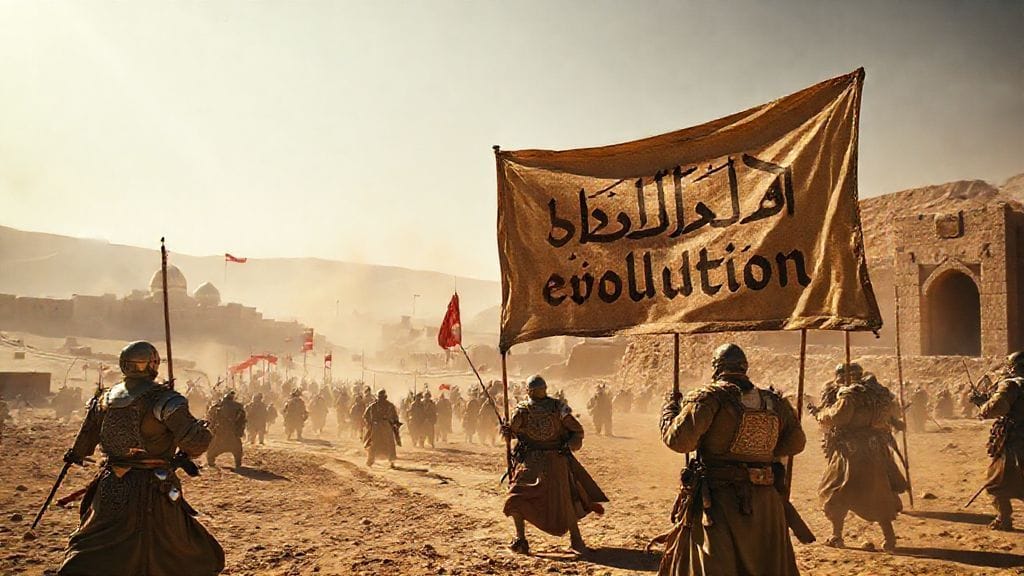
Under the cloak of night and amidst whispered oaths of allegiance (bay'at), secret gatherings unfolded in houses, mosques, and caravanserais. It was here in Merv that the Abbasid flag was raised—not in a grand ceremony, but in quiet, deliberate defiance.
The Weight of the Umayyads: Unrest and Oppression
The Umayyad Caliphate, established in the aftermath of the first Islamic civil war, had ruled the vast Islamic territories from Damascus for nearly a century. Though expanded to its greatest geographical extent under their banner, the dynasty's methods bred a frustration that simmered beneath the surface.
Their governance was marked by heavy taxation, ethnic stratification, and a prioritization of Arab elites over newly conquered peoples and converts to Islam. The mawali—non-Arab Muslims, primarily Persians and others—found themselves denied equal status, fueling resentment that the Abbasid movement expertly exploited.
Events such as the brutal suppression of revolts in Iraq and the marginalization of key religious figures underscored the Umayyads’ rigidity, painting a picture of a dynasty disconnected from the diverse realities of their empire.
Khurasan’s Unique Role: A Land of Diversity and Dissidence
Khurasan was no ordinary province. Stretching from the fertile lands of northeastern Iran into Central Asia, it had developed a character and identity distinct even among the vast reaches of the Umayyad Caliphate.
Its population was a mosaic of ethnicities and faiths. Persian culture, language, and traditions thrived, and a strong sense of local identity permeated its cities and countryside.
Politically and militarily vital, Khurasan had often been a launching pad for uprisings, given its distance from the Umayyad center and its history of semi-autonomy. The Abbasids knew that winning Khurasan was decisive. Control over this province meant access to vast resources, armies, and the legitimacy that came with marshaling diverse social groups under one banner.
The Abbasid Family: Shadows of the Prophet’s Kin
Central to the revolution was the claim of the Abbasids to be rightful heirs to the Prophet Muhammad’s legacy. As the clan of Muhammad’s uncle Abbas, they portrayed themselves as custodians of justice and piety, distinct from the Umayyad’s secular and often despotic rule.
Generations had passed quietly, the Abbasids biding their time in obscurity, nurturing alliances and supporters in Khurasan and beyond. Their lineage was more than genealogy; it was a potent political weapon, an empowerment of the revolution’s religious aspect that galvanized many who yearned for a caliphate ruled by blood connected to the Prophet.
Abu Muslim al-Khurasani: The Unsung Architect
No narrative of the Abbasid Revolution can omit Abu Muslim, an enigmatic figure whose leadership was instrumental in turning whispered conspiracies into a full-scale revolt.
Little is certain about his origins—some say he was Persian, others hint at enigmatic heritage—but what is clear is his charisma, tactical genius, and ability to unite disparate groups.
Abu Muslim’s mastery of both politics and battlefield tactics allowed him to consolidate power quickly. His personal oath to the Abbasid cause made him the ideal general and symbol of the revolution’s dynamism. Under his command, the rebellion expanded exponentially.
Early Strategies and Secret Alliances
The Abbasid Revolution succeeded not only because of grievances but also due to careful planning.
For years before open insurrection, secret networks were established throughout Khurasan. Propaganda in the form of sermons, poetry, and oral tradition spread messages that denounced Umayyad corruption and promised a just new order.
Alliances with disenfranchised Arab tribes, Persian nobles, mawali, and religious scholars underpinned the rebellion. Each faction brought unique motivations and resources to the cause.
Abu Muslim’s ability to balance, cajole, and sometimes brutally suppress opposing interests among the rebels speaks to the complexity of the movement.
The Gathering Storm: Rebellion Spreads Across Khurasan
Once the revolt ignited in Merv, the flames spread rapidly. Cities like Nishapur, Tus, and Balkh fell under the revolution's sway.
Reports detail how local governors either fled, switched allegiances, or were overthrown by popular insurgents. The tide of rebellion grew unstoppable.
The Umayyad response was sluggish, hampered by distance and internal politics in Damascus. While they dispatched armies from the west, reinforcements were often delayed, allowing Abbasid forces to entrench their control.
Thus began a protracted conflict that would topple one of the most powerful dynasties in the medieval world.
Siege and Struggle: Merv as the Revolution’s Crucible
Merv itself was more than a symbolic starting point—it was a battlefield.
The city’s fortifications witnessed intense fighting as loyalists to the Umayyads resisted the growing insurgent forces. The siege stretched weeks, marked by hunger, desperation, and the brutal realities of medieval warfare.
But the rebels’ intimate knowledge of the city and the support of the local population ultimately tipped the scales in their favor. The fall of Merv was a turning point—not just militarily, but psychologically.
It demonstrated to the wider Islamic world that the Umayyads were vulnerable.
The Ideological Fire: Propaganda and Religious Legitimacy
One of the revolution’s distinguishing features was its use of religious rhetoric and symbolism.
The Abbasids proclaimed their rule as a restoration of righteous Islamic governance, promising equality among Muslims regardless of ethnicity, in contrast with the Arab-centric Umayyads.
Pamphlets, public sermons, and poetry reinforced these messages, transforming discontent into a crusade for divine justice.
This ideological dimension attracted support from diverse groups, especially Shi’a factions who saw in the Abbasids a way to challenge the Umayyad suppressions, despite the Abbasids not being Shi’a in the strictest sense.
The Collapse of Umayyad Authority in the East
By 750 CE, the Umayyad grip had effectively crumbled east of Iraq.
The Caliph Marwan II, confronted with defeat in Khurasan, retreated westward, but the damage was done.
Many Umayyad elites were killed or fled into exile, ending their nearly century-long reign as caliphs.
The Abbasids emerged victorious, with the revolution now poised to sweep west and seize the caliphate’s heart—the city of Baghdad.
The Broader Context: Why the Abbasid Revolution Resonated
This revolution was not merely about political power; it embodied the aspirations of a diverse and evolving Islamic society.
The Arab conquest had created an empire with a vast and multi-ethnic population, but governance structures lagged behind societal changes. The Abbasid Revolution was a symptom and a statement.
It addressed long-standing inequities felt by Mawalis and newly Islamized peoples, and it offered a governance model that combined religious legitimacy with a more cosmopolitan outlook.
It is no coincidence that the Abbasid era would later bloom into a cultural and intellectual renaissance.
Battles, Betrayals, and Bloodshed: The Human Cost
No revolution is bloodless. The campaign through Khurasan was marked by cruel battles, shifting loyalties, and heavy civilian tolls.
Accounts detail massacres, executions of captured Umayyad loyalists, and internal purges as the Abbasids consolidated power.
Figures like Abu Muslim, once celebrated, would later be assassinated amid court intrigues, revealing the darker shadows of revolution.
The cost weighed heavily on communities, but the desire for change pushed the revolution forward relentlessly.
Transition from Rebellion to Empire
The seizure of Khurasan was the beginning of the Abbasids’ path to the throne.
Soon after, the revolutionary army moved westward, culminating in the decisive Battle of the Zab in 750 CE, where the Umayyads were finally defeated.
The Abbasids established Baghdad as their capital, inaugurating an era defined by vibrant intellectual life, administrative reform, and imperial expansion.
Yet, the seeds of internal conflict were sown during this transition, as the new rulers struggled to balance their ideals against the harsh realities of empire.
The Revolution’s Enduring Legacy in Islamic Political Thought
Beyond the battlefield, the Abbasid Revolution reshaped how Islamic leadership was conceptualized.
It elevated the principle that a caliph must be both politically legitimate and spiritually connected to the Prophet’s family.
Moreover, the Abbasids championed the inclusion of non-Arabs, subtly shifting Islamic identity toward a more universalist ethos.
These changes reverberated through centuries, influencing subsequent Islamic movements and governance models.
Reflections from Contemporaries: Chroniclers and Poets
Medieval historians like al-Tabari and poets captured the fervor and tragedy of these years with vivid language.
Their writings reveal a society deeply divided, yet hopeful. Poems celebrated the Abbasid cause as destined and just, while chronicles recorded the horrors and heroics with equal candor.
These sources offer invaluable windows into the human dimension—fear, hope, ambition—at the heart of a revolution that reshaped a civilization.
Khurasan Beyond 747: The Birthplace of a Global Caliphate
Long after the initial uprising, Khurasan remained a region of strategic and cultural importance under Abbasid rule.
It became a melting pot where Persian and Arab traditions intertwined, producing scholars, scientists, and artists whose works would influence the medieval world.
The revolution’s origin in Khurasan is thus emblematic—not just a rebellion against a dynasty, but the genesis of a renewed Islamic cultural and political identity.
The Abbasid Revolution’s Impact on Later Revolts and Dynasties
The 747 uprising reverberated far beyond its time.
Future movements—whether against later Abbasid caliphs, Mongol invaders, or Ottoman sultans—would draw inspiration from the moral and political precedents set by the Abbasids.
The narrative of righteous revolt and claims of religious legitimacy became a powerful template in Islamic political culture.
The Cultural Renaissance Heralded by the Abbasids
In the centuries following their rise, the Abbasids fostered a golden age marked by monumental advances in science, philosophy, literature, and the arts.
Institutions like the House of Wisdom symbolized this vibrant era, where knowledge of Greek, Persian, Indian, and Arab worlds converged.
This flowering might never have happened without the revolution that began humbly in Merv, where a group of determined men and women dared to dream of a just caliphate.
Conclusion: From Merv’s Dust to the Golden Age
The Abbasid Revolution’s beginnings in 747 CE in the city of Merv represent more than a historical event—they capture the enduring human yearning for justice, identity, and renewal.
What began in secret gatherings, whispered prayers, and clandestine oaths in a desert city grew into one of the most transformative chapters in Islamic history.
Despite the suffering, betrayals, and violence, the revolution sparked a new dawn—one that continues to influence political thought, culture, and identity in the Muslim world to this day.
It reminds us that history is never fixed but is a constant striving toward ideals, often forged in the crucible of conflict and hope.
FAQs
Q1: Why did the Abbasid Revolution start specifically in Khurasan?
A: Khurasan’s distance from Umayyad centers, its ethnic diversity, and social tensions made it ripe for rebellion. The province had a history of autonomy and was home to many marginalized groups who welcomed the Abbasid cause.
Q2: Who was Abu Muslim al-Khurasani, and why was he important?
A: Abu Muslim was the revolution’s military leader in Khurasan. His charisma, strategic acumen, and ability to unite different factions were crucial for the rebellion’s success.
Q3: How did the Abbasids legitimize their claim to power?
A: They traced their lineage to Abbas, the uncle of Muhammad, using religious symbolism to claim rightful leadership and contrasted themselves with the Umayyads’ perceived corruption.
Q4: What was the role of non-Arab Muslims (mawali) in the revolution?
A: Mawali, often marginalized under Umayyad rule, were instrumental supporters of the revolt. The Abbasids promised them equality, which broadened their base.
Q5: Did the Abbasid Revolution lead to immediate peace and stability?
A: No. While it ended Umayyad rule, the Abbasids faced internal conflicts, rebellions, and political intrigue in the decades after their rise.
Q6: How did this revolution influence later Islamic history?
A: It established ideals of religious legitimacy and inclusivity and became a model for future political and spiritual movements in the Muslim world.
Q7: What sources provide information about the Abbasid Revolution?
A: Chroniclers like al-Tabari and contemporary poets offer detailed accounts, blending historical facts with cultural perspectives.
Q8: Why is the Abbasid era considered a golden age?
A: The Abbasids fostered intellectual, cultural, and scientific advancements, turning Baghdad and other cities into centers of learning and arts.

