Table of Contents
- The Waning Light of Roman Gaul: Setting the Stage
- Who Was Aegidius? The Last Roman Commander in Gaul
- The Rise of Soissons: From Roman Stronghold to Isolated Enclave
- The Fracturing Empire: Rome’s Collapse and Gaul’s Transformation
- The Shadow of the Visigoths: Pressures from the South
- Aegidius’ Enclave: Political Autonomy Amidst Chaos
- The Military Challenges: Defending Soissons Against Barbarian Clans
- The Role of the Roman Senate and Imperial Authority in Exile
- Alliances and Rivalries: Negotiating Power with the Franks
- Daily Life in Soissons: A Roman City Surviving the Dark Ages
- The Legacy of Roman Law and Culture in the Enclave
- Letters, Chronicles, and Archaeology: Sources for Aegidius’ Era
- Aegidius’ Death and the Succession of Syagrius: Last Roman Lords of Gaul
- The Fall of Soissons: The Frankish Conquest and the End of Roman Rule
- Echoes Through Time: How Soissons Shaped Medieval Europe
- The Myth and Memory of Aegidius in Later Histories
- The Impact of Soissons on the Formation of the Frankish Kingdom
- Revisiting the Enclave in Modern Historiography
- Lessons from Soissons: Survival, Identity, and Change at Empire’s Edge
- Conclusion: The Last Light of Rome in Gaul
- FAQs about Aegidius and Soissons
- External Resource
- Internal Link
The Waning Light of Roman Gaul: Setting the Stage
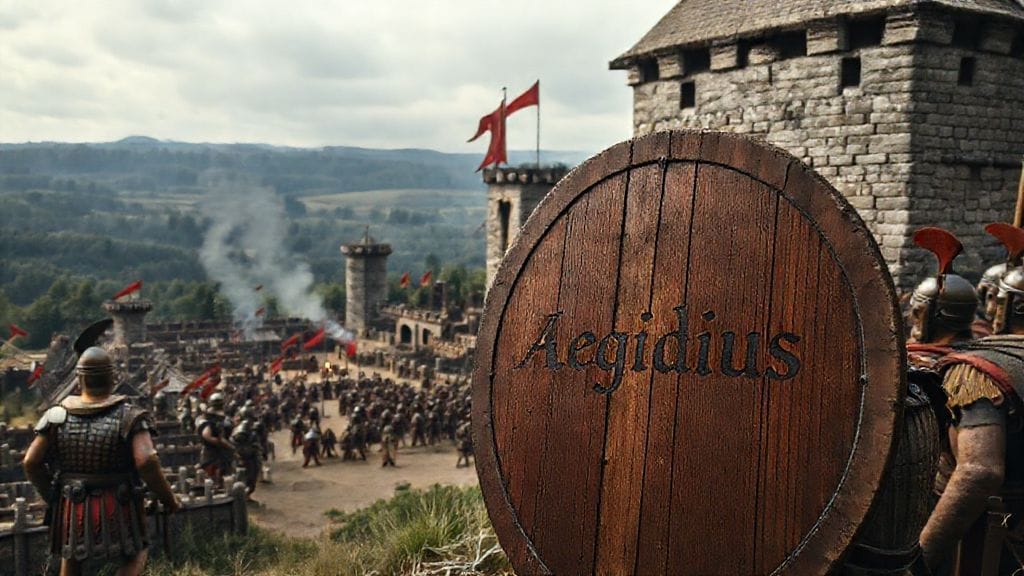
It was a time when empire crumbled not with a dramatic thunderclap, but through a slow, inexorable drifting apart. The sun was setting on Roman Gaul—a land once teeming with legions, aqueducts, and the hum of imperial power. By the mid-fifth century, the grand mosaic of Roman authority was splintering into shards, and amidst this turbulence, a lone commander prepared to hold the last bastion of Roman order: the enclave of Soissons, a fortified city clinging desperately to its fading legacy.
Imagine the scene in the early 460s—walls scarred by siege, markets whispering rumors in broken Latin and Gallic tongues, citizens torn between loyalty to a distant Rome and the encroaching barbarian kingdoms carving up the landscape. Aegidius, the commander and maker of this fragile sanctuary, emerged as both a symbol and a bulwark in this chaotic era. His story is not merely one of battles and politics, but of identity and survival when the very idea of empire seemed to dissolve. But this was only the beginning…
Who Was Aegidius? The Last Roman Commander in Gaul
Aegidius remains a somewhat enigmatic figure, shadowed by the scarcity of sources yet illuminated by the stark clarity of his actions. An officer of Roman birth or Gallic descent, scholars believe he was appointed magister militum (master of soldiers) in Gaul during the declining days of imperial authority. His name flickers faintly in the works of chronicles such as those by Gregory of Tours and Jordanes, those latter guardians of a fading past.
What can we piece together? Aegidius was a man of iron will and strategic insight, inheriting remnants of Roman rule when central authority had all but vanished west of the Alps. His charge was monumental: maintain Roman presence in Gaul, quell barbarian insurrections, and navigate treacherous alliances with tribes and factions that no longer bowed to Rome. Thus began his stewardship of Soissons, a city that would come to embody Rome’s last flickering heartbeat.
The Rise of Soissons: From Roman Stronghold to Isolated Enclave
Soissons, known in Roman times as Noviodunum, was a thriving city by the Aisne River, its walls built and rebuil often against waves of invasion stretching back centuries. By the 5th century, it had become more than a provincial administrative center; it was a fortress, a capital, and a beacon of order on a continent fracturing into barbarian kingdoms.
By holding Soissons, Aegidius was not just holding land—he was holding onto a concept. One rooted in Roman civitas, law, and military discipline. The city’s strategic position meant it was crucial for defense against the Visigoths pressing from the south and the emerging Frankish confederacies to the north and east. It became, in effect, the last Roman enclave in Gaul, surrounded by realms where Roman institutions had crumbled or been supplanted.
The Fracturing Empire: Rome’s Collapse and Gaul’s Transformation
The Roman Empire of the 5th century was more a memory than a reality. The western territories were unraveling under the weight of economic strain, military pressure from migrating peoples, and internal decay. Gaul had been caught in the eye of this storm—its cities sacked, its roads deteriorating, and its natural elites replaced by barbarian chiefs.
Roman rule had retreated to pockets, clinging to fortified cities like Soissons, Arles, and Rheims. In the vacuum, Franks on the one hand and Visigoths on the other carved kingdoms, securing their own local power while paying scant heed to the fading imperium. The severing of Gaul from central Roman control was not simply political, but cultural and social—a redefinition of identity on the old Roman soil.
The Shadow of the Visigoths: Pressures from the South
The Visigoths, settled in southwestern Gaul and later Hispania, were both foes and complex neighbors to Aegidius and his city. Their expansion northwards posed a continual threat to Soissons’ autonomy. After Alaric’s earlier sack of Rome in 410, the Goths had been enmeshed in Roman politics, sometimes allies, often enemies.
Aegidius’ military acumen was tested by their incursions, creating a tense frontier known for shifting allegiances and violent skirmishes. The Visigoths, under their rulers Theodoric II and later Euric, pushed aggressively to consolidate power, while Soissons resisted, a testament to its commander’s resolve.
Aegidius’ Enclave: Political Autonomy Amidst Chaos
In the absence of effective imperial oversight, Soissons became effectively autonomous. Although Aegidius ostensibly ruled in the name of the Emperor, Rome’s presence was a ghostly ideal rather than a practical reality. The enclave operated with a quasi-royal authority, commanding armies, raising taxes, and administering justice.
This autonomy made Soissons a peculiar political entity—Roman in affiliation but bordering on independence. It was a city-state defending Romanitas in a world that had moved beyond it. The delicate balancing act with neighboring powers, from the Franks to the Alemanni, required both diplomacy and military vigilance.
The Military Challenges: Defending Soissons Against Barbarian Clans
The fractious tribal confederacies pressing into Gaul—from Franks led by Clovis and his predecessors, to Burgundians and Alemanni—created a mosaic of threats. Aegidius, seasoned in warfare, faced constant pressure to protect the city and its hinterlands.
Historic records hint at various battles, raids, and sieges that tested Soissons’ defenses. Aegidius’ forces had to be swift and strategic, using Roman military training to counter numerically superior barbarian forces. The city’s walls, towers, and surrounding fortifications became defensive anchors. Yet every victory was shadowed by the relentlessness of external pressure.
The Role of the Roman Senate and Imperial Authority in Exile
While the imperial court in Ravenna or distant Constantinople held nominal power, their impact on Gaul was minimal. The Senate, once a symbol of Roman aristocracy and governance, now existed largely in name or limited local function.
In Soissons, Aegidius maintained communication symbols and rhetoric invoking Rome, reinforcing legitimacy. It was an anchor for refugees, Roman citizens, and officials fleeing wider chaos. Yet this illusion of Roman governance was fragile, increasingly out of step with the realities on the ground.
Alliances and Rivalries: Negotiating Power with the Franks
Perhaps the most dramatic interlocutors with Aegidius were the Franks, themselves evolving from disparate tribes into a powerful kingdom. The relationship was fluid—sometimes violent, sometimes cooperative.
Sources suggest alliances of convenience, intermarriages, and negotiated truces, all underscored by the shared cultural layering of Roman and barbarian practices. Yet competition was fierce, as control over Gaul’s richest territories was at stake. Aegidius’ death around 464 set the stage for his successor and the eventual Frankish takeover.
Daily Life in Soissons: A Roman City Surviving the Dark Ages
Beneath the grand sweep of armies and politics lay the lived experience of Soissons’ inhabitants. Citizens juggled tradition and survival, clinging to Roman customs even as the social fabric unraveled.
Markets struggled to supply food, artisans preserved fading skills, and the Christian church was a source of cohesion and hope. Latin remained the lingua franca, yet influences merged. The city was a crucible where the ancient and medieval began to blend, a patchwork of old world certainty and new world uncertainty.
The Legacy of Roman Law and Culture in the Enclave
Despite isolation, Roman legal systems, customs, and culture persisted under Aegidius’ governance. His court upheld Roman law codes, and local administration mirrored longstanding Roman bureaucratic traditions.
This legal continuity was essential—it provided a framework for resolving disputes, ensuring taxes, and organizing society. Through this, Soissons preserved a cultural imprint that would influence successor polities.
Letters, Chronicles, and Archaeology: Sources for Aegidius’ Era
Piecing together Soissons’ history is an exercise in detective work. Contemporary chronicles give glimpses; Jordanes’ Getica, Gregory of Tours’ writings, and scant legal documents provide fragments.
Archaeological excavations of Soissons unearthed defenses, everyday objects, and religious artifacts, all helping to flesh out the dry ledger of history. These combined sources transform a shadowy figure and isolated city into a living story.
Aegidius’ Death and the Succession of Syagrius: Last Roman Lords of Gaul
Following Aegidius’ death circa 464, his son or appointed successor Syagrius inherited leadership. Syagrius continued the tenuous defense of the enclave with similar Roman pretensions. Yet with his rule came increasing pressure from burgeoning Frankish power under leaders like Clovis.
Syagrius was the last Roman ruler clinging to Gaul’s soil until the decisive Frankish victory near Soissons around 486, signaling an irreversible shift.
The Fall of Soissons: The Frankish Conquest and the End of Roman Rule
The decisive battle near Soissons ended Roman political authority in Gaul. Clovis defeated Syagrius, absorbing the enclave into the growing Frankish kingdom. This marked not just a political conquest but a symbolic end to Roman dominion in the West.
Yet even in defeat, the legacy of Roman order influenced the emerging medieval structures. The Frankish kings would blend Roman governance with Germanic tradition, forging Europe’s future.
Echoes Through Time: How Soissons Shaped Medieval Europe
Soissons’ survival and fall resonate far beyond its walls. The city’s role as the last Roman foothold bridged antique civilization and medieval kingdoms. Its legacy rippled through ecclesiastical reform, law, and cultural memory.
The heritage of Aegidius’ enclave informs modern perceptions of late antique transition, the birth of European identity, and the endurance of Rome’s shadow.
The Myth and Memory of Aegidius in Later Histories
Medieval chroniclers, romantic writers, and modern historians have variously mythologized Aegidius. He is alternately a tragic hero, a stubborn relic, or a symbol of resilience.
This narrative complexity reminds us that history blends fact with collective memory, shaping how eras are understood, taught, and imagined.
The Impact of Soissons on the Formation of the Frankish Kingdom
The incorporation of Soissons expanded Frankish territory and influence. The city’s administrative and military infrastructure was absorbed, supplying the new Frankish kings with tools of governance and power.
This fusion was pivotal for the nascent Merovingian dynasty and thus for shaping the future of Western Europe.
Revisiting the Enclave in Modern Historiography
Contemporary historians continue to debate the nature of Aegidius’ rule and Soissons’ role. Was it a true Roman continuation or a hybrid polity? What does it teach us about empire, identity, and transition?
New archaeological techniques and critical textual analysis bring fresh insights, ensuring Soissons remains a vibrant field of inquiry.
Lessons from Soissons: Survival, Identity, and Change at Empire’s Edge
The story of Aegidius and Soissons is ultimately one about resilience. Amidst chaos and collapse, this enclave illustrates how communities grapple with loss, adaptation, and hope.
It challenges us to reconsider history not as a neat end, but as a complex dance of survival and transformation.
Conclusion
The enclave of Soissons, held by Aegidius in the tumultuous 460s, stands as a poignant monument to the final flicker of Roman power in Gaul. Through skillful leadership and stubborn defense, Aegidius upheld an ideal at a moment when that ideal was crumbling everywhere. His story, carved out of scant sources and vibrant reconstruction, reminds us that history is lived by individuals caught in tides far larger than themselves.
Soissons was more than bricks and battlements; it was a crucible of cultural memory, legal legacy, and human tenacity. Though its political autonomy succumbed to rising barbarian powers, its impact endured—woven into the foundations of medieval Europe and its collective imagination. In an age marked by endings, Soissons was also a beginning—the seedbed of a continent’s rebirth and the lasting echo of Rome’s grand ambition.
FAQs about Aegidius and Soissons
Q1: Who exactly was Aegidius, and what was his background?
Aegidius was a Roman military commander, likely of Gallic or Italian origin, serving as magister militum in northern Gaul during the mid-5th century. He inherited a fragmented Roman command and sought to maintain Roman order in a rapidly changing political landscape.
Q2: Why was Soissons significant during the 460s?
Soissons was the last major Roman-controlled city in northern Gaul, serving as an administrative and military center. Its survival symbolized the persistence of Roman civilization amidst the collapse of Western imperial authority.
Q3: How did Aegidius manage relations with barbarian kingdoms like the Franks and Visigoths?
Aegidius balanced diplomacy and warfare, forging tenuous alliances while defending against incursions. His enclave required constant negotiation and military vigilance to maintain autonomy amidst emerging barbarian powers.
Q4: What led to the fall of Soissons and the end of Roman rule there?
The expanding power of the Franks, particularly under Clovis, culminated in the defeat of Syagrius (Aegidius’ successor) near Soissons around 486, leading to the city's absorption into the Frankish kingdom and the definitive end of Roman political presence.
Q5: How does the legacy of Soissons influence medieval European history?
Soissons served as a transitional hub where Roman administrative and cultural traditions blended with emerging barbarian kingdoms, shaping medieval governance, law, and identity in Western Europe.
Q6: What sources do historians rely on to study Aegidius and Soissons?
Primary sources include the writings of Gregory of Tours, Jordanes, and fragmentary legal documents. Archaeological evidence also enriches understanding by uncovering physical remains from the era.
Q7: Could Soissons be considered an independent state?
While Soissons operated with considerable autonomy and Roman pretensions, it was not formally independent but rather a remnant of Roman authority attempting to project imperial legitimacy in an age lacking central power.
Q8: What lessons about empire and decline does the history of Soissons offer?
Soissons highlights how identity, culture, and governance can persist beyond formal political collapse, demonstrating resilience and adaptation during periods of profound transformation.

