Table of Contents
- The Dawn of Mohammedan Ambition: Sicily on the Eve of Invasion
- The Aghlabids: North African Power Emerges
- Political and Religious Fault Lines in the Mediterranean
- The First Raids: Mazara del Vallo as the Foothold
- Palermo Under Siege: The Battle for Sicily’s Heart
- The Strategy of Conquest: Raids Turned Campaign
- The Defenders: Byzantines, Arabs, and Local Allies
- Dueling Religions and Cultures in a Melting Pot
- The Protracted Conflict: Years of Endurance and Attrition
- The Turning Point: Aghlabid Consolidation in Sicily
- Economic Motivations: Why Sicily Mattered Immensely
- The City of Palermo: Transformation Under Aghlabid Rule
- The Legacy of the Aghlabid Conquest on Mediterranean Trade
- Sicily’s Mosaic of Identities: Linguistic and Cultural Aftershocks
- The Decline of Byzantine Influence in the West
- Preparing for the Fatimid Ascendancy: The Aftermath
- The Raid Force: Not Just Armies, But Maritime Might
- Folklore and Memory: The Invasion That Shaped Legends
- Comparing the Aghlabid Raids to Other Muslim Conquests
- Conclusion: The Enduring Impact of the 9th Century Invasions
- FAQs: Answering Key Questions About the Aghlabid Sicilian Raids
- External Resource
- Internal Link
The Dawn of Mohammedan Ambition: Sicily on the Eve of Invasion
It was the year 827 CE, and the balmy dawn over the Mediterranean coast was tinged with apprehension and the salty scent of impending change. On the rugged shores of Sicily, the Byzantines—heirs to Roman authority—held an island rich in grain, culture, and strategic promise. Yet far across the sea, in Ifriqiya (today’s Tunisia), another power was stirring with hunger and purpose. The Aghlabids, a rising dynasty under the Abbasid Caliphate's shadow, were ready to stake their claim in the Mediterranean’s complex chessboard.
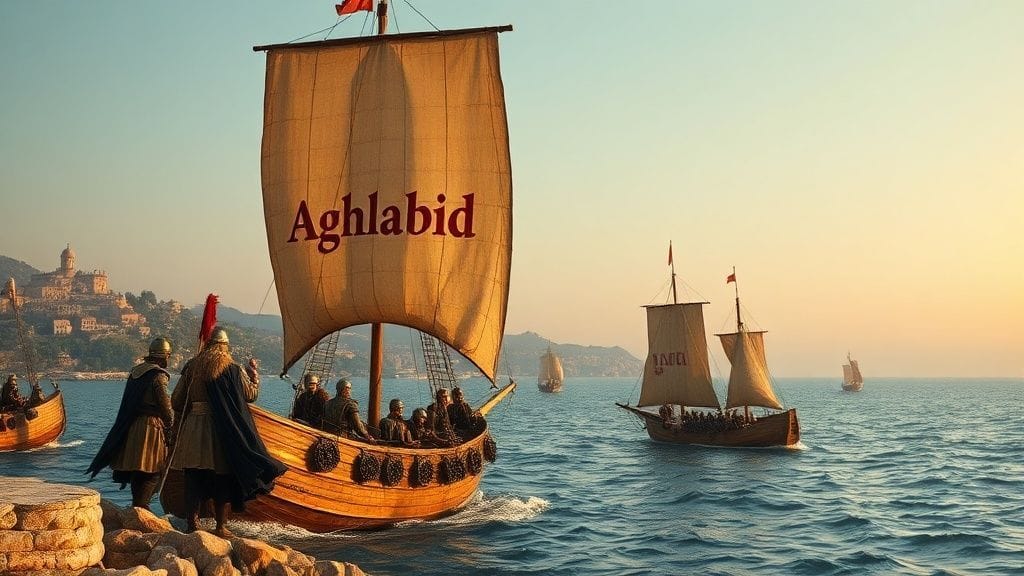
The first sound of war came in rushing, chaotic waves—ships cutting through sea spray as Muslim raiders landed on the western coast. This was no mere plundering raid: it was the beginning of a protracted, eight-decade campaign that would reshape the island and leave an indelible mark on medieval Mediterranean history.
But what compelled this push into Sicily? What forces converged to make that moment fateful? The story of the Aghlabid raids isn’t just about conquest; it’s a tale woven with political intrigue, cultural collision, and the ceaseless currents of faith and ambition. To understand the drama unfolding on Sicily’s coasts is to glimpse the wider dynamics that forever altered a crucible of civilizations.
The Aghlabids: North African Power Emerges
The Aghlabids emerged at the dawn of the 9th century as semi-independent emirs ruling Ifriqiya under the Abbasid Caliphate, exploiting the loosening grip of Baghdad on its distant possessions. Founded by Ibrahim ibn al-Aghlab in 800 CE, this dynasty witnessed a burst of military, cultural, and economic growth. Its strategic coastal position made it a maritime force, with strong naval capabilities and ambitions far beyond North Africa’s shores.
Sicily represented a tantalizing prize: a wealthy, Byzantine-held island not only fertile and economically vital but also strategically positioned between the African coast and mainland Italy. Control of Sicily promised dominance over key maritime routes, access to Mediterranean trade, and a platform for further expansion.
The Aghlabid rulers, pragmatic and energetic, saw their future in controlling Sicily. Their raids would not be simple incursions; they aimed for conquest, control, and conversion. Under Amir Asad ibn al-Furat, the first major targeted expedition was launched—spearheading an era of conflict marked by both brutal warfare and cultural syncretism.
Political and Religious Fault Lines in the Mediterranean
The Mediterranean of the early 9th century was a boiling pot of competing empires, religious identities, and cultural ambitions. The Byzantines, heirs to Rome, struggled to maintain control of Sicily and southern Italy amid internal strife and growing threats from both the Islamic world and rival Christian kingdoms.
Meanwhile, the Abbasid Caliphate’s hold over its western provinces was weakening, allowing the Aghlabids to operate with increasing independence. The religious dimension added further tension: Latin Christianity versus Islam, Orthodox Churches versus emerging Muslim states.
Sicily was more than a geographic prize: it was a key battleground in the contest of belief systems, economic systems, and imperial reach. Its population was mixed—a tapestry of Greeks, Romans, including native Sicilians, and settlers influenced by Arabic, Byzantine, and Latin traditions.
This complex mosaic meant that the Aghlabid conquest would be more than just military—it was a societal upheaval that would redefine identities across generations.
The First Raids: Mazara del Vallo as the Foothold
The initial Aghlabid landing in 827 CE focused on Mazara del Vallo, a coastal town in the southwest of Sicily. This daring amphibious operation was meticulously planned, capitalizing on Byzantine disarray and the local population’s fracturing allegiances.
As ships approached under cover of night, a sense of foreboding rippled through the inhabitants. The city, a key gateway to inland Sicily, fell quickly after intense fighting. Its capture provided a vital staging ground for further inland incursions.
Mazara del Vallo became the Aghlabids’ forward base, a symbol of Muslim determination and a tangible beachhead that would, over time, tighten the noose around the Byzantine strongholds on the island.
The swift success shocked Byzantines and exposed their vulnerabilities—both militarily and politically. It signaled to many that the island might finally slip from Eastern Roman control, and heralded a new epoch of conflict and cultural intermingling.
Palermo Under Siege: The Battle for Sicily’s Heart
The jewel in Sicily’s crown, Palermo, would become the pivotal battleground. Fierce in defense and crucial in control, the city was a Byzantine military and administrative center that the Aghlabids urgently needed to seize.
The siege of Palermo stretched over years, marked by sieges, famine, and ruthless skirmishes. The city’s narrow streets echoed with the thunder of siege engines and whispered with rumors of betrayal and shifting alliances.
Amir Asad ibn al-Furat famously led the protracted siege, displaying both tactical ingenuity and brutal resolve. Under his leadership, Muslim forces dug trenches, blocked supplies, and cut off Byzantine reinforcements.
The capture of Palermo in the early 830s shifted the power balance decisively. The city blossomed under new rulers, becoming a cultural and economic hub that would shine as a beacon of Islamic influence in Europe for decades.
The Strategy of Conquest: Raids Turned Campaign
Initially, Aghlabid incursions were hit-and-run raids, intended to weaken Byzantine defenses and plunder riches. But these tactics evolved into a sustained campaign of territorial conquest by the mid-9th century.
The Aghlabids employed a hybrid approach: naval superiority secured the seas, while mobile land forces exploited political fissures inland. Their strategy was as much psychological as martial—offering local elites terms, religious tolerance, or strict submission, adapting as necessary.
This blend of hard and soft power allowed gradual consolidation of territory, creating pockets of Muslim governance that would eventually coalesce into effective political control.
Patience, pragmatism, and pressure characterized the years-long wars, illustrating the complexity of medieval warfare beyond simple battlefield victories.
The Defenders: Byzantines, Arabs, and Local Allies
Sicily’s defense was no monolith. The Byzantine forces, stretched thin by conflicts on multiple fronts, struggled to maintain cohesion. The local population was divided: some communities sympathized with or even supported the Muslim invaders, weary of Byzantine taxation or ostracism.
Furthermore, Arab Muslims were not alone in their ambitions; various Berber mercenaries and pirates further complicated the conflict. Similarly, local Christian leaders, from nobles to clergy, maneuvered to protect their interests, sometimes allying with the Muslims against distant Byzantine governors.
This fragmented landscape made the conquest a patchwork of sieges, skirmishes, and shifting alliances, with the island in constant flux and uncertainty.
Dueling Religions and Cultures in a Melting Pot
The Aghlabid raids and conquest tore through Sicily’s spiritual fabric. The clash of Orthodox Christianity and Islam was not merely a conflict of armies but of human belief and identity.
The invaders introduced Islamic law, mosques, and Arabic language, mingling with Greek and Latin Christian practices. Some locals converted, while others resisted, creating a complex social tapestry.
Yet over time, a remarkable coexistence emerged. Scholars recognize the unique Sicilian model of religious tolerance relative to other conquered lands, where Christian, Muslim, and Jewish communities lived side by side, exchanging knowledge, art, and ideas.
This cultural blend set Sicily apart as a vibrant Mediterranean crossroads, an enduring legacy of the Aghlabid era.
The Protracted Conflict: Years of Endurance and Attrition
The raids of 827 marked only the beginning of an extended conflict that lasted well into the latter half of the 9th century. Unlike swift conquests elsewhere, Sicily witnessed decades of war marked by periods of stalemate, counterattacks, and grim endurance.
Both sides suffered heavy casualties; famine and disease afflicted besieged cities as much as the battles. The island’s economy fluctuated under the strain, but its agricultural richness ensured that both the Byzantines and Aghlabids fought tenaciously.
This drawn-out warfare wore down the Byzantine resolve and resources, paving the way for gradual Aghlabid dominion over the island.
The Turning Point: Aghlabid Consolidation in Sicily
By the mid-9th century, the tide had decisively turned. The capture of key cities like Palermo, Enna, and others signaled Aghlabid dominance.
The emirate established administrative systems, fortified towns, and encouraged settlement, cementing its presence. The island’s population began to adopt Arabic as a language of administration and culture.
This consolidation was crucial: it marked the transformation from raids to rule, turning Sicily into an Aghlabid province and a gateway for Islamic influence in Europe.
Economic Motivations: Why Sicily Mattered Immensely
Beyond religious and military aims, the Aghlabid drive to Sicily was propelled by clear economic incentives.
Sicily’s fertile plains produced wheat, olives, and wine—commodities crucial for trade. Controlling Sicily meant controlling maritime routes across the Tyrrhenian Sea, facilitating commerce with North Africa, the Levant, and beyond.
Revenue from taxation, tribute, and trade spurred Aghlabid ambitions, providing the resources to fund further expansions.
The change in control altered Mediterranean economic networks, inspiring centuries of trade and cultural exchange.
The City of Palermo: Transformation Under Aghlabid Rule
Once captured, Palermo underwent dramatic changes. The Aghlabids invested in urban infrastructure: erecting mosques, palaces, and aqueducts. The city blossomed as a cosmopolitan center, blending Arab, Byzantine, and Latin aesthetics.
Palermo became a melting pot of learning, trade, and administration, rivaling cities like Cordoba and Cairo in its regional importance.
Its flourishing under Aghlabid rule left architectural and cultural legacies that influenced Sicily’s development for centuries.
The Legacy of the Aghlabid Conquest on Mediterranean Trade
The control of Sicily opened Mediterranean trade routes to Islamic merchants and facilitated the flow of goods, ideas, and art across continents.
Sicily became a hub linking North African ports with Italy and beyond, fostering prosperity but also intensified rivalries.
This maritime dominance would shift later powers’ interests, setting the stage for Norman conquests and the eventual entwining of European and Islamic histories.
Sicily’s Mosaic of Identities: Linguistic and Cultural Aftershocks
The Aghlabid presence deeply affected Sicily’s demographic and linguistic landscape.
Arabic words entered local dialects, architectural styles incorporated Islamic motifs, and even culinary traditions found new ingredients and techniques.
The era sowed seeds that would bloom in Sicily’s distinctive Mediterranean culture—an enduring testament to centuries-old interaction.
The Decline of Byzantine Influence in the West
The loss of Sicily was a severe blow to the Byzantine Empire’s western ambitions.
Unable to project power effectively across the straits, Byzantium shifted its focus eastward, ceding space to emerging Islamic dynasties.
This retreat foreshadowed the gradual reshaping of geopolitical borders that would define medieval Mediterranean history.
Preparing for the Fatimid Ascendancy: The Aftermath
By the late 9th century, the Aghlabid dynasty’s grip weakened, paving the way for the Fatimids, an assertive new Islamic dynasty with radical Ismaili ideology.
The consolidation of Sicily under Muslim rule set the stage for these further shifts, continuing the island’s role as a strategic prize in broader Islamic political rivalries.
The Raid Force: Not Just Armies, But Maritime Might
The success of Aghlabid raids was rooted in their powerful navy, skilled sailors, and knowledge of Mediterranean maritime conditions.
Ships enabled surprise attacks, supply lines, and rapid troop movements that frustrated Byzantine efforts.
Naval supremacy was indispensable to the conquest and control of Sicily—underlining the era’s emphasis on sea power.
Folklore and Memory: The Invasion That Shaped Legends
The Aghlabid invasion entered Sicilian folklore and Mediterranean memory as a moment both catastrophic and transformative.
Stories of heroism, martyrdom, and cultural encounters shaped island identity for centuries—ensuring that the raids were not merely military events but narratives of survival, adaptation, and change.
Comparing the Aghlabid Raids to Other Muslim Conquests
Unlike the swift conquests in Spain or the Levant, the Aghlabid campaign in Sicily was a protracted, complex affair.
This difference reflects local geopolitics, military conditions, and Byzantine resilience, highlighting the unique character of Mediterranean conflict.
It also demonstrates diverse facets of Islamic expansion in the early medieval period.
Conclusion: The Enduring Impact of the 9th Century Invasions
The Aghlabid raids on Sicily were more than a military episode—they were a pivotal juncture in Mediterranean history.
They erased and rebuilt borders, merged cultures and religions, and altered economic and political landscapes for centuries.
From the dusty plains of Mazara to the vibrant streets of Palermo, the echoes of those turbulent years still resonate—reminding us that the past is never far from the present, especially where seas and civilizations meet in restless dialogue.
Conclusion
The story of the Aghlabid raids on Sicily holds a mirror to the complexity of history itself—where war meets culture, power wrestles with identity, and the tides of change reshape entire worlds. These early Muslim incursions were not simply about conquest; they were about transformation, endurance, and the forging of new realities at the crossroads of civilizations.
As the Byzantine Empire waned in influence, the Mediterranean basin emerged as a theater of vibrant, contested exchanges—religious, economic, and cultural. Sicily’s transformation under the Aghlabids is a testament to the layers of history that define Europe and North Africa alike, illustrating how even conflict births renewal in unexpected forms.
Through siege and settlement, war and tolerance, the Aghlabid era etched deep the outlines of a shared heritage—a mosaic that would inspire poets, traders, and rulers for generations to come. And to study this epoch is to immerse oneself in the profound human drama that shapes our collective past.
FAQs
Q1: Why did the Aghlabids target Sicily specifically?
A1: Sicily’s strategic location, fertile lands, and Byzantine vulnerability made it an attractive prize. Controlling Sicily allowed the Aghlabids to dominate key Mediterranean trade routes and extend their political influence into Europe.
Q2: How long did the Aghlabid raids and conquest of Sicily last?
A2: The initial raids began in 827 CE and the protracted conflict of conquest spanned several decades, with significant cities like Palermo falling in the early 830s. However, full consolidation took much longer, well into the late 9th century.
Q3: What was the religious impact of the Aghlabid conquest?
A3: The conquest introduced Islam to Sicily, leading to new religious dynamics marked by coexistence and occasional conflict among Muslims, Christians, and Jews. This religious pluralism became a hallmark of medieval Sicilian society.
Q4: Who were the key figures in the Aghlabid campaign on Sicily?
A4: Amir Asad ibn al-Furat is one of the most notable commanders who led initial sieges such as that of Palermo. The Aghlabid emirs, ruling from Ifriqiya, provided both military and political support for the campaigns.
Q5: How did the Byzantine Empire respond to the Aghlabid incursions?
A5: Byzantium attempted to defend Sicily through military garrisons and alliances but was hampered by internal strife and stretched resources. Eventually, the empire was forced into retreat, losing substantial territory in the West.
Q6: What cultural influences did the Aghlabids bring to Sicily?
A6: The Aghlabids introduced Arabic language, Islamic architectural styles, new agricultural techniques, and expanded trade networks. These influences blended with existing Byzantine and Latin traditions, enriching Sicilian culture.
Q7: How did the raids affect Mediterranean trade?
A7: By securing Sicily, the Aghlabids controlled key maritime routes, linking North African and Mediterranean markets, which stimulated commerce and shifted economic power balances in the region.
Q8: What happened to Sicily after the Aghlabid dynasty?
A8: The Aghlabid dynasty declined by the late 9th century, paving the way for the Fatimid dynasty’s rise. Sicily remained a contested yet vital jewel in Mediterranean politics until the later Norman conquests.

