Table of Contents
- The Final Days of an Era: Al-Ma’mun’s Death in Tarsus
- Al-Ma’mun: The Scholar-Caliph at the End of His Journey
- The Political and Cultural Climate of the Abbasid Caliphate in 833
- The March to Cilicia: Why Al-Ma’mun Was in Tarsus
- The Significance of Tarsus and Cilicia in the Abbasid Frontier
- Military Campaigns Against the Byzantines: Context and Stakes
- The Personal Life and Rule of Al-Ma’mun: Wisdom and Controversy
- The Moment of Death: Circumstances and Immediate Aftermath
- Reactions in the Abbasid Court: Power Struggles and Mourning
- The Succession Question: Al-Mu’tasim’s Rise to Power
- The Legacy of Al-Ma’mun’s Reign in Science and Theology
- Cilicia as a Crossroads Between East and West
- How Al-Ma’mun’s Death Shifted Abbasid Byzantine Relations
- Cultural and Intellectual Vibrancy Under Al-Ma’mun’s Patronage
- The Abbasid Caliphate’s Military Strategy on the Anatolian Frontier
- Broad Political Ramifications Across the Islamic World
- The Human Face of Conflict: Soldiers, Civilians, and Memory
- Al-Ma’mun’s Death in Historical Narratives and Chronicles
- Reflections on Leadership and Mortality in the 9th Century Abbasid World
- Conclusion: The End of an Epoch and the Dawn of Transformation
- FAQs
- External Resource
- Internal Link
The Final Days of an Era: Al-Ma’mun’s Death in Tarsus
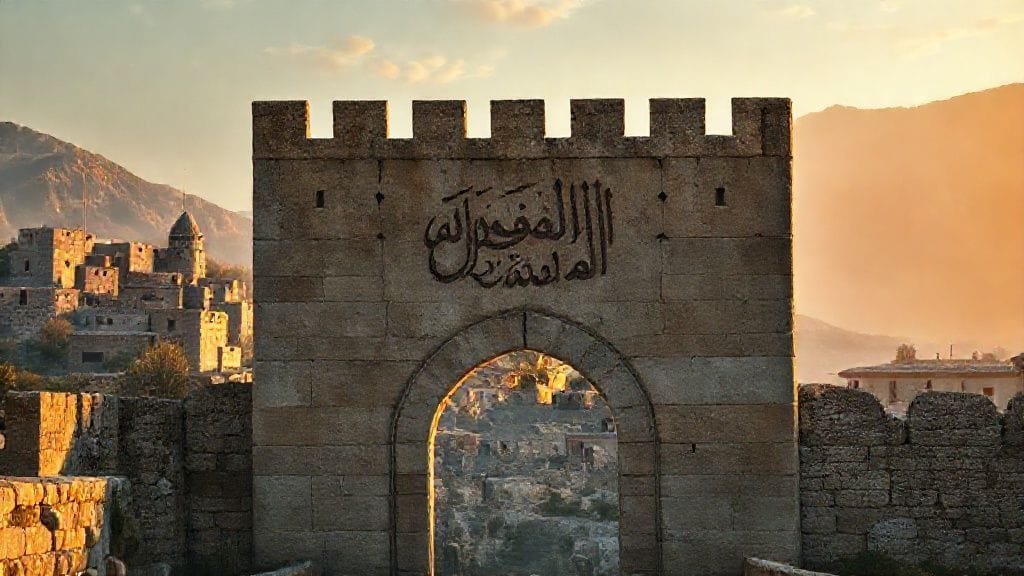
In the late summer of 833, the sun scorched the rugged expanse of Tarsus, the frontier city that for centuries had marked the volatile boundary between the Abbasid Caliphate and the Byzantine Empire. Amid the clamor of soldiers preparing for another Byzantine campaign, a subtle yet irrevocable turning point unfolded: the death of Al-Ma’mun, the eighth Abbasid caliph, a ruler whose reign had shaped the intellectual and political contours of the Islamic world. His passing was not in the heartland of Baghdad, surrounded by scholars and courtiers, but on the harsh edges of the empire, near the ancient lands of Cilicia, a fitting if paradoxical stage for the final act of a caliph renowned both for his patronage of learning and his martial zeal.
It was a moment heavy with irony and portent. At the age of 46, having faced rebellion, theological upheaval, and relentless warfare, Al-Ma’mun’s life extinguished not in triumph but amid the uncertainty of war’s frontier. Soldiers whispered legends beside flickering campfires while courtiers in distant palaces pondered the implications of this sudden loss. The man who championed reason against dogma, who clashed with orthodox clerics and invited Greek philosophers' works to flourish, now disappeared from history’s immediate stage at Tarsus—a liminal point between empire and enemy, past and future.
Al-Ma’mun: The Scholar-Caliph at the End of His Journey
Born in 786 amidst the dynastic turmoil of the Abbasids, Al-Ma’mun emerged as a complex figure—at once a shrewd politician, scholar, and patron of the sciences. His early years were marked by a bitter civil war with his brother Al-Amin, a conflict that left the caliphate rattled but ultimately placed Al-Ma’mun firmly on the throne in 813. Yet his reign was anything but peaceful.
What distinguished him was a restless mind and an unyielding vision for his empire. He commissioned the House of Wisdom in Baghdad, where Greek, Persian, and Indian knowledge converged in translating and advancing human understanding. Yet, for all this cultural flourish, Al-Ma’mun’s reign was underscored by constant territorial defense, religious debates, and harsh political realities, embodying the tensions of a caliph navigating a fragile empire in transformation.
The Political and Cultural Climate of the Abbasid Caliphate in 833
By 833, the Abbasid Caliphate stood as a sprawling but fragile giant. The initial burst of revolutionary energy that had overthrown the Umayyads in 750 gave way to increasingly complex governance challenges. Multiple fronts demanded the Caliph’s attention—internal dissent in distant provinces, the rising influence of Turkish military slaves, and incessant threats from Byzantium and other neighbors.
Religiously, Al-Ma’mun’s promotion of Mu'tazilism, a theological doctrine emphasizing human reason and divine justice, sparked wide-ranging controversies. The Mihna, or inquisition he initiated to enforce intellectual orthodoxy, left scars across Islamic society that outlasted his reign. His capital, Baghdad, remained a crucible of cosmopolitan debates, scientific inquiries, and literary achievements—yet beneath this vibrant surface were undercurrents of political anxieties.
The March to Cilicia: Why Al-Ma’mun Was in Tarsus
The city of Tarsus, located in the region of Cilicia, served as a strategic military outpost on the volatile northeastern frontier. In the summer of 833, Al-Ma’mun personally led forces toward this city—an unusual choice for a caliph traditionally more inclined toward scholarly patronage than battlefield command.
The reasons for his direct involvement were manifold. The Byzantine Empire had intensified its raids and military pressure along the border, threatening Abbasid territorial integrity and prestige. For Al-Ma’mun, leading the campaign was both a strategic necessity and a personal statement—a signal to his court and rivals that he remained a warrior-caliph willing to defend his realm.
The Significance of Tarsus and Cilicia in the Abbasid Frontier
Tarsus was more than a military checkpoint; it was a crucible of cultures, conflict, and commerce. Situated at the crossroads between the Arabian and Byzantine worlds, Cilicia was a region steeped in layered histories of conquest and resistance. Control over Tarsus meant not only territorial security but also access to trade routes and political leverage against Byzantium.
Its fortifications had been reinforced by Abbasid engineers, and its garrisons comprised a mix of Arab warriors, newly recruited Turkish soldiers, and local allies. This diversity made Tarsus a microcosm of the Abbasid empire’s broader challenges—integrating disparate peoples under a unifying yet contested caliphal authority.
Military Campaigns Against the Byzantines: Context and Stakes
The Abbasid-Byzantine frontier represented one of the medieval world’s most enduring conflicts. Frequent raids, counter-raids, and pitched battles defined a grim rhythm of hostilities at the limits of empire. By 833, Abbasid forces sought to project strength, deter incursions, and, when possible, push the frontier outward.
Al-Ma’mun’s campaign was part of a broader strategy to stabilize this contested border. Military leaders coordinated with tribal chieftains and provincial governors to plan raids deep into Byzantine territory. For the caliph, these military ventures were also political theater—the buttress of his legitimacy amidst continual court intrigues.
The Personal Life and Rule of Al-Ma’mun: Wisdom and Controversy
Al-Ma’mun’s rule was as much personal as political. Described by some chroniclers as melancholic yet determined, he faced opposition from conservative ulema (Islamic jurists) resistant to his rationalist reforms. Yet he remained a patron of scholars and poets, guiding Baghdad’s cultural florescence with a steady hand.
His controversial policies often alienated purists but endeared him to minority groups and intellectuals. He openly debated religious scholars and enforced policies that elevated reason and inquiry above dogmatic rigidity. However, his support for Mu'tazilism led to the persecution of those who resisted, instilling fear as well as admiration.
The Moment of Death: Circumstances and Immediate Aftermath
On August 9, 833, in the tented camp near Tarsus, Al-Ma’mun died unexpectedly. Chroniclers offer varying accounts—some speak of illness exacerbated by the rigors of campaigning; others whisper of poisoning amidst the complex web of court rivalries.
His death stunned the army and sent ripples through the Abbasid administration. Soldiers on the edge of hostile territory faced uncertainty; commanders had to quickly secure order; and envoys hastened to inform Baghdad, where the political elite prepared for a delicate transition. The death of the scholar-warrior caliph at the brink of confrontation was a dramatic, almost Shakespearean end to a reign fraught with contradictions.
Reactions in the Abbasid Court: Power Struggles and Mourning
News of Al-Ma’mun’s death arrived in Baghdad like a storm. While genuine grief spread among loyalists and intellectuals mourning the loss of a visionary, whispers of opportunism blossomed rapidly.
The caliph’s brother and successor, Al-Mu’tasim, immediately moved to consolidate power. Factions within the court jockeyed for influence. Some hoped to reverse Al-Ma’mun’s religious policies; others anticipated shifts in military leadership, particularly concerning the rising Turkish guard. The ruling elite faced the dual challenge of honoring the deceased while securing the empire’s fragile stability.
The Succession Question: Al-Mu’tasim’s Rise to Power
Al-Mu’tasim, previously overshadowed by his more famous brother, proved a formidable successor. His command of the Turkish military slaves brought a new dynamic in Abbasid politics and army composition.
His ascent marked a subtle but clear shift—one moving away from purely intellectual patronage toward a more militarized and pragmatic regime. While he maintained many of Al-Ma’mun’s policies, Al-Mu’tasim’s reign saw increased reliance on professional soldiers, reshaped court rituals, and a tougher stance towards external threats.
The Legacy of Al-Ma’mun’s Reign in Science and Theology
Despite the sudden end, Al-Ma’mun’s impact endured for centuries. His establishment of the Bayt al-Hikma (House of Wisdom) fueled a Golden Age of Islamic science and philosophy. Astronomers, mathematicians, and linguists flourished under his sponsorship.
The theological imprint of his Mu'tazilite policies sparked debates that influenced Sunni orthodoxy’s eventual formation. The tension between reason and faith he embodied symbolized broader intellectual currents sweeping the Islamic world—currents whose undercurrent persists today.
Cilicia as a Crossroads Between East and West
Cilicia, where the caliph’s death occurred, epitomized the complex intersection of cultures, religions, and empires. Nestled between massive powers, it bore witness to changing allegiances, religious diversity, and artistic synthesis.
From Armenian princes to Arab tribes, all left their mark on its rocky landscapes. The city of Tarsus itself carried a legacy as the birthplace of St. Paul, adding layers of Christian heritage to its Islamic and Byzantine past—a striking symbol for a caliph whose life combined diverse cultural influences.
How Al-Ma’mun’s Death Shifted Abbasid Byzantine Relations
Al-Ma’mun’s death punctuated a geopolitical pivot. His direct engagement in frontier campaigns had emphasized Abbasid resilience, but the challenge of securing borders now fell to his successor.
Al-Mu’tasim’s reign witnessed both continued conflict and unprecedented military reforms, such as increased reliance on Turkish and Central Asian troops that would reshape the caliphate’s posture. Byzantine diplomacy adapted accordingly, anticipating a transformed and emboldened adversary.
Cultural and Intellectual Vibrancy Under Al-Ma’mun’s Patronage
The Abbasid capital, Baghdad, blossomed culturally under Al-Ma’mun’s watchful eye. The translation movement brought Aristotle and Plato into Arabic, while the caliph’s own patronage of astronomy saw observatories built and celestial charts developed.
Poets and philosophers thrived, embodying ideals of knowledge and enlightenment. Yet this period was also riddled with tension—the clash between rationalism and orthodoxy, the burden of empire, and the burgeoning costs of military campaigns.
The Abbasid Caliphate’s Military Strategy on the Anatolian Frontier
The repeated campaigns in Cilicia and the Taurus Mountains were critical to the Abbasid’s strategy to check Byzantine power. The frontier was a rugged, often forbidding zone, where cavalry raids defined much of the conflict.
The Abbasids’ increasing use of Turkish slave soldiers (ghilman) created a professional army whose mobility and discipline contrasted with the tribal levies of the past. This military evolution culminated in crucial confrontations witnessed during and after Al-Ma’mun’s reign.
Broad Political Ramifications Across the Islamic World
Al-Ma’mun’s death was not just an Abbasid event; its reverberations were felt across distant provinces from Egypt to Persia. His reign had asserted caliphal authority over fractious elites; his demise invited regional governors to reconsider loyalties.
The Shi’a, Kharijites, and various other sectarian groups watched closely, while Christian and other minority communities gauged the shifting power dynamics. The caliphate stood at a crossroads—between consolidation and fragmentation.
The Human Face of Conflict: Soldiers, Civilians, and Memory
Beyond courtly politics and grand strategy, the frontier was marked by the lived experiences of soldiers and civilians alike. The men sent into the Cilician campaigns endured harsh conditions; families in border towns lived under the shadow of raids and reprisals.
Al-Ma’mun’s death on the field, so to speak, made him a poignant symbol of sacrifice and the human cost of imperial ambition. Later chroniclers used his end to reflect on the fragility of life, the burdens of leadership, and the fate of empires.
Al-Ma’mun’s Death in Historical Narratives and Chronicles
The passing of Al-Ma’mun inspired numerous accounts, ranging from official chronicles to poetic elegies. Medieval historians framed his death both as a turning point and a moment of moral reflection.
Some remembered him as the enlightened ruler who bridged faith and reason; others portrayed his demise as a cosmic warning about hubris. His legacy became a prism through which later generations examined the Abbasid era’s glory and decline.
Reflections on Leadership and Mortality in the 9th Century Abbasid World
Al-Ma’mun’s life and death encapsulate the paradoxes of leadership in a vast medieval empire: the tension between intellect and force, idealism and pragmatism. His fate at Tarsus dramatizes how rulers, no matter their wisdom or power, remain subject to fortune.
In an age marked by volatile religious currents, shifting military realities, and cultural ferment, Al-Ma’mun’s story stands as a timeless meditation on the vicissitudes of power and the enduring human quest for meaning.
Conclusion: The End of an Epoch and the Dawn of Transformation
Al-Ma’mun’s death in Tarsus in 833 was far more than the passing of a caliph—it was the end of an epoch defined by heavy intellectual ambitions, theological experiments, and frontier struggles. His reign had propelled the Abbasid Caliphate into a golden age of learning while wrestling with the persistent demands of empire and faith.
Yet his sudden demise amid the cruel landscapes of Cilicia also foreshadowed a period of transformation. The next generation, under Al-Mu’tasim and beyond, would intensify military reforms and reshape Abbasid governance, ushering in new chapters often darker and more militarized but inevitably linked to Al-Ma’mun’s enduring legacy.
His life and death invite us still to ponder the mingling of knowledge and power, the burden of leadership, and the fragile threads on which history turns.
FAQs
Q1: Who was Al-Ma’mun, and why is he significant?
A1: Al-Ma’mun was the eighth Abbasid caliph, ruling from 813 to 833. He is significant for his patronage of science and philosophy, founding the House of Wisdom, and for his controversial theological reforms promoting Mu'tazilism. His reign symbolized a golden age of intellectual inquiry in the Islamic world.
Q2: Why was Al-Ma’mun in Tarsus at the time of his death?
A2: Al-Ma’mun was leading a military campaign against the Byzantine frontier. Tarsus was a strategic fortress city in Cilicia, marking the volatile border zone. His presence aimed to reinforce Abbasid frontier defenses and assert military strength against Byzantine incursions.
Q3: What were the circumstances of Al-Ma’mun’s death?
A3: He died unexpectedly in August 833, likely due to illness exacerbated by the rigors of campaigning. Some sources speculate possible poisoning tied to court intrigue, but the exact cause remains uncertain.
Q4: How did Al-Ma’mun’s death affect Abbasid politics?
A4: His death triggered a swift succession by his brother Al-Mu’tasim, who consolidated power and shifted military and political policies. The event intensified court rivalries and influenced the trajectory toward a more militarized Abbasid state.
Q5: What was the impact of Al-Ma’mun’s rule on Islamic science and theology?
A5: Al-Ma’mun’s reign is considered a golden age for scientific translation and advancement, fostering scholars like Al-Kindi and Al-Khwarizmi. Theologically, his Mu'tazilite policies fueled debates on reason, faith, and orthodoxy that shaped Islamic thought for centuries.
Q6: Why was Cilicia and Tarsus strategically important?
A6: Cilicia, bordering the Byzantine Empire, was a frontline for military and political confrontation. Tarsus, its major fortress-city, controlled critical trade and military routes essential for defending the Abbasid eastern frontiers.
Q7: How is Al-Ma’mun remembered in historical narratives?
A7: He is remembered as an enlightened yet controversial figure—an intellectual patron and warrior whose reign combined ambition and conflict, epitomizing the complexity of Abbasid leadership during a transformative era.
Q8: What broader historical lessons does Al-Ma’mun’s death teach us?
A8: It highlights the transient nature of political power, the interplay between culture and conflict, and the human dimensions of empire-building. His story reminds us that leadership balances vision with vulnerability, and history turns often on sudden moments at the edge of empire.