Table of Contents
- A Tremor that Shook the World: The Prelude to the 1964 Alaska Earthquake
- Geographical and Geological Landscape of Prince William Sound
- The Early Morning Awakening: March 27, 1964
- The Ground Trembles: The Mechanics of a Magnitude 9.2 Earthquake
- Epicenter and Shaking: Mapping the Devastation Across Alaska
- Human Stories in the Midst of Ruin: Survival and Loss
- The Cascading Catastrophes: Aftershocks, Landslides, and Tsunamis
- The Tsunami that Crossed the Pacific: Global Impact of the Aftershock Waves
- Responses and Rescue: Mobilizing Aid Amidst Chaos
- Scientific Revelations: What the Earthquake Taught Seismologists
- Engineering in the Wake of Disaster: Changes in Building Codes and Infrastructure
- Political and Social Consequences: Alaska’s Story in the National Spotlight
- The Environmental Toll: Landscape Altered, Ecosystems Shaken
- Remembering 1964: Memorials, Museums, and Oral Histories
- Lessons Unforgotten: The Legacy of the Great Alaskan Earthquake Today
- Epilogue: Nature's Remindful Fury and Human Resilience
A Tremor that Shook the World: The Prelude to the 1964 Alaska Earthquake
Shortly after dawn on March 27, 1964, as the hushed light of early morning spilled over the rugged coastlines of south-central Alaska, an unseen titan stirred beneath the earth’s surface. In the dim light, fishermen and families preparing for the day ahead had no inkling that the ground beneath them was about to unleash one of the most powerful earthquakes in recorded history. The moment was saturated with an eerie calm, one that belied the colossal shift about to rupture the very foundations of nature and society. What began as a low rumble quickly escalated into a violent convulsion—a deep roar accompanied by an unrelenting shake that would last nearly five minutes and change everything.
The 1964 Alaska Earthquake, also known as the Great Alaskan Earthquake, was a global event, felt as far away as Washington State and caused tsunamis that raced across the Pacific Ocean. It was a phenomenon that combined immense power and tragic human consequences, forever imprinting itself on the history of natural disasters. The story of this seismic cataclysm is not just a tale of tectonic forces and geological shifts; it is a saga marked by courage, loss, scientific breakthrough, and the enduring spirit of the communities that faced nature’s wrath head-on.
Geographical and Geological Landscape of Prince William Sound
To understand the earthquake of 1964, one must first stand on the jagged shores of Prince William Sound, an area where rugged mountains cascade into fjords, and glaciers carve majestic valleys. Located on the southern coast of Alaska, about 120 miles southeast of Anchorage, this region lies along the complex boundary where the Pacific Ocean’s tectonic plate converges with the North American Plate.
Alaska’s position on the “Ring of Fire”—a volcanic belt encircling the Pacific Ocean—renders it one of the world’s most earthquake-prone areas. Specifically, the Prince William Sound area sits near a subduction zone, where the Pacific Plate plunges beneath the North American Plate. This geological interaction builds up tremendous stress in the earth’s crust over decades and centuries, occasionally released in violent tremors that ripple through the land.
Throughout the early 1960s, seismic activity in the region was relatively low, lulling communities into a fragile sense of normalcy. Yet, deep beneath the earth, the relentless movement of the plates was preparing an explosive release, one that would reshape the landscape and human lives with relentless force.
The Early Morning Awakening: March 27, 1964
At precisely 5:36 pm Alaska Standard Time on March 27, the earth began to convulse. It started with a low, continuous rumble that crescendoed into chaotic shaking. From Cordova to Anchorage, people were abruptly forced from their routines as the ground buckled beneath their feet. Walls cracked; buildings groaned; bridges swayed — evoking a raw and terrifying reminder of humanity’s fragility in face of nature’s might.
Aleutian natives, fishermen in harbors, city dwellers settling in for the evening, and oil workers operating rigs all found themselves subjected to unimaginable forces. This was the longest and most powerful earthquake to strike the United States in the 20th century, with a magnitude of 9.2—a number that remains etched in seismological records.
The quake lasted an agonizing four-and-a-half minutes, an eternity of shaking that shattered infrastructure, transformed coastlines, and displaced entire communities. Yet, in the midst of this chaos, many experienced moments of stark surrealism: household objects suspended midair, sounds of splintering timbers, and the anguished cries of those grappling to grasp the chaos unfolding around them.
The Ground Trembles: The Mechanics of a Magnitude 9.2 Earthquake
The 1964 Alaskan Earthquake was a megathrust event, where one tectonic plate thrust beneath another along a fault line spanning more than 600 miles. The Pacific Plate abruptly slipped 20 to 30 feet beneath the North American Plate, releasing pent-up energy that radiated through the earth like a colossal burst of power.
Such quakes occur in subduction zones and are known for their immense scale and potential for destruction. The energy released is equivalent to thousands of atomic bombs detonating simultaneously. The shaking caused wide-scale landslides, liquefaction of soils, and alterations in topography that permanently transformed the region.
For seismologists, the quake provided crucial data on plate tectonics, fault mechanics, and seismic wave propagation—the very building blocks of modern earthquake science. At the time, it was the second-largest recorded earthquake worldwide, surpassed only by the 1960 Chile earthquake.
Epicenter and Shaking: Mapping the Devastation Across Alaska
The epicenter lay in Prince William Sound, but the devastation radiated across southern Alaska. The city of Anchorage, then home to around 47,000 people, bore the brunt of the shaking. Buildings collapsed; highways buckled; utilities failed, leaving the city in darkness.
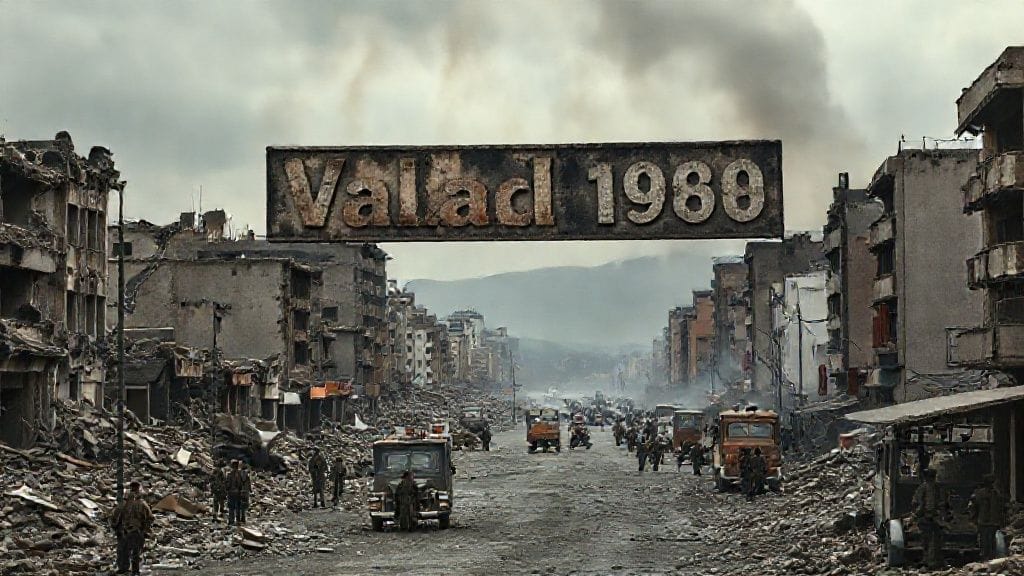
In Valdez, the quake generated one of the most devastating secondary disasters: a massive landslide slid into the harbor, triggering a tsunami that obliterated the town’s waterfront and killed 32 people. The community was virtually wiped off the map.
Other towns, including Seward and Whittier, faced catastrophic tsunamis. Even further afield, the shaking was felt in Seattle and Portland, hundreds of miles south, causing fires and structural damages.
The varied landscape contributed to the uneven distribution of damage. Areas with soft soil suffered severe shaking due to amplification effects, while solid rock formations fared better. The nearest coastal villages experienced some of the deadliest impacts from the waves that surged inland in minutes after the quake.
Human Stories in the Midst of Ruin: Survival and Loss
Behind the staggering statistics of damage and magnitude lie countless human stories—both tragic and heroic.
Mary Wilson, a school teacher in Anchorage, later recalled how she huddled with her students in a now-crumbled classroom while fearing the ceiling would collapse. Fishermen trapped in boats in the harbor recounted the terrifying waves tossing their vessels as landslides turned serene waters into chaotic maelstroms.
Across towns, families grappled with loss. The death toll reached 131 people, a number both sobering and testament to the power of the disaster. Yet amid the ruin, tales of resilience shone through: neighbors rescuing each other, strangers opening homes, first responders risking their lives navigating rubble and fires.
The Cascading Catastrophes: Aftershocks, Landslides, and Tsunamis
The initial quake was only the beginning. Thousands of aftershocks followed, shaking nerves and destabilizing already fragile structures. Many were violent enough to cause further damage and impede rescue efforts.
The earthquake triggered massive landslides; one particularly colossal slide near the town of Valdez buried the harbor under rocks and debris, generating unforeseen tsunamis.
Speaking of these tsunamis: waves soared up to 220 feet in elevation locally, inundating coastal communities within minutes. The water surged as far south as California and Hawaii—the waves claiming dozens more victims far from the epicenter.
The crossing of these waves across the Pacific is a haunting reminder of the interconnectedness of nature’s forces and their capacity to affect distant corners of the globe.
The Tsunami that Crossed the Pacific: Global Impact of the Aftershock Waves
One of the remarkable aspects of the 1964 earthquake was how its effects transcended borders and oceans. After surging through the adjacent Alaskan coastlines, the tsunami waves radiated outward, traveling thousands of miles across the Pacific.
In places like Crescent City, California, 12 people lost their lives due to tsunami damage. Hawaii experienced flooding of low-lying areas along with extensive damage to ports and fishing infrastructure. Japan’s eastern coasts also felt the ripple effects, reminding the world that these natural disasters have no respect for geopolitical boundaries.
International communications at the time were dramatically disrupted, and the event helped galvanize international cooperation on tsunami warning systems—a legacy saving countless lives in the decades since.
Responses and Rescue: Mobilizing Aid Amidst Chaos
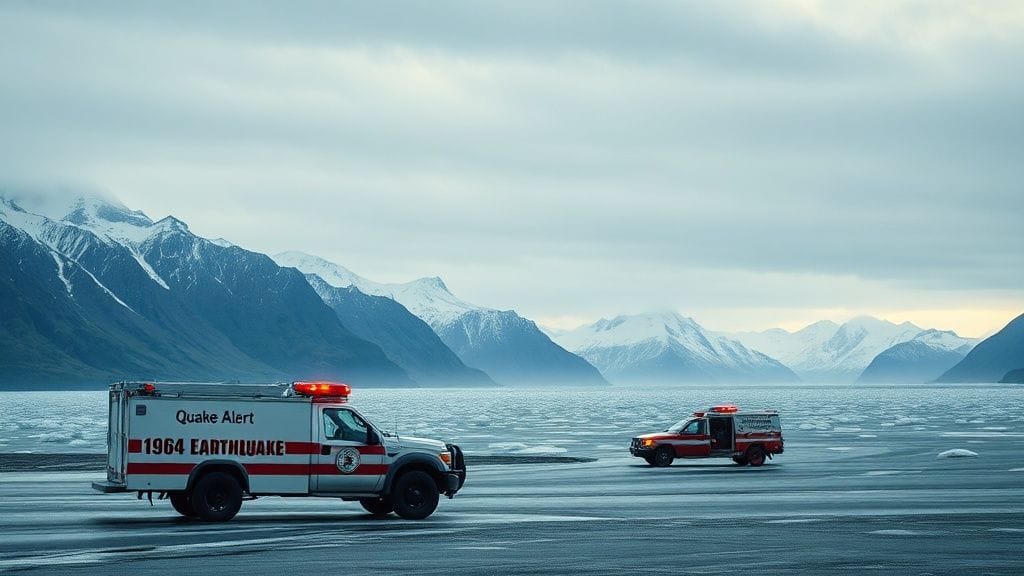
In the immediate aftermath, Alaska’s sparse infrastructure and remote locations posed enormous challenges for relief operations. Roads were impassible, communication lines destroyed, and airports overwhelmed.
However, the U.S. military quickly mobilized troops, aircraft, and naval vessels to transport supplies and personnel. The Red Cross and other aid organizations established emergency shelters and medical stations.
The disaster spurred unprecedented federal attention. President Lyndon B. Johnson declared Alaska a major disaster area, releasing aid and funding. Volunteers, local governments, and national agencies worked tirelessly over months to rebuild homes, utilities, and essential public services.
Scientific Revelations: What the Earthquake Taught Seismologists
At a time when plate tectonics theory was emerging, the 1964 Alaska earthquake profoundly shaped our understanding of earth sciences.
Scientists seized the moment, deploying instruments and conducting surveys that revealed subduction zone mechanics and seismic wave behaviors.
The quake’s size and rupture characteristics provided a natural laboratory that helped confirm theories about earthquake genesis related to plate boundaries. It also brought attention to the concept of rupture zones and the need for continuous monitoring of “seismic gaps” that could unleash future quakes.
In many ways, the event propelled seismology into a new era—one driven by data, predictive models, and interdisciplinary research.
Engineering in the Wake of Disaster: Changes in Building Codes and Infrastructure
The extensive destruction exposed vulnerabilities in Alaska’s building practices. Engineers and architects undertook a comprehensive analysis of damaged structures, leading to innovations in earthquake-resistant design.
Building codes were revised dramatically, incorporating lessons on flexible foundations, materials capable of absorbing shocks, and the necessity of accounting for soil liquefaction.
Public infrastructure such as bridges, pipelines, and airports were redesigned or retrofitted to withstand future quakes. These changes set standards not only for Alaska but influenced nationwide practices on disaster preparedness in infrastructure.
Political and Social Consequences: Alaska’s Story in the National Spotlight
Until the earthquake, Alaska was often a peripheral concern in U.S. national politics. The disaster thrust the state into the spotlight, revealing both its vulnerabilities and strategic importance.
The federal government invested in extensive recovery and economic development, improving roads, housing, and utilities.
Socially, the earthquake reinforced community bonds and the pioneering spirit associated with Alaska. It also raised awareness about indigenous communities, many of whom suffered disproportionately and whose cultural heritage sites were damaged.
The event factored into justifications for Alaska’s rapid development post-statehood in 1959, intertwining natural disaster with political identity.
The Environmental Toll: Landscape Altered, Ecosystems Shaken
Geologists estimate that approximately 27,000 square kilometers of land subsided or rose during the quake, changing coastlines dramatically.
Islands disappeared, wetlands were submerged, and hundreds of miles of road and rail were affected by landslides and ground deformation.
Wildlife habitats changed, fish spawning grounds shifted, and forests were decimated by landslides and fires. The reshaped environment meant many ecosystems needed decades to recover.
Still, the Earth’s rejuvenation began almost immediately, with new forests growing and river courses adjusting—a testament to life’s resilience even after massive upheaval.
Remembering 1964: Memorials, Museums, and Oral Histories
The memory of the 1964 earthquake is preserved in museums like Anchorage’s Alaska Earthquake Center and special exhibits recounting survivor stories.
Memorials have been erected in towns hardest hit, honoring those who lost their lives. Oral histories collected from survivors keep alive a personal and vivid connection to the event, teaching younger generations the importance of preparedness.
Annual commemorations encourage reflection on the disaster’s lessons and Alaska’s indomitable spirit in the face of adversity.
Lessons Unforgotten: The Legacy of the Great Alaskan Earthquake Today
Nearly six decades later, the 1964 earthquake remains a benchmark in disaster science, emergency management, and cultural memory.
It galvanized the establishment of comprehensive seismic monitoring in Alaska and across the United States.
Public education campaigns on earthquake preparedness are rooted in this event, influencing policies and community initiatives.
Investments in infrastructure resilience continue to echo the lessons learned, reminding humanity that while we cannot prevent nature’s fury, we can prepare, respond, and rebuild stronger.
Epilogue: Nature's Remindful Fury and Human Resilience
The 1964 Alaska earthquake is a stark reminder that beneath humanity’s seemingly stable world lurks a restless power capable of dramatic transformation. Yet, amid the destruction, it also reveals the profound strength, courage, and adaptability of communities facing the unknown.
It challenges us to respect the Earth’s forces and strive toward coexistence with an unpredictable natural world. From shattered towns rose new hope, and from trembling earth, a renewed commitment to understanding our planet was born.
In this blend of fear, loss, and renewal lies the true story of the Great Alaskan Earthquake—a moment when the earth spoke in trembling roars and humans listened, learned, and endured.
Conclusion
The Prince William Sound Earthquake of 1964 was more than a geological event; it was a defining moment for Alaska and for the science of earthquakes itself. The five dreadful minutes of shaking not only caused widespread destruction and tragically claimed lives, but also opened up new horizons in seismology and engineering. It forged bonds across communities and states and placed Alaska squarely in the consciousness of the world.
Remembering the quake today is about honoring both the awe-inspiring forces of nature and the human stories that emerged from the rubble—tales of survival, loss, and perseverance that transcend decades.
As we reflect on this immense earthquake, we are reminded that history is a continuous dialogue between nature and humanity. Through understanding and respect, we can prepare for the tremors yet to come, equipped by the lessons etched into the rugged landscapes of Alaska in 1964.
FAQs
Q1: What caused the 1964 Alaska Earthquake?
The quake was caused by the sudden slipping of the Pacific Plate beneath the North American Plate along a subduction zone near Prince William Sound, releasing immense seismic energy.
Q2: How powerful was the earthquake?
It registered a magnitude of 9.2, making it the second-largest earthquake recorded in history, and the strongest to occur in the United States.
Q3: What were the main effects of the earthquake?
Significant ground shaking, landslides, structural collapse, tsunamis, shifts in the landscape, and over 130 fatalities were the primary impacts.
Q4: How did the earthquake affect communities outside Alaska?
The quake’s tsunamis traveled across the Pacific, causing destruction and fatalities in coastal communities including California, Hawaii, and Japan.
Q5: What scientific contributions arose from the event?
It provided concrete evidence supporting plate tectonics, helped understand megathrust earthquakes, and advanced seismic monitoring technology.
Q6: How did the earthquake influence building codes and preparedness?
Post-quake analysis led to enhanced earthquake-resistant designs and stricter building codes in Alaska and other seismic regions.
Q7: How is the earthquake remembered today?
Through museums, memorials, oral histories, and annual commemorations, preserving knowledge and promoting preparedness.
Q8: What lessons does the 1964 earthquake hold for modern society?
It underscores the importance of disaster readiness, scientific research, resilient infrastructure, and community solidarity in facing natural disasters.