The 1946 Aleutian Tsunami: The Wave That Crossed Oceans
Table of Contents
- Introduction
- A Sudden Jolt from the Aleutians
- A Wave With Global Reach
- Hilo, Hawaii: A City Caught Off Guard
- The Birth of a Warning System
- Legacy and Lessons
- Conclusion
- External Resource
1. Introduction
On April 1, 1946, what began as a distant rumble in the Aleutian Islands of Alaska turned into a deadly wave that crossed the Pacific Ocean. Known as the Aleutian tsunami, this event not only devastated parts of Alaska and Hawaii, but also pushed scientists and governments to rethink how tsunamis are detected and how people are warned.
2. A Sudden Jolt from the Aleutians
At 12:29 a.m. local time, a magnitude 8.6 earthquake struck near Unimak Island, part of Alaska’s Aleutian chain. The tremor itself was barely felt outside the region, but it triggered a tsunami that would soon prove devastating.
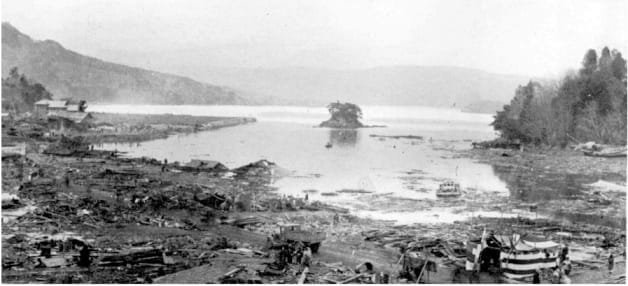
✔️ Unimak Island saw the first destruction: a lighthouse was swept away, killing all five occupants.
✔️ The wave was likely caused by an undersea landslide triggered by the earthquake, amplifying its strength.
3. A Wave With Global Reach
About 4.5 hours after the quake, tsunami waves reached Hilo, Hawaii, with little to no warning. The water surged inland, destroying buildings and sweeping people away.
🔹 Waves in Hilo reached up to 13.5 meters (44 feet).
🔹 159 people were killed in Hawaii alone.
🔹 The tsunami was felt as far as California, Chile, and New Zealand.
The most tragic part? There were no alarms, no sirens, and no official warning. The ocean just came.
4. Hilo, Hawaii: A City Caught Off Guard
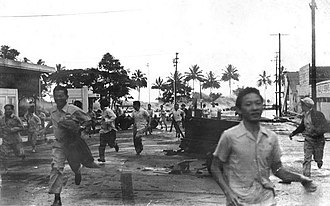
In Hilo, it was early morning. Many were sleeping or going about their day when the sea suddenly receded—always a bad sign—and then returned with violent force. Streets were flooded, homes shattered, and families torn apart.
✔️ Children walking to school were among the victims.
✔️ Boats were tossed onto buildings.
✔️ Survivors described the sea as if it had come alive.
5. The Birth of a Warning System
The destruction prompted a sobering realization: there needed to be a better way to warn coastal communities. In response:
✔️ The Pacific Tsunami Warning Center (PTWC) was established in 1949 in Hawaii.
✔️ Systems were created to monitor seismic activity and sea level changes.
✔️ Public education on tsunami risk became a priority.
This tsunami essentially kickstarted modern tsunami warning infrastructure.
6. Legacy and Lessons
The 1946 Aleutian tsunami showed that even remote earthquakes can have far-reaching consequences. It taught the world that distance doesn’t equal safety and that preparedness saves lives.
✔️ Events like these inspired research in seismology and oceanography.
✔️ Hawaii now conducts regular tsunami drills.
✔️ Global collaboration in disaster warning systems grew stronger.
7. Conclusion
The Aleutian tsunami of 1946 wasn’t just a deadly wave—it was a wake-up call. Born in a remote corner of Alaska, it crossed oceans and forced humanity to respect the hidden power of the sea. Today, thanks to the lives lost that day, millions more are protected by systems built to anticipate the next big wave.
8. External Resource
🌐 Wikipedia: 1946 Aleutian Islands earthquake