Table of Contents
- Introduction
- Berlin in the Late 19th Century
- Early Life and Education
- Fascination with Science and Nature
- Wegener’s Career in Meteorology
- First Polar Expeditions
- Birth of the Continental Drift Theory
- Evidence Supporting Continental Drift
- Opposition and Scientific Controversy
- Later Polar Expeditions and Challenges
- His Tragic Death in Greenland
- Posthumous Recognition
- Connection to Modern Plate Tectonics
- Influence Beyond Geology
- Wegener’s Writings and Publications
- Anecdotes from His Expeditions
- Legacy in Earth Sciences
- Honors and Memorials
- Why Wegener Still Matters Today
- External Resource
- Internal Link
Introduction
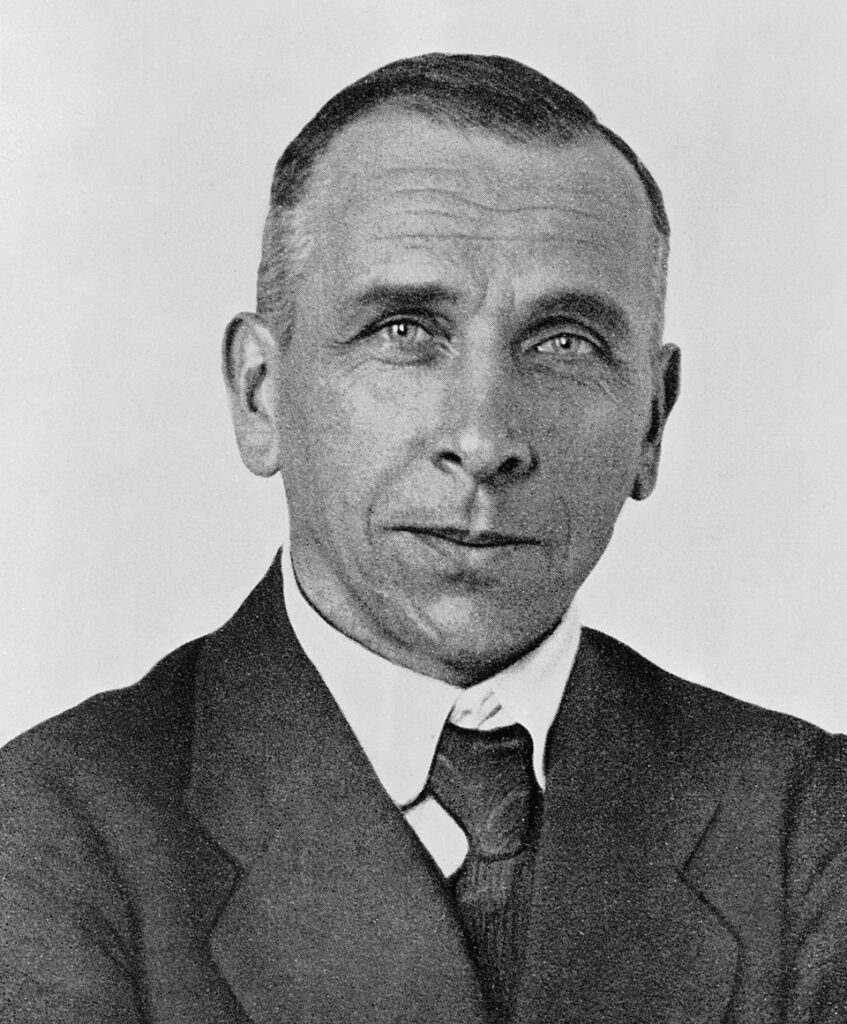
Alfred Wegener biography opens a window into the life of one of the most daring scientists of the 20th century. Born on November 1, 1880, in Berlin, Germany, he is best remembered for introducing the revolutionary theory of continental drift. At a time when most geologists resisted such bold ideas, Wegener combined evidence from geology, paleontology, and climatology to suggest that continents were once united in a single landmass, drifting slowly apart over millions of years.
Berlin in the Late 19th Century
Wegener was born in an era when Berlin was becoming a hub of science, culture, and innovation. Germany had recently unified, and universities were flourishing. Imagine walking through Berlin’s streets in 1880—steam trains, gas lamps, and scientific lectures attracting curious young minds. This environment nurtured Wegener’s early passion for knowledge.
Early Life and Education
The son of a clergyman, Wegener displayed intellectual curiosity from a young age. He attended Berlin’s universities, where he studied astronomy, physics, and meteorology. His interdisciplinary training would later allow him to see connections between different sciences that others overlooked.
Fascination with Science and Nature
From his student years, Wegener was fascinated not just by books but by nature itself. He loved hiking, observing landscapes, and pondering Earth’s mysteries. Friends recalled him as both analytical and adventurous—an unusual mix that defined his career.
Wegener’s Career in Meteorology
Before becoming known for continental drift, Wegener was respected as a meteorologist. He contributed to weather forecasting and atmospheric research. His interest in long-term climate patterns later influenced his geological theories.
First Polar Expeditions
Wegener’s thirst for adventure led him to the Arctic. In 1906, he joined a Greenland expedition, where he tested scientific instruments in extreme conditions. These expeditions toughened him physically and mentally, while giving him invaluable data about glaciers and climate.
Birth of the Continental Drift Theory
In 1912, Wegener presented a bold hypothesis: continents were once joined in a supercontinent he called Pangaea, and over time, they drifted apart. He based his idea on observations such as:
- The striking fit between the coastlines of South America and Africa.
- Fossil evidence of identical plants and animals found on distant continents.
- Geological similarities in rock formations across oceans.
It was a breathtaking idea—so simple yet so daring.
Evidence Supporting Continental Drift
Wegener gathered diverse evidence:
- Paleontological: Fossils of Mesosaurus, a freshwater reptile, found in both Africa and South America.
- Geological: Similar mountain ranges, like the Appalachians in North America and the Caledonides in Europe.
- Climatic: Signs of glaciation in now-tropical regions.
C’est incroyable, non ? At the time, nobody had united such evidence so convincingly.
Opposition and Scientific Controversy
Despite the strength of his arguments, Wegener’s theory was dismissed by most geologists. Why? Because he could not explain how continents moved. The idea of drifting continents clashed with the established belief in fixed land bridges. Critics even ridiculed him, saying the theory belonged more to science fiction than to geology.
Later Polar Expeditions and Challenges
Wegener never gave up exploration. He led several expeditions to Greenland, studying ice caps and weather. These journeys were perilous—frostbite, storms, and near starvation were constant threats. Yet, he returned again and again, driven by science and discovery.
His Tragic Death in Greenland
In 1930, Wegener embarked on another Greenland expedition. Supplies were running low, and in November he set out across the ice to deliver food. Tragically, he never made it back alive. His body was later found in the snow, peacefully preserved by the cold. He was only 50 years old.
Posthumous Recognition
At the time of his death, his continental drift theory was still controversial. But decades later, when the concept of plate tectonics emerged in the 1960s, Wegener was finally vindicated. His vision had been correct—he was simply ahead of his time.
Connection to Modern Plate Tectonics
Today, every geology textbook acknowledges Wegener as the pioneer who set the stage for plate tectonic theory, the unifying model of Earth sciences.
Influence Beyond Geology
Wegener’s story also inspired explorers, climatologists, and anyone who dared to challenge orthodoxy. His courage showed that science is not about conforming, but about questioning.
Wegener’s Writings and Publications
His landmark book, Die Entstehung der Kontinente und Ozeane (The Origin of Continents and Oceans), went through several editions. Though mocked at first, it became a cornerstone of Earth science history.
Anecdotes from His Expeditions
One story tells of Wegener narrowly escaping death when his sled dogs collapsed in a snowstorm. Instead of panicking, he calmly repaired his instruments in the freezing dark, showing his unshakable commitment to science.
Legacy in Earth Sciences
Wegener’s name now appears in geology departments, conferences, and even on lunar craters (the Wegener Crater on the Moon). His legacy is not just scientific, but also symbolic: the courage to dream differently.
Honors and Memorials
Mountains, research stations, and institutions carry his name. In Greenland, a glacier is named Wegener Glacier, eternalizing his bond with the Arctic.
Why Wegener Still Matters Today
In a world where climate change and Earth sciences are crucial, Wegener’s interdisciplinary vision—linking climate, geology, and life—remains deeply relevant. His story reminds us that truth sometimes takes decades to be accepted.