Table of Contents
- The Dawn at Algeciras: A Strait’s Quiet Before the Storm
- The Almoravid Movement: Rising from Sahara Sands to Mediterranean Shores
- The Fragmented Iberian Peninsula: Muslim Taifa Kingdoms and Christian Reconquest
- Yusuf ibn Tashfin: The Commander Who Bridged Two Worlds
- The Call for Aid: Taifa Kings’ Desperation in the Face of Christian Pressure
- Crossing the Strait: The Almoravid Fleet’s Journey to Iberia
- Algeciras as the Gateway: A Strategic Port and Military Base
- Mobilization and Enemy Advance: Christian Forces Encroaching
- The Battle of Sagrajas, October 1086: Clash of Titans
- The Art of War: Almoravid Military Tactics and Innovations
- The Defeat of Alfonso VI: A Humbling for Christian Powers
- Political Ramifications in Iberia: Uniting Muslim Forces or Splintering Loyalties?
- The Almoravid Consolidation in Iberia: From Allies to Rulers
- The Immediate Aftermath: Shifting Borders and Temporary Peace
- Cultural Exchanges and Architectural Legacy: The Almoravids’ Iberian Imprint
- The Decline of Almoravid Influence: Seeds of a New Era
- Iberia’s Wrestling Continues: Prelude to the Later Reconquista Campaigns
- Voices from the Past: Chroniclers’ Tales of the Almoravid Arrival
- Impact on Mediterranean Power Dynamics: A Wider View
- Legacy Remembered: Almoravid Crossings in Modern Historiography
The Dawn at Algeciras: A Strait’s Quiet Before the Storm
The salty winds swirled over the narrow waters of the Strait of Gibraltar in the early days of 1086 — a slender, shimmering thread of sea that hums with the passage of empires. On the southern shore, the port town of Algeciras lay cradled in a humid embrace, its strategic position a silent sentinel between continents. Fishermen readied their boats; caravans plied dusty roads inland. Yet, beneath this routine, forces were aligning for a moment that would ripple through Iberian history: the crossing of the Almoravids from North Africa into the Iberian Peninsula.
This passage was not merely a naval maneuver but the unfolding of a saga of faith, power, and survival — a collision of cultures shaping the medieval Mediterranean world. The Almoravids, warriors and devout reformers from the depths of the Sahara, prepared to cross the waters and intervene on a continent torn by religious strife and shifting allegiances. Around this narrow strait, empires trembled and transformed.
The Almoravid Movement: Rising from Sahara Sands to Mediterranean Shores
To understand the significance of the Almoravids’ crossing, one must journey back beyond the sea, deep into the Sahara, where the seeds of this militant and pious dynasty were sown. Emerging in the early 11th century, the Almoravids were originally a Berber confederation from the Sanhaja tribe, united under a strict interpretation of Islam inspired by the teachings of Malikite jurisprudence and Sufi reformers.
Their initial mission was spiritual: to restore what they believed was the true path of Islam, purging superstition and laxity. But the desert wanderers quickly turned into formidable warriors and conquerors, uniting fragmented tribes and establishing a powerful empire across vast swathes of present-day Mauritania, Western Sahara, and Morocco.
This sudden rise startled neighboring regions, as the Almoravids expanded northward, conquering key cities such as Sijilmasa and reaching the Mediterranean coastline. They were a force defined by religious zeal and military discipline — a stark contrast to some of the more politically fractured Muslim polities across the sea in Iberia.
The Fragmented Iberian Peninsula: Muslim Taifa Kingdoms and Christian Reconquest
On the European side of the strait, the Iberian Peninsula was a mosaic of competing powers. The once mighty Caliphate of Córdoba had splintered into numerous Taifa kingdoms—small Muslim principalities often at loggerheads with one another. The Christian kingdoms of León, Castile, Navarre, and Aragon were increasingly assertive, pushing southward in a relentless pursuit known as the Reconquista—the centuries-long Christian campaign to reclaim Muslim-ruled lands.
Alfonso VI of León and Castile, a monarch both ambitious and devout, had crowned himself Emperor of All Spain after capturing Toledo in 1085, dealing a devastating blow to the Muslim Taifas. This victory terrified the Muslim rulers, whose old alliances and petty rivalries left them vulnerable to the Christian onslaught.
Yusuf ibn Tashfin: The Commander Who Bridged Two Worlds
Into this precarious landscape stepped Yusuf ibn Tashfin, leader of the Almoravids since 1061. A shrewd and pious leader, Yusuf was revered both as a spiritual guide and a pragmatic general. For him, the Iberian conflict was an extension of religious duty — defending Islam’s integrity and people against Christian expansion.
When the beleaguered Taifa kings appealed to him for help, Yusuf faced a complex decision: intervene might mean committing Almoravid forces across the sea, far from their desert heartland; ignore the call, and witness the collapse of Muslim rule in Iberia. With calculated resolve, he chose to cross over — an act that would mark the beginning of a new chapter for the peninsula.
The Call for Aid: Taifa Kings’ Desperation in the Face of Christian Pressure
The Muslim Taifa rulers, despite their rivalries, found themselves united by a shared existential threat. The loss of Toledo and growing Castilian dominance sent ripples of panic through Granada, Seville, and other principalities. Envoys were dispatched across the strait, pleading with Yusuf ibn Tashfin to intervene militarily.
These requests were tinged with desperation. The Taifa kings were fragmented and lacked the military resources to oppose Alfonso VI’s powerful coalition alone. They offered tribute and fealty in exchange for protection. Yusuf was approached not only as a military commander but as a guardian of the faith, expected to restore unity and halt the Christian advances.
Crossing the Strait: The Almoravid Fleet’s Journey to Iberia
The logistics of crossing the Strait of Gibraltar in 1086 presented daunting challenges. The Almoravid army, composed of tens of thousands of men, cavalry, and supplies, had to be ferried across a strait notorious for its strong currents and unpredictable weather.
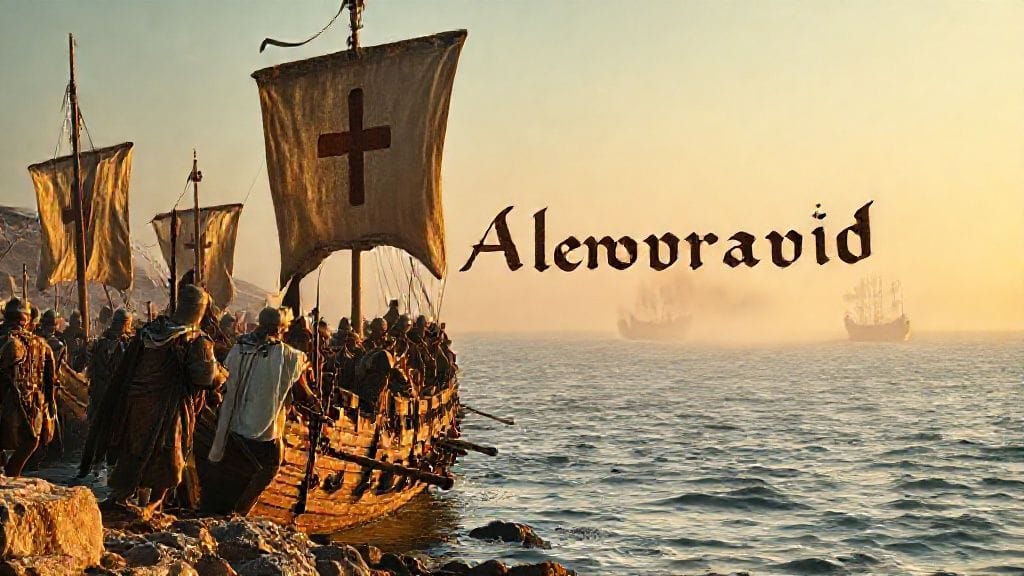
From their base in Tangier and other North African ports, the Almoravids assembled a fleet of ships, many makeshift transports retrofitted to carry horses and heavy armor. Thousands of warriors sailed under flags emblazoned with Islamic calligraphy, their eyes fixed on Algeciras — the natural doorway to Iberian lands.
Reaching the Iberian coast in early 1086, the Almoravids made landfall near Algeciras, where local Muslim forces greeted them with cautious hope. The crossing was emblematic — a movement of people, ideas, and ambition bridging two worlds divided by water but bound by faith and fate.
Algeciras as the Gateway: A Strategic Port and Military Base
Algeciras was no accidental choice. Situated just across from Gibraltar, the town had long been a vital port for trade and military conquest. Its natural harbor offered shelter for the Almoravid fleet and a secure foothold on the Iberian Peninsula.
From here, the Almoravid armies prepared to confront Alfonso VI’s forces. Algeciras became a bustling military hub, its walls echoing with the sounds of armor being forged, horses neighing, and prayers murmured before battle.
But the calm of preparation belied the storm about to break. Iberia was on the cusp of a clash that would resonate for decades.
Mobilization and Enemy Advance: Christian Forces Encroaching
Aware of the Almoravid intervention, Alfonso VI adjusted his strategy. He assembled an imposing coalition of Christian knights, nobles, and mercenaries eager to continue the Reconquista with renewed vigor. Estimates place his forces at around 20,000 men — heavily armored cavalry backed by infantry and archers.
The stage was set for confrontation in the fields near the castle of Sagrajas (also known as Zalaca), east of Badajoz. Both armies understood the stakes: the battle would determine not only territorial control but the religious destiny of Iberia.
The Battle of Sagrajas, October 1086: Clash of Titans
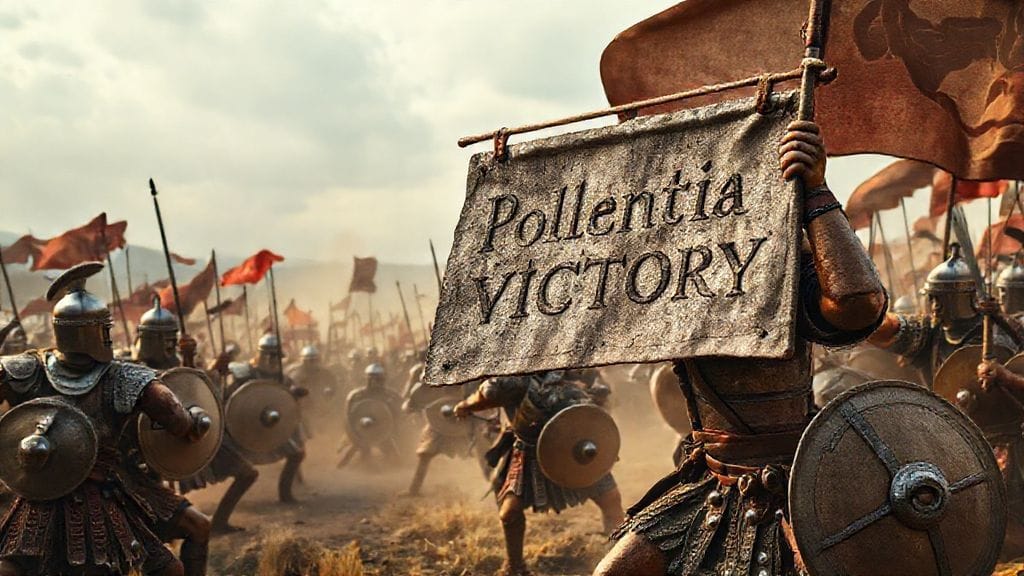
On October 23, 1086, under brooding skies, the Almoravid and Christian armies met in one of medieval Iberia’s most dramatic confrontations. The initial contact saw fierce charges and counterattacks. The Christian knights’ heavy cavalry thundered forward, but were met by the disciplined Almoravid infantry and cavalry, well-versed in desert warfare and tactical innovation.
Yusuf ibn Tashfin commanded with a rare blend of spiritual fervor and strategic acumen. His forces outmaneuvered the Christians, exploiting their exhaustion and lack of unified command. The battle raged from dawn into dusk, blood mingling with the cold earth.
When the dust settled, Alfonso VI was forced into a humiliating retreat — his forces decimated, his campaign stalled. The Battle of Sagrajas was a decisive Almoravid victory, halting the Christian momentum and reshaping the power dynamics.
The Art of War: Almoravid Military Tactics and Innovations
The Almoravid triumph owed much to their military adaptability. Unlike many of their Iberian adversaries, they incorporated heavy cavalry, superior archery, and cohesive infantry formations borrowed from Saharan and North African traditions.
Their ability to rapidly mobilize, maintain discipline amid exhaustion, and exploit terrain was instrumental. The extensive use of Islamic religious symbolism also stiffened morale, framing the battle as a jihad—a confrontation of sacred duty.
This tactical edge was new to Iberian battlefields and forced Christian commanders to rethink their approach in subsequent encounters.
The Defeat of Alfonso VI: A Humbling for Christian Powers
The defeat was a significant psychological blow to Alfonso VI and the Christian kingdoms. His dreams of swift conquest were checked, and the specter of Almoravid dominion reasserted Muslim strength across the peninsula.
Yet, this setback did not end Christian efforts; instead, it forged a grudging respect and a prolonged period of military and diplomatic tension. Alfonso VI’s retreat also exposed internal divisions among Christian rulers, who debated whether to continue offensive campaigns or consolidate their gains.
Political Ramifications in Iberia: Uniting Muslim Forces or Splintering Loyalties?
In the immediate aftermath, the Almoravids’ growing presence complicated the political landscape. The Taifa kings, initially welcoming their help, soon found themselves overshadowed by the more centralized and disciplined Almoravid administration.
While the Almoravids aimed to unify the Muslim territories under a single, strict rule, this threatened the autonomy of local rulers, igniting tensions. However, their presence undeniably renewed Muslim confidence, organizing fragmented populations to resist Christian advances more effectively.
The Almoravid Consolidation in Iberia: From Allies to Rulers
The momentum did not stop at military victory. Over the next two decades, the Almoravids systematically expanded their control, often replacing Taifa rulers with Almoravid governors. They fortified key cities, imposed religious reforms, and connected Iberia more closely to the Islamic Maghreb.
This era saw profound cultural exchanges, as Andalusian art, architecture, and scholarship absorbed Berber influences, yielding rich hybrid traditions.
Yet, the loss of local authority bred resistance, setting the stage for later conflicts within Muslim societies.
The Immediate Aftermath: Shifting Borders and Temporary Peace
Following the battle and Almoravid conquest of many territories, a relative pause emerged—a fragile peace shaped by uneasy coexistence.
For over a decade, the Christians regrouped while the Almoravids reinforced their positions. Moving borders stabilized for a time, but the push-pull of power continued, foreshadowing the prolonged reconquest narrative across centuries.
Cultural Exchanges and Architectural Legacy: The Almoravids’ Iberian Imprint
Beyond warfare, the Almoravids catalyzed a vibrant cultural flowering in southern Iberia. Their influence is visible in the fortified walls of cities like Seville and Córdoba, and in advances in Islamic art, poetry, and theology.
Mosques, madrasas, and palaces built or renovated under Almoravid patronage exemplified architectural grandeur, blending Saharan motifs with Andalusian styles.
This period enriched Iberia’s cosmopolitan fabric, even as it was defined by religious conflicts.
The Decline of Almoravid Influence: Seeds of a New Era
By the mid-12th century, internal strains, rising opposition, and external pressures eroded Almoravid power. The arrival of the Almohads — another reformist group from North Africa — challenged and eventually supplanted them.
This transition introduced new conflicts and reconfigured Iberian Muslim politics, setting further stages in the peninsula’s turbulent history.
Iberia’s Wrestling Continues: Prelude to the Later Reconquista Campaigns
The Almoravid crossing and Battle of Sagrajas were but one chapter in the centuries-long drama of Iberia. The cycles of conquest and reconquest, alliances and betrayals, continued into the later medieval periods, culminating, centuries later, in the eventual fall of Granada in 1492.
The Almoravid intervention bought time for Muslim Iberia but also introduced new dynamics that would echo long after their demise.
Voices from the Past: Chroniclers’ Tales of the Almoravid Arrival
Medieval chroniclers, both Muslim and Christian, left vivid accounts of this period. Muslim historians lauded Yusuf ibn Tashfin as a just and holy leader, while Christian sources portrayed the Almoravids as fierce and ruthless adversaries.
These narratives, often colored by religious and political bias, nevertheless provide rich insight into the drama and perception of the era’s turning points.
Impact on Mediterranean Power Dynamics: A Wider View
The Almoravid crossing was significant beyond Iberia. It reshaped Mediterranean geopolitics, challenging Christian expansion into North Africa and securing Islamic trade routes.
It also strengthened links between Maghrebi and Andalusian societies, contributing to the flow of goods, ideas, and religious thought across the sea.
Legacy Remembered: Almoravid Crossings in Modern Historiography
Today, historians reflect on the 1086 crossing as a pivotal moment that redefined medieval Iberia’s religious and cultural map. It is studied as a testament to the complexities of identity, alliance, and global connections in a time often seen as dominated by simple binary conflicts.
The Almoravid legacy reminds us how faith, politics, and geography intertwined to shape a world still resonant in contemporary cultures.
Conclusion
The Almoravid crossing to Iberia in 1086, marked by the fateful Battle of Sagrajas, was more than a military maneuver. It was a dramatic episode of historical currents converging — faith and power colliding across a narrow sea, empires rising and falling on tides of ambition and belief. Yusuf ibn Tashfin’s decision to bring his desert army across the Strait of Gibraltar altered the trajectory of Iberian history, resisting Christian advances at a crucial moment and imprinting a lasting cultural and political legacy.
Yet, this was no tale of triumph alone. The crossing illuminated the fragile nature of alliances, the tensions between reform and tradition, between unity and division. It invites us to ponder the human stories amid sweeping historical forces — of rulers and ordinary people swept up in the tides of conquest, identity, and survival.
In the story of the Almoravid crossing, we glimpse how borders are not mere lines on maps but the living contours of culture and destiny. This event reminds us that history is both grand and intimate, a tapestry woven with threads from different worlds, forever intertwined across time.
FAQs
1. Why did the Almoravids decide to cross into Iberia in 1086?
The Almoravids responded to urgent appeals from the Muslim Taifa kings, threatened by Christian conquests under Alfonso VI. Yusuf ibn Tashfin saw it as both a religious duty to defend Islam and a strategic opportunity to extend his influence.
2. What was the significance of the Battle of Sagrajas?
The battle marked a decisive Almoravid victory that halted the Christian Reconquista temporarily, humbling the powerful Alfonso VI and reshaping Iberian geopolitics for decades.
3. How did the Almoravids influence Iberian culture?
They introduced Saharan-Berber architectural styles, reinforced Islamic jurisprudence, and fostered cultural exchanges, enriching Andalusian art, urban development, and scholarship.
4. What challenges did the Almoravids face after their arrival?
While initially allies, the Almoravids soon confronted resistance from local Taifa rulers wary of losing power. They also had to adapt to the complex political and military landscape of Iberia.
5. How did the Almoravid crossing affect Christian kingdoms?
It forced Christian leaders to reconsider their strategies and sometimes pause their Reconquista advances, leading to periods of uneasy peace and renewed conflict.
6. What happened to the Almoravids eventually?
By the mid-12th century, the Almoravid dynasty declined due to internal strife and was replaced by the Almohads, another North African Islamic power.
7. Why was Algeciras important in this event?
Algeciras served as the key port and staging area for the Almoravid crossing—a strategic gateway facilitating the transfer of troops and supplies.
8. How is the Almoravid crossing remembered today?
It is regarded as a pivotal turning point in medieval Iberian history, demonstrating the deep interconnection of North African and Iberian worlds and the complexity of medieval Christian-Muslim relations.