Table of Contents
- The Silent Fury Awakens: Ambrym Volcano’s Dormant Threat
- Historical Footprints: The Legacy of Ambrym’s Past Eruptions
- Vanuatu’s Volcanic Heart: Geography and Cultural Significance
- The Preludes to Eruption: Geophysical Changes in 2018
- December 2018: The Explosion Ripples Through the Sky
- Witnessing the Fire: Eyewitness Accounts and Dramatic Scenes
- The Veil of Ash: Environmental and Atmospheric Impact
- The People on the Edge: Immediate Consequences for Local Communities
- Evacuation and Emergency Response: Stories of Resilience and Struggle
- International Aid and Scientific Surveillance: A Global Effort
- The Dynamic Landscape: Lava Flows, Craters, and New Landforms
- The Role of Traditional Beliefs in the Face of Natural Disaster
- Economic Reverberations: Agriculture, Tourism, and Livelihood at Stake
- Science in Action: Monitoring and Understanding the Volcano Post-Eruption
- Ambrym’s Eruption in the Context of Pacific Volcanism and Climate
- Rebuilding Lives and Lands: Recovery and Long-Term Adaptation
- The Volcano as a Living Entity: Narratives from Vanuatu’s Culture
- Lessons Learned: Disaster Preparedness and Community Cohesion
- The Global Lessons from Ambrym’s Fiery Revival
- Ambrym’s Volcanic Soul: A Story That Continues to Shape Vanuatu
1. The Silent Fury Awakens: Ambrym Volcano’s Dormant Threat
On a humid evening of early December 2018, the villagers of Ambrym Island first noticed the sky darken unnaturally, a thick veil of ash blotting out the stars—a sight both terrifying and mesmerizing in its ominous beauty. The earth shivered beneath their feet with an unsettling rhythm, a deep, guttural growl rising from the bowels of the volcano that had long been a silent, looming presence on this lush island. In mere hours, Ambrym—one of the most active volcanoes in the South Pacific—roared back to life with an eruption that would send plumes of ash and lava into the sky, forever altering the landscape and the lives of those who call it home.
For those witnessing the eruption, the eruption was not simply a geological event, but a profound encounter with nature’s most primal power. The air was thick with the scent of sulfur, embers glowed ominously in the night, and the horizon was lit by the fiery tongue of molten rock. It was a moment of awe and dread, a reminder that beneath the idyllic beauty of Vanuatu’s islands lies a seething, volatile heart.
2. Historical Footprints: The Legacy of Ambrym’s Past Eruptions
Ambrym’s eruptions are not unprecedented. This volcano, steeped in both geological and cultural history, has a record of fiery episodes dating back centuries. Indigenous oral traditions speak of great eruptions shaking the island, reshaping its terrain, and challenging its inhabitants. Documented eruptions since European contact in the 19th century noted major events in 1894, 1913, and more recently in 2005, each shaping not only the physical geography but weaving into the local mythology.
The 2018 eruption was yet another chapter in this fiery legacy. Traditionally, eruptions have been viewed as both curses and cleansing acts by the islanders, deeply embedded in their spiritual worldview. Scientists, meanwhile, have studied Ambrym as a laboratory of volcanic activity, fascinated by its twin calderas and persistent lava lakes—some of the most active in the world.
Through history, the volcano has been both a creator and destroyer, a force that demands respect and incessantly reminds humanity of its fragile place on Earth.
3. Vanuatu’s Volcanic Heart: Geography and Cultural Significance
Ambrym is situated in the archipelago nation of Vanuatu, a chain of over 80 islands scattered across the Pacific Ocean. The island itself is roughly circular, dominated by two massive volcanic calderas—Benbow and Marum—that have consistently produced lava lakes that mesmerize both locals and volcanologists.
The island’s remote beauty contrasts with the latent menace beneath. Ambrym is more than a geological feature; it is a living cultural symbol. For the local communities, the volcano is sacred. Rituals and ceremonies abound, aimed at appeasing the spirits believed to dwell in the volcanic vents, ensuring harmony between people and the elemental forces.
Geographically, the volcano sits on a subduction zone where the Australian and Pacific tectonic plates collide—a complex and volatile area responsible for many of the Pacific’s restless volcanoes. Its eruptions have played a critical role in shaping the island’s topography, influencing soil fertility and biodiversity, and through millennia, inspiring legends and shaping social identity.
4. The Preludes to Eruption: Geophysical Changes in 2018
By late 2018, subtle but unmistakable signs pointed to Ambrym’s awakening. Seismographs recorded an uptick in tremors—deep, rumbling earthquakes that grew in frequency and intensity. Gas emissions intensified, releasing clouds rich in sulfur dioxide, a clarion signal of magma rising beneath the surface.
Remote sensing satellites observed ground deformation—slow inflation of the volcanic edifice—as magma pushed upward, stressing the earth’s crust. Local authorities issued warnings, but for many, these signs were only the first inkling of what was to come.
Scientists monitoring Ambrym were on high alert. The volcano’s behavior, like a capricious beast, is notoriously difficult to predict with precision. But the increase in vulcanian explosions and ash plumes suggested magma was approaching the surface, poised to breach.
5. December 2018: The Explosion Ripples Through the Sky
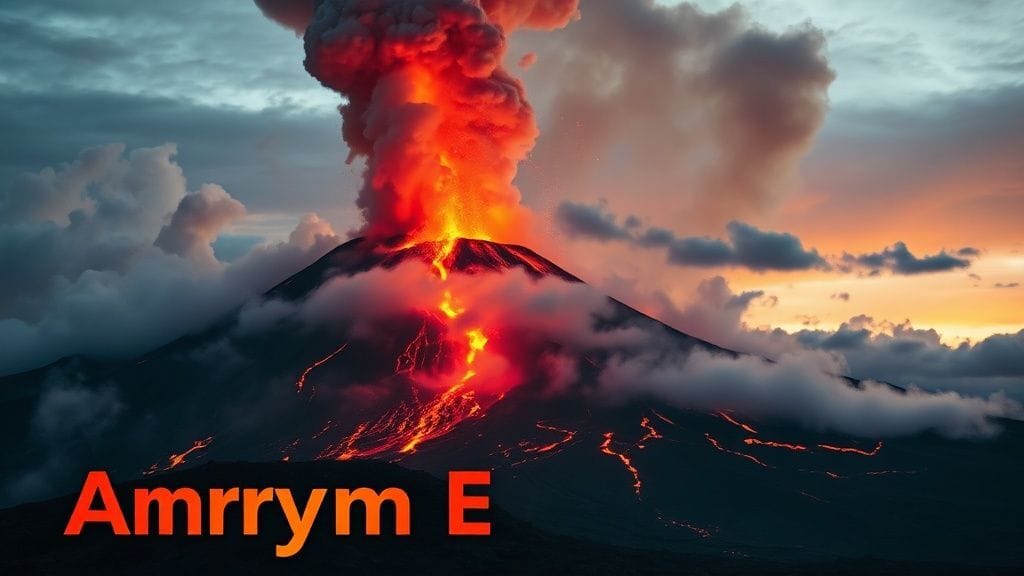
On December 6th, the volcano erupted with sudden ferocity. Skyward jets of ash and incandescent lava tore through the clouds, casting a terrifying spotlight across Ambrym’s nightscape. The eruption generated colossal ash columns rising up to several kilometers—visible from neighboring islands and paralyzing the airspace.
Torrents of lava poured into the caldera’s floor, spilling across the interior in glowing rivers of fire, transforming forest and village alike. The ground trembled beneath the volcano’s wrath; explosions echoed in reverberating roars as rocks and ash showered down.
This was no distant natural spectacle but an immediate threat. Darkness blanketed villages; roofs collapsed under ash weight. It was a scene from a primordial landscape, a vivid reminder of the raw, uncontrollable forces of the planet.
6. Witnessing the Fire: Eyewitness Accounts and Dramatic Scenes
Local islanders describe the night as one of disbelief and fear, but also solemn acceptance. “The mountain roared as if angered by the world,” recounted Mary, a villager who lost her home but survived with her family. “The sky was on fire, and the earth shook beneath our feet. We had never seen the volcano like this… It was like the gods spoke with fire.”
Volcanologists stationed nearby captured striking footage of the glowing lava fountains and sky-piercing ash plumes. Observers saw lightning crackle within the ash clouds—a spectacular but deadly electrical storm generated by volcanic activity.
The eruption forced families to flee amid thick darkness, their paths lit by the fiery glow reflecting off ash clouds. These firsthand perspectives bring humanity to the overwhelming scale of natural disaster—voices that narrate survival amidst chaos.
7. The Veil of Ash: Environmental and Atmospheric Impact
Ash from the eruption spread far, blanketing Ambrym and drifting across neighboring islands and the wider Pacific region. The volcanic plume injected particles high into the atmosphere, which affected air quality and visibility. Aviation routes were disrupted as ash clouds posed extreme hazards to aircraft engines.
The environment suffered immediate impacts: crops were buried beneath ash, freshwater sources contaminated, and ecosystems stressed. Yet volcanic ash can also enrich soils with minerals over time, promising regrowth after devastation.
Furthermore, the eruption contributed to localized climate effects—the injection of sulfur dioxide into the stratosphere can temporarily cool regions by reflecting sunlight, a complex interplay between volcanic activity and climate patterns.
8. The People on the Edge: Immediate Consequences for Local Communities
The eruption hit the island’s residents hard. Homes were destroyed or rendered uninhabitable; schools closed, and daily life was uprooted. One in five islanders faced displacement. Respiratory illness from ash inhalation surged, and food insecurity became urgent as agriculture paralyzed beneath thick ash layers.
Communities faced the brutal choice between fleeing or enduring a hazardous environment. For many, traditional ties to the land made evacuations wrenching but necessary. The psychological toll—a mix of grief, fear, resilience, and hope—echoed through the villages.
9. Evacuation and Emergency Response: Stories of Resilience and Struggle
Vanuatu’s government, the national disaster office, and international partners mobilized quickly but faced logistical challenges. The island’s remoteness, coupled with damaged infrastructure, limited access and delayed relief.
Stories abound of community leaders organizing grassroots evacuations by boat to neighboring islands. Aid workers distributed masks to combat ash inhalation and set up temporary shelters—efforts under immense pressure to address immediate health and safety.
Despite the chaos, the community’s spirit was palpable: neighbors helping neighbors, elders guiding the young, traditions offering solace amid upheaval.
10. International Aid and Scientific Surveillance: A Global Effort
The eruption drew global scientific attention, galvanizing volcanologists, geologists, and emergency responders from across the world. International agencies provided vital support—aircraft, medical supplies, and crisis assessment teams.
Satellite technology, drones, and remote sensors were deployed to monitor lava flows, ash dispersion, and seismic activity in real time, greatly assisting risk assessment.
For the global scientific community, Ambrym became a case study of active volcanism in a remote setting—an urgent reminder of how interconnected disaster preparedness and scientific knowledge must be.
11. The Dynamic Landscape: Lava Flows, Craters, and New Landforms
Volcanic eruptions reshape the earth in dramatic fashion—but Ambrym’s 2018 eruption was especially transformative. Lava flows filled parts of the caldera, creating new landforms that changed the island’s contours.
The twin lava lakes showed renewed activity, spectacularly glowing red in the night. Geological mapping post-eruption revealed shifts in vent positions and crater morphology.
These changes are important, not just physically but culturally: landforms are landmarks intertwined with local identity, myth, and history.
12. The Role of Traditional Beliefs in the Face of Natural Disaster
For the people of Ambrym, the volcano is a sentient presence, a deity or spirit that must be respected. Traditional rituals, such as offerings and dances, are performed to appease the lava spirits and maintain balance.
During the eruption, many communities turned to ancient customs to find meaning and comfort. Elders played key roles, interpreting signs and guiding responses in accordance with ancestral wisdom.
This blending of science and tradition illustrates the resilience of intangible heritage, standing side-by-side with modern hazard management.
13. Economic Reverberations: Agriculture, Tourism, and Livelihood at Stake
Agriculture—the backbone of Ambrym’s subsistence economy—was severely affected. Staple crops such as yams, taro, and bananas were smothered under meters of ash, creating food shortages. Livestock suffered, and fishing was disrupted by falling ash and water acidity.
Tourism, though limited, saw a sharp decline as travel warnings and perceptions of danger deterred visitors. Ambrym’s famed volcano trekking, once a growing attraction, faced setbacks.
Economic recovery required patience and innovation, as communities looked to rebuild sustainable livelihoods amidst environmental uncertainty.
14. Science in Action: Monitoring and Understanding the Volcano Post-Eruption
Post-eruption, scientific teams redoubled monitoring efforts. Sophisticated instruments tracked gas emissions, ground deformation, and seismic activity to forecast future behavior.
This eruption yielded invaluable data on magma dynamics and eruption patterns, contributing to global volcanology knowledge. The interplay between continuous lava lake activity and periodic explosive episodes proved especially fascinating.
Moreover, collaborative efforts integrated local knowledge with scientific observations, creating a more holistic approach to hazard preparedness.
15. Ambrym’s Eruption in the Context of Pacific Volcanism and Climate
Ambrym’s eruption is part of a wider Pacific “Ring of Fire” narrative—the zone around the Pacific Plate notorious for intense seismic and volcanic activity.
In 2018, with several significant eruptions worldwide, Ambrym’s rumblings fed into broader discussions on how such events influence atmospheric chemistry, regional climate, and even human settlement patterns.
Increasing awareness of such volcanic phenomena underscores the delicate balance in island nations vulnerable to both natural and climatic upheavals.
16. Rebuilding Lives and Lands: Recovery and Long-Term Adaptation
Recovery from the eruption was a marathon, not a sprint. Infrastructure repairs, soil rehabilitation, and public health campaigns were essential steps.
New strategies emerged around disaster preparedness: stronger community networks, improved early-warning systems, and education programs.
The people of Ambrym, displaying remarkable resilience, adapted their agricultural practices and housing methods to better cope with future volcanic activity.
17. The Volcano as a Living Entity: Narratives from Vanuatu’s Culture
Ambrym symbolizes more than geophysical power—it is a character in Vanuatu’s cultural drama. Folktales speak of the volcano’s moods, its fiery breath a manifestation of ancestral will.
Writers, artists, and storytellers weave the volcano into their work, ensuring that Ambrym’s story is passed on through generations—sometimes as cautionary tales, sometimes as celebrations of survival.
This cultural layer adds a human dimension to the raw statistics of eruptions.
18. Lessons Learned: Disaster Preparedness and Community Cohesion
The 2018 eruption taught hard lessons in crisis management. Speed and coordination were vital; communication infrastructures were spotlighted as a critical lifeline.
At the same time, community cohesion emerged as the strongest asset. Shared experiences forged new bonds and fostered a collective identity centered on survival.
These lessons have fed into policies not only in Vanuatu but in other volcanic regions worldwide.
19. The Global Lessons from Ambrym’s Fiery Revival
Ambrym’s eruption reminds the world of the unpredictability and potency of volcanic hazards. It urges better integration of indigenous wisdom and scientific methods, faster disaster response, and long-term planning for climate resilience.
As global challenges mount—from climate change to population growth—natural disasters like Ambrym’s eruption offer stark lessons in humility and preparedness.
20. Ambrym’s Volcanic Soul: A Story That Continues to Shape Vanuatu
As the smoke clears and the lava cools, Ambrym remains a living force—part earth’s geological process, part cultural symbol. Its memory is etched into the people and landscape, a story of destruction and creation, fear and beauty, loss and resilience.
The volcano continues to shape Vanuatu’s identity, a fiery pulse at the heart of an island nation where nature and humanity coexist in a delicate, enduring balance.
Conclusion
The Ambrym eruption of December 2018 was more than a natural disaster—it was a dramatic chapter in the story of human resilience, cultural depth, and the relentless power of the Earth. In the trembling shadows of lava and ash, the people of Ambrym reaffirmed their bond to their land, their traditions, and each other. The event exposed vulnerabilities yet showcased the strength found in community and knowledge.
From volcanic fury emerged lessons that transcend geography, reminding us that nature’s forces are not only to be feared but understood and respected. Ambrym’s eruption is a testament to the perpetual dance between creation and destruction, a vivid symbol of life’s fragile beauty amid chaos. As we watch the glowing mountain, we confront the eternal rhythm that shapes our planet—and ourselves.
FAQs
Q1: What geological processes caused the Ambrym eruption in 2018?
The eruption was triggered by magma rising from deep within the Earth along the subduction zone where the Australian and Pacific plates converge. Pressure built beneath the volcano’s calderas until explosive activity ensued.
Q2: How did the eruption affect the local population?
Hundreds were displaced, crops destroyed, and health impacted due to ash inhalation. Evacuations and emergency responses helped mitigate casualties, but the event disrupted livelihoods and infrastructure significantly.
Q3: What role do traditional beliefs play in Ambrym’s volcanic activity?
Locals regard the volcano as a living spiritual entity. Rituals and offerings are traditional means to appease the volcano’s spirits, providing cultural frameworks for coping with and interpreting eruptions.
Q4: How has volcanic monitoring improved the response to Ambrym’s activity?
Advanced seismic, gas, and satellite monitoring technologies provided early warnings and real-time data, improving evacuation timing and risk assessment.
Q5: What environmental impacts did the eruption have?
The ash fall damaged ecosystems and agriculture while contaminating water supplies, but volcanic ash also enriches soils over time, aiding future growth.
Q6: How is Ambrym’s eruption connected to broader patterns of Pacific volcanism?
It is part of the Pacific “Ring of Fire” activity, reflecting the tectonic dynamics responsible for many Pacific island volcanoes and related risks.
Q7: What economic challenges followed the eruption?
Damage to agriculture and tourism affected incomes. Recovery requires diversified approaches and long-term adaptation to volcanic hazards.
Q8: What global lessons can be drawn from the 2018 Ambrym eruption?
The event highlights the importance of integrating indigenous knowledge with modern science, improving disaster preparedness, and adapting to environmental changes linked to volcanic activity.

