Table of Contents
- The Roar Before the Collapse: Anak Krakatau’s Final Warning
- Birth of a Fiery Island: The Origins of Anak Krakatau
- Geology Meets Myth: Legend and Science in the Sunda Strait
- Indonesia’s Volcanic Playground: The Ring of Fire Context
- The Calm That Shattered: December 22, 2018
- A Volcano’s Violent Transformation: The Eruption Unfolds
- The Night the Sea Turned Deadly: The Tsunami on the Sunda Strait
- Immediate Human Impact: Casualties, Displacement, and Chaos
- The Response on the Ground: Rescue Amidst Rubble and Fear
- Scientists’ Race Against Time: Monitoring, Measurement, and Mysteries
- Early Warnings Missed: What Happened to the Tsunami Alerts?
- Anak Krakatau’s Collapse: How the Volcano Receded into the Sea
- Geological Aftershocks: Morphing Landscapes and Continuing Danger
- Political and Social Reverberations: The Indonesian Government’s Reckoning
- International Attention and Aid: Global Response to the Disaster
- Survivor Stories: Voices from the Edge of Disaster
- Environmental Consequences: Marine and Terrestrial Impact
- Memory and Memorials: How Communities Remember the Tragedy
- Lessons Learned: Improving Volcanic and Tsunami Preparedness
- Anak Krakatau Today: Rebirth, Steaming Vents, and New Horizons
- The Volcano’s Legacy: A Dark Reminder in the Age of Climate and Catastrophe
- Conclusion: Nature’s Power, Human Fragility, and Hope for the Future
- FAQs: Understanding the Anak Krakatau Eruption and Its Effects
- External Resource
- Internal Link
1. The Roar Before the Collapse: Anak Krakatau’s Final Warning
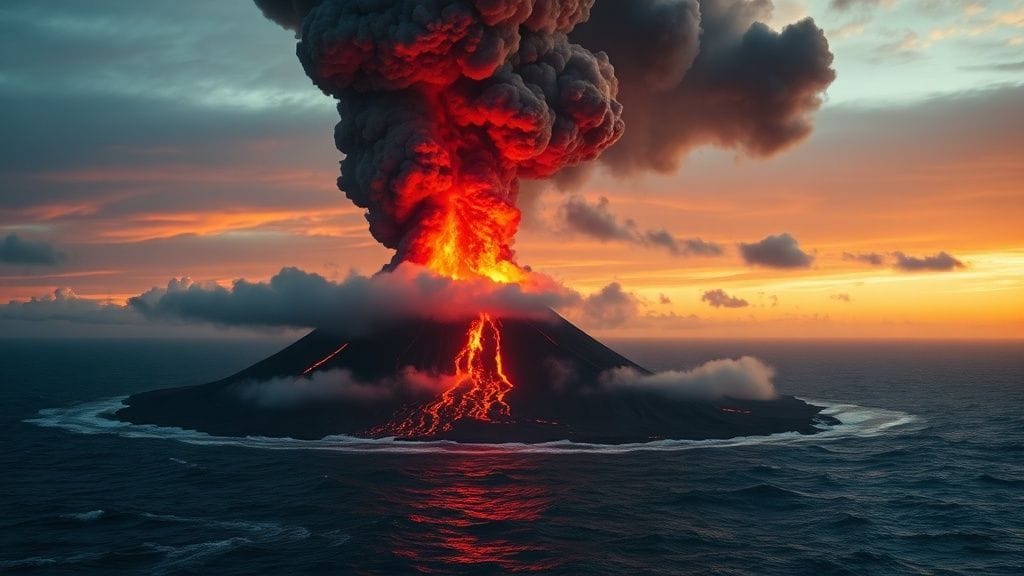
The night sky above the Sunda Strait turned into a canvas of fiery explosions, as Anak Krakatau finally unleashed its fury in late December 2018. Villagers living along the Indonesian coasts watched from anxious shores as the volcanic mountain, long considered a restless sentinel in the sea, spewed ash and glowing lava with unprecedented violence. But the most terrifying spectacle came not from the eruption itself—it was the monstrous tsunami that followed, crashing on shores with lethal force less than an hour after the volcanic tremors. The world watched in horror as nature’s power struck again, reminding humanity that beneath the sea and below the trembling earth lie forces beyond control and comprehension.
This article delves into the eruption of Anak Krakatau—its origins, catastrophic consequences, and enduring legacy. We explore how the Indonesian archipelago’s volcanic heart beats with a deadly rhythm and reveals the complex interplay between human society and the raw forces shaping our planet.
2. Birth of a Fiery Island: The Origins of Anak Krakatau
Anak Krakatau—literally “Child of Krakatoa”—is a volcanic island born from the ashes of the legendary Krakatoa eruption of 1883. That colossal eruption, one of history’s deadliest natural disasters, annihilated much of the original island and triggered tsunamis that killed tens of thousands. Anak Krakatau rose from the caldera's submerged remnants in 1927, slowly but relentlessly climbing from the sea, growing and reshaping with every eruption.
This new volcanic island has never been a passive observer; its infancy defined by continuous eruptions, ash fall, and lava flows made it a living laboratory of geology and a dangerous neighbor to coastal communities. Above all, it served as a stark reminder: the past’s trauma was not forgotten, and the mountain’s simmering heart always held the potential for catastrophe.
3. Geology Meets Myth: Legend and Science in the Sunda Strait
The Sunda Strait is more than a geographical passage between Java and Sumatra—it is a place where legends swirl with molten reality. Local folklore for centuries spoke of the Krakatoa monster, a spirit of fire that emerged destructively from the ocean’s depths. These stories, passed through generations, intertwined with scientific observations revealing the strait’s position atop the volatile Ring of Fire, a nearly continuous string of volcanoes encircling the Pacific.
Geologists describe the Sunda Strait as a subduction zone hotspot—here, one tectonic plate slips beneath another, melting rock and creating the perfect conditions for volcanic firestorms. Anak Krakatau is a child of this violent geological marriage. The tension between the plate boundaries builds an invisible pressure cooker underneath, ready to release with destructive force.
4. Indonesia’s Volcanic Playground: The Ring of Fire Context
Indonesia is paramount among nations when it comes to volcanism. Situated on the converging-Pacific "Ring of Fire," its more than 130 active volcanoes have shaped the land and culture for millennia. Yet, this volcanic abundance is a double-edged sword: fertile soils and geothermal treasures coexist with an ever-present threat of explosions and earthquakes.
The 2018 Anak Krakatau eruption must be understood within this context. This was not an isolated event but a chapter in Indonesia’s ceaseless dance with the earth’s molten cores. The government’s struggle to implement effective monitoring and emergency systems, the challenges of balancing development with safety—all reflect the complex reality of living atop such a restless geological cauldron.
5. The Calm That Shattered: December 22, 2018
Despite Anak Krakatau’s steady puffing activity over 2018, December seemed asleep to many—until a low rumble deep beneath the earth grew violent. On December 22nd, seismic instruments detected an unusually intense series of eruptions beginning around 20:00 local time. Villagers on both sides of the Sunda Strait noticed strange noises and saw the volcano’s glowing crater illuminated against the night.
As lava fountains erupted sporadically, the volcanic dome began showing signs of structural weakness. But no one could imagine the catastrophe that a partial collapse of this growing volcano would soon trigger—a deadly tsunami eerily reminiscent of the 1883 disaster, but hiding its approach under the cloak of darkness.
6. A Volcano’s Violent Transformation: The Eruption Unfolds
The eruption was not simply a spectacular display of nature’s fire but a structural event with grave consequences. Around 21:03, sudden landslides caused parts of Anak Krakatau’s volcanic cone to crumble into the sea. This partial collapse triggered a rapid displacement of enormous water volumes, producing tsunami waves that surged outward with lethal speed.
Witnesses described the volcanic spectacle before the sea rose: glowing flashes, intermittent ash clouds, and the roar of falling rock. For the geologists observing remotely, it was a textbook demonstration of how volcanic landslides can generate tsunamis—a rare, deadly phenomenon emphasizing how intimately connected earth and ocean truly are.
7. The Night the Sea Turned Deadly: The Tsunami on the Sunda Strait
Minutes after the collapse, the tsunami struck the coasts surrounding the Sunda Strait. Waves estimated at up to 5 meters tall battered beaches with devastating force. Coastal towns in Banten and Lampung provinces were caught entirely unprepared. Many communities had no time to react; the tsunami arrived with little warning, sweeping away fishing boats, homes, markets, and lives.
In total, the tsunami killed over 430 people, injured more than a thousand, and displaced tens of thousands. Entire villages lay in ruins by morning’s light. This tragedy was a dramatic wake-up call, underscoring the gaps in monitoring and alert systems for such unusual but catastrophic events.
8. Immediate Human Impact: Casualties, Displacement, and Chaos
The human toll was harrowing. Families were ripped apart, rescue teams scrambled through mud and debris, and temporary shelters soon filled with survivors. The loss of livelihoods—fishing boats, homes, local businesses—deepened the crisis beyond the blink of an emergency.
Eyewitness accounts speak of frantic escapes and the surreal horror of finding stillness where life had been vibrant moments before. The tsunami’s cruelty was not merely in its force, but in its suddenness. Survivors recall how darkness swallowed their world—how the sea betrayed its usual patterns in a blink.
9. The Response on the Ground: Rescue Amidst Rubble and Fear
The Indonesian government mobilized thousands of soldiers, police, and volunteers to assist in rescue and recovery efforts. Hospitals overflowed, roads were blocked, and communications severed in many coastal areas. International aid trickled in, but logistical challenges slowed the efforts.
Despite obstacles, a resilient spirit shone through. Local communities banded together, often using traditional knowledge and improvisation to save lives. Yet, the scale of destruction emphasized the need for improved disaster preparedness and crisis coordination.
10. Scientists’ Race Against Time: Monitoring, Measurement, and Mysteries
For volcanologists and oceanographers, Anak Krakatau’s eruption opened new questions. Why had the recent eruption led to a collapse? How could similar events be predicted? Earth observation satellites, seismic data, and remote sensing technology provided critical data.
Researchers highlighted the challenges of monitoring underwater landslides and their tsunami potential. The real-time communication between geological agencies and disaster managers became a focal point of post-event analysis. It was clear that Indonesia’s network of volcano and tsunami warning systems needed urgent strengthening.
11. Early Warnings Missed: What Happened to the Tsunami Alerts?
One of the most troubling aspects of the disaster was the lack of timely warning. Indonesia’s tsunami alert system had been designed mainly for earthquakes-generated tsunamis, not for those caused by volcanic landslides. Sensors, located offshore, failed to trigger a national alarm.
This gap revealed technical and infrastructural weaknesses—and sparked debates on funding, technology investments, and interdisciplinary cooperation. The tragedy became a catalyst for a deep review and upgrade of Indonesia’s early warning capabilities to better protect communities vulnerable to both earthquakes and volcano-triggered tsunamis.
12. Anak Krakatau’s Collapse: How the Volcano Receded into the Sea
The physical landscape of Anak Krakatau itself changed dramatically. After the partial collapse, the island’s area shrank by more than half, and its height dropped by hundreds of meters. The volcanic edifice had lost a substantial volume of rock to the sea.
This morphological transformation altered eruption patterns and posed new monitoring challenges. But it also renewed Anak Krakatau’s status as a natural laboratory for studying island volcanoes and their dynamic behavior.
13. Geological Aftershocks: Morphing Landscapes and Continuing Danger
Even after December 2018, Anak Krakatau remained volatile. Frequent eruptions—smaller but persistent—continued to shape the island. Science has shown that such volcanic islands undergo cycles of construction and destruction, each one potentially hiding new hazards beneath.
Communities around the Sunda Strait remain vigilant. Scientists continue to monitor ground deformation, gas emissions, and seismic activity—aware that nature’s reprisal can come at any moment.
14. Political and Social Reverberations: The Indonesian Government’s Reckoning
The disaster put pressure on authorities to improve disaster management policies, urban planning, and public education programs. Criticisms arose over insufficient warning systems and emergency infrastructures, particularly in remote fishing villages.
In the aftermath, the government strengthened partnerships with international scientific bodies and invested in more comprehensive disaster response plans. Local and national dialogues have grown around climate resilience, infrastructure development, and indigenous knowledge integration.
15. International Attention and Aid: Global Response to the Disaster
Indonesia’s tragedy resonated globally, prompting aid and solidarity from governments and humanitarian organizations worldwide. Financial assistance, technical expertise, and relief supplies poured in from countries across Asia and beyond.
This international cooperation emphasized the interconnectedness of natural disaster risks and the importance of global networks in response and preparedness—an urgent reminder that volcanic and tsunami risks transcend borders.
16. Survivor Stories: Voices from the Edge of Disaster
Amid statistics and scientific reports rise the human stories. One fisherman recalls how the sudden roar of the sea forced him to sprint inland, leaving his boat and net behind. Another mother speaks of clutching her child as waves tore apart their village.
These personal narratives articulate the trauma, resilience, and hope of people who lived through Anak Krakatau’s wrath. They remind us that behind every number is a human heartbeat, a history interrupted but not extinguished.
17. Environmental Consequences: Marine and Terrestrial Impact
The eruption and tsunami reshaped ecosystems both on land and in the surrounding sea. Coral reefs suffered sediment smothering, while coastal forests were uprooted or burned. The volcanic ash enriched soils but also poisoned some freshwater sources.
Scientists continue to track recovery trajectories, noting nature’s remarkable ability to heal even after profound destruction. Anak Krakatau’s event provides invaluable data on ecological disturbance and regeneration in volcanic contexts.
18. Memory and Memorials: How Communities Remember the Tragedy
Years after the disaster, memorials stand on coastlines—simple markers with names and dates, places for mourning and reflection. Annual commemorations bring together survivors, rescuers, and officials to honor the lost and reaffirm their commitment to vigilance.
These acts of collective memory bind communities, transform grief into strength, and educate younger generations about the risks hidden beneath their scenic shores.
19. Lessons Learned: Improving Volcanic and Tsunami Preparedness
The Anak Krakatau disaster has prompted Indonesia and the global community to rethink disaster policies. Emphasis now lies on integrating multiple hazards, enhancing real-time data sharing, and expanding community participation.
Key lessons include recognizing the unique dangers of volcanic tsunamis, diversifying warning technologies, and fostering local knowledge alongside scientific monitoring—creating resilience born from partnership between earth science and society.
20. Anak Krakatau Today: Rebirth, Steaming Vents, and New Horizons
Today, Anak Krakatau continues its restless existence—today’s eruptions smaller but steady, a constant reminder that no volcano stays silent forever. Satellite images reveal steam vents, fresh lava flows, and a reshaped island silhouette.
Researchers watch with both caution and fascination. The “child” of Krakatoa is growing, reminding us that, in the dance between creation and destruction, this island remains a potent symbol of nature’s fiery heart.
21. The Volcano’s Legacy: A Dark Reminder in the Age of Climate and Catastrophe
Beyond its geological drama, Anak Krakatau’s eruption echoes in a world facing increasing natural disasters. It prompts reflections on human vulnerability, the need for preparedness, and the urgency of integrating science, policy, and community action.
The disaster’s memory challenges us to respect nature’s power and to build societies ready to endure amid planetary changes yet to come.
Conclusion
The eruption of Anak Krakatau in December 2018 was more than a geological event—it was a vivid, tragic chapter of human and natural history converging in violent interplay. It taught us about the unpredictable nature of volcanic tsunamis, the resilience of affected communities, and the pressing need for better preparedness worldwide.
In a world where the earth’s pulse can shatter lives in moments, Anak Krakatau stands as a fiery monument to nature’s might and humanity’s enduring hope. It reminds us that while we cannot command the elements, we can choose to listen, learn, and stand ready—as vigilant guardians beside the restless shores.
FAQs
Q1: What caused the tsunami triggered by Anak Krakatau in 2018?
A1: The tsunami was caused by a partial collapse of Anak Krakatau’s volcanic cone into the sea, which displaced large volumes of water and generated destructive waves.
Q2: How many people were affected by the tsunami?
A2: Over 430 people died, more than 1,400 were injured, and tens of thousands were displaced from their homes.
Q3: Why was there no effective warning before the 2018 tsunami?
A3: Indonesia’s tsunami warning system was primarily designed to detect earthquake-triggered tsunamis, not those caused by volcanic landslides; sensors failed to detect the rapid collapse and wave formation in time.
Q4: How has Anak Krakatau changed physically after the 2018 eruption?
A4: The island lost more than half its area, with the volcanic cone collapsing and its height decreasing by hundreds of meters.
Q5: What is the significance of Anak Krakatau in Indonesian geological history?
A5: Anak Krakatau is the volcanic island born from the 1883 Krakatoa eruption's remnants, symbolizing the ongoing geological fire and volcanic hazards in the region.
Q6: How has Indonesia improved disaster preparedness since the incident?
A6: The government has upgraded early warning systems, enhanced monitoring technology, fostered community education, and cooperated with international experts to better predict and respond to similar events.
Q7: What environmental impacts did the eruption and tsunami have?
A7: The events damaged marine ecosystems such as coral reefs, destroyed coastal forests, and altered soil and water quality, but natural recovery processes are ongoing.
Q8: Are there still risks associated with Anak Krakatau today?
A8: Yes, Anak Krakatau remains an active volcano with ongoing eruptions and potential for future landslides, continuing to pose risks to nearby communities.

