Table of Contents
- The Night of Destruction: A Sudden Fury in the Sunda Strait
- Anak Krakatau: The Fiery Child of a Volcanic Giant
- Indonesia’s Volcanic Legacy: A Double-Edged Sword
- The Geological Fracture: Building Tensions Beneath the Surface
- Prelude to Disaster: Signs that Went Unheeded
- December 22, 2018: When the Mountain Collapsed
- The Chain Reaction: From Landslide to Tsunami
- Surprise and Horror: The Human Toll Unfolds
- First Response: Local Heroes and International Alert
- Scientific Investigations: Piecing Together the Catastrophe
- Early Warnings and Their Absence: An Institutional Analysis
- The Impact on Coastal Communities: Stories of Loss and Survival
- Environmental Repercussions: A Changed Landscape
- The Role of Media: Narrating a Disaster in Real Time
- Indonesia’s Disaster Preparedness: Lessons Learned
- Global Reactions and Humanitarian Aid
- Revisiting Anak Krakatau: Volcanic Activity After the Tsunami
- Technological Advances in Tsunami Detection Post-2018
- Memorializing the Disaster: Remembering the Sunda Strait Tragedy
- The Psychological Aftermath: Healing Wounds Invisible to the Eye
- Comparing Sunda Strait’s Tsunami to Past Oceanic Catastrophes
- Anak Krakatau’s Future: Nature’s Resilience and Unpredictability
- Balancing Risk and Community: Navigating Life in Volcanic Regions
- Conclusion: When Nature’s Fury Meets Human Vulnerability
- FAQs: Understanding the Anak Krakatau Landslide Tsunami
- External Resource
- Internal Link
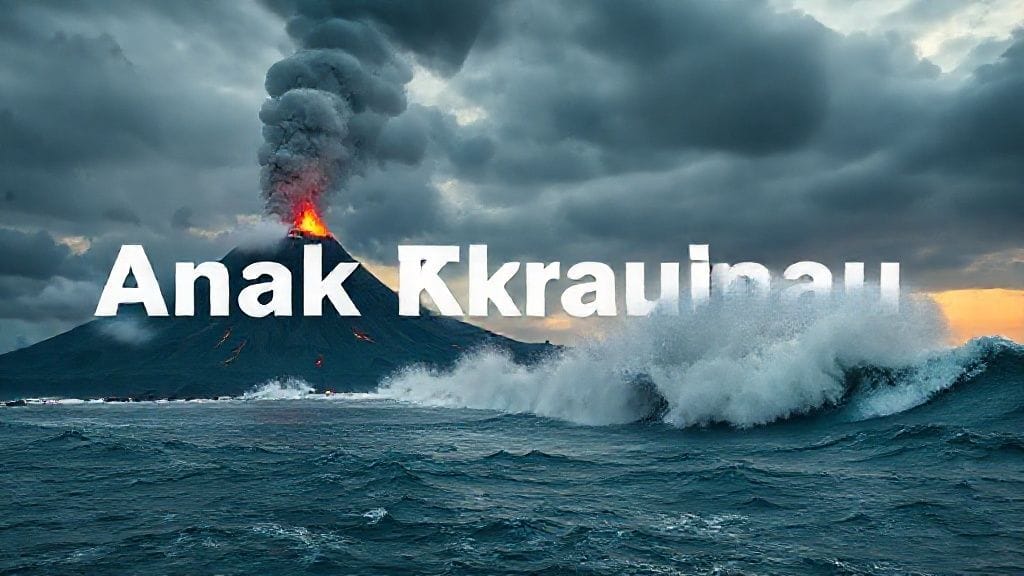
On a quiet evening in late December 2018, the peaceful rhythm of coastal life in Indonesia’s Sunda Strait was shattered by a catastrophe as sudden as it was devastating. The Anak Krakatau, a restless volcanic island rising defiantly from the sea, gave way to forces invisible and ineffable to those who lived within earshot. In less than a minute, the world would witness a somber reminder of nature’s terrifying power: a colossal landslide from this fiery mountain plunged into the sea, setting off a tsunami that swept through nearby shores with deadly speed and fury.
This was not merely a natural disaster; it was a tragic collision of geology, human vulnerability, and the intricate dance woven by earth’s own processes. But how did this volcanic child of Krakatoa become the agent of such destruction? And why was the tsunami so devastating, despite Indonesia’s unfortunate familiarity with these oceanic onslaughts? To truly understand the barking fury of Anak Krakatau on December 22, 2018, we must journey back through time and space, peering beneath the surface of both earth and human systems to grasp the fragility of life at the nexus of fire and water.
Anak Krakatau: The Fiery Child of a Volcanic Giant
To speak of Anak Krakatau is to invoke the living legacy of one of the most infamous volcanic disasters in history. The original Krakatoa volcano, whose cataclysmic eruption in 1883 sent shockwaves across the globe, culminated in the disappearance of an island and the death of tens of thousands of people. Decades later, from the very abyss that swallowed its predecessor, Anak Krakatau—“Child of Krakatoa”—was born in 1927, a persistent and proud remnant of earth’s fiery underbelly.
Unlike its destructive ancestor, Anak Krakatau grew slowly yet relentlessly, its eruptions a potent reminder of the subterranean turmoil that simmered below. This island was a symbol of both creation and destruction — a continuous rebirth born of volcanic fury that shaped Indonesia’s complex geography and immense seismic risk. Yet, in the decades leading to 2018, the volcanic activity had been moderate, with eruptions that reminded locals and scientists alike that the mountain was alive but apparently stable.
Indonesia’s Volcanic Legacy: A Double-Edged Sword
Indonesia’s archipelago sits squarely on the infamous Pacific “Ring of Fire,” a horseshoe-shaped belt notorious for its concentration of volcanoes and seismic activity. This fiery necklace of geologic tension bestows the region with fertile soil, thriving ecosystems, and breathtaking landscapes. But at a steep price: the ceaseless risk of eruptions, earthquakes, and tsunamis that periodically wrench human communities into chaos.
In the Sunda Strait, where the islands of Java and Sumatra nestle like sleeping giants at the edges of tectonic plates, this volatile setting is painfully evident. Yet, the rhythm of daily life — fishing, trade, tourism — has long persisted alongside this uncertainty. The duality of blessing and curse has shaped local culture, governance, and readiness, intertwining with Indonesia’s national narrative of resilience and tragedy.
The Geological Fracture: Building Tensions Beneath the Surface
On the night of December 22, 2018, Anak Krakatau’s southern flank, swollen by months of volcanic activity and altered by intense magma flows, began to give way. Beneath layers of ash and hardened lava, vast volumes of earth were in motion, destabilized by the inclusion of volcanic debris and relentless weathering.
Scientists later revealed that this catastrophic landslide was both gradual and sudden—a lethal combination. On one hand, slow accumulation of fractures and magma pressured the mountain’s structure; on the other, a swift failure saw thousands of cubic meters of rock and soil plunge into the ocean, displacing billions of liters of seawater in an instant. It was a geological fracture turned ruinous event—a moment when the land betrayed itself, sending waves of destruction outward.
Prelude to Disaster: Signs that Went Unheeded
In the weeks before the landslide, observers noted increased volcanic activity. Seismic instruments detected tremors, and plumes of ash marked Anak Krakatau’s restless vigor. However, these signals were not beyond expectation for a volcano of this type and location.
Warnings were muffled by a mix of optimism, complacency, and infrastructural limitations. Indonesia’s early warning systems, while robust in theory, lacked the precision and integration to anticipate the tsunami triggered by a landslide—an event qualitatively different from usual tectonic tsunamis. The absence of a sufficient alert system proved a fatal oversight when the mountain finally fractured.
December 22, 2018: When the Mountain Collapsed
At approximately 9:03 pm local time, as residents along the coasts of Banten and Lampung were settling in for the night, Anak Krakatau’s southern flank suddenly collapsed into the sea. The event lasted mere moments, but its impact was immediate and catastrophic. Massive volumes of volcanic rock tumbled into the ocean, instantaneously displacing seawater and generating tsunami waves that radiated swiftly across the Sunda Strait.
These waves, reaching heights of up to 13 meters in some places, surged with relentless ferocity toward the shores, catching thousands by surprise. The coastlines, normally alive with nighttime activity and fishing villages, were awash with terror and destruction in minutes.
The Chain Reaction: From Landslide to Tsunami
A landslide-induced tsunami is a rarity compared to the more common earthquakes that jolt tectonic plates. The specific dynamics of Anak Krakatau’s collapse set off a violent displacement of seawater, with waves racing outwards in multiple directions, elevated by the confined geography of the strait.
The 2018 tsunami was unique because it followed minutes after volcanic eruptions, compounding the chaos. Fishermen and residents reported hearing loud rumbling, explosions, and a ‘cracking’ sound before the waves struck — a chilling prelude to the deluge they couldn’t escape.
Surprise and Horror: The Human Toll Unfolds
By the time dawn broke over the Sunda Strait, the full scale of tragedy became heartbreakingly clear. Over 400 lives had been lost, with hundreds more injured and thousands displaced. Entire villages were swept from the map or left in ruins. Families mourned loved ones taken in the blink of an eye.
Official reports tallied 437 confirmed fatalities, over 14,000 injured, and more than 33,000 displaced. Yet behind the numbers were individual stories: mothers clutching shattered children, fishermen’s boats shattered like toys, entire communities wrestling with grief and disbelief.
First Response: Local Heroes and International Alert
Despite the shocking scale, the emergency response mobilized quickly. Local governments, military units, and volunteers worked tirelessly to rescue survivors, distribute aid, and support displaced families. International organizations, including the United Nations and Red Cross, extended solidarity and coordinated humanitar- ian relief.
This crisis revealed remarkable courage and community spirit but also exposed vulnerabilities—gaps in infrastructure, communication bottlenecks, and challenges of reaching remote areas under threat of aftershocks and landslides.
Scientific Investigations: Piecing Together the Catastrophe
In the weeks following the disaster, multidisciplinary teams of geologists, volcanologists, tsunami experts, and oceanographers converged on the region. Their mission: to decode the precise sequence of events and improve future prediction capabilities.
Satellite imagery showed the dramatic morphological changes on Anak Krakatau’s southern flank. Seismic data helped establish the landslide’s timing and magnitude. Meanwhile, oceanographic monitoring focused on wave speed and construction of underwater topographies shaped by recent events.
This comprehensive effort laid foundations not only for academic understanding but for the practical improvement of early warning systems.
Early Warnings and Their Absence: An Institutional Analysis
One of the most painful lessons of the Anak Krakatau tsunami is the failure of early warning systems to detect a landslide-triggered tsunami. Unlike traditional seismic tsunamis, these disasters lack typical earthquake signatures that prompt automatic alerts.
In Indonesia, warning infrastructures must contend with complex geography, resource constraints, and unpredictable natural behavior. Post-disaster audits revealed glaring weaknesses and sparked debates about investment, technology adoption, and community engagement.
The Impact on Coastal Communities: Stories of Loss and Survival
The coastal populations along the Sunda Strait embody resilience carved out of constant exposure to nature’s extremes. Yet, the suddenness of this tsunami meant many were caught utterly unprepared.
Survivor stories speak of rapid decisions, altruism, and desperate races against time. Some owe their lives to last-minute escapes or warnings shouted across the water. Others manage to preserve fragments of memory—a family photo, a fishing net—as emblems of endurance.
Environmental Repercussions: A Changed Landscape
Nature is often a silent survivor in disasters; yet, the Anak Krakatau event irreversibly altered the environment. The island itself lost roughly two-thirds of its volume. The coastline shifted, coral reefs and marine ecosystems were damaged, and sedimentary deposits changed the ocean floor’s makeup.
Scientists continue studying these changes, understanding that they ripple through ecosystems and fisheries that local communities depend upon.
The Role of Media: Narrating a Disaster in Real Time
The 2018 Sunda Strait tsunami unfolded in the age of instant communication. Social media served both as a tool of information and a source of confusion. Videos captured waves crashing against shores; emergency broadcasts sought to alert; virtual crowds mourned and prayed.
Yet, misinformation and panic also spread rapidly, challenging authorities’ abilities to provide timely and accurate updates.
Indonesia’s Disaster Preparedness: Lessons Learned
Indonesia’s complex hazards call for an equally dynamic and multifaceted response system. Post-Anak Krakatau evaluations stress the need to expand detection networks—incorporating landslide monitoring and upgrading coastal sensors.
Community education, evacuation routes, and communication infrastructure are equally critical. This disaster becomes a case study in balancing technological solutions with grassroots preparedness.
Global Reactions and Humanitarian Aid
The tragedy prompted swift global sympathy. Countries from Japan to Australia offered assistance, whether in expertise, finance, or supplies. This showcased the international interconnectedness of disaster response, highlighting shared vulnerabilities and cooperative strength.
Revisiting Anak Krakatau: Volcanic Activity After the Tsunami
Rather than fall silent, Anak Krakatau sparked debates in volcanology. Post-collapse activity intensified, with new eruptions and reshaped calderas. The mountain’s story is one of adaptation, both geological and societal.
Technological Advances in Tsunami Detection Post-2018
In response to the disaster, technological innovation accelerated. New sensors capable of detecting submarine landslides, improved sea-level monitoring stations, and AI-powered early warning platforms now feature prominently in Indonesia’s risk management strategies.
Memorializing the Disaster: Remembering the Sunda Strait Tragedy
Memorial sites along the coast, annual remembrance ceremonies, and educational programs seek to honor victims and keep memories alive. These rituals offer communities a chance to grieve collectively and underline the importance of vigilance.
The Psychological Aftermath: Healing Wounds Invisible to the Eye
Survivors confront enduring trauma: nightmares, anxiety, and the struggle to rebuild intangible securities. Mental health programs, often overlooked, have grown into a vital component of post-disaster recovery.
Comparing Sunda Strait’s Tsunami to Past Oceanic Catastrophes
While less deadly than the 2004 Indian Ocean tsunami, the 2018 event is noteworthy for its causes and suddenness. Comparative studies deepen our understanding of tsunami diversity, informing global emergency preparedness.
Anak Krakatau’s Future: Nature’s Resilience and Unpredictability
Anak Krakatau continues to grow, reminding us that the natural world is neither static nor forgiving. Its cycles teach the permanence of change and the delicate balance between human presence and geological forces.
Balancing Risk and Community: Navigating Life in Volcanic Regions
For communities living in the shadow of volcanoes, disaster readiness and sustainable development must go hand in hand. The Sunda Strait tragedy underscores the complexities of balancing human ambition and respect for nature’s whims.
Conclusion
The Anak Krakatau landslide tsunami of December 22, 2018, is a haunting testament to the raw, unpredictable power lying just beneath the surface of our planet. It shattered lives in moments but also awakened a nation—and the world— to the necessity of rethinking disaster preparedness where land, fire, and sea converge.
Beyond the numbers of dead and displaced lie stories of human courage, loss, and the enduring resilience of communities on the edge of nature’s most dramatic theaters. Anak Krakatau, born of fire and fury, reminds us that the earth’s cycles are both creators and destroyers.
As we remember those lost to the waves and rubble, we also embrace the lessons taught by this tragedy, hoping our vigilance can one day keep such sudden fury from claiming so many again. Ultimately, it is a story not just of disaster, but of fragile coexistence, human tenacity, and the eternal dance of nature’s forces.
FAQs
Q1: What caused the Anak Krakatau landslide tsunami in 2018?
A: The tsunami was triggered by a massive landslide on the southern flank of Anak Krakatau volcano, which collapsed into the sea following increased volcanic activity. This plunging mass displaced seawater rapidly, generating tsunami waves.
Q2: Why was the tsunami so deadly despite Indonesia’s experience with tsunamis?
A: The tsunami was caused by a landslide rather than an earthquake, which traditional early warning systems are designed to detect. The lack of specific monitoring for volcanic landslide tsunamis meant warnings were not issued in time.
Q3: How many people were affected by the tsunami?
A: Official reports confirm at least 437 deaths, over 14,000 injured, and more than 33,000 displaced due to the tsunami along the Sunda Strait coasts.
Q4: What changes occurred to Anak Krakatau after the event?
A: The island lost about two-thirds of its volume, with significant reshaping of its southern flank. The volcano’s activity also continued post-collapse, with ongoing eruptions and geological changes.
Q5: What lessons did Indonesia learn from the disaster?
A: The event highlighted the need to incorporate landslide-induced tsunami monitoring into early warning systems, improve communication infrastructure, and increase community disaster preparedness education.
Q6: How has the disaster affected environmental and marine ecosystems?
A: The tsunami and landslide damaged coastal ecosystems, coral reefs, and altered sediment patterns, impacting fisheries and biodiversity in the Sunda Strait region.
Q7: Are volcanic landslide tsunamis common worldwide?
A: They are relatively rare compared to tectonic tsunamis but can be highly destructive when they occur, especially near volcanic islands with unstable flanks.
Q8: How is the memory of the tsunami preserved locally?
A: Through memorial sites, annual ceremonies, survivor storytelling, and educational programs focused on disaster awareness and remembrance.