Table of Contents
- The Silent Roar: Prelude to a Submarine Cataclysm
- The Bay of Bengal on a Quiet June Morning
- The Tectonic Theater: Geology Beneath the Waves
- June 26, 1941: The Day the Earth Trembled
- Unseen Tremors: The Ocean’s First Warning
- The Andaman–Nicobar Islands: Isolation and Vulnerability
- The Tsunami Unleashed: Waves of Destruction
- The Human Toll: Stories from the Edge of Disaster
- Colonial Echoes: British India and the Islands' Strategic Importance
- The Role of Local Communities: Resilience and Response
- Scientific Breakthroughs: Early Understanding of Submarine Earthquakes
- Communication Breakdown: Why the Warning Came Too Late
- The Aftermath: Rebuilding Amidst Uncertainty
- Ripples Through History: Impact on Regional Maritime Routes
- The Geopolitical Shadow: World War II’s Overlapping Crises
- Silent Witnesses: The Islands’ Natural Recovery
- Modern Science Reexamines 1941: Lessons Learned
- Tsunami Preparedness: From 1941 to Today
- Public Memory and Forgotten Catastrophe
- Conclusion: Echoes Beneath the Waves
- FAQs: Understanding the Andaman–Nicobar Tsunami
- External Resource: Comprehensive Study Link
- Internal Link: Visit History Sphere
The Silent Roar: Prelude to a Submarine Cataclysm
The morning of June 26, 1941, began as any other in the distant waters of the Bay of Bengal, a vast sea of swirling currents and tropical rhythms. Islanders stirred awake beneath the shade of coconut palms, fishermen prepared their nets with practiced hands, and the British colonial stations ticked quietly on amid the simmering swirl of a world at war. But beneath the cerulean calm of the sea surface, an ancient and titanic struggle was unfolding—a sudden, violent rearrangement of the Earth’s crust that would send a lethal wave racing across the ocean, forever altering lives and landscapes.
In those first tremors, unheard and unseen by most, lay the harbinger of destruction: the Andaman–Nicobar tsunami. It was a sudden rupture, invisible yet profound, a reminder of the restless planet on which human histories unfold. The story of that day is not just the account of a natural disaster; it is a window into geological mysteries, colonial history, human resilience, and the intricate dance of nature and society in an era overshadowed by war.
The Bay of Bengal on a Quiet June Morning
The Bay of Bengal, cradled between the peninsulas of India and Myanmar, is a mosaic of maritime activity and ecological diversity. In 1941, its waters were busy with fishing boats, cargo ships, and the occasional warship. The Andaman and Nicobar Islands—scattered hundreds of kilometers into the bay’s deepest reaches—were small enclaves of life and culture, bearing the marks of centuries of migration, colonial rule, and strategic importance.
June in this region is characterized by the early onset of the monsoon, a time when skies can darken suddenly and winds shift with palpable urgency. Yet, the morning of June 26 was deceptively calm. No one anticipated the convulsion the Earth was about to make beneath their feet and under the sea. The ocean, which had long been a giver of life and sustenance, was about to reveal a more terrifying face, driven by the tectonic fury locked beneath the seafloor.
The Tectonic Theater: Geology Beneath the Waves
Beneath the Bay of Bengal lies a complex and restless boundary of the Earth’s tectonic plates. The Indian Plate relentlessly nudges northeastward, colliding with the Burma Plate and pressing against the Sunda Plate, a process responsible for some of the most violent geological events in the region. This immense subduction zone—where one plate slides beneath another—stores colossal amounts of energy as the plates lock, strain, and suddenly release.
The Andaman–Nicobar region sits directly at this interface, a geological fault line where the Earth’s crust breaks and reshapes itself in devastating ways. While earthquakes are frequent, only periodically do they generate tsunamis—gigantic waves capable of traveling thousands of kilometers at speeds up to 800 kilometers per hour. The 1941 event would prove to be one such rare but deadly release of pent-up tectonic energy.
June 26, 1941: The Day the Earth Trembled
The sequence began deep beneath the waves. Around mid-morning, seismographs recorded a powerful earthquake, estimated now to have been around magnitude 7.7 to 8.0. The quake ruptured the seafloor near the Andaman trench, displacing massive volumes of seawater. Unlike tremors that mostly rock the land, this one sent shockwaves crashing through the ocean itself.
On the islands, faint rumbles reached communities accustomed to the earth’s shifting moods—but this was different. The quake struck with suddenness, a violent pulse felt through the jungle and coastal villages before the ocean’s surface betrayed the upcoming disaster.
Unseen Tremors: The Ocean’s First Warning
The initial sign of catastrophe was not the shaking earth but the strange behavior of the sea. Fishing boats reported the water retreating dramatically from the shoreline, exposing coral reefs and revealing stretches of seabed that had been hidden for decades. This uncanny recession, a direct consequence of the tsunami’s trough passing beneath, lasted mere minutes but instilled a deep sense of dread.
Few understood these signs then—the correlations between seismic events beneath the ocean and the destructive waves that could follow were not yet well known in this remote part of the world. Thus, neither the islanders nor colonial administrators could prepare for what came next: waves towering over tree lines, bulldozing everything in their paths.
The Andaman–Nicobar Islands: Isolation and Vulnerability
The Andaman and Nicobar archipelagos were a peculiar cluster of tropical serenity and strategic isolation. Spread over hundreds of kilometers, they housed a mosaic of indigenous tribes, settlers, colonial outposts, and natural refuges. Despite their natural beauty, the islands were vulnerable—geographically remote and infrastructure weak.
Communication was sparse at best. The British administration overseeing the region struggled to maintain control over these distant territories in an already turbulent decade. The islands had become more than just outposts; they were symbols of empire and control in a volatile geopolitical landscape. This fragility became tragically apparent as the tsunami’s waves arrived.
The Tsunami Unleashed: Waves of Destruction
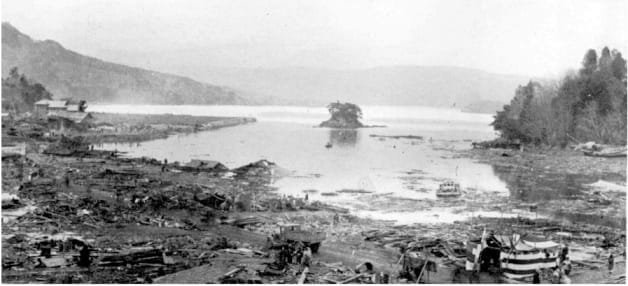
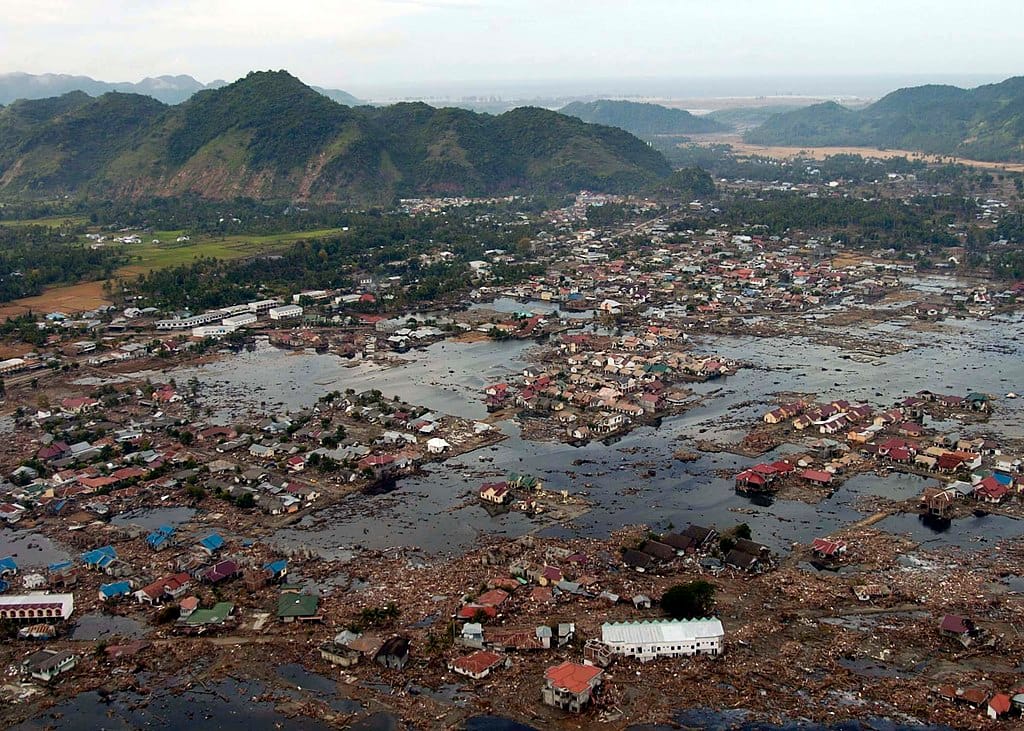
From the Andaman trench, the tsunami unleashed a series of colossal waves racing outward, slamming first into the nearest shores—the Andaman Islands themselves. Eyewitnesses would later recall waves of six to ten meters or more crashing over the coasts, uprooting trees, destroying settlements, and carrying away boats and people alike.
The tsunami’s reach extended far beyond the immediate islands. The wave propagated through the Bay of Bengal, touching distant shores with diminished but deadly force. The Nicobar Islands, further south, endured the shock with devastating consequences. In fishing villages, entire families disappeared beneath the dark waters; palm trees, homes, and boats became flotsam in the sudden, brutal surge.
The Human Toll: Stories from the Edge of Disaster
It is impossible to recount the Andaman–Nicobar tsunami without bearing witness to the human suffering it inflicted. While exact death tolls remain uncertain due to the fragmented records of the time, it is estimated that several hundreds—perhaps thousands—lost their lives as a direct result of the wave.
One story stands out: that of a small fishing village on Car Nicobar. When the water pulled back, a group of villagers rushed to gather shellfish from the exposed reef, only to be caught unaware by the returning wave. Survivors recounted the terrifying moments when the tsunami struck—schools swept away, homes flattened, and the sea turning a raging monster.
For the indigenous tribes, many of whom lived in close relationship with the natural rhythms of the islands, the tsunami became a traumatic rupture, a break in the continuity of life itself. The waves did not just erode land—they tore through the cultural fabric of communities.
Colonial Echoes: British India and the Islands' Strategic Importance
The tsunami unfolded against the backdrop of World War II, a time when the British Empire’s grip was under increasing strain. The Andaman and Nicobar Islands, while geographically remote, held significant strategic value—commanding key naval routes in the Bay of Bengal and serving as potential forward bases in the struggle against Japanese expansionism.
British colonial authorities faced the challenge of responding to the disaster in the midst of wartime pressures. Relief efforts were constrained, communication lines were weak, and military concerns often overshadowed humanitarian ones. The disaster thus also highlighted the neglect and marginalization of the island populations under colonial administration.
The Role of Local Communities: Resilience and Response
Despite limited official aid, local communities mobilized quickly. Folk knowledge, although imperfect, guided some to higher ground and safer zones. Fishing crews banded together to search for survivors and salvage what they could.
The experience fostered a strong communal spirit, one born of necessity and repeated exposure to natural threats like monsoon floods and cyclones. Oral histories emphasize the strength of kinship networks and the importance of traditional knowledge in weathering such crises.
Yet the scars of that day lingered for generations, an indelible part of communal memory passed from elders to youth, shaping how islands prepared for future dangers.
Scientific Breakthroughs: Early Understanding of Submarine Earthquakes
In 1941, underwater seismic activity was only beginning to be understood globally. The Andaman–Nicobar tsunami contributed to a growing body of evidence that connected powerful earthquakes beneath the ocean floor with deadly tsunamis.
Seismologists and geologists studied the event’s aftershocks and wave patterns, gradually piecing together the mechanics of plate tectonics and subduction zones in this part of the world. Instruments back then were rudimentary compared to modern seismic arrays, but the observations made during this event paved the way for future tsunami research.
Communication Breakdown: Why the Warning Came Too Late
Unlike today, when tsunami warnings are broadcast internationally within minutes, the 1941 disaster struck with little prior warning. The reasons were manifold: limited technology, lack of monitoring stations, and communication hurdles due to the islands’ remoteness.
Even the tremors were only loosely reported as they happened, and the warning signals given by the ocean’s retreat were not widely understood as omens of catastrophe. The tragedy highlighted the critical need for better information systems and early-warning mechanisms—a legacy that would influence post-war disaster preparedness.
The Aftermath: Rebuilding Amidst Uncertainty
The tsunami’s assault devastated infrastructure—homes, docks, and plantations suffered. Crops were ruined by saltwater inundation, fishing fleets destroyed, and freshwater sources contaminated. Recovery was slow, hampered by wartime shortages and regional instability.
Aid came sporadically, and much rebuilding depended on the islanders’ own labor and resourcefulness. Villages relocated to higher ground, new settlement patterns emerged, and traditions adapted to a changed environment.
The event became a silent catalyst for change, reshaping not just landscapes but social structures and governance in these far-flung corners of the empire.
Ripples Through History: Impact on Regional Maritime Routes
The tsunami affected regional shipping and naval operations. In an era when the Bay of Bengal was a vital artery for goods and military movements, the destruction of ports and navigational hazards caused by debris disrupted maritime traffic.
It forced recalculations on sea routes and contributed to strategic decisions in the wider war theater. The event serves as a reminder how natural disasters and human conflicts intertwine, each shaping histories in unforeseen ways.
The Geopolitical Shadow: World War II’s Overlapping Crises
1941 was a year of global upheaval. The war engulfed continents, and faraway islands like Andaman and Nicobar became pawns and frontlines. The tsunami was a natural calamity looming over an already unstable geopolitical stage.
Following the disaster, the Japanese would occupy the islands in 1942, using their strategic position to monitor Allied movements. The tsunami thus marked a transition not only of nature’s fury but also a prelude to changing imperial fortunes.
Silent Witnesses: The Islands’ Natural Recovery
Nature, ever resilient, began reclaiming the damaged shores. Mangroves regrew, coral reefs slowly repaired, and forests crept back over eroded soil. The cycle of destruction and renewal is ceaseless here, a living testament to ecological balance amid human tragedy.
Today, geological surveys continue monitoring uplift and shifts caused by the quake. The islands stand as silent witnesses, protecting memory beneath their peaceful vistas.
Modern Science Reexamines 1941: Lessons Learned
In recent decades, scientists have revisited the 1941 Andaman–Nicobar tsunami with advanced technology—satellite imagery, underwater sonar mapping, and seismic data integration.
They have sought not only to understand this particular event but also to develop predictive models for future tsunamis in the Bay of Bengal—one of the most disaster-prone regions globally. The legacy of 1941 is encoded in these efforts to protect vulnerable populations and improve global responses.
Tsunami Preparedness: From 1941 to Today
The tragedy underscored the importance of awareness and technology in mitigating tsunami impacts. Today, India and neighboring countries operate vast tsunami warning systems, community education programs, and emergency protocols aimed at saving lives.
From remote villages to urban centers, the lessons of 1941 echo in drills, sirens, and international cooperation. It is an ongoing struggle to honor memories with meaningful prevention.
Public Memory and Forgotten Catastrophe
Despite its scale, the 1941 tsunami is less widely remembered than later disasters like the 2004 Indian Ocean tsunami. Historical amnesia, overshadowing by war, and limited documentation contributed to its fading from public consciousness.
Yet, for island communities, June 26 remains a solemn day of remembrance, a quiet but vital link to the past that informs identity and collective resilience.
Conclusion: Echoes Beneath the Waves
The Andaman–Nicobar tsunami of June 26, 1941, was more than a natural disaster. It was a moment when the Earth’s deep forces pierced human realities—a sudden, brutal reminder of the delicate balance between life and the restless planet we inhabit. Its waves reshaped lands, lives, and histories.
Far from being a forgotten footnote, the event’s ripples persist—in scientific understanding, in cultural memory, and in the shared human experience of vulnerability and recovery. As we reflect on that tragic day, we are reminded that beneath the calmest seas lies a power beyond imagining, calling us to respect, understand, and prepare for nature’s profound mysteries.
FAQs
1. What caused the Andaman–Nicobar tsunami of 1941?
The tsunami was triggered by a powerful underwater earthquake along the tectonic subduction zone near the Andaman trench, where the Indian Plate meets the Burma Plate. The sudden seafloor displacement generated the destructive waves.
2. How many people were affected by the tsunami?
While exact numbers are difficult to determine, estimates suggest several hundred to a few thousand people died as a result of the tsunami’s waves and subsequent hardships, particularly in fishing villages and coastal settlements.
3. Why was there little warning before the tsunami struck?
In 1941, tsunami science and early-warning systems were in their infancy, especially in remote regions like the Andaman and Nicobar Islands. Communication limitations and lack of seismic monitoring led to minimal warning.
4. How did World War II impact the disaster response?
With British colonial resources stretched due to the war, relief and reconstruction efforts were limited. Moreover, the islands were soon occupied by Japanese forces, complicating recovery and governance.
5. What long-term impacts did the tsunami have on the islands?
The tsunami reshaped coastal geography, damaged infrastructure, affected marine and terrestrial ecology, and influenced settlement patterns and regional geopolitics during a critical phase of global conflict.
6. How has tsunami preparedness evolved since 1941 in this region?
Modern monitoring systems, including seismic sensors and tsunami warning buoys, have been established. Community education and international cooperation have also vastly improved disaster readiness and response mechanisms.
7. Why is the 1941 tsunami less known compared to the 2004 Indian Ocean tsunami?
The 1941 event occurred during a tumultuous wartime period, received limited coverage, and lacked the dramatic global scale and media attention that followed the catastrophic 2004 tsunami.
8. What lessons does the 1941 tsunami teach us today?
It highlights the importance of scientific understanding, early-warning dissemination, community awareness, and the need to respect the immense power of natural hazards, especially in vulnerable coastal regions.