Table of Contents
- The Silent Menace: Dawn Breaks Over the Andreanof Islands
- The Aleutian Archipelago: A Geological and Cultural Crossroads
- March 9, 1957: The Earth Trembles Beneath the Waves
- The Catastrophic Origin: The Great Andreanof Earthquake
- Unleashing the Tsunami: The Invisible Wave Rushes In
- Warnings Unheard: Communications and Preparedness in 1957
- The Human Toll: Communities Swept by the Tsunami’s Wrath
- The American Response: Rescue, Relief, and Recovery
- Scientific Breakthroughs: Understanding Subduction Zone Tsunami Mechanics
- Remote Islands, Global Impact: The Tsunami’s Pacific Reach
- Stories of Survival: Personal Accounts from the Aleutians
- Cultural Resilience: Aleutian Traditions Amidst Disaster
- The Cold War Context: Strategic Concerns Amidst Calamity
- The Modern Legacy: How 1957 Shaped Tsunami Warning Systems
- Lessons in Nature’s Fury: Reflections on Preparedness and Risk
- The Andreanof Tsunami in Collective Memory and Scholarship
- A Living Warning: Earthquakes and Tsunamis in the Aleutians Today
- Conclusion: The Indomitable Spirit of the Aleutians
- Frequently Asked Questions (FAQs)
- External Resource: More on the Andreanof Islands Tsunami
- Internal Link: Visit History Sphere
In the remote dawn of March 9, 1957, a spectral calm enveloped the rugged landscapes of the Aleutian Islands, a chain stretching like a necklace of jewels across the North Pacific. Few could imagine that beneath the placid sea, a colossal force was tightening its grip—a monstrous earthquake poised to shatter the stillness and summon a deadly tide. This was no ordinary tremor; it was the prelude to a devastating tsunami, one that dragged entire communities into history’s tumult and reshaped the very understanding of natural disasters in the mid-20th century.
The Silent Menace: Dawn Breaks Over the Andreanof Islands
Before the sun cast its golden fingers over the jagged peaks and the cold, misty harbors of the Andreanof Islands, peace reigned unchallenged. The quiet villages nestled against the harsh Alaskan wilderness, homes to indigenous Aleut communities and American servicemen alike, seemed worlds away from catastrophe. Yet, beneath the icy seabed, tectonic plates grinded with relentless pressure — a slow, unseen harbinger of the violent upheaval to come.
The people went about their routines unaware, fishermen mending nets, children playing along the shores, and military personnel preparing the day's tasks at remote radar sites. In these moments of serene normalcy, the Earth was already moving, preparing to rewrite the lives of all who called these islands home.
The Aleutian Archipelago: A Geological and Cultural Crossroads
Spanning over a thousand miles from the Alaska Peninsula westward, the Aleutian Islands form part of the Pacific Ring of Fire, notorious for seismic volatility. The Andreanof Islands occupy the central portion of this volcanic arc, their rocky outcrops born from fiery upheavals and subduction of the Pacific Plate beneath the North American Plate. Geological forces here are relentless, shaping the landscape and the lives intertwined with it.
But this chain of islands is more than a natural marvel; it is a cultural refuge. For thousands of years, the Aleut (Unangan) people inhabited these rugged isles, developing deep connections to the sea and its rhythms. Their knowledge of nature’s gifts and dangers was profound, passed down through generations in oral traditions and community practices. By the mid-20th century, the Aleutians had also become a strategic frontier during World War II and the Cold War, with military installations scattered across their expanse.
March 9, 1957: The Earth Trembles Beneath the Waves
Precisely at 8:17 AM local time, the ground convulsed violently. The Andreanof Islands earthquake, one of the largest recorded in U.S. history, ruptured the seafloor, releasing an estimated 8.6 magnitude shock. The tremor’s initial roar echoed through the islands, knocking buildings and startled residents alike.
Yet, this was only the opening act. The quake's epicenter lay deep underwater, and its force displaced immense volumes of seawater. The land shook, but the sea was poised to strike back with a vengeance.
The Catastrophic Origin: The Great Andreanof Earthquake
What set the 1957 event apart was its immense tectonic complexity. The Pacific Plate’s relentless dive beneath North America created a lock—pressure accumulated over decades without release. When the fault finally slipped, it unleashed a rupture hundreds of kilometers long, the seafloor thrust upward and downward in violent spasms.
This sudden vertical displacement was the perfect trigger for a tsunami — an unstoppable wave that gathers energy across vast distances. Scientists later analyzed seismic records and oceanographic data, piecing together the mechanics of this undersea upheaval that defied many prior assumptions about Aleutian seismic risk.
Unleashing the Tsunami: The Invisible Wave Rushes In
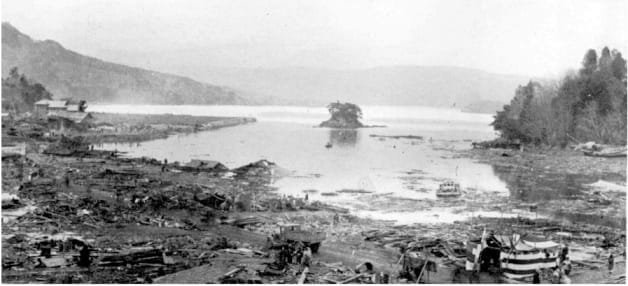
Minutes after the earthquake ceased, the ocean began to recede—a quiet, eerie withdrawal that foreshadowed the approaching terror. Then, as if the sea itself exhaled its fury, towering waves burst upon the shores. In some locations, water levels rose catastrophically, swallowing wharfs, homes, and boats.
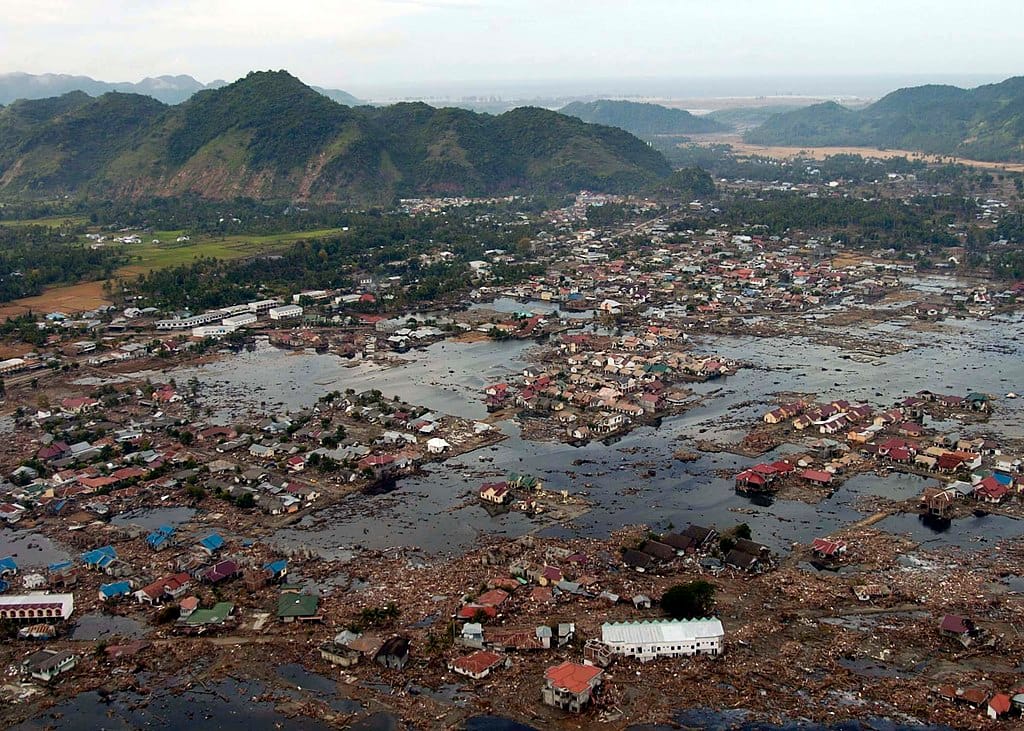
Though the Andreanof Islands lie in a remote corner, the tsunami’s destructive power was immense, with wave heights reported between 10 and 15 meters in certain bays. The force of water flattened coastal villages, uprooted trees, and swept away all in its path with cold, merciless hands.
Warnings Unheard: Communications and Preparedness in 1957
In 1957, early warning systems were rudimentary at best. The sparsely populated Aleutians had limited communication infrastructure, and no coordinated tsunami alert network existed. The suddenness of the quake left little time for warning.
Radio broadcasts aimed at military stations and isolated communities struggled against the geographic and technological constraints of the region. Emergency response depended largely on local awareness and spontaneous action, highlighting the tragic vulnerability of these island populations.
The Human Toll: Communities Swept by the Tsunami’s Wrath
The human cost was grim but variable, shaped by geography and fate. Several villages suffered devastating losses, with dozens of residents killed or injured, many others rendered homeless. The Aleut people, deeply connected to their environment, faced the heartbreaking task of burial and rebuilding in the face of overwhelming loss.
Military installations experienced structural damage, but personnel casualties were limited thanks to some fortunate timing and robust construction standards. Still, the event left an indelible mark on all who witnessed it—memories passed down as stories of survival and heartbreak.
The American Response: Rescue, Relief, and Recovery
In the wake of devastation, military and civilian authorities mobilized swiftly. Air and naval units conducted reconnaissance flights to assess damage, airlifting supplies and rescuing isolated survivors. Medical teams worked tirelessly amidst difficult weather and terrain.
Government aid flowed into the region, sparking efforts to reconstruct infrastructure and improve housing. Yet, the remoteness of the Aleutians meant recovery was slow, requiring persistence and resilience from communities long accustomed to hardship.
Scientific Breakthroughs: Understanding Subduction Zone Tsunami Mechanics
The Andreanof tsunami proved a watershed moment for seismology and tsunami science. Researchers used seismic data, tide gauges, and eyewitness accounts to analyze how subduction-zone earthquakes could generate sizable tsunamis far from densely populated coasts.
This event challenged previous beliefs that Aleutian earthquakes posed limited tsunami risk and underscored the need for comprehensive Pacific-wide monitoring. The 1957 tsunami laid foundational knowledge that would later inform global tsunami warning networks.
Remote Islands, Global Impact: The Tsunami’s Pacific Reach
Though centered near the Aleutians, the tsunami’s energy traveled thousands of miles across the Pacific Basin. It was recorded along the west coasts of North and South America, in Hawaii, and even as far afield as Japan and New Zealand.
These distant observations marked the Andreanof event as a Pacific-wide phenomenon, a grim reminder of the ocean’s interconnected fury. Maritime activities across the Pacific found themselves unexpectedly jolted, underscoring the need for international cooperation in tsunami monitoring.
Stories of Survival: Personal Accounts from the Aleutians
Amid statistics and geoscientific data lie the intimate stories of individuals caught in the maelstrom. Survivors recalled the terrifying moments when the earth shook, the sea withdrew, and the monstrous waves surged ashore.
Many spoke of community solidarity—neighbors helping neighbors, women and elders guiding frightened children, and brave rescues in frigid waters. These accounts, vivid and poignant, anchor history in human experience, ensuring memories transcend mere numbers.
Cultural Resilience: Aleutian Traditions Amidst Disaster
The Aleut communities, whose ancestors had weathered countless natural crises, drew upon cultural strengths. Traditional knowledge of evacuation routes, safe high ground, and fishing patterns provided vital information.
Community rituals and oral histories not only preserved memories but also helped heal emotional wounds. The trauma of 1957 reinforced the Aleuts’ sense of identity and connection with the land and sea, reaffirming cultural continuity despite disruption.
The Cold War Context: Strategic Concerns Amidst Calamity
Amid natural disaster, geopolitical tensions simmered. The Cold War’s shadow loomed large over the Aleutians, which hosted radar stations and military outposts critical to U.S. defense strategy.
The earthquake and tsunami tested these installations’ resilience, sparking concerns about vulnerability to natural hazards in this strategic frontier. The event underscored the complex interplay between nature and politics in a region at the edge of two competing global spheres.
The Modern Legacy: How 1957 Shaped Tsunami Warning Systems
In the decades that followed, lessons from the Andreanof tsunami fueled innovation. The Pacific Tsunami Warning Center, established in 1949 but limited in scope, expanded and improved detection technology and communication protocols.
Today’s robust warning systems, capable of providing early alerts to millions, owe much to early recognition of Aleutian seismic threats. The sobering lessons of 1957 continue to resonate in efforts to safeguard vulnerable coastal populations worldwide.
Lessons in Nature’s Fury: Reflections on Preparedness and Risk
The 1957 disaster revealed humanity’s fragile position before geological forces. It exposed gaps in preparedness, communication, and understanding while illuminating the courage and adaptability of island communities.
Contemporary disaster mitigation strategies draw heavily on this historical event, emphasizing education, infrastructure resilience, and international cooperation. The Andreanof tsunami stands as a timeless warning and a source of hope that knowledge can mitigate nature’s fury.
The Andreanof Tsunami in Collective Memory and Scholarship
While overshadowed by later Pacific tsunamis, the 1957 event remains a keystone case study. Historians and scientists explore it to understand mid-century disaster responses and evolving seismic science.
Memorials and oral traditions keep its memory alive in Aleut communities, serving as both commemoration and guidepost for future generations. Academics continue excavating its hidden lessons, bridging history with emerging technologies.
A Living Warning: Earthquakes and Tsunamis in the Aleutians Today
The Aleutian Islands remain one of the planet’s most seismically active and tsunami-prone regions. Earthquakes still rupture beneath its waters, requiring vigilance and preparedness.
Modern residents and scientific communities collaborate closely, blending indigenous wisdom with technological advances. The legacy of 1957 informs current strategies to anticipate, detect, and respond to natural hazards in a changing world.
Conclusion
The Andreanof Islands tsunami of March 9, 1957, is far more than a moment of catastrophe. It is a vivid testament to the power of nature and the resilience of human spirit. In the frozen isolation of the Aleutians, where land, sea, and sky meet in constant flux, communities endured unimaginable loss and rebuilt with bravery and determination.
The event reshaped scientific understanding and laid the foundation for modern disaster preparedness, saving countless lives in the decades since. Above all, it reminds us that even at the edge of the world, humanity shares a profound vulnerability—and strength—in the face of nature’s unpredictable wrath.
FAQs
Q1: What caused the 1957 Andreanof Islands tsunami?
A1: The tsunami was triggered by a massive 8.6 magnitude earthquake resulting from the subduction of the Pacific Plate beneath the North American Plate along the Aleutian subduction zone. The sudden vertical displacement of the seafloor displaced vast amounts of water, generating powerful tsunami waves.
Q2: How many people were affected by the tsunami?
A2: Several dozen people in the remote Aleutian villages were killed or injured, with many more displaced. While the population was sparse, the destruction of homes and infrastructure was extensive, particularly in coastal communities.
Q3: Why was there no early warning for the 1957 tsunami?
A3: At the time, tsunami early warning systems were underdeveloped, and the Aleutian Islands had limited communication facilities due to their remoteness. The tsunami arrived rapidly after the earthquake, leaving little time to alert residents.
Q4: How did the 1957 event influence tsunami science and warning systems?
A4: It highlighted the significant tsunami risk from Aleutian earthquakes, prompting improved seismic monitoring, the expansion of the Pacific Tsunami Warning Center, and fostering international cooperation in tsunami preparedness.
Q5: What role did the Aleut people’s traditions play during the disaster?
A5: Aleut indigenous knowledge contributed to survival strategies, including awareness of safe evacuation routes and natural signs of impending tsunamis, helping reduce casualties and maintain cultural continuity despite destruction.
Q6: Did the tsunami affect areas beyond the Aleutian Islands?
A6: Yes, the tsunami’s waves propagated thousands of miles across the Pacific Ocean, detected along coastlines in North and South America, Hawaii, Japan, and New Zealand, demonstrating its far-reaching power.
Q7: How does this event compare to other historic tsunamis in the Pacific?
A7: While not as devastating as the 1960 Chile or 2004 Indian Ocean tsunamis, the 1957 event was one of the largest in the North Pacific and pivotal for its role in expanding scientific understanding of Aleutian seismic hazards.
Q8: What lessons can modern societies learn from the Andreanof tsunami?
A8: It teaches the importance of continuous monitoring, robust warning systems, community preparedness, and respecting the knowledge of indigenous peoples when facing natural disasters.