Table of Contents
- A Clash on the Horizon: The Prelude to Anglo-Zulu Hostilities
- The British Empire’s African Ambitions: Setting the Stage
- The Zulu Kingdom under King Cetshwayo: Pride and Power
- January 11, 1879: The Spark that Ignited War
- Isandlwana: The British Army’s Calamitous Defeat
- The Aftershock at Rorke’s Drift: A Small Garrison’s Stand
- The Dynamics of Colonial Warfare: Weapons, Strategy, and Morale
- Profiles of Heroism: British Defenders at Rorke’s Drift
- Zulu Warriors: Discipline, Tradition, and Tactical Genius
- The Psychological Impact: British Imperial Confidence Shaken
- The War Expands: Battles, Sieges, and Tactical Shifts
- The British Response: Reinforcements and Tactical Reorganization
- The Role of Media and Public Opinion in Britain
- The War’s Turning Point: The Capture of Ulundi
- Political Ripples: The Aftermath in Britain and Zululand
- Cultural Legacy: How Rorke’s Drift Became a Legend
- Revisiting the Historical Narrative: Myths and Realities
- Impact on Anglo-Zulu Relations and Southern African History
- The Global Dimension: Imperialism Seen Through the Lens of 1879
- Conclusion: Lessons from Courage and Conflict
- FAQs: Unraveling the Anglo-Zulu War’s Most Intriguing Questions
- External Resource
- Internal Link
The sun was just beginning to rise over the rolling hills of Zululand, casting a golden light on the wooden palisades of Rorke’s Drift, a tiny mission station nestled on the rugged frontier of British colonial ambition. Soldiers, weary but unprepared, were settling into the impossible task of defending one of the smallest garrisons against an overwhelming tidal wave of Zulu warriors. This was January 22, 1879 — a day destined to etch itself deeply into the annals of military history and imperial myth.
But the war had already been unfolding for days. Just two weeks earlier, the British Empire’s forces, confident and dismissive of their adversary, suffered a devastating blow at Isandlwana. What followed was a desperate, heroic stand at Rorke’s Drift that would capture imaginations across continents and symbolize both the audacity and tragedy of empire.
This story is not merely one of battles and tactics, but also a human saga — of ambition, courage, tragedy, and the collision of worlds. To understand the Anglo-Zulu War’s beginning and the heroic defense of Rorke’s Drift is to glimpse the complex textures of nineteenth-century imperialism and tribal resistance, a volatile tapestry woven from pride, miscalculation, and indomitable will. So let us trace the origins, the fateful days, and the enduring legacy of a confrontation that changed Southern Africa forever.
A Clash on the Horizon: The Prelude to Anglo-Zulu Hostilities
By the late 1870s, Southern Africa was a chessboard of competing powers, with the British Empire expanding relentlessly northward. Their eyes were set on establishing a confederated colonial state — a policy inspired by figures like Sir Bartle Frere — to unify disparate territories under British control. The Zulu Kingdom, ruled by King Cetshwayo, stood as the most formidable indigenous power in the region, fiercely proud and militarily powerful after decades of internal consolidation and expansion.
Tensions had been simmering for years. British officials demanded disarmament and political submission from the Zulu, seeing their independence as an obstacle to colonial unification. Cetshwayo, however, navigated a delicate balance, attempting to avoid outright war while sustaining his kingdom’s autonomy and culture.
Then came that fateful ultimatum, issued in late 1878, demanding Zulu forces disband and cede authority, an impossible concession for Cetshwayo and his nation. When the deadline passed on January 11, 1879, it was more than defiance — it was a declaration that the Zulu were ready to defend their land with the spear and the shield.
The British Empire’s African Ambitions: Setting the Stage
The British push into Zululand was not an isolated venture — it was part of a grander design to consolidate power in Southern Africa. The Cape Colony and Natal sought expansion while competing with Dutch-descended Boer republics and indigenous kingdoms.
Colonial policy was often driven by a mixture of strategic calculation, economic interests tied to mineral wealth, and a paternalistic ideology of ‘civilizing’ native peoples. Sir Bartle Frere, High Commissioner for Southern Africa, saw the Zulu as an intolerable impediment to peace and progress, demanding their subjugation under British rule.
British military planners underestimated the Zulu, perceiving them as primitive and unable to withstand modern firepower. But what they failed to account for was the deep cultural cohesion, tactical acumen, and fierce warrior tradition that galvanized the Zulu like nothing else.
The Zulu Kingdom under King Cetshwayo: Pride and Power
Cetshwayo kaMpande inherited his father's legacy in 1873 and ruled with a measured hand, balancing traditional Zulu customs with the pressures of European expansion. His army was one of the most efficient and feared in Africa, organized into impis — regiments bound by discipline, loyalty, and deadly close-combat skills.
Contrary to colonial stereotypes, the Zulu military combined innovation with age-old traditions: swift encirclement tactics (the famous “horns of the buffalo”), rigorous training, and an unbreakable esprit de corps. Cetshwayo’s leadership embodied a cultural renaissance and a defiant assertion of sovereignty.
When the British ultimatum arrived, Cetshwayo’s council debated fiercely, but the consensus was clear — to preserve Zululand’s independence, defense was not just necessary but sacred.
January 11, 1879: The Spark that Ignited War
On the cold dawn of January 11, the British ultimatum expired. With a solemn war chant echoing over the hills, the Zulu impis moved in force. Unlike many 19th-century colonial skirmishes, this was no minor raid — the Zulu attacked with tens of thousands of warriors, fully prepared for the fight.
The British, scattered across outposts and underestimating the enemy’s resolve, scrambled to respond. The stage was set for a collision that would shock the world: the modern imperial army, armed with breech-loading rifles and artillery, against the finely honed, traditional Zulu war bands.
Isandlwana: The British Army’s Calamitous Defeat
Two days later, on January 22, 1879, the main British column at Isandlwana faced the full brunt of the Zulu advance. What followed was one of the greatest defeats in British military history: over 1,300 soldiers killed, many torn down before they could reload or regroup.
The British camp, surrounded and overwhelmed in a matter of hours, was a scene of chaos and carnage. The Zulu’s devastating “horns of the buffalo” tactic fully manifested, encircling and crushing the colonial forces with shock and precision.
This shock reverberated throughout the Empire. For many Britons, never before had their army been so decisively routed by what they called “savages.” Yet, the conflict was far from over.
The Aftershock at Rorke’s Drift: A Small Garrison’s Stand
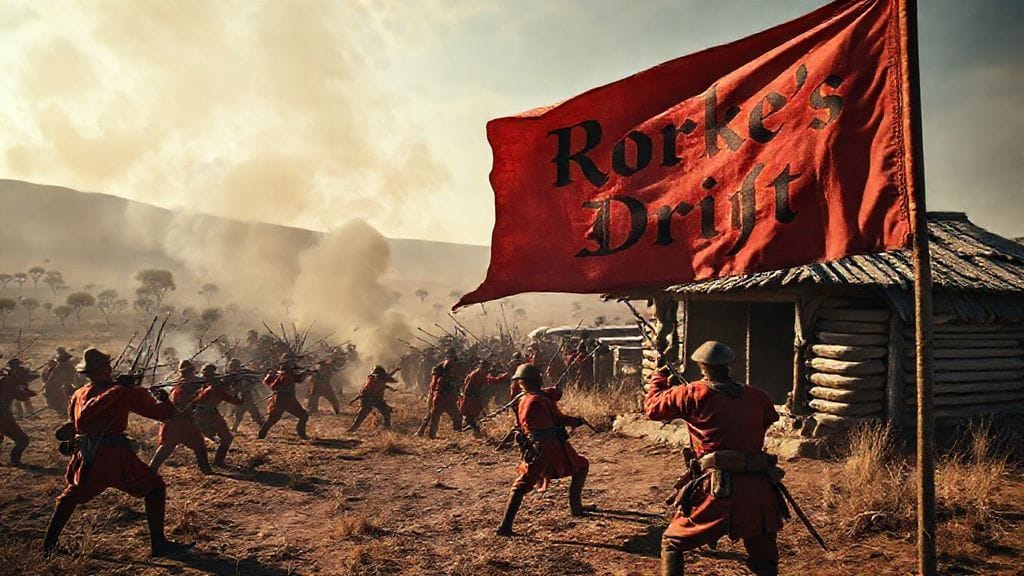
Just a few miles away from Isandlwana, the small mission station at Rorke’s Drift became the unlikely stage of one of the most famous last stands in military history. With fewer than 150 British defenders, including many wounded, the station was pounded by over 4,000 Zulu warriors.
For more than twelve harrowing hours, the garrison fought relentlessly. Using biscuit boxes to reinforce walls, turning classrooms into barricades, and with sheer grit holding off wave after wave, these men defied staggering odds.
The battle was brutal. Defenders lost friends and comrades, but their tenacity bought crucial time for British reinforcements to mobilize. Eleven Victoria Crosses were awarded for bravery — a record for a single engagement — transforming Rorke’s Drift into a legend of imperial courage and indomitable spirit.
The Dynamics of Colonial Warfare: Weapons, Strategy, and Morale
The Anglo-Zulu War showcased the collision of two very different forms of warfare. The British army represented industrial technological superiority — Martini-Henry rifles, artillery, and organized supply chains. Yet, their overconfidence led to strategic blunders, especially underestimating the Zulu’s fighting capabilities.
The Zulu, lacking modern firearms in volume, compensated with overwhelming numbers, intimate knowledge of terrain, and rapid, cohesive strikes. Morale was bound to communal identity and survival, factors not to be discounted in military calculus.
This contrast made for a war that upended contemporary expectations and drew complex lessons about resilience, adaptation, and the costs of imperial hubris.
Profiles of Heroism: British Defenders at Rorke’s Drift
Figures such as Lieutenant John Chard and Lieutenant Gonville Bromhead emerged as icons. Their leadership under fire — calm, adaptive, inspiring — forged the backbone of the defense.
Moreover, soldiers of varied backgrounds, including those from across the British Isles and colonial forces, demonstrated courage and solidarity far beyond the call of duty.
Their stories humanize the conflict, transforming abstract military history into tales of individual valor and sacrifice.
Zulu Warriors: Discipline, Tradition, and Tactical Genius
Often caricatured by colonial narratives as “barbaric,” the Zulu fighters exhibited intricate military discipline and strategic brilliance.
Their tactics at Isandlwana and the assault on Rorke’s Drift involved coordinated attacks, feigned retreats, and psychological warfare — not simply brute strength but a nuanced mastery of battlefield dynamics.
Acknowledging their skill challenges simplistic imperial narratives and elevates understanding of indigenous resistance.
The Psychological Impact: British Imperial Confidence Shaken
The disaster at Isandlwana and the fierce resistance at Rorke’s Drift sent shockwaves across Britain and the Empire. For an empire so often triumphant, the horrors of these battles punctured the myth of invincibility.
This psychological blow fueled both a desire for swift retribution and introspection about military policy, colonial governance, and cultural arrogance.
The events also sparked a wave of Victorian-era patriotism and martyrdom narratives, shaping public memory for decades.
The War Expands: Battles, Sieges, and Tactical Shifts
Following Rorke’s Drift, the British regrouped and launched a more methodical campaign, applying overwhelming force. Sieges at Eshowe and other strongpoints unfolded.
The war became a grinding conflict of attrition, combining conventional battles and guerrilla skirmishes. The British gradually learned from earlier mistakes, while the Zulu adjusted tactics amidst dwindling resources.
The British Response: Reinforcements and Tactical Reorganization
Recognizing the grave threat posed by the Zulu, London dispatched fresh troops. Command structures were overhauled, logistics improved, and caution replaced previous arrogance.
Leaders like Lord Chelmsford were recalled or reassigned. The British adapted their approach, culminating in the decisive Battle of Ulundi in July 1879, where the Zulu suffered a crushing defeat.
The Role of Media and Public Opinion in Britain
Newspapers, illustrations, and popular literature sensationalized the conflict. The drama of Rorke’s Drift, with its David-and-Goliath undertones, captured hearts.
Public opinion demanded justice, glorifying the defenders and vilifying the “savage” enemy. However, some voices called for reflection on colonial aggression and indigenous rights.
The war played a critical role in shaping the British public’s perception of empire and warfare.
The War’s Turning Point: The Capture of Ulundi
In July 1879, British forces decisively defeated the Zulu at Ulundi, the royal capital. This battle marked the effective end of the independent Zulu nation.
Cetshwayo was captured and exiled, and the British divided Zululand into territories under colonial administration. The traditional order was irreparably disrupted.
Political Ripples: The Aftermath in Britain and Zululand
Back in Britain, the war stirred debates about imperial policy, the morality of conquest, and the future of colonial governance.
Zululand’s social structure unraveled, with long-term consequences for its people, culture, and politics. This historical disruption echoes to the present in Southern African identity and memory.
Cultural Legacy: How Rorke’s Drift Became a Legend
The story of Rorke’s Drift transcended its military significance to become a cultural touchstone — inspiring books, films, and academic discourse.
Its narrative, focusing on bravery against overwhelming odds, fed imperial pride but also obscured complex truths about the causes and consequences of the war.
Revisiting the Historical Narrative: Myths and Realities
Modern historians have challenged traditional views, highlighting Zulu agency, critiquing British imperialism, and revisiting the roles of African actors.
This revisionism fosters a more balanced understanding that respects all perspectives in this turbulent chapter.
Impact on Anglo-Zulu Relations and Southern African History
Though defeated militarily, the Zulu cultural identity endured, influencing nationalist movements in the 20th century.
The war reshaped Southern Africa’s political landscape, contributing to tensions that would later explode during apartheid and beyond.
The Global Dimension: Imperialism Seen Through the Lens of 1879
The Anglo-Zulu War was emblematic of the wider “Scramble for Africa,” a moment when European powers accelerated colonization with profound consequences.
It serves as a case study in the tragic costs of empire: cultural destruction, human suffering, and contested legacies.
Conclusion: Lessons from Courage and Conflict
The Anglo-Zulu War’s opening battles, especially Rorke’s Drift, offer a prism through which to study empire, resistance, and humanity in extremis.
Far from a simple tale of conquest or victory, this history invites us to reflect on pride and prejudice, the limits of military might, and the enduring power of cultural identity. Courage emerged on both sides — in the steadfast British defenders and the impassioned Zulu warriors — reminding us that history is always a tapestry of many voices.
FAQs
Q1: What caused the Anglo-Zulu War to begin?
The war was triggered by British imperial ambitions to consolidate Southern Africa under colonial control, clashing with the Zulu Kingdom’s determination to remain independent. The immediate cause was the British ultimatum demanding Zulu disarmament and submission, which King Cetshwayo rejected.
Q2: Why was the Battle of Isandlwana so significant?
Isandlwana was a catastrophic defeat for the British, marking one of the rare times a modern Western army was decisively beaten by indigenous forces. It challenged the perceived military superiority of the British and shook imperial confidence.
Q3: What made the defense of Rorke’s Drift legendary?
Despite being heavily outnumbered, the small British garrison successfully defended the mission station through sheer determination, tactical improvisation, and leadership. Their heroic stand earned numerous Victoria Crosses and inspired countless stories of valor.
Q4: Who was King Cetshwayo, and what role did he play?
Cetshwayo was the Zulu monarch who led the kingdom during the war. He sought to preserve Zulu sovereignty and successfully marshaled his armies to initially repel the British invasion, exemplifying strong indigenous leadership.
Q5: How did the British ultimately win the war?
After early setbacks, the British reinforced and restructured their military strategy, culminating in the decisive Battle of Ulundi where the Zulu forces were defeated and their social order dismantled.
Q6: What is the historical legacy of the Anglo-Zulu War?
The war had profound political and cultural effects, redrawing boundaries in Southern Africa, influencing later resistance movements, and leaving a complex legacy of heroism and tragedy that challenges imperial narratives.
Q7: How is the war remembered in South Africa today?
It is remembered both as a symbol of Zulu resistance and as a painful episode of colonial conquest. The war is commemorated with a nuanced understanding of its impact on indigenous culture and identity.
Q8: What lessons does the Anglo-Zulu War offer for understanding colonial history?
The war illustrates the dangers of underestimating cultural complexity, the brutality of imperial expansion, and the vital importance of respecting indigenous sovereignty. It serves as a cautionary tale of conflict born from misunderstanding and ambition.