Table of Contents
- A Frontier in the Mist: Setting the Scene in Roman Britain, 142 CE
- Rome Looks North: Emperors, Ambitions, and the Decision to Build
- Drawing a Line Across the World: Planning the Antonine Wall
- antonine wall construction Begins: Legions, Labor, and the First Spade of Earth
- Stone, Turf, and Sweat: Engineering a Roman Frontier in Scotland
- Forts, Fortlets, and the Military Machine on the Edge of Empire
- The People Behind the Rampart: Soldiers, Engineers, and Camp Followers
- Tribes Beyond the Wall: The Caledonians and the Gaze of Rome
- First Winters on the New Frontier: Hardship, Doubt, and Endurance
- Symbols in Stone: Distance Slabs, Inscriptions, and Imperial Propaganda
- Trade, Taxes, and Tension: How the Wall Reshaped Life in the North
- Raids in the Heather: Conflict, Resistance, and the Limits of Control
- Strain on the Empire: Politics, Finances, and the Fate of the Wall
- Withdrawal and Abandonment: When Rome Steps Back to Hadrian’s Line
- Echoes in the Landscape: The Long Memory of the Antonine Wall
- From Frontier to World Heritage: Archaeology, Debate, and Discovery
- Conclusion
- FAQs
- External Resource
- Internal Link
Article Summary: In the year 142 CE, under the reign of Emperor Antoninus Pius, Rome pushed its British frontier further north, beginning the ambitious antonine wall construction across the wild central belt of what is now Scotland. This article explores the political calculations in distant Rome and the grim, methodical work on the ground by legionaries and auxiliaries carving a new boundary into turf and stone. It follows the wall’s creation from initial survey lines to fully garrisoned forts, examining how it altered trade, tribal politics, and everyday life on both sides. As the narrative unfolds, readers encounter the Caledonian tribes who refused to bow, and the Roman commanders who tried to hold an uneasy peace. We trace how the antonine wall construction, though completed with impressive speed, exposed the strategic overreach and logistical strain of the empire. The story then shifts to the wall’s short use, its quiet abandonment, and the slow erasure of its physical presence from common memory. Finally, the article shows how modern archaeology has revived global interest in antonine wall construction and turned this once-forgotten frontier into a key lens on Roman imperial power, resistance, and the fragility of borders. In doing so, it argues that the Antonine Wall was less a line of stone and turf than a line drawn through human lives and destinies.
A Frontier in the Mist: Setting the Scene in Roman Britain, 142 CE
The year is 142 CE. Dawn creeps slowly over the damp, rolling hills of northern Britain, and a line of Roman soldiers stands at the edge of what their maps call the barbaricum—the land beyond empire. The air smells of wet earth, peat smoke from distant native settlements, and the sea-salt tang drifting in from the Firth of Forth to the east. Behind the soldiers lie decades of conquest and consolidation; before them, a landscape Rome has never fully tamed. This is where the decision has been made to redraw the limits of the known world.
To the south sprawls Roman Britain, a province stitched together with stone roads, tiled villas, and walled towns. Hadrian’s Wall, built only a few decades earlier, runs like a scar from the Tyne to the Solway Firth, a stern reminder that the empire’s reach was once thought to stop there. Farmers in Britannia plant grain for markets they will never see, and governors file reports in careful Latin to an emperor who has never set foot on the island. Yet here, in the damp fog of the northern frontier, boundaries are never as solid as they appear on papyrus.
It is in this landscape, somewhere between the Firth of Forth and the Firth of Clyde, that surveyors begin to place their measuring rods, marking out a line that will, in time, stretch some 60 kilometers across the waist of Scotland. The antonine wall construction is about to begin—not just as an engineering project, but as an act of imperial will. Around cookfires, grizzled veterans speculate in murmurs. Why move north, when Hadrian’s Wall already stands strong? Are the tribes beyond really worth the trouble? And will any of them live long enough to see this new wall stand finished against the Scottish sky?
Above all of this hangs the unseen figure of Antoninus Pius, the emperor whose name this new frontier will bear. In Rome, he is praised for peace and stability; here, his legacy will be written in turf and stone, in cold hands gripping shovels, and in the wary eyes of local tribesmen watching Roman flags appear once more on their horizons. The frontier is shifting again, and with it, the destinies of thousands who have no say in the imperial calculations that drive it.
Rome Looks North: Emperors, Ambitions, and the Decision to Build
The story of the antonine wall construction begins far from the heathered hills of Britain, in the marbled halls of Rome. When Emperor Hadrian died in 138 CE, he left behind a secure but cautious empire, marked by consolidation rather than expansion. His great British project, Hadrian’s Wall, symbolized this new philosophy: hold what is defensible, withdraw from the costly fringes, and build lines that can be maintained instead of endlessly advanced. His successor, Antoninus Pius, inherited not only the throne but also the political need to define his own reign.
Antoninus was not a battlefield emperor. Mild, thoughtful, and known for his piety, he was more inclined to senate debates than to front-line command. Yet emperors were expected to leave monuments, to inscribe their names on the fabric of the empire. With few spectacular wars to celebrate, Antoninus’s advisers and commanders saw an opportunity in Britain. Reasserting direct control over the lands north of Hadrian’s Wall, already intermittently influenced and raided, could be framed as a bold yet controlled expansion—more a correction of the frontier than an act of reckless conquest.
Reports arriving from governors in Britain spoke of renewed unrest among the northern tribes, of pressures on the frontier, of raiding, hostage-taking, and uneasy diplomacy. Whether these reports were exaggerated to justify new campaigns or reflected genuine instability is still debated by historians. What appears clear is that the Roman high command believed that a more forward position could tighten Rome’s grip on the island, pressuring the Caledonian tribes and projecting strength. The suggestion emerged: build a new wall, north of Hadrian’s line, and demonstrate that under Antoninus, Rome was not retreating but asserting.
In the senate, such a move could be trumpeted as a triumph without the unpredictable hazards of distant campaigning. As the historian Cassius Dio would later note in another context, emperors often sought victories that were as political as they were military, victories that looked impressive on coins and inscriptions even if their strategic value was questionable. The decision was taken. A new frontier would be drawn. Legions would be reassigned. The northern mists of Britain, once thought a limit, would become a stage for Antoninus’s authority.
Orders traveled along Rome’s roads and sea lanes, carried by official couriers whose boots and sails tied the empire together. From legionary headquarters in Britain, responses came back in disciplined, if perhaps slightly resigned, tones: they would build. Yet behind the formal phrases, commanders knew what this would entail—years of manpower diverted from other tasks, exposure to harsher climates, and the endless grind of supply that any fixed frontier demanded. Ambition in Rome, as so often, meant hardship in the provinces.
Drawing a Line Across the World: Planning the Antonine Wall
Before a single sod was lifted, the antonine wall construction existed as an idea traced on tablets and whispered in council tents. The Romans were masters of planning, and a frontier of this magnitude required logistics as impressive as any battlefield maneuver. Surveyors—agrimensores—were dispatched north, accompanied by escort troops and interpreters familiar with local terrain and tribes. Their task was to turn imperial intention into an actual line through hills, bogs, and river valleys.
The chosen course would run roughly from the River Forth in the east to the River Clyde in the west, taking advantage of higher ground, natural bottlenecks, and visibility over the surrounding landscape. It would be significantly shorter than Hadrian’s Wall, about 60 kilometers compared to Hadrian’s 117, but that did not mean it was simpler. Scotland’s central belt was a patchwork of marshy ground, dense woodland, and undulating ridges. Finding a path that allowed rapid construction, strong defense, and steady supply lines was a puzzle that could not be solved from an office in Londinium, let alone from a palace on the Palatine Hill.
The planners had to consider not only topography but also politics. Certain tribes were known to be more hostile; others maintained fragile agreements with Rome. Placing a wall directly across traditional travel routes, hunting grounds, or sacred sites could inflame resistance. And yet, that was precisely the point: a frontier denied easy passage, restricted movement, and forced local communities into the logic of Roman checkpoints, taxes, and diplomacy. On Roman maps, the line was straight and clean. On the ground, it would cut through complex human landscapes.
By the time winter fogs curled over the Forth and Clyde, routes had been walked, measured, and marked. Wooden stakes, cairns of small stones, and scratched notations on wax tablets indicated where forts might rise, where fortlets would watch the gaps, and where the great ditch—the fossa—would be carved into the earth. The decision to construct much of the wall in turf atop a stone base, rather than wholly in stone like Hadrian’s Wall, reflects both available materials and the desire for rapid building. Turf, cut in blocks and stacked, could reach impressive heights and thicknesses with a fraction of the quarrying and dressing time that stone required.
Supply chains were plotted from the south: roads to be upgraded, river routes to be exploited, depots to be established. Grain, nails, timber, leather, iron tools, and wine for the officers—all of it had to move north, feeding both constructors and future garrisons. The army’s engineers drew up standard designs for forts and watchtowers, modified to suit the new wall’s scale and terrain. Theoretically, every stone and sod now had a place, each to be laid in a sequence that, if all went well, would transform this raw planning into a frontier worthy of an emperor’s name.
antonine wall construction Begins: Legions, Labor, and the First Spade of Earth
Sometime around 142 CE, the first orders were barked, the first turf was cut, and the antonine wall construction moved from theory to relentless, physical labor. Contemporary sources are sparse, but the labor force can be reconstructed from inscriptions and archaeological traces. Three legions stationed in Britain—II Augusta, VI Victrix, and XX Valeria Victrix—seem to have taken leading roles, supported by auxiliary cohorts recruited from across the empire: Batavians from the Rhine, Thracians from the Balkans, and others who had come to Britain as strangers and now knew its rains all too well.
For the soldiers, this was not the glorious combat imagined in Rome’s triumphal art. Construction duty meant long days with shovel and pickaxe, wading through mud, cutting turf blocks, hauling stone, and erecting timber structures. Yet it was also integral to Roman military identity. The legionary was as much builder as fighter, and every rampart raised was a testament to the army’s discipline. Each unit was typically responsible for a defined stretch of the wall, a fact later proudly recorded on inscribed “distance slabs” that credited legions and cohorts for the lengths they completed.
One can imagine a typical morning along the nascent line. Trumpets call men from leather tents or wooden barracks in temporary construction camps. The sky is grey, the ground slick. Overseen by centurions and engineers, work parties form: some assigned to dig the great ditch on the north side, up to 12 meters wide in places and several meters deep; others tasked with laying the stone foundation, a solid ribbon intended to carry the turf superstructure; still others drafted into cutting peat and turf from carefully selected fields, carving them into neat blocks that could be stacked like bricks.
The pace was punishing. The empire wanted results, and the antonine wall construction progressed with surprising speed. Within a few short years, much of the basic line was in place, its forts rising, its ramparts taking shape. Yet every gain came at a cost measured not only in denarii from Rome’s treasury, but in strained muscles, frostbitten fingers, and the quiet attrition of men worn down by exposure and accident. When later generations would walk the soft, grassy banks left behind by erosion, it would be easy to forget that these mounds were once red with freshly turned soil and echoed with shouted commands in Latin, Greek, and a dozen provincial tongues.
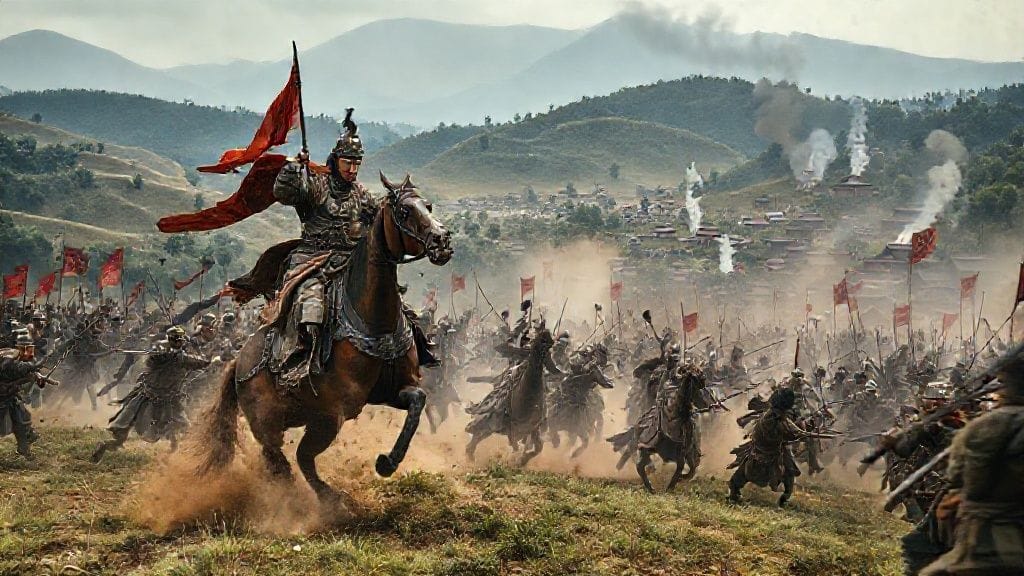
As construction moved westward from the Forth and eastward from the Clyde, the line began to feel real. Commander’s maps could now show not just a planned frontier, but a growing wall. At night, watchfires burned above newly dug ditches, and patrols stepped cautiously into the dark, wary of arrows or spears from the unseen north. The wall was no mere civil project; it was a military operation unfolding day by day, under the constant possibility of hostile eyes watching from the shadowed ridges beyond.
Stone, Turf, and Sweat: Engineering a Roman Frontier in Scotland
To walk the course of the Antonine Wall today, following what remains of its grassy embankments through modern towns and farmlands, is to trace the bones of a structure that once had sharp, engineered intent. At its height, the wall combined a stone base, turf rampart, sizeable ditch, and associated road in a complex layered system that reflected centuries of Roman frontier expertise.
At the northern edge, nearest the unconquered lands, lay the great ditch—an imposing trench with steep sides, sometimes shaped into a classic Roman “V” profile. Excavated material from the ditch was piled into a low mound or glacis on its outer lip, making any approach even more treacherous and exposing attackers to missiles. South of the ditch ran the wall itself, typically resting on a stone foundation about 4–5 meters wide, designed to support a turf rampart that may have originally stood some 3–4 meters high. Topping this rampart, a timber parapet or walkway likely allowed soldiers to patrol and to fire down on any would-be infiltrators.
Construction materials varied along the line. Where good stone quarries were available nearby, more masonry was used in ancillary structures. Where turf and clay were plentiful, they became the frontier’s flesh. Roman engineers were nothing if not pragmatic. The goal was not aesthetic perfection but durable functionality. Behind the wall ran a service road, now called the Military Way, which enabled the rapid movement of troops, supplies, and messages. In effect, the wall was not just a single line, but a compact corridor of military control.
The act of building integrated Roman technical skill with local constraints. Timber came from nearby forests, carefully managed or simply stripped as needed. Stone was hewn from quarries opened specifically for the project. Watercourses had to be bridged or diverted. In marshy ground, groundwork and drainage were critical to prevent the wall from subsiding into mud. Every few kilometers, natural features like ridges and river crossings were carefully woven into the design, turning the landscape itself into part of the defensive plan.
Some modern archaeologists have compared the Antonine Wall to an immense military factory line, each part standardized yet adapted to its particular slot. The reused stone from earlier forts further south, including materials drawn from installations associated with Hadrian’s frontier, suggests that the antonine wall construction cannibalized elements of earlier defenses to fuel the new project. It is astonishing, isn’t it, to imagine massive blocks pried from older walls, hauled north, and reset to form the skeleton of a frontier that would outlast its political rationale by centuries?
Forts, Fortlets, and the Military Machine on the Edge of Empire
A wall alone cannot hold a frontier. It needs eyes, ears, swords, and a structured system for response. Accordingly, the Antonine Wall was studded with forts and smaller fortlets, forming a chain of garrisoned nodes that transformed a line on a map into a living defensive network. Roughly every 3 to 4 kilometers, a major fort anchored the wall, each capable of housing several hundred soldiers; in between, smaller installations kept watch over intervening stretches and key routes.
Forts like Bar Hill, Rough Castle, and Balmuildy are today names on interpretive boards and archaeological reports, but in the mid-2nd century they were tightly packed mini-towns of stone and timber. Inside their ramparts and ditches lay barrack blocks, granaries raised on stilts to keep vermin at bay, headquarters buildings (principia), workshops, stables, and sometimes bathhouses where soldiers could wash away at least a little of the northern chill. Each fort opened toward the south with a gate connected to the Military Way, and another gate pierced the wall itself, providing controlled access northward.
The units stationed here were not usually full legions, but auxiliary cohorts and alae (cavalry units) recruited from across the empire. A cohort from modern-day Belgium might find itself posted thousands of kilometers from home, policing a wall in Scotland. Such diversity created a peculiar cultural mix: Latin commands shouted in a Germanic accent, Greek inscriptions scratched into barrack walls, native British gods blended with Roman deities in local shrines. On the very margins of Rome’s known world, its global complexity was compressed into a line of forts under constant tension.
Between the larger forts, small fortlets housed modest detachments charged with monitoring stretches of ditch and rampart, checking movement, and sounding the alarm in case of trouble. Signal systems—whether simple fire beacons or more elaborate codes of torches and smoke—linked the chain together. If a raid broke against one section of the wall, word could quickly flash along the frontier, drawing reinforcements.
Yet even as they represented Roman strength, these forts were vulnerable islands of order in a sea of resistance. Supply lines were long and could be harassed. Morale depended not only on discipline, but on reliable food, pay, and clear leadership. The grinding routine of garrison life—patrols, drills, maintenance, guard duty—could numb the sharpness of vigilance. A century after the wall’s construction, many of its physical contours would remain, but the memory of its daily human dramas would be all but gone, swept away by the indifferent passing of time.
The People Behind the Rampart: Soldiers, Engineers, and Camp Followers
History remembers emperors and generals, but the antonine wall construction was really the work of ordinary people. The vast majority of those who gave shape to the frontier were nameless legionaries and auxiliaries, specialists and slaves, and the unofficial entourage that always traveled in the wake of the Roman army.
Take, for instance, a hypothetical soldier of the Sixth Legion, originally from a small town near the Danube. Enlisted as a teenager, he might have fought in minor campaigns on the Continent before being shipped to Britain. Now in his late twenties, he finds himself swinging a pickaxe into cold Scottish soil. His pay is modest, his prospects uncertain, but the army offers food, clothing, and the faint promise of land at discharge. Beside him, another soldier mutters in a tongue from the Iberian hills. Jokes, curses, and orders weave a strange polyphony as they work.
Engineers—some of them officers, others skilled ranks within the legions—oversaw the technical aspects. They measured gradients, adjusted trench depths, inspected foundations, and managed the allocation of labor. Under their guidance, the wall rose according to Roman standards, segment by segment. Surveyors, with their staffs and sighting instruments, checked alignments and gradients, ensuring that the line remained coherent despite local undulations.
Alongside the formal military presence came a shadow population: traders selling wine, oil, spices, metalware, and simple luxuries; blacksmiths and carpenters offering services; women and children attached to soldiers unofficially, for Roman law did not legally recognize most soldiers’ marriages during active service. These camp followers settled just outside forts in makeshift communities that, over time, could evolve into permanent villages. Here, one could hear lullabies in provincial dialects, smell stews blending Roman and local ingredients, and see religious altars bearing inscriptions that invoke both Mars and native gods of river and hill.
For local Britons drawn into service as laborers, scouts, or auxiliary recruits, the wall was both an employer and an intruder. Some found steady wages working on construction or supplying grain and livestock; others saw only dispossession and the looming presence of foreign soldiers. Oral traditions would later cast these years as times of hardship and conflict, but also of strange exchanges: a Caledonian youth glimpsing his first Roman helmet, a Roman engineer amazed by the resilience of people who could thrive in such a climate.
Tribes Beyond the Wall: The Caledonians and the Gaze of Rome
North of the frontier, the land did not suddenly become empty. It was the territory of complex societies Rome lumped together under names like “Caledonii,” terms that smoothed over the diversity and shifting alliances of tribal Britain. These communities herded cattle, farmed on marginal soils, hunted in deep forests, and wove their own intricate webs of kinship, rivalry, and honor. They told stories of ancestors and spirits of place, stories in which Rome was at first merely a distant rumor.
To such peoples, the advance of Roman troops and the rise of the wall were earthshaking developments. Roads cut through traditional routes. Patrols disrupted seasonal migrations. Tribute demanded by Roman officials—or violently extracted by punitive expeditions—could tip precarious balances of survival. Yet resistance was not simply reflexive hostility. Some leaders sought accommodation, trading cooperation for Roman goods, prestige, or a measure of security against rival tribes.
From Rome’s perspective, the Caledonians were a problem to be managed—a source of raids and defiance that frowned across the northern horizon. From the Caledonians’ perspective, Rome was an encroaching reality to be outlasted or repelled. Archaeological finds suggest limited trade across the frontier: Roman pottery and small luxury items have surfaced on sites north of the Antonine line, indicating that, despite tension, goods and ideas crossed the boundary. A chieftain might wear a Roman brooch on his cloak while plotting raids against the very forts from which such items came.
The wall, once completed, would stand as a permanent, visible declaration that the south was under Roman control and the north was not. This line of separation sharpened identities. To be “beyond the wall” came to signify a certain wildness in Roman eyes, a refusal to submit fully. Yet such labels simplified a more complicated reality: families and clans whose lands straddled the frontier, who traded on one day and skirmished on another. In this way, antonine wall construction did not simply divide; it created a zone of intense, constant negotiation.
First Winters on the New Frontier: Hardship, Doubt, and Endurance
The first winter after the rampart’s main line was completed must have bitten hard. Snow gathered along the ditch edges, turning the previously churned earth into slick, treacherous slopes. Winds tore across the central belt with a damp cold that penetrated cloaks and crept into bones. Inside the forts, hearth fires burned longer, but fuel was finite and had to be carefully managed. Black smoke curled from barrack roofs, blending with the low clouds that often never seemed to lift.
For soldiers stationed along the Antonine Wall, this was when the cost of the entire enterprise weighed most heavily. In summer, building and patrols had kept them busy, their bodies warm with exertion. Now, boredom joined the cold as an insidious enemy. Guards stood on ramparts slick with frost, scanning for movement that rarely came. Letters home, if they reached their destinations at all, spoke of wet, cold, and an endless succession of grey days. Those from warmer provinces must have wondered what distant offense had condemned them to this frozen edge of empire.
Supplies strained. Grain shipments delayed by storms meant smaller rations. Cattle driven north left muddy tracks and the lingering stench of beasts crowded into pens near forts. When Roman logisticians had first endorsed the antonine wall construction, they understood the principles of provisioning, but perhaps not the full compounding effect of distance, weather, and hostile territory. Dropped sacks of grain, broken carts, and exhausted mules were all part of the unrecorded cost.
Doubt inevitably crept in among the ranks and even in officers’ councils. Had it been wise to push the frontier north? Was this shorter line really easier to defend than Hadrian’s Wall, with its stronger stone construction and more established hinterland? Those who had served further south could compare the relative comfort and stability there with the rawness of this new frontier. Yet Rome demanded perseverance. Orders remained orders, and the wall had to be held.
Local tribes, too, watched the winter unfold. Some might have reasoned that the best time to strike was precisely when Roman vigor ebbed. Raids on outlying patrols or supply trains, sudden nighttime attacks on small fortlets—these were the skirmishes that never reached the polished stone of Roman inscriptions, yet shaped perceptions on both sides. Each success emboldened resistance; each failure reminded the tribes of Rome’s vicious capacity for retaliation.
Symbols in Stone: Distance Slabs, Inscriptions, and Imperial Propaganda
If the ditches and ramparts were the muscle of the frontier, its public face was carved in stone. Along the Antonine Wall, sculpted and inscribed “distance slabs” recorded the segments completed by particular legions and units, turning engineering milestones into statements of pride and propaganda. These slabs, often richly decorated, counted the number of Roman miles constructed and invoked the emperor’s name as the ultimate patron of the work.
One such slab, discovered near Bridgeness, is among the most spectacular. It shows Roman cavalry riding down naked or lightly armed barbarians, a brutal visual metaphor for imperial domination. Beneath the imagery, Latin text proclaims the completion of a defined length of wall by a specific legion under Antoninus Pius. Another slab might simply show a wreath, an eagle, or standard military symbolism. Taken together, these artifacts—many now preserved in museums—reveal how the antonine wall construction was framed not merely as a practical necessity, but as a triumph to be celebrated and displayed.
The language of these inscriptions is formulaic yet telling. They emphasize the emperor’s titles, the pious nature of his rule, and the loyalty of the legions. They never mention the backbreaking labor, the deaths from exposure, or the doubt simmering in some hearts. In stone, the project is seamless, inevitable, and unassailable. As the Roman historian Tacitus once wrote about another frontier endeavor (though in a different context), “They make a desert and call it peace”—a famous line later applied by critics to such imperial undertakings.
To local eyes, these slabs must have been strange objects indeed. A Caledonian warrior might see in them only foreign gods and incomprehensible letters. Yet he would certainly grasp their intent: to declare ownership, to speak of power. Placed near forts or at key points along the wall, they acted as messages to both Roman and non-Roman audiences. To the soldiers, they were monuments of achievement. To the natives, they were stone voices saying, “We are here, and we intend to stay.”
Over time, some of these slabs were toppled, broken, reused in later buildings, or buried by accident or design. Their rediscovery centuries later would be a revelation, giving modern scholars direct testimony from the very units that had turned Antoninus’s will into reality. Through them, the antonine wall construction steps momentarily out of the mist of generalization into the sharp relief of named legions and specific distances.
Trade, Taxes, and Tension: How the Wall Reshaped Life in the North
A frontier is never just a military boundary; it is an economic membrane, a filter through which goods, people, and ideas pass, are taxed, or are blocked. Once the Antonine Wall was established, even briefly, it began to alter the rhythms of life in northern Britain in ways that can still be glimpsed in archaeological remains and inferred from comparative studies of other Roman borders.
Markets sprang up near forts, where local farmers could sell surplus grain, cattle, hides, and wool to feed the Roman garrisons. In return, they acquired coins, tools, clothing, and imported goods—small luxuries that hinted at the broader world of the empire. Pottery from Gaul or the Rhineland, glassware from distant workshops, and even exotic foods could find their way into the hands of those who navigated the new frontier economy skillfully.
Yet this trade was shadowed by taxation and control. The Romans were adept at turning movement into revenue. Travelers wishing to cross the wall at official gates might have to pay duties or present proof of sanctioned trade. Smugglers and those who tried to bypass these channels risked confiscation of goods or harsher penalties. The wall thus acted as both a physical and bureaucratic structure, channeling wealth toward the imperial system.
Local elites faced difficult choices. Cooperation with Rome promised status, access to valuable goods, and perhaps Roman military backing against rivals. Refusal or resistance could align them with nationalist sentiment but at the risk of retaliation and economic marginalization. Some may have sent sons to serve as auxiliary cavalry, donning Roman gear while retaining ties to their own people. Such young men stood literally astride two worlds, loyal to paymasters in one direction and to kin in another.
For common folk, the wall might be experienced more as disruption than opportunity. Traditional grazing routes cut by ditches, sacred groves cleared for timber, and fishing spots restricted by new patrols—these were daily irritations that could cumulatively breed resentment. Still, the frontier also generated work. Suppliers, guides, interpreters, and craftsmen found employment in its shadow, their livelihoods entangled with a structure that simultaneously threatened and sustained them.
Raids in the Heather: Conflict, Resistance, and the Limits of Control
No Roman wall, however well built, ever guaranteed total security. The Antonine frontier was no exception. The very need for its construction signaled ongoing tensions with the northern tribes. Although our literary sources are fragmentary and biased, archaeological traces of destruction, alongside scattered references in later texts, suggest that the short life of the wall was punctuated by episodes of violence.
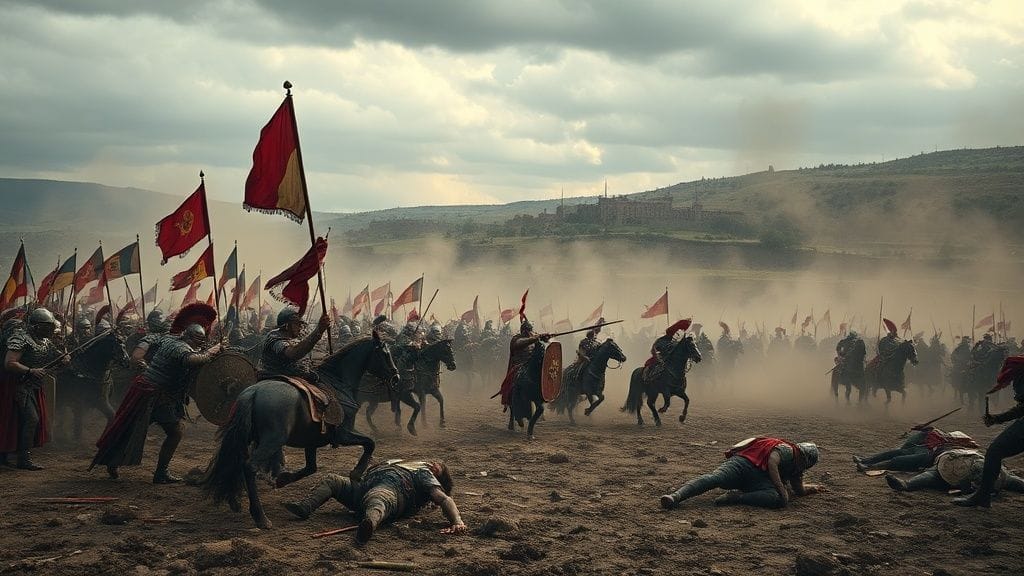
Raids by small bands of warriors slipping through gaps in the frontier likely occurred with some regularity. Fast-moving groups could exploit knowledge of the terrain to avoid patrols, striking isolated farms, supply trains, or lightly defended points before vanishing back into bog and forest. Roman retaliation was often swift and brutal: punitive expeditions marched north, burning settlements suspected of harboring raiders, taking prisoners, and seizing livestock. These cycles of raid and reprisal etched fear and anger into local memory.
On at least one occasion, there may have been attacks serious enough to damage or overrun parts of the wall’s installations. Some forts show evidence of burning and hurried repair. Whether these were the result of coordinated tribal uprisings or localized conflicts remains unclear, but they underscore the vulnerability inherent in stretching imperial resources so far north. A frontier, after all, is not a sealed border; it is a zone of contest.
Roman propaganda framed such conflicts as the suppression of banditry or rebellion, casting imperial action as the restoration of order. But from the perspective of those labeled “barbarians,” resistance was an assertion of autonomy. Oral traditions, never written down by the tribes themselves, must have celebrated daring raids where lightly armed warriors humiliated heavily armored Romans, even if ultimate victory remained elusive.
In this sense, the antonine wall construction created its own opposition. The more thoroughly Rome sought to control movement and extract resources, the more incentive local groups had to defy or circumvent its structures. The wall’s ditch and rampart, meant to impose clarity on who was inside and who was outside the empire’s embrace, instead produced blurred edges where smuggling, raiding, and quiet forms of defiance thrived.
Strain on the Empire: Politics, Finances, and the Fate of the Wall
For nearly two decades, the Antonine Wall stood as the official northern frontier of Roman Britain. Yet even as it functioned, cracks appeared—not so much in its physical fabric as in the strategic foundation on which it had been justified. The empire that had authorized the antonine wall construction was not static; political and financial pressures shifted with each year, and what once seemed feasible could gradually come to look like overreach.
Maintaining the wall demanded a constant flow of resources. Garrison troops needed pay, equipment, and food. Structures required repair; timber rotted, turf eroded, and stonework shifted with freeze and thaw. As new challenges emerged elsewhere in the empire—from border troubles on the Danube to brewing tensions in the East—Roman administrators faced difficult choices about where to allocate limited funds and forces.
Antoninus Pius himself ruled for an unusually long and relatively stable reign, dying in 161 CE. His successor, Marcus Aurelius, would become known as a philosopher-emperor, but also as a ruler beset by crises—from Germanic invasions to plague and internal revolt. In such a context, the value of a far-northern British frontier line, closer to Caledonian bogs than to Rome’s beating heart, became questionable.
Economically, the return on investment was unclear. The lands secured between Hadrian’s and Antonine’s Walls were not rich in the kinds of easily extractable resources that might have quickly justified the expense. Politically, the propaganda value of maintaining the more northerly line waned once the initial glow of “expansion” under Antoninus faded. Marcus Aurelius had his own challenges and triumphs to highlight; keeping his predecessor’s wall manned at great cost did little to bolster his reputation in Rome.
Scholars debate the precise sequence of decisions, but by the late 150s or early 160s CE, a general withdrawal to Hadrian’s Wall had begun. This did not happen overnight. Some forts along the Antonine line may have been partially garrisoned for a time, others allowed to decay more quickly. Yet the direction was clear: Rome was stepping back, conceding that the ambition embodied in the northern turf and stone had outstripped practical benefits. What had been built so quickly was now, in effect, being unbuilt as an active frontier.
Withdrawal and Abandonment: When Rome Steps Back to Hadrian’s Line
The moment when the last Roman unit filed south through a gate in the Antonine Wall must have been strangely anticlimactic. There was no dramatic treaty, no carved inscription formally announcing abandonment. Frontiers seldom die with fanfare; they fade. Yet for the soldiers who had spent formative years along this edge of empire, the withdrawal carried deep personal and symbolic weight.
Orders would have arrived—perhaps ambiguously worded, emphasizing strategic redeployment or rationalization of defenses. Forts were systematically stripped of portable valuables. Iron fittings, usable timbers, and movable equipment were hauled south. Some structures might have been deliberately damaged to prevent immediate reuse by hostile forces. Others were simply locked and left to the slow encroachment of vegetation and weather.
Local communities, both north and south of the line, would have watched this process with a mix of relief and apprehension. For some, the receding Roman presence meant an end to intrusive patrols and taxes, a chance to reclaim lands and routes. For others, it meant the loss of markets, wages, and the relative stability that the military presence had inadvertently provided. Banditry might increase in the short term; power vacuums tend to invite opportunists.
North of the former wall, tribes that had long resisted Roman incursions could savor a cautious satisfaction. They had outlasted the greatest power of their age, not by marching on Rome, but by enduring, by making the cost of permanent control too high. South of the new frontier at Hadrian’s Wall, administrators hastened to reestablish the older, more robust line of defense, repairing structures and redeploying garrisons. In a sense, the empire had snapped back to a shape that had proved more sustainable.
The wall itself, stripped of its function, began its slow surrender to time. Turf slumped. Wooden palisades decayed. Ditches silted up. Sheep grazed on embankments whose original purpose they could not have guessed. In only a few generations, much of the frontier’s sharpness had blurred. Children of the late 2nd century might hear stories from grandparents about the days when Roman eagles flew further north, but for them, it would already feel like a half-remembered tale.
Echoes in the Landscape: The Long Memory of the Antonine Wall
Although the Antonine Wall’s active life was brief, its imprint on the landscape endured far longer than Rome’s political will to maintain it. Medieval travelers and chroniclers, moving through central Scotland centuries later, occasionally noted mysterious banks and ditches that seemed too regular to be natural. In some cases, they conflated these remains with those of Hadrian’s Wall, merging the two into a single, legendary “Roman wall” in the imagination.
Local folklore attached stories to prominent mounds and ruined structures. Giants were said to have piled up the earth; ancient kings were rumored to have built barriers against enemies long forgotten. In the absence of written continuity, the facts of antonine wall construction were replaced by fantasy and myth. Yet the very persistence of these earthworks in memory, however distorted, testifies to the wall’s durability.
Over time, plows bit into the banks, stones were robbed out for farmhouses and churches, and roads casually followed the line of least resistance, sometimes aligning with, sometimes cutting across the ancient frontier. Paradoxically, the wall’s remnants survived best where human activity was least intense: in patches of rough pasture, on wooded hillsides, and beneath layers of later development only revealed by chance discoveries.
The wall also left subtler legacies. Place names sometimes preserved echoes of forts and camps. Patterns of settlement that had been shaped in response to the frontier—villages forming near former forts, routes skirting the old line—could persist long after the original reasons were forgotten. The frontier had once organized human life; its ghost continued to nudge it.
In this way, antonine wall construction became part of a deep, layered history that locals walked through every day without necessarily knowing it. A farmer tilling a field in the 15th century might occasionally turn up a worked stone or a piece of Roman pottery, shrug, and toss it aside, unaware that it linked him to legionaries who had once cursed the same sodden ground.
From Frontier to World Heritage: Archaeology, Debate, and Discovery
The transformation of the Antonine Wall from misunderstood earthwork to recognized World Heritage Site is a story of scholarly curiosity, evolving methods, and changing attitudes toward the distant past. Early antiquarians of the 16th and 17th centuries, inspired by classical texts and by visible remains further south, began to suspect that the banks across Scotland’s central belt were indeed Roman. They walked the line, sketched fort outlines, and collected inscriptions, slowly piecing together a frontier that written records only hinted at.
By the 19th century, archaeology became more systematic. Excavations at forts like Rough Castle and Bar Hill uncovered stone foundations, bathhouses, and coins bearing the faces of emperors long dead. The rediscovery and careful study of distance slabs provided direct, quantitative evidence of antonine wall construction, including which legions built which stretches and how far each segment ran. Scholars compared these findings with references in Roman authors such as Cassius Dio, who mentioned campaigns in northern Britain under Antoninus Pius, helping to anchor the frontier in historical time.
Modern methods deepened and refined this picture. Aerial photography revealed cropmarks that traced buried ditches and structures invisible at ground level. Geophysical surveys mapped subsurface anomalies, guiding targeted digs. Environmental analysis of pollen and soil samples shed light on how the landscape looked during the wall’s active use—what was forested, what was farmed, how climate shifts may have affected both Romans and natives.
Debates flourished among historians. Was the primary purpose of the wall military defense, customs control, symbolic assertion of power, or some combination of all three? How many troops exactly were stationed along it, and for how long? To what extent did locals interact peacefully with garrisons versus resisting them violently? One influential line of scholarship has emphasized the ideological dimension, treating the wall as a “theater of power” where Rome staged its dominance for both its own soldiers and the tribes beyond.
In the early 21st century, recognition of the wall’s global importance culminated in its inscription as a UNESCO World Heritage Site, as part of the transnational “Frontiers of the Roman Empire” designation. Visitors now walk carefully laid-out trails, read interpretive signs, and peer at reconstructed sections, trying to imagine the full height and complexity of a rampart that time has reduced to humbler contours. Museums house distance slabs under controlled lighting, their Latin texts translated into many modern languages.
What was once a little-known line in Scotland has thus become a focal point for public history, education, and reflection. Children on school trips stand where legionaries once shivered; scholars continue to publish new interpretations and data. In all of this, the antonine wall construction itself—the sweat, planning, and human ambition that raised the turf—remains central, the original act from which all subsequent stories unfold.
Conclusion
The Antonine Wall began as a line on an imperial map, a calculated response to political ambition and frontier unrest. From that abstract decision flowed a cascade of real-world consequences: surveyors tramping through wet heather, legionaries heaving turf and stone, Caledonian warriors testing the new barrier with wary eyes and sometimes with sharpened steel. For a brief span in the mid-2nd century, this frontier reshaped northern Britain, redirecting trade, reconfiguring alliances, and imposing a Roman rhythm on landscapes and peoples who had long moved to different tempos.
The antonine wall construction demonstrated both the astonishing capacity of Rome to project power and its inherent limits. Rome could order a 60-kilometer frontier raised in just a few years, but it could not easily sustain the cost of holding it against a persistent, elusive enemy and relentless climate. The wall’s relatively rapid abandonment in favor of Hadrian’s more southerly line underscores a fundamental truth about empires: they are as much constrained by logistics and economics as they are driven by glory.
Yet the wall’s significance outlived its garrisons. In the centuries after Rome’s withdrawal, its earthworks lingered as enigmatic scars in the landscape, sparking legends long before receiving scholarly attention. Modern archaeology has pulled the frontier back into focus, revealing forts, distance slabs, and artifacts that speak of diverse individuals—officers and rankers, traders and locals—whose lives intersected on this damp edge of the known world. Their voices reach us in fragments: a Latin dedication here, a worn shoe sole there, the ghost of a ditch traced in aerial photographs.
In contemplating the Antonine Wall, we confront enduring questions about borders, identity, and power. What does it mean to draw a line and declare, “This far, and no further”? How do such lines shape the lives of those who live near them, on both sides? And how long do the intentions behind a frontier survive in memory once its stones crumble? The wall’s story invites us to see past the simplicity of maps and to recognize the dense weave of human experience that underlies every boundary.
Today, as visitors walk along softened embankments and read about legions and tribes long vanished, they participate in the latest chapter of this history. The frontier that once divided now connects—linking archaeologists, local communities, and global audiences in a shared effort to understand. The Antonine Wall stands, not in its original height, but as a powerful reminder that even the mightiest empires leave behind questions as well as monuments, and that the lines they draw across the world can never be entirely erased.
FAQs
- What was the main purpose of the Antonine Wall?
The Antonine Wall served as the northern frontier of Roman Britain for about two decades in the mid-2nd century CE. Its main purposes were military defense, control of movement and trade, and the symbolic assertion of Roman power over the newly secured territory between it and Hadrian’s Wall. It functioned as a fortified barrier with forts, fortlets, and a military road, allowing Rome to monitor and respond to activity along the border. - How did the Antonine Wall differ from Hadrian’s Wall?
Unlike Hadrian’s Wall, which was largely built in stone, the Antonine Wall consisted of a stone foundation topped by a substantial turf rampart fronted by a deep ditch. It was also shorter—around 60 kilometers, compared to Hadrian’s roughly 117 kilometers—and located further north, between the Firth of Forth and the Firth of Clyde. While both functioned as frontiers, Hadrian’s Wall proved more durable and remained the primary boundary for much longer. - Who built the Antonine Wall?
The wall was constructed primarily by three Roman legions stationed in Britain—II Augusta, VI Victrix, and XX Valeria Victrix—alongside various auxiliary units. Soldiers, engineers, and specialists carried out the bulk of the work, supported by local laborers and camp followers. Distance slabs found along the line record specific segments built by particular legions, attesting to their role in the project. - How long was the Antonine Wall in use?
The Antonine Wall was begun around 142 CE and appears to have been fully operational for roughly two decades. By the late 150s or early 160s CE, Roman forces began withdrawing back to Hadrian’s Wall, and the Antonine frontier was gradually abandoned as the formal northern boundary of the province. Some sites may have seen intermittent reuse, but its primary role as the empire’s frontier was relatively short-lived. - Why did the Romans abandon the Antonine Wall?
The abandonment was likely due to a combination of strategic, economic, and political factors. Maintaining the more northerly frontier required substantial resources, exposed troops to harsh conditions and persistent tribal resistance, and delivered limited economic return. As pressures mounted elsewhere in the empire and new emperors reassessed priorities, it made more sense to revert to the better-established, more defensible Hadrian’s Wall further south. - What remains of the Antonine Wall today?
Today, the Antonine Wall survives mainly as grassy banks, filled-in ditches, and stone foundations of forts and associated structures. In some locations, such as Rough Castle and Bar Hill, the earthworks are clearly visible; in others, remains lie buried beneath modern development or farmland. Museums along the route display key finds, including the famous distance slabs that record lengths of wall built by specific legions. - Can visitors walk along the Antonine Wall?
Yes. Various sections of the wall are accessible via walking paths and heritage trails across central Scotland. Interpretive signs, reconstructions, and visitor centers help explain what once stood there and how it functioned as a frontier. While the original rampart no longer rises to its full height, the surviving earthworks and fort sites offer a tangible sense of the wall’s scale and setting. - How do historians know about the Antonine Wall’s history?
Knowledge of the Antonine Wall comes from a combination of archaeological evidence—fort remains, artifacts, and inscriptions—and limited references in ancient literary sources, such as the work of Cassius Dio. Over centuries, systematic excavation, mapping, and scientific analysis have refined our understanding. Comparative studies with other Roman frontiers, like the Rhine and Danube limes, also provide context for interpreting the wall’s function and lifespan.
External Resource
Internal Link
Other Resources
- Encyclopaedia Britannica – general search for the exact subject
- Google Scholar – academic search for the exact subject
- Internet Archive – digital library search for the exact subject