Table of Contents
- The Dawn of a New Nation: July 9, 1816
- Argentina on the Brink: Colonial Shackles and Revolutionary Sparks
- The Road to Independence: A Long Voyage of Struggle and Hope
- The Congress of Tucumán: A Gathering of Visionaries
- San Miguel de Tucumán: The Historic Venue
- The Declaration Text: Words That Resounded Beyond Borders
- Key Figures Behind the Declaration: Heroes and Statesmen
- The Influence of Other Revolutions: Inspiration and Imitation
- Internal Conflicts and Divisions: Unity Amid Fragmentation
- The Role of the Army and Guerrilla Fighters: Battlefields Shaping Destiny
- International Context: Colonial Powers and Emerging Ideals
- The Aftermath: Immediate Reactions and Political Upheavals
- Economic Challenges Post-Independence: Building a Nation from Ruins
- Cultural Identity and National Symbols: Forging an Argentine Soul
- Legacy of the Declaration: From 1816 to Modern Argentina
- The Place of Tucumán in Collective Memory and Commemoration
- How Argentina’s Independence Influenced Latin America
- Women and Minorities: Unsung Contributors to Independence
- The Role of the Catholic Church in the Independence Movement
- Myths and Legends: The Declaration Beyond History
- Conclusion: The End of a Beginning
- FAQs: Understanding Argentina’s Independence Day
- External Resource
- Internal Link
1. The Dawn of a New Nation: July 9, 1816
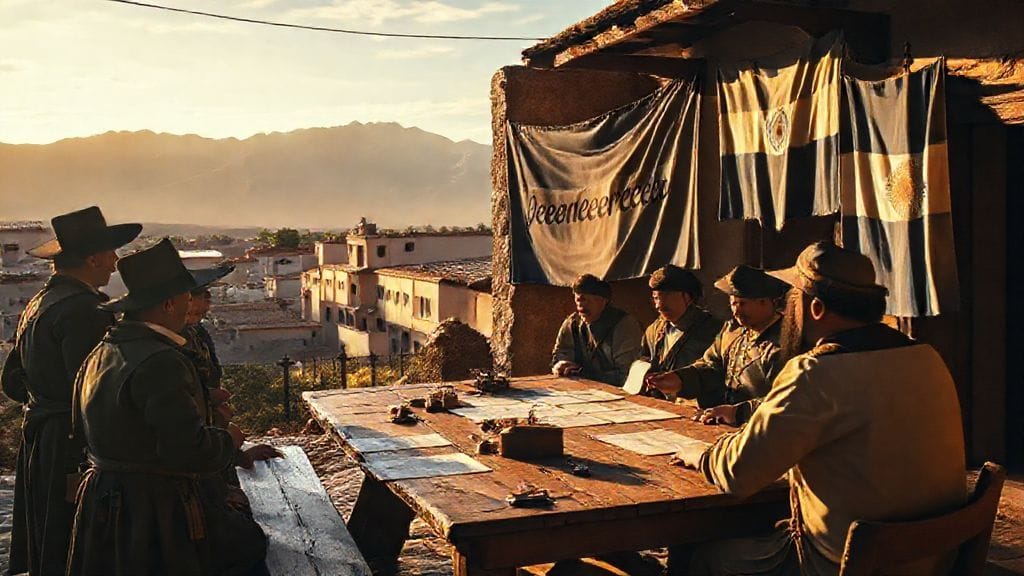
The sun rose on a winter morning in the humble, dusty city of San Miguel de Tucumán, its light filtering through the heavy wooden shutters, casting long shadows on the cobblestone streets below. The air was thick with expectation, hope, and a palpable tension that seemed to vibrate in every corner. Inside the modest hall where representatives of the United Provinces of the Río de la Plata had gathered, history was in the making. The murmurs hushed as the chair opened the session, voices steady but hearts pounding. On this day—July 9, 1816—Argentina would declare its independence from Spain, ushering in a new era, brimming with promise and uncertainty.
It was not merely words pronounced on parchment. It was the climax of years of struggle, the emancipation of a people bound by colonial chains, and the audacious declaration of a vision for the future. The very act of declaring independence signaled a break, not just political, but cultural and existential. Argentina was emerging, wary but resolute, from the shadow of empire. The story of that day is more than a date; it is a symphony of dreams, sacrifice, and an unyielding desire for freedom.
2. Argentina on the Brink: Colonial Shackles and Revolutionary Sparks
For nearly three centuries prior, the lands we now call Argentina had been woven into the vast tapestry of the Spanish Empire. The colonial system was marked by exploitation, mercantilism, and rigid social hierarchies. Buenos Aires and other cities operated under Spanish royal authority, and indigenous peoples and creole populations found themselves marginalized and constrained. Yet beneath this imposed order simmered growing unrest.
The late 18th and early 19th centuries saw the confluence of Enlightenment ideas—liberty, equality, fraternity—and the practical woes of colonial rule. The Bourbon Reforms aimed to tighten control and extract greater wealth, but they also sowed resentment among the creoles (American-born descendants of Europeans), who felt excluded from power despite their wealth and influence.
The Napoleonic invasion of Spain in 1808 sent shockwaves across the Atlantic. With the Spanish king captive, legitimacy of authority faltered. Argentinian leaders began to question loyalty to a distant crown, sparking revolutionary movements. The May Revolution of 1810—a pivotal precursor—had already planted the seeds of autonomy by overthrowing the viceroy in Buenos Aires. Yet formal independence was still years away. The years that followed saw a patchwork of battles, failed congresses, shifting alliances, and a country divided between royalists and patriots.
3. The Road to Independence: A Long Voyage of Struggle and Hope
The journey to July 1816 was anything but linear. Argentina’s vast geography, difficult communications, and internal factionalism complicated efforts to unify. Provinces like Córdoba, Salta, and Mendoza had distinct local interests, economic priorities, and political outlooks.
Yet in the relentless cadence of wars—fought in pampas, mountains, and cities—the Argentines forged a shared destiny. Leaders nursing hopes of liberty but wary of despotism sought to craft a new political foundation. The successes of revolutionary armies, led by figures like Manuel Belgrano and José de San Martín, helped turn the tide against Spanish control.
San Martín’s Crossing of the Andes in early 1817, shortly after independence was declared, would become legendary. It symbolized not only military brilliance but a dedication to the liberation of wider South America, linking Argentina’s independence to a regional cause.
4. The Congress of Tucumán: A Gathering of Visionaries
The Congress of Tucumán convened in March 1816, with delegates from different provinces arriving under the weight of history. Some were old revolutionaries, battle-hardened and pragmatic; others were young idealists, rich in Enlightenment ideals. The atmosphere was charged with urgency.
Discussion was intense, often fractious. Delegates debated not only independence but the form the new nation should take. Centralism versus federalism, monarchy or republic, relations with the church—these questions loomed large. Ultimately, the pressing need was to sever ties with Spain unequivocally.
On July 9, after weeks of deliberation, a consensus emerged. Through a unanimous vote, the declaration was adopted, marking the birth of the United Provinces of the Río de la Plata as a sovereign entity. This was a remarkable act of political courage.
5. San Miguel de Tucumán: The Historic Venue
Tucumán was hardly the bustling metropolis one imagines for such a seminal event. Nestled in northwest Argentina, surrounded by fertile valleys and mountain ranges, the city was a strategic choice.
Its location offered relative security from royalist forces entrenched further south and north. But the building where the Congress met—the House of Tucumán—was more symbolic than grand: a simple colonial structure, an unassuming witness to a colossal event.
In 1941, the Argentine government declared the site a National Historic Monument, and today, visitors can still feel the echo of heated debates and electrifying proclamations within its walls.
6. The Declaration Text: Words That Resounded Beyond Borders
The declaration itself was both a legal act and a manifesto. It proclaimed the severance of all political ties with the Spanish crown and rejected any claims to foreign domination over the provinces.
The document, succinct yet powerful, embodied the aspirations of freedom and self-determination. It spoke of justice, sovereign rights, and the inherent liberty of nations to govern themselves. While it explicitly refused submission to any other power, it carefully noted the desire to maintain peaceful relationships with other peoples.
Its tone was deliberate: neither inflammatory nor conciliatory, but resolute and clear. This balanced approach hinted at the fragile situation Argentina faced—claiming independence while still negotiating a place on the world stage.
7. Key Figures Behind the Declaration: Heroes and Statesmen
Several remarkable personalities animated the Congress and shaped the declaration:
- Bernardino Rivadavia: A passionate diplomat and thinker, Rivadavia argued fervently for national unity and constitutional government.
- Juan Martín de Pueyrredón: Serving as Supreme Director later, he provided both military and political leadership.
- José de San Martín: Although absent from the Congress, San Martín’s influence was profound. His military campaigns symbolized the commitment to liberty’s cause.
- Mariano Moreno: Though deceased by 1816, Moreno’s earlier revolutionary writings inspired many delegates.
The delegates themselves came from varied backgrounds—landowners, lawyers, military officers—reflecting a cross-section of the emerging Argentine elite. Each brought personal ambitions, experiences, and visions, but all shared a common cause.
8. The Influence of Other Revolutions: Inspiration and Imitation
Argentina’s independence was not created in a vacuum. Across the Atlantic, the echoes of the American Revolution and the French Revolution resounded loudly. The successful creation of the United States epitomized what could be achieved outside European monarchy.
Closer to home, the Haitian Revolution had shown the power and complexity of liberating an oppressed people. Latin America’s own liberation movements, led by Simón Bolívar in the north, paralleled the Argentine struggle.
Philosophers such as Montesquieu and Rousseau permeated political thought, emphasizing the rights of man and sovereignty of people. Yet Argentina had to adapt these ideals to its unique social fabric, geography, and challenges.
9. Internal Conflicts and Divisions: Unity Amid Fragmentation
Despite the unanimous vote, the new nation was far from unified. The provinces differed not just politically but culturally and economically. Centralists pushed for a strong government headquartered in Buenos Aires, while federalists sought greater autonomy.
This tension would ignite decades of civil wars and political instability, making the 1816 declaration a beginning rather than a conclusion. These internal divides delayed the formation of a stable Argentine state, reflecting the immense challenge of nation-building.
10. The Role of the Army and Guerrilla Fighters: Battlefields Shaping Destiny
Outside the halls of Congress, the fight for independence raged. Argentine soldiers faced royalist troops loyal to Spain in brutal, protracted campaigns. Guerrilla warfare, especially in northern provinces like Salta and Jujuy, was a cornerstone of the patriots’ resistance.
Manuel Belgrano, creator of the Argentine flag, combined military prowess and vision, serving as an emblem of the independence movement’s intertwining of politics and warfare. These battles not only defended the fledgling nation’s sovereignty but forged its collective identity.
11. International Context: Colonial Powers and Emerging Ideals
Argentina's declaration of independence triggered wary interest from foreign powers. Britain, for instance, saw opportunities for trade but was cautious about openly supporting revolutionary governments. Spain was determined to retain its American colonies, launching military expeditions to crush rebellions.
The United States followed events closely, sympathetic to revolutionary causes yet pragmatic in recognizing governments. The question of international recognition would be a slow and complex process for Argentina.
12. The Aftermath: Immediate Reactions and Political Upheavals
The declaration did not end conflict. Shortly after, royalist forces attempted to retake territories. Within Argentina, factions vied for power, leading to a fragile and shifting political landscape.
Still, for many citizens, independence fueled a newfound pride. National symbols—flags, anthems—began to crystallize identity. Annual celebrations became a way to commemorate sacrifice and inspire unity.
13. Economic Challenges Post-Independence: Building a Nation from Ruins
Free from Spain’s mercantile restrictions, Argentina faced the monumental task of restructuring its economy. Agricultural exports, especially cattle and hides, gained new importance, but infrastructure was sparse, and internal markets fragmented.
Trade policies vacillated as leaders sought sustainable development. Foreign investment was limited. Moreover, wars had drained resources, demanding recovery plans.
14. Cultural Identity and National Symbols: Forging an Argentine Soul
The declaration of independence also set in motion the creation of a national culture. The blue and white colors, adopted in 1812 and refined afterward, became emblems of the Argentine spirit.
Literature, music, and folklore began to incorporate themes of liberty and nationhood. The gaucho—nomadic horseman—rose as a symbol embodying freedom and resistance.
15. Legacy of the Declaration: From 1816 to Modern Argentina
The act of July 9, 1816 is a cornerstone in Argentina’s historical consciousness. It marked the assertion of self-determination, even amid struggles that would last decades.
Modern celebrations—parades, ceremonies—honor that moment, reminding citizens of their shared heritage. The declaration’s principles underpin constitutional developments and political discourse.
16. The Place of Tucumán in Collective Memory and Commemoration
San Miguel de Tucumán remains a pilgrimage site for Argentines and historians alike. Its congress hall is preserved with reverence, and museums nearby narrate the story to new generations.
Each anniversary rekindles discussions about unity, sovereignty, and the nation’s path forward. Tucumán’s streets, once modest and quiet, pulse with celebration and reflection annually.
17. How Argentina’s Independence Influenced Latin America
Argentina’s bold step inspired neighboring countries—Chile, Peru, Uruguay—to intensify their own independence efforts. Together, they contributed to the dismantling of Spanish colonial rule across the continent.
The figure of San Martín, in particular, became a symbol of continental liberation, fighting not just for national freedom but for broader South American emancipation.
18. Women and Minorities: Unsung Contributors to Independence
While the formal declaration was dominated by male political leaders, women played crucial roles behind the scenes—as messengers, fundraisers, and supporters. Figures like Juana Azurduy, a guerrilla leader, demonstrated extraordinary bravery.
Indigenous and Afro-Argentine populations also contributed, although their stories are often overlooked in mainstream narratives. Their participation shaped the social fabric of the emerging nation.
19. The Role of the Catholic Church in the Independence Movement
The Church’s position was ambivalent—while some clergy supported royal authority, others embraced the ideals of liberty. During the Congress, debates about the relationship between church and state surfaced.
The Catholic Church remained influential, but Argentina gradually moved toward secular governance, balancing tradition with modernity.
20. Myths and Legends: The Declaration Beyond History
Argentina’s independence is surrounded by countless legends—the dramatic gestures of flags waved, heated exchanges among delegates, and tales of last-minute decisions. These stories enrich the collective imagination, making history tangible.
Some details remain debated, reflecting the human desire to find meaning and heroes in foundational moments.
21. Conclusion: The End of a Beginning
Argentina’s declaration of independence on July 9, 1816, was not simply an end to colonial rule—it was the ignition of a complex and ongoing journey toward nationhood, identity, and sovereignty. It was a moment where courage met uncertainty, where ideals embraced reality, and where the dream of liberty began to take concrete shape.
This proclamation, forged in a provincial town by men and women of vision and conviction, resonates today as a testament to the enduring human pursuit of freedom and dignity.
FAQs
Q1: What were the main causes that led Argentina to declare independence in 1816?
The causes were a mix of political, economic, and ideological factors: resentment against Spanish colonial restrictions, inspiration from Enlightenment ideas and other revolutions, the weakening of Spain due to Napoleonic wars, and local aspirations for self-governance. The failure of colonial rule to address local needs spurred revolutionary movements.
Q2: Who were the key figures involved in the Congress of Tucumán?
Prominent figures included Bernardino Rivadavia, Juan Martín de Pueyrredón, and many provincial delegates who debated and voted for independence. José de San Martín was a crucial military leader and inspiration despite not attending the Congress.
Q3: How did other global revolutions influence Argentina’s independence?
The success of the American and French Revolutions provided ideological models emphasizing rights and sovereignty. Latin American movements like the Haitian Revolution and Simón Bolívar’s campaigns also created a shared context for liberation.
Q4: What challenges did Argentina face immediately after declaring independence?
Internal divisions between centralists and federalists, ongoing military conflicts with Spanish loyalists, economic restructuring from colonial trade systems, and lack of international recognition posed significant challenges.
Q5: What role did women and minorities play in Argentina’s fight for independence?
Women supported the cause as organizers and combatants (e.g., Juana Azurduy), while indigenous and Afro-Argentine peoples also participated in various capacities, although their contributions have often been overlooked.
Q6: Why was San Miguel de Tucumán chosen as the site for the declaration?
Tucumán offered a strategic and relatively secure location, geographically distant from major royalist-controlled areas, and its colonial building served as a practical meeting place.
Q7: How is Argentina’s independence commemorated today?
July 9 is a national holiday marked by ceremonies, parades, educational activities, and cultural events that honor the declaration and reflect on national identity.
Q8: Did Argentina’s independence influence other South American countries?
Yes, it inspired neighboring territories and leaders, contributing to the broader liberation of South America from Spanish colonial rule.