Table of Contents
- The Fateful Dawn of August 13, 1868: A City Shattered
- Arica Before the Quake: A Flourishing Port on the Edge of the Pacific
- Tectonic Tensions Beneath the Pacific Rim
- The Earth Trembles: The Cataclysm Unfolds
- The Night of Horror: Destruction and Despair in Arica
- Tsunami’s Deadly Arrival: Waves That Engulfed the Coast
- Neighboring Chile and Peru: Waking to Devastation
- Immediate Aftermath: Chaos, Rescue, and Survival
- International Reactions: Aid, Sympathy, and Geopolitical Implications
- The Human Cost: Lives Lost and Communities Broken
- Eyewitnesses and Survivors: Voices from the Rubble
- The Science of the 1868 Earthquake: Early Observations and Later Understanding
- Reconstruction and Resilience: How Arica Rose from its Ashes
- The Earthquake and Tsunami’s Economic Impact on the Region
- Memories Engraved: The Event in Peruvian and Chilean Collective Memory
- Shaping Modern Seismology: Lessons Learnt from 1868
- The Arica Earthquake in a Global Context of Natural Disasters
- Political Repercussions: Borders, Military, and Diplomacy in Aftermath
- Cultural Reflections: Literature, Art, and Music Inspired by the Disaster
- Modern Commemorations and Educational Efforts
- Conclusion: The Enduring Legacy of the 1868 Arica Earthquake
- FAQs: Understanding the 1868 Arica Earthquake
- External Resource
- Internal Link
August 13, 1868 — Arica lay silent as the first light of dawn struggled to pierce a haze swollen with the sea’s salty breath. This coastal city, perched like a jewel on the edge of the Pacific Ocean and populated by a dynamic mix of Peruvian and Chilean inhabitants, was about to face a calamity that would reverberate not only across national boundaries but throughout the history of natural disasters.
Suddenly, the ground began to quake with an unrelenting fury. Walls cracked, roofs collapsed, the earth itself seemed to breathe erratically beneath the feet of terrified residents. The tremors were not subtle; they were the unmistakable thunder of a colossal earthquake—a seismic event so powerful that it would forever alter the fate of Arica and its surroundings. Amidst the collapse arose another horror: the ocean's wrath rendered in monstrous waves roaring ashore to consume everything. The great Arica Earthquake had begun, and its catastrophic tableau was as brutal as it was inevitable.
This is the story of a land shaped by tectonic titanism, a city braving nature's merciless fury, and a memory etched in the hearts of generations.
Arica Before the Quake: A Flourishing Port on the Edge of the Pacific
Before August 1868, Arica was a vibrant commercial port within Peruvian territory, although the area today belongs to northern Chile. Its strategic position made it a crucial hub of trade and culture. The population was a blend of indigenous peoples, Spanish-descended colonists, and immigrants seeking opportunity. Cobblestone streets bustled with merchants trading minerals, textiles, and goods from across South America and beyond. The city’s economy was anchored by nitrate mining, agriculture, and its position as a transit point to the interior highlands.
Yet beneath Arica’s vitality simmered the slow, inexorable tectonic forces of the South American Pacific margin, where the Nazca Plate dives beneath the South American Plate—a zone infamous for generating some of the planet’s strongest earthquakes.
Tectonic Tensions Beneath the Pacific Rim
The Arica Earthquake belongs to one of Earth’s most seismically volatile regions: the Peru-Chile subduction zone. Here, the oceanic Nazca Plate is continuously thrust beneath the continental South American Plate at a modest yet relentless rate of about 6–7 cm per year. This subduction generates the friction and stress required to trigger mega-thrust earthquakes—the most powerful kind on Earth.
In August 1868, accumulated tectonic strain along more than 450 kilometers of the plate boundary would rupture almost simultaneously. This catastrophic release sent shockwaves both through the Earth’s crust and the communities above, culminating in what would be recorded as an earthquake with a magnitude estimated between 8.5 and 9.0—among the largest in history.
The Earth Trembles: The Cataclysm Unfolds
At about 5:30 AM, the ground began to shake violently beneath Arica. The quake lasted an agonizingly long 3 to 5 minutes—an eternity in a moment of disaster. Buildings shuddered, many collapsing without warning. The shock was so intense that landslides roared down nearby hills, burying smaller settlements and cutting off escape routes.
The rupture propagated north and south, devastating areas stretching from southern Peru into northern Chile. This was no isolated tremor — it was a vast rupture on a scale few had witnessed before. Yet this violent shaking was only the opening act to the full catastrophe.
The Night of Horror: Destruction and Despair in Arica
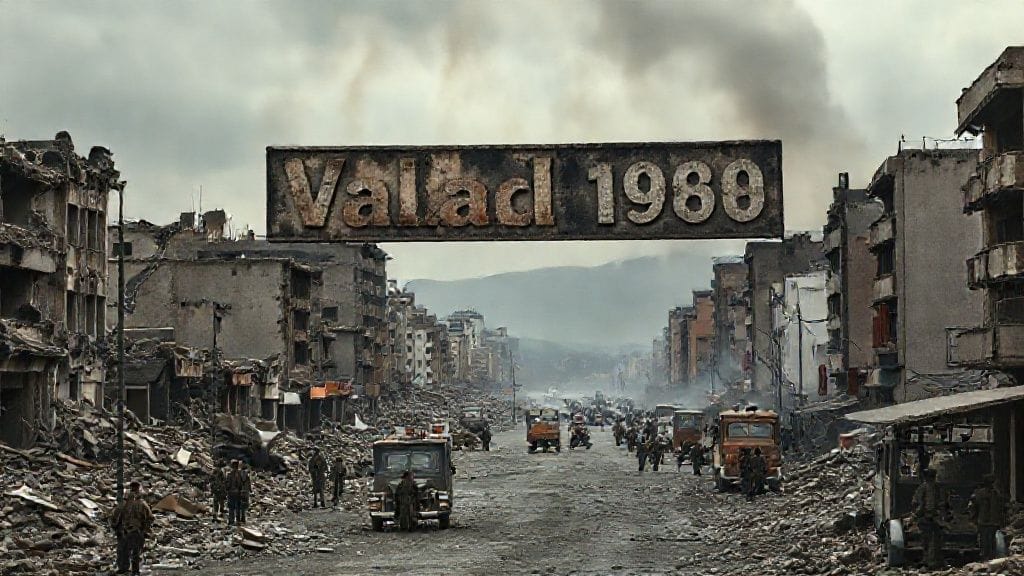
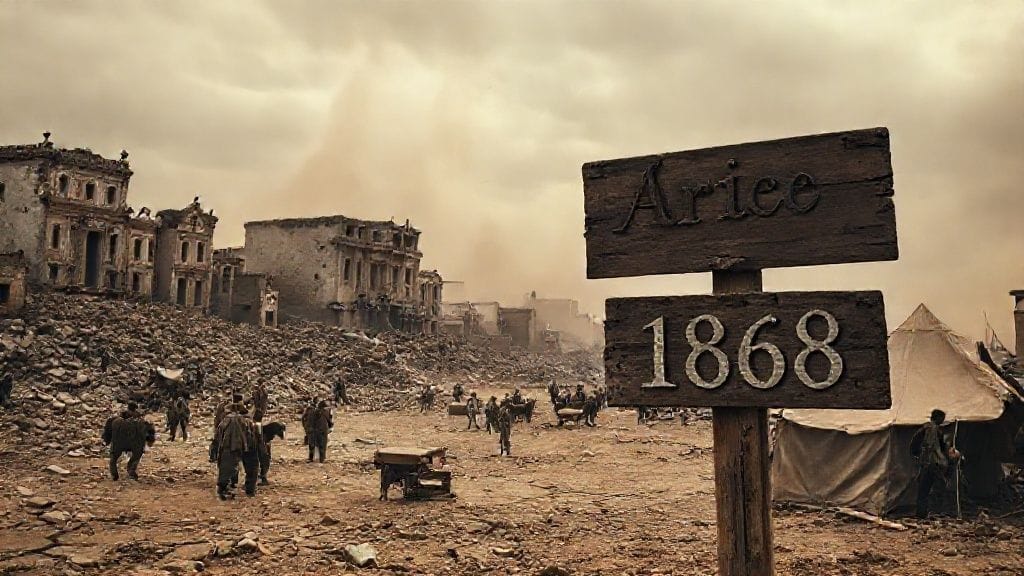
As the sun rose and the initial shockwaves quieted, survivors staggered through the debris, confronted by the grim extent of destruction. Around 70% of Arica’s buildings were destroyed, including schools, churches, and trading houses. The city’s infrastructure crumbled, forcing thousands into improvised camps in the open.
Families searched among fallen timbers and stones for the missing. Fires ignited by broken lamps and stoves ran rampant, compounding the chaos. This was a city on its knees—an eerie stillness punctuated by desperate cries for help and the groans of the injured.
Tsunami’s Deadly Arrival: Waves That Engulfed the Coast
As if the earthquake itself was not enough, nature dispatched its next punishment: a massive tsunami. The underwater rupture displaced colossal volumes of seawater, sending grotesque waves roaring toward the coast.
Eyewitnesses described walls of water towering over 15 meters high in some places, crashing inland and swallowing the port. Little boats, docks, and entire communities vanished beneath the surging ocean. The tsunami traveled up the coast, reaching as far as Hawaii, where it inflicted damage thousands of miles away.
Neighboring Chile and Peru: Waking to Devastation
While Arica bore the brunt, cities farther afield were not spared. Tacna, Iquique, and other settlements in Peru and Chile experienced severe quake damage and were further ravaged by the tsunami’s waves. These regions faced their own battles for survival amidst widespread destruction.
Communication lines of the era crumbled. News traveled in fragmented pieces, fueling both panic and solidarity. Relief attempts were slow but steadily organized as the enormity of the disaster became clear.
Immediate Aftermath: Chaos, Rescue, and Survival
The days following the quake were marked by frantic rescue operations. Armed forces and volunteers combed through ruins amid aftershocks. Medical supplies were scarce, and makeshift hospitals overflowed. Food and clean water shortages soon threatened the survivors.
Yet amidst the despair, communities displayed remarkable resilience. Neighbors helped neighbors; religious organizations mobilized; foreign aid ships anchored offshore, bringing precious resources.
International Reactions: Aid, Sympathy, and Geopolitical Implications
Though communication technology was limited in 1868, the Arica Earthquake resonated internationally. Governments in Europe and North America sent monetary and material assistance, while scientists took a keen interest in studying the earthquake’s scale.
Moreover, the disaster influenced regional politics. At a time when territorial tensions between Chile and Peru simmered beneath cooperation, the quake and tsunami complicated border demarcations and military posturing, foreshadowing further conflicts in the years to come.
The Human Cost: Lives Lost and Communities Broken
It is estimated that between 25,000 and 70,000 lives were lost—a staggering human toll that devastated families and entire communities. The psychological scars endured for generations, with survivors recounting the trauma to their descendants.
Entire villages vanished under landslides or were swept away by the tsunami. The fabric of daily life unraveled, forcing displacement and migration that reshaped the region’s demographics.
Eyewitnesses and Survivors: Voices from the Rubble
Historical accounts from survivors paint vivid pictures of that day’s terror. One merchant recalled standing at his doorway as the earth tore open, hearing the “roar of the mountain itself breaking apart.” A local schoolteacher described her class’ narrow escape from collapsing walls, sheltering afterwards under a tree as water streamed through the streets.
These testimonies give the disaster its human voice—no longer mere statistics, but stories of courage and heartbreak.
The Science of the 1868 Earthquake: Early Observations and Later Understanding
Though scientific instruments were primitive, the 1868 earthquake became a cornerstone in early seismology studies. Researchers like the Chilean seismologist Luis Federico Leloir would later analyze the event’s characteristics and relate them to plate tectonics theory that gained prominence decades later.
The tsunami’s reach across the Pacific also expanded the global understanding of how far-reaching such maritime disasters could be.
Reconstruction and Resilience: How Arica Rose from its Ashes
Despite the overwhelming destruction, Arica was rebuilt—slowly, painfully, but with determination. Infrastructure was modernized with better building techniques aimed at earthquake resistance. Trade resumed, and the city gradually regained its role as a vital port.
The reconstruction efforts reinforced local identities of resilience and collective memory, framing Arica as a symbol of survival amidst catastrophe.
The Earthquake and Tsunami’s Economic Impact on the Region
The quake devastated not only lives but also economic stability. Mines shut down, ports were unusable, and agricultural fields were buried. Commerce halted, affecting supply chains across Peru and Chile.
Recovery required years, and the event shaped regional economic policies geared toward disaster preparedness—a lesson still relevant today.
Memories Engraved: The Event in Peruvian and Chilean Collective Memory
Stories of the 1868 disaster passed down across generations, through oral history, ceremonies, and commemorations. The event became a defining moment in local and national narratives, a reminder of nature’s power and human vulnerability.
Monuments and plaques today mark the places of destruction and loss.
Shaping Modern Seismology: Lessons Learnt from 1868
The Arica earthquake offered invaluable lessons to earth scientists developing seismology and tsunami research. It underscored the need for early warning systems and structural engineering adapted to seismic realities.
Modern risk management strategies in Chile and Peru owe much to the hard-earned knowledge from this historic event.
The Arica Earthquake in a Global Context of Natural Disasters
Within the tapestry of 19th-century catastrophes, the 1868 Arica earthquake stands as one of the most powerful and destructive seismic events worldwide. Comparing it with other megaquakes—such as the 1906 San Francisco earthquake or the 2011 Tōhoku earthquake in Japan—highlights universal challenges in coping with nature’s fury.
Its legacy transcends continents and disciplines.
Political Repercussions: Borders, Military, and Diplomacy in Aftermath
The territorial disputes between Peru and Chile later intensified, culminating in the War of the Pacific (1879–1883). Some historians argue that the shared trauma of 1868 paradoxically complicated relations, as both nations wrestled with reconstruction and border security.
The disaster reshaped regional alliances and military priorities.
Cultural Reflections: Literature, Art, and Music Inspired by the Disaster
Artists and writers translated the catastrophe into cultural expressions that continued to resonate long after the dust settled. Poets mourned the lost, painters depicted the chaos, and musicians composed mournful or hopeful works reflecting societal grief and endurance.
These works enrich the historical narrative with emotional depth.
Modern Commemorations and Educational Efforts
Today, communities in northern Chile and Peru hold ceremonies remembering the quake’s anniversary. Educational programs teach students about seismic risk, disaster preparedness, and historical resilience.
These serve as vital reminders that the lessons of 1868 remain crucial as populations grow along the restless Pacific Rim.
Conclusion
The Arica Earthquake of August 13, 1868, was not just a natural disaster; it was a profound human tragedy that tested the limits of endurance and reshaped an entire region. In the trembling earth and towering waves, there lies a story of loss, but also of extraordinary courage and resilience.
From the shattered streets of Arica to the far shores of Hawaii touched by its tsunami, this event underscores the fragile yet unyielding relationship between humanity and the planet it inhabits. Its legacy endures, compelling us to remember, prepare, and respect the powerful forces beneath our feet.
FAQs
1. What caused the 1868 Arica Earthquake?
The earthquake was caused by the subduction of the Nazca Plate beneath the South American Plate along the Peru-Chile Trench, releasing enormous tectonic stress in a mega-thrust event.
2. How powerful was the Arica Earthquake?
It is estimated to have a magnitude between 8.5 and 9.0, making it one of the most powerful recorded earthquakes in history.
3. What was the impact of the tsunami triggered by the earthquake?
The tsunami generated waves up to 15 meters high, devastating coastal areas in Peru and Chile and reaching across the Pacific to cause damage in Hawaii and beyond.
4. How many people died in the earthquake and tsunami?
Estimates vary from 25,000 to 70,000 fatalities, with many communities wiped out entirely.
5. How did the earthquake influence political relations between Peru and Chile?
The disaster complicated existing territorial disputes, contributing to the tensions that eventually led to the War of the Pacific (1879–1883).
6. What scientific knowledge did the event contribute to?
The earthquake became an important case study for early seismologists, advancing understanding of mega-thrust earthquakes and tsunami propagation.
7. How is the event remembered today?
Through memorials, educational programs, and annual commemorations in northern Chile and Peru that emphasize both remembrance and preparedness.
8. Did the quake affect regions beyond South America?
Yes, the tsunami waves crossed the Pacific Ocean, causing damage as far away as the Hawaiian Islands, illustrating the event’s vast reach.