Table of Contents
- The Night the Sea Rose: August 13, 1868
- A Calm Before the Storm: The Coastal Life of Arica and Chile in the 1860s
- The Geological Crossroads of the Pacific Ring of Fire
- The Earthquake That Shattered Nations
- From Tremor to Terror: The Birth of the Arica Tsunami
- Waves of Destruction: The Tsunami’s Deadly Journey
- The Cities Engulfed: Arica and Beyond
- Survivors’ Stories: Voices from the Abyss
- The Response of Empires: Chile, Peru, and Beyond
- Scientific Understanding in the 19th Century: Earthquake and Tsunami Knowledge
- Economic Aftershocks: Commerce and Infrastructure Devastated
- Political Ramifications in a Region on Edge
- The Human Cost: Death Toll, Displacement, and Trauma
- The Earth’s Wrath Recorded: Contemporary Accounts and Eyewitnesses
- Early Warning Myths and Lessons Learned
- The Legacy of 1868: How the Event Shaped Coastal Policies
- Modern Reflections: The Arica Tsunami in Memory and Research
- Comparing Historical Tsunamis in the Pacific
- The Role of Oral Tradition and Storytelling
- The Invisible Waves: Psychological and Cultural Impacts
- Earthquakes and Tsunamis Today: Scientific Advances from 1868’s Tragedy
- Conclusion: Remembering the Night When the Earth and Sea Collided
- FAQs: The Arica Tsunami Unveiled
- External Resource
- Internal Link
August 13, 1868. Under a brooding, star-speckled sky along the western edges of South America, the restless earth began to murmur. Seismographs were yet a nascent invention; the residents of Arica, then part of Peru, felt only the subtle tremors at first. But beneath their feet, the geological forces were aligning towards a manifestation of a cataclysm the likes of which the coastal Pacific had rarely witnessed. Within moments, a violent earthquake tore apart the foundations of towns and cities, followed swiftly by a wall of water racing ashore, turning life into death, moments into eternal memories.
This was the Arica Tsunami, a natural disaster that has since echoed not only in the annals of history but also in the collective psyche of an entire region. A tragedy where earth and sea collided with devastating force, reshaping landscapes, societies, and scientific understanding alike. But what led to this night of terror? How did human lives entwine with such primal geological fury? And, most intriguingly, how did the world respond and remember this event?
A Calm Before the Storm: The Coastal Life of Arica and Chile in the 1860s
In the mid-19th century, the Pacific coast of South America was a land of bustling port towns, pristine deserts, and indigenous cultures increasingly intertwined with colonial and emerging national identities. Arica, a thriving port city, was then part of Peru—a vital node for trade routes bridging continents. The city’s docks saw ships from Europe and Asia, the salty air smelled of commerce, and the marketplace buzzed with the vibration of a globalizing world.
Just south, Chile was cementing its own national identity following decades of struggle for independence and internal consolidation. Both regions were characterized by a delicate balance: economic growth driven by mining and agriculture, political tensions born of shifting borders, and the looming threat of natural disasters from a land that seemed alive with seismic restlessness.
The Geological Crossroads of the Pacific Ring of Fire
To understand the Arica Tsunami, one must first understand the geological theatre it arose from. The west coast of South America lies along the Pacific Ring of Fire—a horseshoe-shaped line notorious for volcanic eruptions and earthquakes.
Here, the Nazca tectonic plate slides under the South American plate in a seismic ballet known as subduction. This constant pressure builds over decades, only to be released catastrophically. The very earth beneath Arica and northern Chile was a tinderbox waiting for the inevitable spark.
The Earthquake That Shattered Nations
On the evening of August 13, 1868, near 7 PM, the earth violently convulsed. What followed was an earthquake with a magnitude estimated today at 8.5 to 9.0—a force so immense it destroyed much of Arica and was felt as far as Buenos Aires and Rio de Janeiro.
Buildings that had stood for generations crumbled like sandcastles. Sidewalks cracked open; roads buckled. The tremor lasted several intense minutes, leaving in its wake shattered infrastructure and, worse, a terrifying realization: the ground itself was no longer safe.
From Tremor to Terror: The Birth of the Arica Tsunami
But the earthquake was only the prelude. As the land shifted, it sliced open sections of the ocean floor, displacing enormous volumes of water in terrifying waves.
The tsunami formed swiftly—the first wave racing ashore in Arica within minutes. Locals, unprepared and unaware, heard a curious retreat of the ocean, a deceptive lull that was in fact the calm before an aqueous storm.
Waves of Destruction: The Tsunami’s Deadly Journey
The initial wave towered above town piers, sweeping away small boats, homes perched precariously near the shore, and any lives caught unaware. But the tsunami didn’t halt at Arica—it barreled north to Callao, Lima’s port, and southward along the Chilean coast, wreaking havoc through a vast stretch of the Pacific shoreline.
Some eyewitness accounts describe water rising as walls of frothing white, breaking like mountains onto land. The waters kept surging and retreating, ambushing survivors hiding in high places.
The Cities Engulfed: Arica and Beyond
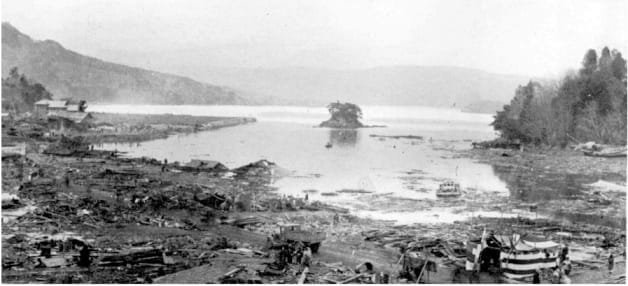
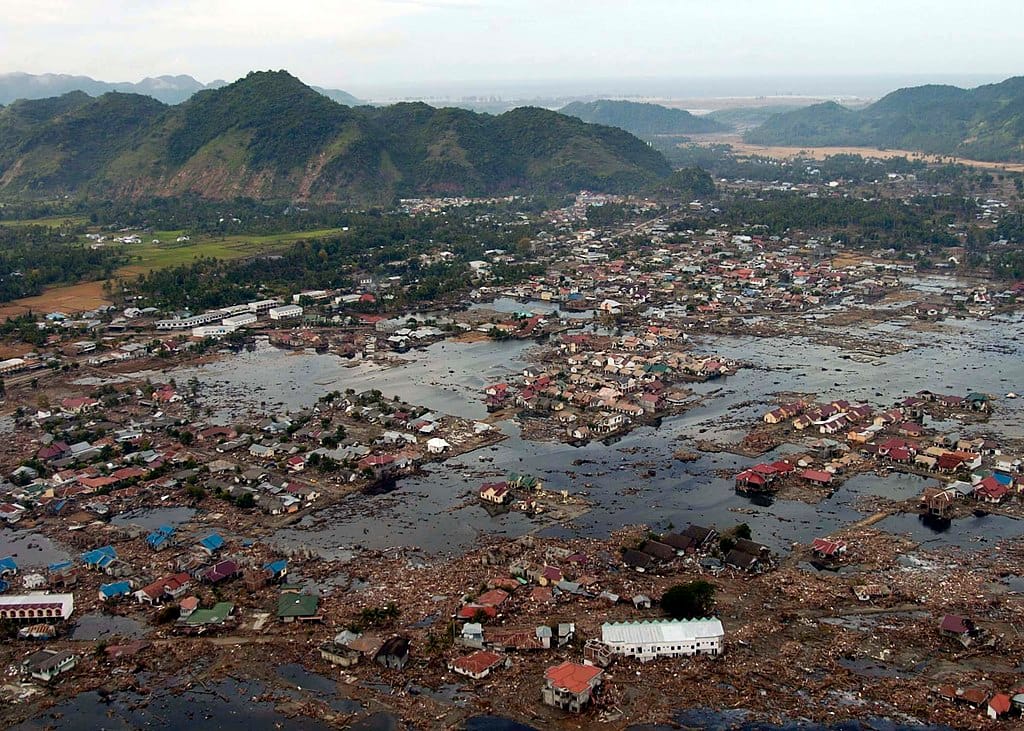
Arica suffered the most devastating blows. Contemporary reports estimate that nearly two-thirds of the city was destroyed, with thousands perishing in the floodwaters and collapsed buildings. The port’s essential infrastructure lay in ruins, crippling local trade.
Farther along the coast, coastal communities in northern Chile and southern Peru faced similar fates—homes and livelihoods washed away, fishing fleets destroyed, entire neighborhoods lost.
Survivors’ Stories: Voices from the Abyss
Amid the carnage emerged stories of resilience and heartbreak. Women clutching children climbed to hills, fishermen ran to high ground, and neighbors pulled the injured from debris.
One account by a Chilean trader recalled how “the sea pulled back as if gathering breath, then returned as a colossal beast, swallowing our humble village in a single gulp.” Another survivor in Arica recounted hearing the frantic cries of friends as the waves swallowed their refuge.
The Response of Empires: Chile, Peru, and Beyond
News of the disaster traveled in an age before instant communication. Governments of Peru and Chile dispatched aid where possible, though infrastructure damage slowed efforts. International communities, particularly European and North American merchants with vested interests in regional stability, contributed ships and supplies.
But the disaster also stirred political tensions, with disputes over responsibility and resources—particularly germane given ongoing border contests in the region.
Scientific Understanding in the 19th Century: Earthquake and Tsunami Knowledge
In 1868, seismic science was embryonic. Earthquakes were often attributed to mysterious subterranean phenomena rather than understood as plate tectonics (a theory only formalized nearly a century later).
The Arica event helped stimulate interest in cataloging earthquake damage and understanding tsunami triggers, though effective early warning systems were decades away.
Economic Aftershocks: Commerce and Infrastructure Devastated
Ports damaged or destroyed meant that exports—from mineral riches to agricultural goods—vanished virtually overnight. Railroads connecting inland regions to the coast suffered interruptions.
The disaster’s timing was particularly debilitating as South American economies were increasingly linked to global markets. Recovery stretched into years, with ripple effects in commodity prices.
Political Ramifications in a Region on Edge
The destruction exposed vulnerabilities at a time when Peru and Chile were politically strained, setting the stage for the War of the Pacific (1879-1884). The disaster accelerated migrations and altered demographic distributions, influencing political calculations.
Reconstruction tied into national prestige and military preparedness, reinforcing the fragile dance of diplomacy and rivalry.
The Human Cost: Death Toll, Displacement, and Trauma
Though exact numbers remain debated, estimates suggest over 25,000 lives lost, with thousands more injured or displaced. Entire families were lost within minutes; communities were scattered.
Survivors carried psychological scars that lasted lifetimes—memories of crashing waves, shattered homes, and vanished loved ones lingered.
The Earth’s Wrath Recorded: Contemporary Accounts and Eyewitnesses
Newspapers, letters, and official reports chronicled the horror. These sources provide a mosaic of perspectives—from European diplomats to indigenous residents.
They reveal the chaos, the heroism, and the despair, anchoring the tragedy in human terms that numbers alone cannot capture.
Early Warning Myths and Lessons Learned
Communities along the Pacific had local knowledge of tsunami phenomena—such as the ocean withdrawing mysteriously before waves—but lacked coordinated systems.
The 1868 event fostered cautious respect and gradual investment in monitoring seismic activity. Following disasters like Arica, the seeds of modern tsunami science took root.
The Legacy of 1868: How the Event Shaped Coastal Policies
Reconstruction efforts began incorporating stronger building techniques, and governments grew more attuned to natural disaster risks.
Cities developed rudimentary evacuation plans, and international scientific collaboration on seismic phenomena slowly emerged.
Modern Reflections: The Arica Tsunami in Memory and Research
Today, the 1868 Arica Tsunami stands as a pivotal historical marker. Scientists studying historic tsunamis use data from the event to model future risks.
Memorials in Arica and northern Chile honor the dead, and cultural memory keeps alive stories of resilience.
Comparing Historical Tsunamis in the Pacific
The 1868 tsunami joins other massive Pacific tsunamis, such as 1946, 1960, and 2011, in demonstrating the enduring vulnerability of the coastal populations.
Each event advances scientific understanding and international cooperation.
The Role of Oral Tradition and Storytelling
Indigenous and local communities preserved memories of the event through stories and songs—warning future generations of the sea’s dual nature as provider and destroyer.
These narratives enrich historical knowledge with emotional depth.
The Invisible Waves: Psychological and Cultural Impacts
Beyond physical destruction were waves of grief and trauma, altering artistic expression, collective identity, and faith systems.
Historians note changes in literature and local traditions interpreting the disaster as a signal of nature’s power and human fragility.
Earthquakes and Tsunamis Today: Scientific Advances from 1868’s Tragedy
With modern seismology and early warning technology, we seek to prevent repeat catastrophes. The 1868 event's data influenced emerging understanding of tectonic subduction zone behavior.
Today’s scientists remember 1868 not just for its devastation but as a turning point in humanity’s effort to comprehend the earth’s humbling, unpredictable force.
Conclusion
The Arica Tsunami of August 13, 1868, remains etched in time not only as an act of geological fury but as a profound human tragedy. This event tore apart the land and shredded the fabric of communities, exposing the limits of human control against nature’s raw power. Yet, through the rubble and loss emerged the first fragile steps toward scientific understanding and disaster preparedness, born from pain and resilience.
Anchoring this calamity are the stories of those who gazed into the abyss that night, bearing witness to a moment when earth and sea intertwined in violence. Their voices, echoed through history, remind us of the fragile line society walks on the edge of natural forces that shape our existence. The 1868 tsunami compels us to honor the past and strive for greater knowledge and unity in confronting the unpredictable rhythms of the earth.
FAQs
Q1: What caused the Arica Tsunami of 1868?
The tsunami was triggered by a massive subduction earthquake along the boundary where the Nazca tectonic plate dips beneath the South American plate, causing the seafloor to violently uplift and displace ocean water.
Q2: How severe was the earthquake that preceded the tsunami?
Estimated at a magnitude between 8.5 and 9.0, the earthquake was one of the strongest ever recorded in South America, lasting several minutes and causing widespread destruction.
Q3: How many people died in the disaster?
Though exact figures vary, estimates suggest that more than 25,000 people lost their lives, with thousands more injured or displaced along the Peruvian and Chilean coasts.
Q4: What were the immediate political effects of the tsunami?
The disaster intensified existing regional tensions, contributed to economic instability, and indirectly influenced the geopolitical landscape that led to the War of the Pacific.
Q5: Did the disaster lead to improvements in tsunami early warning systems?
While modern early warning systems were developed much later, the 1868 tsunami heightened awareness of the risk and inspired early scientific and governmental interest in seismic phenomenon monitoring.
Q6: How has the Arica Tsunami been remembered in local culture?
Through local storytelling, memorials, and cultural expressions, surviving communities have preserved the memory of the event as a somber lesson about nature’s power.
Q7: What scientific insights were gained from this event?
The event contributed to early documentation of earthquake-tsunami relationships, influencing the development of seismology and tsunami science.
Q8: How does the 1868 Arica Tsunami compare to other historic Pacific tsunamis?
It ranks among the most powerful and destructive, comparable in impact to the 1960 Chilean earthquake and tsunami and the 2011 Tohoku disaster in Japan.