Table of Contents
- The Fateful Night of August 13, 1868: When the Earth Shook Beneath Arica
- The Geological Context: South America’s Restless Pacific Rim
- Arica before the Disaster: A Bustling Port City on the Edge
- The Great Earthquake: Tremors That Shattered the Coast
- The Birth of the Tsunami: How the Ocean Turned Deadly
- Witnesses to the Fury: Accounts from Survivors and Sailors
- The Wave’s Path: From Arica Across the Pacific
- Immediate Aftermath in Peru and Chile: Destruction and Despair
- The Toll in Human Lives: Stories of Loss and Survival
- Response and Rescue: Local and International Efforts
- The Impact on Coastal Geographies: Altered Landscapes and Vanished Towns
- Scientific Understanding in the 19th Century: Earthquakes and Tsunamis in Knowledge’s Dawn
- The Arica Tsunami’s Place in Global Disaster History
- Economic and Social Consequences: Rebuilding Amid Ruins
- The Chile-Peru Border and Political Ramifications
- Artistic and Literary Memories: Preserving the Disaster in Culture
- Legacies in Seismic Preparedness: Lessons Learned and Forgotten
- Modern Commemorations and Archaeological Discoveries
- The Tsunami’s Wave Across the Pacific: Effects in Hawaii and Beyond
- Comparing 1868 to Later Tsunamis: Continuity and Change
- Natural Forces and Human Vulnerability: Reflections on Arica’s Tragedy
- The Role of Religion and Spirituality Amidst Catastrophe
- Why Arica’s 1868 Tsunami Still Resonates Today
- Conclusion: Endurance, Memory, and the Call of the Ocean
- FAQs: Exploring the Depths of the 1868 Arica Tsunami
- External Resource
- Internal Link
The night of August 13, 1868, in the coastal city of Arica—then part of Peru, now in northern Chile—was shattered by a force of nature so fierce that it tore the very ground beneath its inhabitants and summoned a monstrous wave to swallow everything in its path. The earth roared with a power that sent ripples of horror and awe crossing the Pacific basin. It is a story not just of destruction, but of human endurance and the relentless, sometimes cruel relationship between civilization and the wild forces of the natural world.
The events of that August evening unfolded in a landscape ripe with tectonic tension—where the Nazca Plate slides beneath the South American Plate, making the Pacific Rim one of the most seismically volatile places on Earth. The small bustling port of Arica, a critical node of trade and culture in the 19th century, was unprepared for what nature was about to unleash.
At approximately 7:00 pm, the earth began to tremble violently. This was no ordinary earthquake; it was a magnitude 8.5 to 9.0 megathrust, one of the most powerful seismic events recorded in South American history. The shaking continued for several minutes, toppling buildings and throwing families into panic. But the initial quake was only the harbinger of a far deadlier phenomenon: within tens of minutes, great waves rose abruptly from the Pacific and crashed into the shore, drowning what the earthquake had spared.
Survivor testimonies describe an ocean seemingly retreating in horror before the wave’s front surged forward with terrifying speed and height. Streets vanished under the saltwater deluge, homes were swept away, and the fragile human order along the coast was shattered. From the rocky cliffs overlooking the port to the docks cluttered with merchant ships, the tsunami’s path was indiscriminately devastating.
Yet, this was only the beginning of the disaster’s reach. The tsunami did not confine itself to Arica or even the coasts of Peru and Chile. It sent enormous waves traversing thousands of miles of open ocean, reaching the Hawaiian Islands, where it caused further damage, and perhaps more surprisingly, it was felt as far as the distant shores of Japan.
The death toll was staggering—official estimates vary, but thousands perished in Arica and neighboring regions. Entire communities disappeared, swallowed by both the earth’s convulsions and the ocean’s wrath. The disaster triggered waves of migration, economic upheaval, and political tension, influencing the contested border region between Peru and Chile.
Efforts to understand and respond to the catastrophe sparked early scientific inquiry into tsunamis and earthquakes, revealing the limits of contemporary knowledge and sowing the seeds for modern seismology.
As the decades passed, the 1868 Arica Tsunami survived in memory and myth, its story retold in literature, commemorated in monuments, and studied by historians and geologists eager to unravel the exact causes and impacts of this cataclysmic event. It remains a compelling chapter in the entwined saga of nature and humanity along the Pacific's restless edge.
1. The Fateful Night of August 13, 1868: When the Earth Shook Beneath Arica
On the evening of August 13, the air hung heavy with unremarkable calm over Arica’s port, a trading hub where merchants and sailors mingled, unaware that the ground beneath them was about to convulse with unprecedented fury. Suddenly, the earth lurched violently, buildings groaning before succumbing to dust and rubble. Mothers clutched their children, fishermen stumbled along docks, and merchants saw their wares smashed in an instant.
The quake lasted several minutes—an eternity of terror. Once it subsided, silence was briefly restored, but this calm was deceptive and transient.
2. The Geological Context: South America’s Restless Pacific Rim
The devastating earthquake was rooted in the ceaseless grinding of tectonic plates along the western edge of South America. The Nazca Plate, a dense oceanic plate, inexorably dives beneath the lighter South American continental plate—a process known as subduction. This plate boundary is a hotbed of seismic activity.
In 1868, scientific comprehension of this phenomenon was embryonic at best. The South American coast had experienced violent quakes and tsunamis historically, but the mechanisms remained a mystery to many, including local populations.
3. Arica before the Disaster: A Bustling Port City on the Edge
Arica, situated then within Peruvian territory, was a flourishing commercial town, its economy buoyed by nitrate exports and maritime trade. The city's architecture blended colonial Spanish influences with developing industrial elements. Its population was diverse—a mix of indigenous people, mestizos, Europeans, and immigrants.
This vibrant community thrived at the interface between the Andes and the Pacific, vulnerable to the whims of nature but intertwined with the sea that provided both livelihood and peril.
4. The Great Earthquake: Tremors That Shattered the Coast
At roughly 7 pm, the earthquake initiated—a titanic release of strain accumulated over centuries. Contemporary eyewitnesses described the earth’s surface as rippling like waves, buildings cracking open, and the land itself seeming to heave skyward.
Reports suggest the shaking lasted up to eight minutes—extraordinarily long for an earthquake. The magnitude, later estimated between 8.5 and 9.0, makes it one of the strongest known in the region’s recorded history.
5. The Birth of the Tsunami: How the Ocean Turned Deadly
The quake’s violent displacement of the ocean floor triggered the formation of a tsunami. The seabed suddenly rose and fell, sending towering waves racing toward the coast.
At first, the sea withdrew from the shoreline as if retreating in fear, exposing the ocean bed and causing many to approach out of curiosity. Moments later, a wall of water surged back with catastrophic force.
6. Witnesses to the Fury: Accounts from Survivors and Sailors
The testimonies from survivors reveal harrowing scenes: entire neighborhoods washed away, children dragged under torrents of debris, and sailors struggling to keep vessels afloat. One sea captain recalled how the ships in the harbor were tossed about like toys, some smashed against each other, others carried inland by the waves.
Eyewitness accounts make the horror tangible—descriptions of the roaring water, the stench of salt and smoke, and the desperate cries of those caught in the flood.
7. The Wave’s Path: From Arica Across the Pacific
The tsunami radiated outward beyond Arica’s destruction. It battered other coastal towns along Peru and northern Chile, spreading devastation. But even more remarkably, the waves crossed the vast Pacific Ocean, arriving in Hawaii roughly 12 hours after the quake.
In Hawaii, the waves caused significant property damage, overturned canoes, and led to casualties. Reports continued to surface from various Pacific locales, underscoring the disaster’s expansive reach.
8. Immediate Aftermath in Peru and Chile: Destruction and Despair
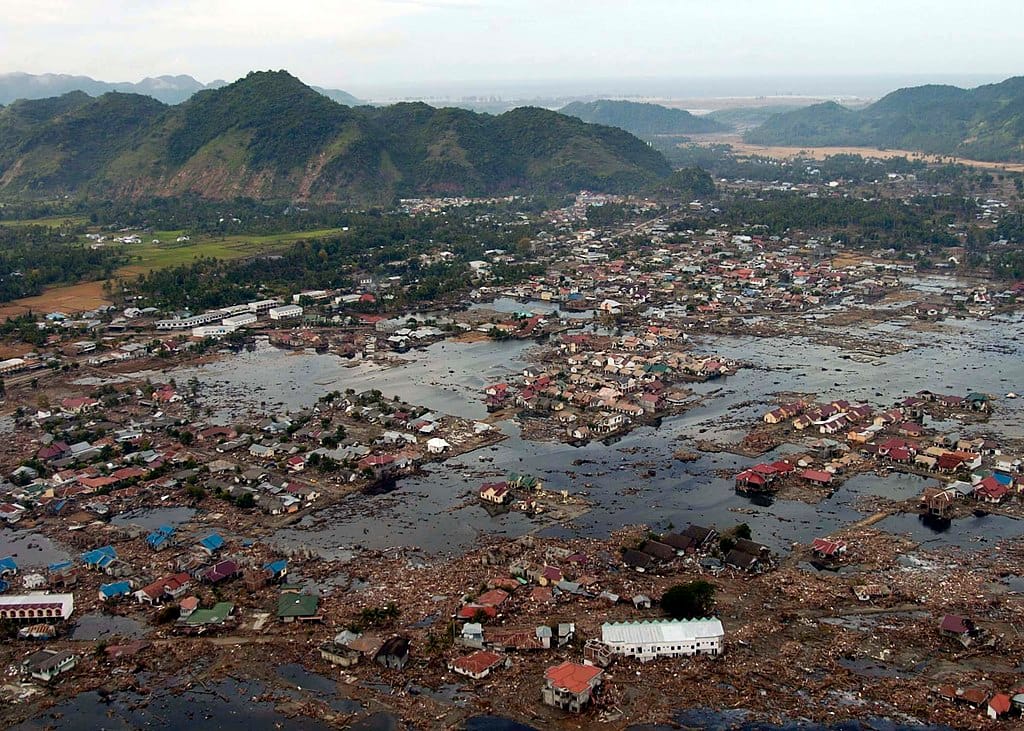
The immediate impact on coastal communities was catastrophic. Infrastructure lay in ruins; thousands were homeless, and access to food and fresh water became critical concerns. Hospitals were overwhelmed, and civic structures were incapacitated.
The political authorities faced immense challenges in coordinating relief and reconstruction amid damaged communication and transportation networks.
9. The Toll in Human Lives: Stories of Loss and Survival
Death toll estimates vary but suggest somewhere between 9,000 and 25,000 people perished across the affected regions. Many victims were drowned, others fell victim to collapsing buildings or injuries sustained during the tsunami.
Survivors often described miraculous escapes, such as families climbing nearby hills or ships riding out the waves at sea. Yet, countless lives were irrevocably altered.
10. Response and Rescue: Local and International Efforts
Local efforts to aid survivors were heroic but limited by the scale of the disaster. Aid from neighboring cities and countries gradually arrived.
Notably, individuals and organizations across the Americas and Europe mobilized resources, underscoring early global solidarity in disaster response.
11. The Impact on Coastal Geographies: Altered Landscapes and Vanished Towns
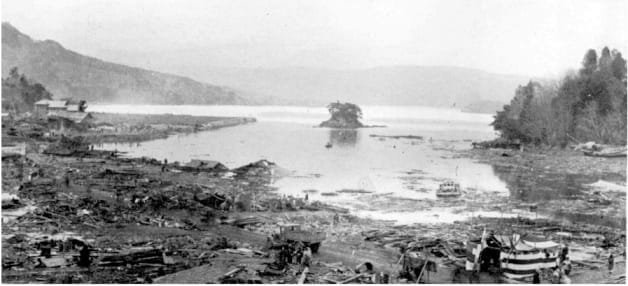
The earthquake and tsunami reshaped the coastline itself. Land was uplifted in some areas by several meters, while elsewhere, parts of the coast subsided or were engulfed by the sea.
Entire settlements disappeared, and new shorelines were drawn, transforming local geography and complicating reconstruction.
12. Scientific Understanding in the 19th Century: Earthquakes and Tsunamis in Knowledge’s Dawn
The scientific community grappled with explaining the destruction. While some early geologists and naturalists proposed theories of subterranean movement, many misconceptions and myths persisted.
The Arica event spurred increased investigation into seismic phenomena and tsunamis, contributing to the gradual evolution of earth sciences.
13. The Arica Tsunami’s Place in Global Disaster History
This disaster became a benchmark in the annals of natural catastrophes. It was among the first seismic-tsunami events globally documented with written eyewitness accounts and scientific observations.
Its transpacific effects launched the concept of tsunami waves traveling great distances, a revelation that would inform disaster preparedness decades later.
14. Economic and Social Consequences: Rebuilding Amid Ruins
The destruction devastated trade and local economies, especially nitrate exportation critical to the region. Communities faced poverty and destitution; many residents emigrated in search of new opportunities.
Reconstruction efforts were slow, marked by tensions over resources, labor, and political control.
15. The Chile-Peru Border and Political Ramifications
Arica’s geopolitical significance was heightened by the disaster. The ensuing years saw shifting sovereignty—after the War of the Pacific (1879–1883), Arica was ceded to Chile.
Some historians suggest the disaster indirectly influenced regional politics by destabilizing governments and economies.
16. Artistic and Literary Memories: Preserving the Disaster in Culture
The tsunami welded itself into cultural memory through poems, paintings, and local oral traditions. Artists captured the drama and grief, while writers reflected on nature’s power and human fragility.
These artistic legacies helped ensure the event was not forgotten amid rapid modernization.
17. Legacies in Seismic Preparedness: Lessons Learned and Forgotten
Despite its scale, many lessons from Arica were not immediately incorporated into safety measures or urban planning. Coastal populations remained vulnerable to future tsunamis.
Only much later, with technological advances, were effective early warning systems developed—echoes of a past still informing present policies.
18. Modern Commemorations and Archaeological Discoveries
Today, monuments in Arica and other parts of Chile and Peru commemorate the victims. Archaeological efforts explore submerged ruins and geological markers, deepening understanding of the disaster’s impact.
Such work reconnects communities to their history and fosters awareness of natural hazards.
19. The Tsunami’s Wave Across the Pacific: Effects in Hawaii and Beyond
The tsunami’s transoceanic journey was a stark illustration of Earth’s interconnectedness. Damage and loss in Hawaii revealed vulnerabilities in distant lands far removed from the quake’s epicenter.
This recognition pressured authorities to consider broader regional warning and response mechanisms.
20. Comparing 1868 to Later Tsunamis: Continuity and Change
Comparisons between the Arica tsunami and later events, such as the 1960 Valdivia or the 2011 Tōhoku disasters, highlight both technological progress and persistent challenges in risk reduction.
The 1868 tragedy serves as an early point of reference in a long history of seismic catastrophe management.
21. Natural Forces and Human Vulnerability: Reflections on Arica’s Tragedy
Arica’s fate in 1868 epitomizes the precarious balance between human habitation and natural forces. It underscores a timeless tension—how to live with the unpredictable Earth while fostering resilient societies.
Stories of both destruction and heroism from that night persist as lessons in humility and courage.
22. The Role of Religion and Spirituality Amidst Catastrophe
For many survivors, faith provided solace amid ruin. Churches played roles in rescue and recovery, as spiritual leaders offered comfort and explanation for the seemingly senseless disaster.
This religious dimension enriched community bonds even as material order crumbled.
23. Why Arica’s 1868 Tsunami Still Resonates Today
More than 150 years later, the Arica tsunami remains a profound case study in natural disaster impact, historical memory, and resilience.
In a world confronted increasingly by climate and geological hazards, revisiting such stories grounds modern awareness in human experience.
24. Conclusion: Endurance, Memory, and the Call of the Ocean
The 1868 Arica Tsunami is more than a mere historical fact; it is a vivid human saga. It illuminates nature’s forces beyond control, compels respect for scientific inquiry, and provokes reflection on how people endure, rebuild, and remember.
The ocean, both a giver of life and a harbinger of destruction, continues to shape the destinies of those living on its shores. The legacy of Arica’s tragedy calls us to vigilance, compassion, and understanding.
Conclusion
The tragic night of August 13, 1868, is etched into the sands and memories of Arica, rippling beyond to touch coasts thousands of miles away. This event was a raw and vivid demonstration of the planet’s dynamism and human vulnerability.
Yet, amid terror and loss, there was resilience. Communities rebuilt, scientific understanding slowly advanced, and cultures preserved stories turning pain into wisdom. The Arica Tsunami reminds us that disaster can also be a catalyst—for knowledge, unity, and hope.
In today’s era of growing seismic risk and environmental uncertainty, remembering and studying such events is not merely an academic exercise but a vital act of respect and preparation for generations to come.
FAQs
Q1: What caused the 1868 Arica earthquake and tsunami?
A1: The disaster was caused by a megathrust earthquake triggered by the subduction of the Nazca Plate beneath the South American Plate along the Pacific coast, which displaced the seafloor and generated the massive tsunami.
Q2: How powerful was the earthquake that struck Arica in 1868?
A2: Estimates place the quake’s magnitude between 8.5 and 9.0, making it among the strongest ever recorded in South America.
Q3: How far did the tsunami waves travel?
A3: The waves traveled across the Pacific Ocean, impacting coasts in Peru, Chile, and reaching as far as Hawaii, and possibly Japan, thousands of miles away.
Q4: What was the human toll of the disaster?
A4: Death estimates vary, but it is believed that between 9,000 and 25,000 people died due to the earthquake and ensuing tsunami.
Q5: Did the event influence the political situation in the region?
A5: While the tsunami did not directly cause political change, it contributed to destabilizing the region economically and socially, occurring just a decade before the War of the Pacific, after which Arica became part of Chile.
Q6: How did the 1868 tsunami contribute to scientific knowledge?
A6: It was one of the first studied seismic-tsunami events with eyewitness accounts that helped early scientists understand the relation between undersea earthquakes and tsunami formation.
Q7: How is the disaster remembered today?
A7: Through monuments, scholarly research, artistic works, and public commemorations in Peru, Chile, and beyond, keeping the memory alive and educating about natural hazards.
Q8: What lessons can modern societies draw from the Arica tsunami?
A8: The importance of seismic preparedness, early warning systems, public awareness, and recognizing the profound power of natural forces that shape human destinies.