Table of Contents
- The Dawn Shatters: Herher Awakens to Disaster
- A Quiet Region’s Violent Tremor: The Setting of May 19, 2011
- Geological Roots: Understanding Armenia’s Seismic Vulnerability
- That Fateful Night: The Sudden Jolt Felt Across the Land
- Human Toll and Immediate Impact: Lives Interrupted
- Emergency Response: Local Resilience in the Face of Catastrophe
- The Role of Armenian Government and International Aid
- Eyewitness Stories: Voices from the Rubble
- Infrastructure and Economy Under Strain: The Hidden Costs
- Media Coverage and Global Awareness: A Regional Tragedy in the Spotlight
- Scientific Aftershocks: Research Mobilized by Herher’s Quake
- Lessons in Preparedness: Shaping Future Earthquake Policies
- Community Recovery: Healing Wounds, Rebuilding Lives
- Commemoration and Memory: Honoring the 2011 Herher Earthquake
- The Broader Impact: Armenia and Seismic Safety in the South Caucasus
- Between Nature and Man: The Enduring Challenge of Earthquake Risk
- Conclusion: From Rubble to Resilience – Armenia’s Path Forward
- FAQs: Understanding the Herher Earthquake of 2011
- External Resource: Wikipedia Link to the Herher Earthquake
- Internal Link: Visit History Sphere
1. The Dawn Shatters: Herher Awakens to Disaster
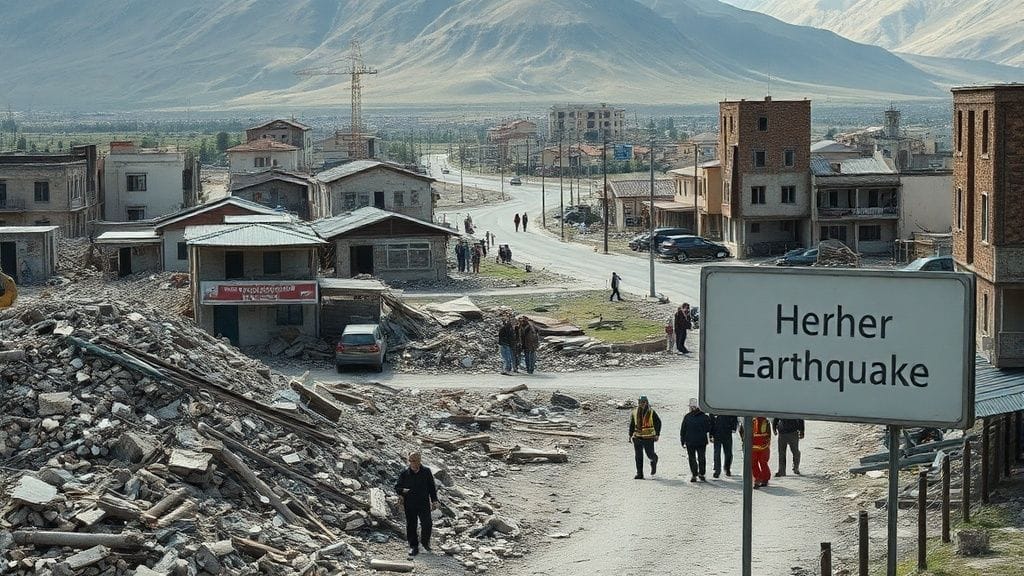
At 2:35 a.m. local time on May 19, 2011, the tranquil night air in the small village of Herher, nestled in Armenia’s southeastern borderlands, shattered with a sudden, unforgiving roar. The earth convulsed beneath the sleeping homes and fields, as the ground twisted and buckled violently. Families were yanked from their beds, thrown into chaos as the very foundation of their lives trembled and cracked. This was no mere tremor—it was a violent reminder of the restless Earth lying beneath the hills, a force both ancient and immediate.
In those terrifying moments, the children’s cries mingled with the groan of collapsing walls, and the night sky was illuminated not by stars, but by dust and debris. For a region where seismic activity was a known threat but rarely felt with such intensity, the Herher earthquake was a brutal awakening.
2. A Quiet Region’s Violent Tremor: The Setting of May 19, 2011
Herher, part of the Vayots Dzor province, is a sparsely populated region marked by rugged mountains, vineyards, and ancient monasteries. It is a land that breathes history, but on that spring night, it was nature’s raw power that made history. Often overshadowed by Armenia’s capital, Yerevan, the area had long been peripheral in geopolitical narratives but central in folklore about the Earth’s unpredictability.
Despite its calm surface, Armenia sits near the complex converging boundaries of the Arabian and Eurasian tectonic plates—a tension zone where the earth’s crust stores tremendous energy. The Herher earthquake was a stark reminder that peaceful landscapes can suddenly become epicenters of destruction.
3. Geological Roots: Understanding Armenia’s Seismic Vulnerability
The South Caucasus region, including Armenia, has long wrestled with its seismic destiny. The collision between the Arabian plate pushing northwards and the Eurasian plate pressing downward has created a jagged puzzle of faults and fractures. The Herher event was attributed to movements along one of these faults—most likely a strike-slip fault that initially went unnoticed by casual observers.
Armenia’s rugged topography and soil composition often exacerbate seismic impacts. Valleys act as funnels for seismic waves; older masonry buildings, common in rural areas like Herher, crumble under the sudden, violent strains. Yet for many locals, the scientific explanations were obscured by immediate survival demands.
4. That Fateful Night: The Sudden Jolt Felt Across the Land
Witnesses in Herher described a moment of terrifying stillness followed by an explosion of noise and motion. The earthquake measured a magnitude of approximately 5.6—strong enough to damage structures but small compared to global megathrusts. This magnitude, however, was devastating locally due to building standards and geological amplification.
The quake was felt beyond Herher, reaching neighboring towns and even parts of neighboring Azerbaijan, reflecting the vast reach of seismic energy. Though brief—lasting only seconds—those moments were enough to challenge nature’s dominion.
5. Human Toll and Immediate Impact: Lives Interrupted
While the death toll was thankfully limited, the number of injured and displaced cast a deep shadow. Many families lost their homes or were forced to evacuate due to structural unsafety. Elderly residents were particularly vulnerable, shaken not only physically but psychologically by the trauma.
Hospitals in nearby Yeghegnadzor grappled with sudden surges of patients. The chaos was compounded by aftershocks, which kept the population on edge, unwilling to return indoors even when daylight came. For those who witnessed entire homes crack and collapse, the world had contracted in an instant from stable earth beneath their feet to an uncertain and dangerous place.
6. Emergency Response: Local Resilience in the Face of Catastrophe
In the immediate aftermath, Armenian emergency services mobilized rapidly. Rescue teams, volunteers, and local officials worked through the night and days that followed, clearing debris and providing aid. Makeshift shelters were established under the warm Armenian sun, offering respite and hope amid destruction.
The resilience of these communities was palpable. Neighbors shared food, blankets, and stories—a tacit assertion that solidarity, not despair, would carve the way forward. Yet, resource constraints in a rural province meant that much of the response leaned heavily on local initiative before large-scale support could arrive.
7. The Role of Armenian Government and International Aid
The Armenian government declared a state of emergency in the affected areas, releasing funds for immediate relief and reconstruction. The response was coordinated through national agencies, with attention to not only physical infrastructure but mental health support for survivors traumatized by the event.
International aid organizations, including the Red Cross and UN agencies, dispatched experts and supplies. Neighboring Georgia and Russia offered logistical assistance, reflecting regional solidarity in times of disaster. Yet, geopolitics also played a shadowy part; a complex interplay of diplomacy was quietly unfolding as Armenia balanced aid offers with sovereign pride.
8. Eyewitness Stories: Voices from the Rubble
One resident, Mariam, spoke of waking to the shaking with her infant daughter held tight. “The house groaned like an old man,” she recalled. “I thought the world was ending.” Across the village, others recounted how pets fled, how elders whispered prayers, and how children unknowingly clutched onto each other, eyes wide with fear and wonder.
These personal stories weave a human tapestry out of statistical data, reminding us that history is lived experience—raw, intimate, and messy. They etched a collective memory that would inform community rebuilding for years to come.
9. Infrastructure and Economy Under Strain: The Hidden Costs
Beyond physical damage, the earthquake disrupted roads, agricultural patterns, and local trade networks. Herher’s vineyards—sources of both livelihood and tradition—were threatened by cracks in terraces and irrigation channels. Schools were temporarily closed, impeding education in an already challenged rural region.
Repair efforts stalled due to budget shortages and logistical difficulty, revealing the fragility of infrastructure outside Armenia’s urban centers. The economic ripple effects would be felt well beyond the immediate aftermath, shaping regional development debates.
10. Media Coverage and Global Awareness: A Regional Tragedy in the Spotlight
Though not making international headlines like larger seismic catastrophes, the Herher earthquake was covered extensively in Armenian media, with features on national television and extensive press analyses. Social media platforms began to buzz with personal accounts, photos, and calls for donations.
International outlets noted the earthquake’s occurrence but often framed it within the context of the South Caucasus' volatile geopolitical landscape, where natural disasters intersect with political tensions—adding layers to an already complex story.
11. Scientific Aftershocks: Research Mobilized by Herher’s Quake
The earthquake prompted increased scientific interest in Armenia’s seismic hazards. Geologists and seismologists expanded monitoring networks, aiming toward better early warning systems. Studies of the fault’s behavior improved, feeding into regional seismic hazard maps and building code updates.
Collaborations with international scientists grew, positioning Armenia as a key site for understanding the interplay between smaller seismic events and larger tectonic forces driving the Caucasus’ restless geology.
12. Lessons in Preparedness: Shaping Future Earthquake Policies
One clear takeaway was the urgent need to upgrade building standards and improve public education on earthquake response. Schools, hospitals, and communal buildings needed reinforcement, and emergency drills became more common.
The episode spurred debate among policymakers about balancing economic constraints with safety demands—a perennial challenge in developing regions exposed to natural hazards.
13. Community Recovery: Healing Wounds, Rebuilding Lives
The long road to recovery was marked by a mixture of government initiatives and grassroots effort. Rebuilding was not only physical but emotional, as survivors coped with loss, uncertainty, and grief. NGOs offered counseling services, and cultural projects aimed at restoring community spirit were launched.
Agricultural restoration programs sought to reestablish vineyards and farms, reinforcing the region’s identity and economy. These efforts underscored a vital truth: resilience is both stone and soul.
14. Commemoration and Memory: Honoring the 2011 Herher Earthquake
Each year, anniversaries of the earthquake became moments of reflection and remembrance. Memorials erected in Herher honor those affected, emphasizing lessons learned and the enduring strength of community ties.
Such commemorations link the isolated event to a broader narrative of human endurance in the face of nature’s caprice, ensuring that the earthquake’s legacy transcends statistics and becomes woven into cultural consciousness.
15. The Broader Impact: Armenia and Seismic Safety in the South Caucasus
Herher’s earthquake highlighted the imperative of regional cooperation on seismic monitoring and disaster response. With tectonic forces indifferent to political borders, Armenia, Georgia, Azerbaijan, and neighboring countries have found new impetus to share knowledge and resources.
This shared fate underscores the inextricable link between nature and geopolitics, where collaboration becomes not only prudent but essential for survival.
16. Between Nature and Man: The Enduring Challenge of Earthquake Risk
The 2011 Herher earthquake is a stark reminder that no landscape is immune from the Earth’s restless energy. For the peoples of Armenia, it reinforced a humbling truth: human ambitions and histories unfold atop a dynamic and sometimes dangerous planet.
Preparing for such inevitable events is not merely technical but profoundly human, demanding courage, empathy, and foresight—a challenge that this small village, now stronger and wiser, continues to face.
17. Conclusion: From Rubble to Resilience – Armenia’s Path Forward
The Herher earthquake of May 19, 2011, stands as an emblem of vulnerability but also of strength. Its tremors shook stones and souls alike, but left a lasting imprint of community courage, scientific progress, and political will.
As Armenia continues to navigate its seismic destiny, Herher’s story reminds us that history is not only about what breaks but also what rebuilds—the shaky roots from which hope and renewal ultimately grow.
Conclusion
The Herher earthquake might appear as a fleeting rupture in time, but its impact was far more profound. It unveiled the delicate balance between nature’s power and human fragility, highlighting the resilience embedded deep within Armenia’s communities. Through the echo of falling stones and the quiet rebuilding of homes, this event teaches us that history is a lived journey through crisis, recovery, and ultimately—hope.
Herher’s 2011 earthquake remains a vivid chapter in Armenia’s tale, a reminder that while the earth may quake beneath our feet, humanity’s resolve to endure and rebuild can never be shaken.
FAQs
Q1: What were the geological causes of the Herher earthquake?
The earthquake was caused by tectonic stresses at the boundary between the Arabian and Eurasian plates. Movements along local fault lines, possibly strike-slip faults, released accumulated strain energy leading to the quake.
Q2: How strong was the earthquake and what was its magnitude?
The quake measured about 5.6 on the Richter scale, making it moderate but locally destructive, especially in rural areas with vulnerable infrastructure.
Q3: What was the human toll of the Herher earthquake?
Casualties were limited, with some injuries reported, and a number of homes damaged or destroyed, leading to displacement for many families.
Q4: How did the Armenian government respond?
The government declared a state of emergency, coordinated relief efforts, allocated funds for reconstruction, and collaborated with international organizations for aid.
Q5: What long-term changes resulted from this earthquake?
Greater emphasis was placed on seismic monitoring, building code enforcement, disaster preparedness education, and regional cooperation on earthquake risk mitigation.
Q6: How has the Herher earthquake influenced scientific research?
It spurred enhanced geological studies in Armenia, increasing seismic monitoring capacity and advancing understanding of regional fault dynamics.
Q7: Is the region still at risk for future earthquakes?
Yes. The South Caucasus remains geologically active, and Armenia continues to face earthquake threats due to its location on complex tectonic boundaries.
Q8: How is the Herher earthquake remembered today?
Through annual commemorations, memorials, and community events, the earthquake’s memory is honored as a testament to resilience and the ongoing efforts to live safely in a seismic landscape.