Table of Contents
- A City on the Edge: Dvin in the Mid-7th Century
- The Armenian Spirit Under Byzantine Rule
- The Seeds of Discontent: Religious and Political Tensions
- The Byzantine Empire’s Waning Grip on the Caucasus
- Prelude to Rebellion: The Armenian Nobility’s Rising Frustration
- The Spark Ignites: Outbreak of the Armenian Revolt
- Dvin at the Heart: The Revolt’s Epicenter
- Byzantine Response: Military Strategy and the Siege of Dvin
- Key Figures: Byzantine Commanders and Armenian Leaders
- The Clash of Armies: Battle Narratives and Strategies
- The Role of Religious Identity: Chalcedonian Christianity vs. Armenian Apostolic Church
- The Aftermath of the Revolt: Suppression and Political Reconfiguration
- The Human Toll: Civilian Suffering and Urban Destruction
- Implications for Byzantine-Armenian Relations
- The Revolt in the Context of the Arab-Byzantine Conflicts
- Dvin’s Historical Legacy in Armenian Memory
- How the Revolt Shaped Regional Alliances and Rivalries
- Reflections from Chronicles: Byzantine and Armenian Perspectives
- The Cultural Impact: Art, Literature, and Collective Identity
- Modern Interpretations and Historical Debates
- Conclusion: The Revolt’s Enduring Resonance
1. A City on the Edge: Dvin in the Mid-7th Century
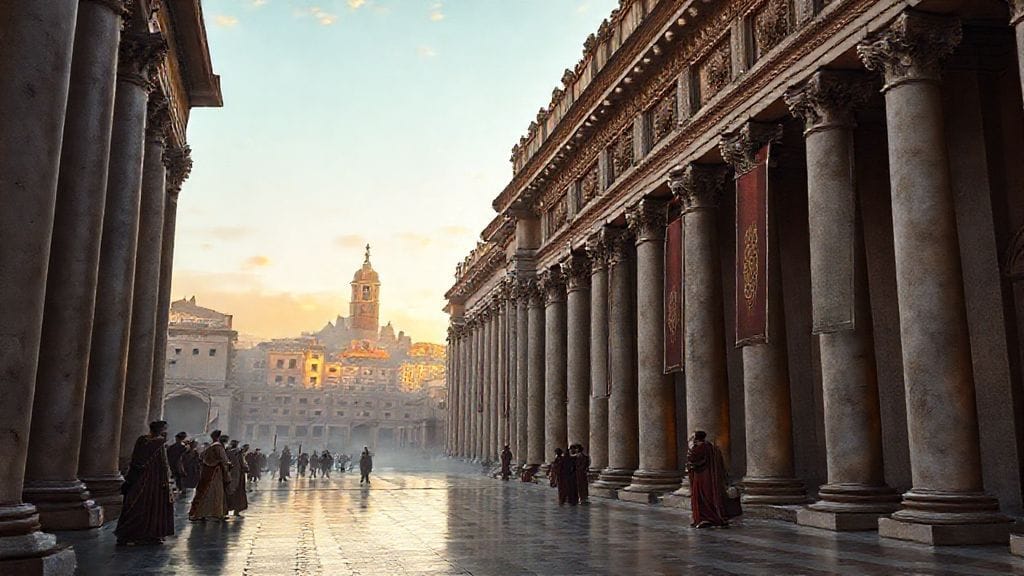
In the gusting winds of the Caucasus, where mountains pierce cloud-heavy skies and stories are etched into every stone, lay the city of Dvin—a jewel of Armenian civilization. As the 7th century dawned, Dvin was no ordinary city. It was a crossroads of empires, a bustling trade nexus, and the heartthrob of Armenian identity amidst the sprawling grip of Byzantium. The air buzzed with tension as the Byzantine Empire, a colossal yet faltering giant, struggled to maintain control far from its imperial capital. Here, in this cradle of ancient cultures, fate was about to weave a tumultuous chapter — the Armenian Revolt against Byzantine rule that would expose the vulnerabilities of empire and the enduring stubbornness of a people determined to define their own destiny.
2. The Armenian Spirit Under Byzantine Rule
Armenia’s history with Byzantium was a complex tapestry of alliance, subjugation, and cultural exchange. While many Armenians served as imperial officers and bureaucrats, the people’s identity remained fiercely distinct. Their language, Christian faith, and noble traditions nurtured a spirit unbroken by centuries of shifting rulers. However, Byzantine governance was often distant and imposing, characterized by heavy taxation and religious pressure to conform to Chalcedonian Christianity — a doctrine at odds with the Armenian Apostolic Church’s deeply entrenched beliefs. The result was a simmering undercurrent of dissatisfaction, a profound yearning for autonomy kindled by the contrast between imperial authority and local sovereignty.
3. The Seeds of Discontent: Religious and Political Tensions
Religion sat uneasily at the center of the conflict. Byzantium, the self-proclaimed guardian of Orthodox Christianity, zealously promoted the Chalcedonian creed, condemning the Armenian Church’s Miaphysite theology as heretical. This religious imposition bred resentment. Politically, Byzantine rulers appointed foreign governors, undermining the traditional Armenian nakharars (nobles) who had long steered the territory. The resultant friction was not simply administrative; it struck at the heart of Armenian identity and power structures. When local nobles found themselves sidelined and Orthodox overlords attempted to dictate spiritual belief, resistance became not only political but existential.
4. The Byzantine Empire’s Waning Grip on the Caucasus
The mid-7th century was a time of crisis for Byzantium. The empire was battered on multiple fronts — the rise of Islam had swept through the Levant and North Africa, swallowing territory and sapping resources. On the eastern frontier, the Caucasus stood as a contested zone. Byzantine control over Armenia fluctuated, often shared or opposed by the emergent Arab Caliphate. Such instability weakened imperial authority, emboldening local actors like the Armenian nobility to challenge Byzantine directives more openly. The empire’s overstretched administration struggled to enforce compliance, and in Dvin, this weakness planted the seeds for rebellion.
5. Prelude to Rebellion: The Armenian Nobility’s Rising Frustration
The nakharars, stewards of Armenian heritage, watched with growing alarm as their influence eroded. Byzantine officials, often foreign and unfamiliar with local customs, imposed laws that alienated the aristocracy and the broader population. Additionally, increased taxation strained the populace, already grappling with the economic disruptions caused by warfare and shifting trade networks. Letters, secret gatherings, and whispered conversations within Dvin’s stone ramparts revealed a consensus: the time had come to resist. The revolt was not a rash eruption but a carefully contemplated act of reclaiming autonomy.
6. The Spark Ignites: Outbreak of the Armenian Revolt
The precise moment when peaceful discontent turned to armed rebellion is lost to history’s fog, but chroniclers agree it was abrupt and fierce. Armenian insurgents seized control of key fortifications in and around Dvin, cutting off Byzantine garrisons and rallying the city’s population. The atmosphere was electric—hope mingled with fear, resolve with desperation. News of the uprising spread swiftly across the Caucasus, sending ripples through both Byzantine and Arab circles. For Byzantium, this revolt was a stark reminder that their rule was no longer unchallenged in these remote lands.
7. Dvin at the Heart: The Revolt’s Epicenter
Dvin, a city with rich cultural layers and countless stories etched in its walls, became the battleground and symbol of Armenian defiance. Its labyrinthine streets and imposing citadel were scenes of clashes that combined siege warfare, guerrilla tactics, and street fighting. The city's importance as a trading hub magnified the revolt’s impact: blocking Byzantine supply lines and threatening imperial communication in the region. For its defenders, Dvin was more than a city—it was a last bastion of identity amidst encroaching empire.
8. Byzantine Response: Military Strategy and the Siege of Dvin
Emperor Constans II, preoccupied with wars elsewhere, ordered reinforcements to suppress the rebellion. Byzantine commanders assembled a force intent on quashing the uprising swiftly. The siege of Dvin was grim and protracted, marked by scarcity of supplies, disease, and fierce sorties from the Armenian defenders. Byzantine tactics combined direct assault with efforts to fracture unity by sowing dissent among the nobles. Yet, despite superior numbers and artillery, the siege revealed the formidable resilience and strategic acumen of the Armenian resistance.
9. Key Figures: Byzantine Commanders and Armenian Leaders
Behind the clashes were men and women of formidable will. On the Byzantine side, commanders such as Theodore and Maurikios played pivotal roles—experienced veterans grappling with the complexities of irregular warfare far from Constantinople's center. Among the Armenians, leaders like Theodore Rshtuni emerged—a noble noted for his tactical brilliance and unyielding nationalist fervor. These figures became legends not merely for their military exploits but for embodying a broader struggle for cultural survival.
10. The Clash of Armies: Battle Narratives and Strategies
The battles that unfolded around Dvin were brutal and marked by adaptability. Armenians employed knowledge of terrain, ambush tactics, and swift raids that frustrated conventional Byzantine formations. The empire’s reliance on heavy infantry and cavalry was challenged by local militias adept in mountainous warfare. Yet, the Byzantines’ siege engines and organized supply chains eventually wore down resistance. Chroniclers recount moments of heroism and tragedy—stories of Armenian defenders rallying under walls stained with blood, Byzantine soldiers weary from months of campaigning, civilians caught in the crossfire.
11. The Role of Religious Identity: Chalcedonian Christianity vs. Armenian Apostolic Church
The clash extended beyond politics and warfare to the very soul of the people. Byzantine attempts to impose religious orthodoxy galvanized much of the Armenian populace, intertwining faith with revolt. The Armenian Apostolic Church became a rallying symbol of national resistance. Monasteries served as sanctuaries, clerics as messengers of hope, and liturgy as a reinforcement of communal identity. This religious dimension lent the revolt a quasi-sacred nature, fueling determination against imperial pressure to conform.
12. The Aftermath of the Revolt: Suppression and Political Reconfiguration
Ultimately, Byzantine forces reasserted control over Dvin, but the cost was high. The city was physically and psychologically scarred, its population decimated or dispersed. Byzantium reorganized Armenia’s governance, increasing military presence while allowing limited self-rule to co-opt local leaders. The revolt had exposed the limits of imperial authority and forced concessions that subtly altered the balance of power. The Armenian nakharars, while subdued, retained enough influence to maintain cultural continuity.
13. The Human Toll: Civilian Suffering and Urban Destruction
Amidst grand strategies and political maneuvers, ordinary people bore the brunt. Civilian deaths, famine induced by besiegement, and destruction of homes shattered families. Archaeological evidence from Dvin reveals layers of burning and abandonment, echoing tales chroniclers penned with sorrow. Refugees fled to neighboring regions, carrying stories of hardship and resilience. This human cost, often overshadowed by military narratives, remains a poignant reminder of rebellion’s harsh realities.
14. Implications for Byzantine-Armenian Relations
The revolt reshaped a delicate equilibrium. Byzantium’s approach shifted towards a more pragmatic fusion of direct control and local collaboration. The Armenian aristocracy, though tested, was reintegrated into imperial frameworks with cautious autonomy. This dynamic would shape Armenian politics for decades, influencing alliances, loyalties, and resistance movements. Religious tension modestly eased, but beneath the surface, aspirations for independence continued simmering.
15. The Revolt in the Context of the Arab-Byzantine Conflicts
The Armenian revolt unfolded against a larger backdrop of Arab expansion. The Rashidun and Umayyad Caliphates encroached upon Byzantine territories, applying pressure on multiple fronts. Armenia became a buffer zone, a prize in the geopolitical contest between empires. Some Armenian factions even entertained alliances with Arab forces, seeing them as potential liberators from Byzantine oppression. This interplay of loyalties complicated the revolt’s outcomes, illustrating the intricate dance of survival in a volatile region.
16. Dvin’s Historical Legacy in Armenian Memory
Despite devastation, Dvin’s role in this saga was etched deeply into Armenian collective memory. It became a symbol of resistance — a testament to the unyielding will of a people confronting imperial might. Poets, chroniclers, and later historians invoked the revolt as evidence of Armenian perseverance. Monuments and ruins served as silent witnesses, while oral traditions preserved tales of heroism, pain, and defiance handed down through generations.
17. How the Revolt Shaped Regional Alliances and Rivalries
The failed revolt recalibrated diplomatic relations. Byzantine reliance on Armenian loyalty was tempered by suspicions; local nobles balanced their allegiances between Byzantium and the emerging Muslim powers. Neighboring Georgian and Caucasian principalities watched carefully, adapting their strategies to the shifting power landscape. Thus, the revolt influenced not only Armenia but the mosaic of Caucasian politics for years to come.
18. Reflections from Chronicles: Byzantine and Armenian Perspectives
Byzantine historians like Theophanes the Confessor recorded the revolt as a dangerous insurrection threatening imperial unity. Armenian chroniclers, such as Sebeos, framed it as a righteous fight for freedom and faith. The divergence in narratives underscores the subjectivity of history—each side weaving the event into its worldview. These chronicles, despite biases, provide invaluable windows into the era’s mindset, conflicts, and hopes.
19. The Cultural Impact: Art, Literature, and Collective Identity
Artistic expressions born in the revolt’s wake—illuminated manuscripts, frescoes, and liturgical music—celebrated resistance and sacrifice. The preservation and adaptation of Armenian cultural motifs became acts of defiance. Literature revived ancient heroes and contemporary martyrs, forging a renewed communal identity that strengthened social bonds. This cultural renaissance, sparked amid destruction, underscored the enduring power of memory and creativity.
20. Modern Interpretations and Historical Debates
Today’s historians debate the revolt’s causes, scale, and consequences. Some emphasize its religious dimension, others its geopolitical context; some highlight grassroots popular support, others focus on aristocratic leadership. Archaeological studies continue to uncover traces that challenge or confirm ancient accounts. This ongoing dialogue illustrates how history evolves, shaped as much by contemporary lenses as by past realities.
21. Conclusion: The Revolt’s Enduring Resonance
The Armenian Revolt against Byzantium in the 650s was more than a military uprising—it was a profound assertion of identity, faith, and self-rule amid an empire’s twilight struggles. Dvin’s siege embodied the clash between local resilience and imperial ambition, with lessons resonating across centuries. It reminds us that beneath grand histories lie human stories of courage, loss, and hope—the timeless essence of rebellion’s soul.
Conclusion
In the tumultuous theater of the 7th century Caucasus, the Armenian Revolt against Byzantium was a dramatic act of defiance, a battle fought for the heart of identity itself. The siege of Dvin crystallized centuries of grievances born from religious discord, political marginalization, and cultural pride. Although the rebellion was ultimately contained, it sent ripples through the region’s political and spiritual fabric that echoed far beyond the city’s walls. This event stands as a testimony to the indomitable spirit of a people confronting the daunting machinery of empire. It encapsulates the eternal tension between freedom and domination, tradition and transformation. Through exploration of this revolt, we glimpse not only the clash of empires but the enduring human quest for dignity and autonomy.
FAQs
Q1: What were the primary causes of the Armenian Revolt against Byzantium?
A1: The revolt stemmed from a complex mix of factors: religious tensions between the Chalcedonian Byzantine faith and the Armenian Apostolic Church, political marginalization of Armenian nobles, heavy taxation, and Byzantine attempts to impose external authority on a proud, distinct nation.
Q2: How significant was the city of Dvin during the revolt?
A2: Dvin was the epicenter of the revolt—a major economic, cultural, and administrative center in Armenia. Its strategic and symbolic importance made it the focal point of both the rebellion and Byzantine military response.
Q3: Who were key figures in the Armenian Revolt?
A3: On the Armenian side, noble leaders such as Theodore Rshtuni played instrumental roles. Byzantine commanders like Theodore and Maurikios led efforts to suppress the uprising. These personalities embodied the broader struggle between Armenia and Byzantium.
Q4: What role did religion play in the revolt?
A4: Religion was central. The Byzantine imposition of Chalcedonian Christianity clashed with the Armenian Apostolic Church’s theological distinctions, fueling resistance and solidarity among Armenians, who saw their faith as inseparable from their national identity.
Q5: What were the immediate consequences of the revolt?
A5: Although Byzantium reasserted control, the revolt forced concessions toward Armenian autonomy and altered governance structures. The human cost was severe, with widespread destruction, displacement, and social trauma.
Q6: How did the revolt affect Byzantine-Arab relations?
A6: The revolt occurred amidst Arab expansion, influencing alliances and power dynamics in the Caucasus. Some Armenians sought alliances with Arab forces, complicating Byzantine efforts to maintain dominance.
Q7: How is the revolt remembered in Armenian culture today?
A7: It is remembered as a symbol of resilience and cultural survival. Stories of the revolt are preserved in literature, art, and oral tradition, reinforcing Armenian collective identity and historical consciousness.
Q8: What challenges do historians face when studying this revolt?
A8: Divergent sources—Byzantine and Armenian chronicles—offer contrasting narratives. Limited archaeological evidence and the entangled geopolitical context also complicate efforts to fully understand the revolt’s scope and impact.