Table of Contents
- The Dawn of a Digital Revolution: October 29, 1969
- The Birthplace: UCLA and the Visionary Minds Behind ARPANET
- From Concept to Reality: The Origins of ARPANET
- The Cold War Catalyst: Why the US Needed a Network
- The Role of ARPA and the Defense Department
- The Architecture of a New Communication Era
- The First Node: UCLA’s Interface Message Processor
- The Historic Login Attempt: “LO” and a Crash Worth Remembering
- Key Players: Leonard Kleinrock, Charley Kline and Their Team
- From Four Nodes to Global Connectivity: Early ARPANET Expansion
- Protocols and Packet Switching: Innovations That Changed Everything
- The Human Stories Behind the Machines
- Cultural Reverberations: How ARPANET Inspired Future Generations
- Technical Hurdles and Triumphs: The Growth Pains of Networking
- The Ripple Effect: ARPANET Beyond Military and Academia
- ARPANET and the Dawn of the Internet Age
- The Legacy of ARPANET in Modern Digital Life
- Reflections on a Moment That Changed the World
- Conclusion: Connectivity as a Human Endeavor
- FAQs: Understanding ARPANET’s First Node and Its Impact
- External Resource: Wikipedia on ARPANET
- Internal Link: Visit History Sphere
The Dawn of a Digital Revolution: October 29, 1969
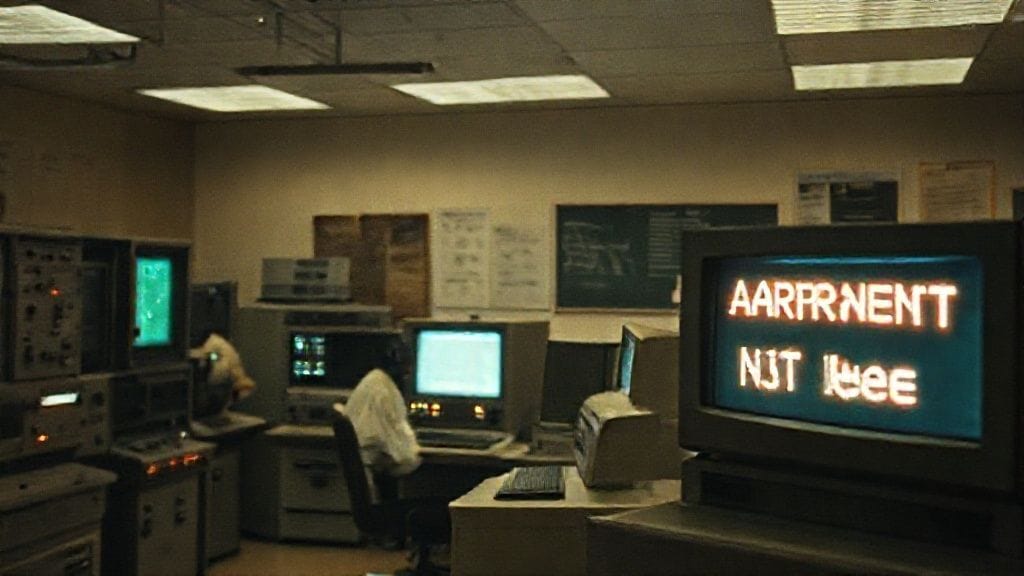
The dimly lit room at the University of California, Los Angeles, buzzed with anticipation. It was late October 1969 — a chilly autumn night where history was quietly unfolding, piece by piece, humming through thick cables and blinking consoles. No crowds, no headlines, no fanfare. Just a relentless determination to connect minds across distances previously thought impossible. At 10:30 PM Pacific Time on October 29, the first node of what would become ARPANET flickered to life, marking a monumental birth within the nascent domain of digital communication.
The command was simple: log in. Charley Kline, a young computer science graduate student, would type the letters “L” and “O” to begin a login process with a machine located hundreds of miles away at Stanford Research Institute. What followed was an unexpected crash — a “LO,” rather than “LOGIN," but that accidental glitch didn’t stifle the excitement; it ignited it. The world had just taken its first step toward interconnected networks, providing the primitive yet profound foundation of our global internet.
This moment, often overlooked, holds the story of ambition, ingenuity, and the relentless human desire to connect in ways previously unimagined. Let us trace the arc of that historic night, and the era that shaped the first ARPANET node, watching closely how a single computer terminal became a portal to the digital future.
The Birthplace: UCLA and the Visionary Minds Behind ARPANET
The University of California, Los Angeles, was more than just an academic hub in 1969—it was the crucible of digital innovation. Amidst the growing chasms of traditional telephone lines and isolated computers, UCLA’s Network Measurement Center had become the focal point for a daring experiment: to link separate computers into a decentralised network.
The choice of UCLA wasn’t accidental. Leonard Kleinrock, a young professor of computer science, had been pioneering work in packet switching since the early 1960s, publishing theories that later became instrumental in ARPANET’s design. Kleinrock’s belief that information could be sent not in a continuous subway stream, but in small, discrete packets, was revolutionary. It promised that networks could be resilient—able to reroute data if any single path failed.
By 1969, Kleinrock’s lab was selected to host the first Interface Message Processor (IMP), the ‘router’ of the time, representing the first tangible node of what would become the ARPANET. This wasn’t simply a piece of technology; it was a beacon of a new era where computers, until then isolated computation machines, could talk and share in completely novel ways.
From Concept to Reality: The Origins of ARPANET
Turning vision into reality often requires a convergence of political need, academic innovation, and technological possibility. ARPANET was born from this nexus. The Advanced Research Projects Agency (ARPA), created in 1958 amid Cold War anxieties about U.S. technological superiority, sought ways to maintain an edge over Soviet capabilities. Early on, ARPA’s Systems Development Division was tasked with exploring potential advances in networking.
Realizing that the era of standalone mainframes was unsustainable, ARPANET was conceived to link researchers and computer systems across the country. Beyond mere data sharing, the idea was to create a decentralized communication system that could withstand interruptions—a principle gleaned from military needs during potential nuclear warfare scenarios.
This vision led to the initial plan: connect four nodes—UCLA, Stanford Research Institute (SRI), UC Santa Barbara, and the University of Utah. Every step was uncharted, pioneering new hardware and software to bridge distances using packet switching and Interface Message Processors.
Yet, many skeptics doubted the practicality of the idea. Early computers were massive, fragile, and disconnected by design. Yet the promise of ARPANET propelled a dedicated team of engineers, scientists, and academics into what would become a legacy of constant innovation.
The Cold War Catalyst: Why the US Needed a Network
It’s 1969, and the world is steeped in tension. The Cold War’s shadow cast long and deep, as the U.S. and Soviet Africa vied for technological preeminence. The space race was in full swing, the Vietnam War raged, and fears of nuclear conflict permeated political and scientific circles.
Amid this backdrop, the U.S. Department of Defense sought a revolutionary communications system resilient enough to endure a nuclear strike. Conventional networks, reliant on centralized switching centers, were vulnerable; if these nodes were destroyed, communication collapsed. The ARPANET envisioned a decentralized structure, distributing communication across multiple routes, avoiding any single point of failure.
Though not purely military, the project benefitted from defense funding and concerns, balancing academic curiosity with national security priorities—a complex blend that pushed the boundaries of what was technologically feasible. The cold logic of war birthed one of humanity’s greatest communication triumphs.
The Role of ARPA and the Defense Department
The Advanced Research Projects Agency, soon renamed DARPA, was the engine behind this radical experimentation. ARPA’s director, Robert Taylor, was a man with a vision—to bridge research labs and institutions through networking. Taylor secured funding and political backing for the ARPANET, knowing full well that its implications would go far beyond the battlefield.
Contracting companies such as Bolt, Beranek and Newman (BBN) to develop the physical IMPs, ARPA orchestrated a delicate dance of academics, military officials, and private enterprises. The IMP was the first practical router: a machine that could forward packets and perform routing decisions based on destination addresses.
Meanwhile, ARPA’s insistence on openness and academic collaboration meant ARPANET would become a tool for research, innovation, and ultimately global connectivity. This blend of government support with open scientific inquiry set ARPANET apart from many proprietary systems before it.
The Architecture of a New Communication Era
At the heart of ARPANET lay a new model of communication, breaking from traditional telephony’s circuit-switched paradigm. Instead of reserving a dedicated line for the entire communication, ARPANET would slice messages into packets, routing each independently through the network.
This packet-switching approach leveraged redundancy and flexibility: if one route failed, packets would find another path, creating resilience. The architecture consisted of host computers connected to IMPs, with the IMPs linked by dedicated lines. The logical design was revolutionary, fundamentally rewriting the possibilities of computer communication.
Interfacing different computer systems with diverse operating systems and processing capabilities prompted the development of early protocols, the ancestors of today’s TCP/IP. This architecture heralded an era where communication was no longer tethered to hardware compatibility but to universally defined protocols.
The First Node: UCLA’s Interface Message Processor
October 29, 1969, saw the activation of the first IMP at UCLA’s Boelter Hall. This rugged Honeywell DDP-516 minicomputer was the humble anchor of the first ARPANET node—a bridge between the university’s SDS Sigma 7 mainframe and the growing network.
The moment the IMP booted and acknowledged commands signaled a historic paradigm shift. The node would handle packet transmission, reception, and acknowledgement, enabling host computers to communicate seamlessly. In truth, this wasn’t only a network device; it was the embodiment of a new model: decentralized, resilient, and cooperative.
The nascent network was modest—a handful of nodes linked over phone lines—but the technical intricacy behind the operation was vast. Programming the IMP for reliable transmission, error control, and routing demanded engineering prowess unmatched at the time.
The Historic Login Attempt: “LO” and a Crash Worth Remembering
Charley Kline’s attempt to log into the Stanford Research Institute’s computer on that October night was the first real exchange across the ARPANET. Following the typed letters “L” and “O” to begin “LOGIN,” the system crashed—yet that was merely a symbolic hiccup in groundbreaking communication.
Leonard Kleinrock, watching the experiment firsthand, later recalled the thrill, “The first message ever sent over the ARPANET was ‘LO,’ because the system crashed after the first two letters. It was a humble beginning, but a profound one.”
Behind the scenes, what happened was an overload of the receiving computer’s buffer. But for those present, it confirmed the vision: the machines had spoken for the first time. Soon, messages would flow uninterrupted, bridging institutions and pioneering a new digital language.
Key Players: Leonard Kleinrock, Charley Kline and Their Team
Much of ARPANET’s success rests on the shoulders of hidden architects—scientists and engineers whose names might be unfamiliar but whose legacies resonate globally.
Leonard Kleinrock’s early work on queueing theory and packet switching provided the theoretical framework essential to ARPANET’s design. Charley Kline, as Kleinrock’s graduate student, was tasked with implementing and testing the software to send the first messages. The technical director, Bob Kahn, and later Vint Cerf, would expand these ideas, developing protocols that formed the core of future internet architecture.
Behind the scenes, a host of other innovators, from BBN engineers to academic collaborators, contributed to the network’s success. Their work was pioneering, collaborative, and underscored by confidence that computation and communication were destined to merge.
From Four Nodes to Global Connectivity: Early ARPANET Expansion
After UCLA, additional IMPs were installed at SRI, UC Santa Barbara, and the University of Utah, each connected via leased phone lines. By late 1969 and early 1970, the network had grown into a mesh of four nodes—small but powerful proof of concept.
The expansion was painstaking; every connection required modifying hardware and software. Yet each new node brought fresh data, experiments, and applications—remote resource sharing, electronic mail prototypes, scientific collaboration—each use case stretching the network’s potential.
This period marked a shift from isolated experiments to dynamic digital ecosystems, sowing the seeds for a truly interconnected global community. The ARPANET was no longer a military or academic curiosity; it was a functional, living network.
Protocols and Packet Switching: Innovations That Changed Everything
While physical connections formed ARPANET’s skeleton, the true breakthrough was in the protocols defining communication rules. Early ARPANET protocols evolved out of necessity—handling addressing, routing, error detection, and data flow control across diverse systems.
Packet switching, the concept that made ARPANET possible, fragmented messages into smaller packets transmitted independently before reassembling. This innovation allowed more efficient use of communication lines and meant networks could adapt dynamically to failures or congestion.
Later, Vint Cerf and Bob Kahn’s TCP/IP protocols would evolve from these early standards, becoming the lingua franca of the modern internet. The glory of ARPANET lies not only in its circuits but its ideas—the theory that made global digital interaction scalable, flexible, and universal.
The Human Stories Behind the Machines
Beneath the wires and protocols were the people—curious, driven, and often sleepless—who believed in a connected future. Leonard Kleinrock famously stayed up through the first night, thrilled by the tentative success. Charley Kline’s nervous fingers typing “LO” symbolized the faith they had in technology’s promise.
These pioneers faced constant technical hurdles, from unpredictable hardware glitches to the challenge of coaxing bureaucracies into supporting visionary projects. Their dedication wasn’t just professional; it was personal, driven by belief, curiosity, and a hint of audacity.
Their stories reveal the human heartbeat of technological revolutions: reticence, frustration, exhilaration, and the relentless pursuit to dream beyond apparent limits.
Cultural Reverberations: How ARPANET Inspired Future Generations
Though ARPANET operated within academic and military halls, its vision rippled outward, influencing culture, art, and society. The idea that information could be shared instantly across vast distances startled not only technologists but today’s thinkers who foresaw digital community and mobility.
Popular culture slowly caught up—early hacker communities, science fiction writers, and futurists speculated on a world connected by invisible networks. ARPANET’s success laid the groundwork for the digital age’s fundamental idea: that access to information and communication were rights to be extended worldwide.
The ethos of openness and collaboration in ARPANET foreshadowed the internet’s ongoing struggles and triumphs over control, privacy, and freedom.
Technical Hurdles and Triumphs: The Growth Pains of Networking
No pioneer path is smooth. ARPANET’s infancy was fraught with challenges: incompatible hardware, software bugs that brought down entire network segments, and the difficulties of coordinating across sites with different priorities.
Yet every problem spurred innovation: software to detect errors, protocols to ensure data integrity, and design principles promoting modularity and redundancy. These technical hurdles were opportunities to refine ideas, revealing the network’s resilience and adaptability.
The ARPANET team learned that failure was not defeat but a vector for growth, an ethos that continues to guide internet development today.
The Ripple Effect: ARPANET Beyond Military and Academia
While the Department of Defense initiated ARPANET, its impact quickly transcended its military roots. Universities, research institutions, and eventually commercial enterprises began to see the network’s potential beyond classified or defense needs.
By the mid-1970s, ARPANET was integral for scientific collaboration, remote computing, and nascent forms of electronic communication—email being among the earliest popular applications. This trailblazed new ways of working, learning, and sharing knowledge globally.
The project proved that open, cooperative technology could underpin not only defense but culture, education, and commerce—a radical notion in a world still divided by Cold War parochialism.
ARPANET and the Dawn of the Internet Age
It’s often said that ARPANET was the Internet’s great-grandfather. This is hardly an overstatement. Over the next two decades, ARPANET’s technological offspring—the TCP/IP protocols, domain name systems, and the World Wide Web—would transform how humanity perceives space itself, collapsing distances into instantaneous connections.
The architecture, philosophy, and technical breakthroughs pioneered on October 29, 1969, paved the way for a truly global brain, linking billions of people in real time—creating networks not just of computers but of ideas, cultures, and dreams.
Without that first node, that first message, the internet as we know it might never have existed.
The Legacy of ARPANET in Modern Digital Life
Looking back at that dimly lit room at UCLA, it is astounding to recognize its resonance in every facet of modern life. From social media to telemedicine, streaming to distance learning, the invisible lines etched by ARPANET’s first node are everywhere.
Yet the legacy is more than technical; it’s philosophical. ARPANET embodied a faith in communication as a human right and a driver of progress. It laid foundations for decentralization, collaboration, and innovation—principles still fiercely debated in today’s digital age.
The first node was a symbol of collective human endeavor—asserting that technology is not just hardware but a medium for connection, understanding, and shared destiny.
Reflections on a Moment That Changed the World
It’s nearly impossible to overstate the significance of sending those first two letters—“LO”—into the void of cables and circuits. That partial login was everything and nothing: a start, a fragile promise of what could be.
Today, as billions surf an interconnected web of ideas and culture, it remains humbling to remember the faces, the fingers, and the dreams that made these connections possible. In the end, ARPANET’s first node isn’t just a milestone of technology—it’s a monument to human creativity, courage, and the eternal quest to bridge isolation with communication.
Conclusion
The story of ARPANET’s first node at UCLA on October 29, 1969, is one of quiet inception leading to colossal change. It reminds us that revolutions often have humble beginnings—in a single typed character, a machine’s blink, or a small group of visionaries daring to defy the status quo.
This night launched the digital age, reshaping politics, economies, and cultures around the globe. Yet behind this vast transformation lies a deeply human narrative—a desire to connect, to share, and to understand. From “LO” to “LOGIN,” from one node to billions of devices, ARPANET’s first flicker lights the present and future of human interaction.
We live today because they dreamed differently, because connectivity became an act of hope. As we navigate the complexities of a hyper-connected world, reflecting on ARPANET reminds us that technology is always, ultimately, a reflection of humanity itself.
FAQs
Q1: What exactly was ARPANET’s first node?
A1: The first ARPANET node was an Interface Message Processor (IMP) installed at UCLA that served as the initial point of connection in the ARPANET network. It allowed computers at UCLA to send data packets to other computers on the network.
Q2: Why was UCLA chosen as the site for the first ARPANET node?
A2: UCLA was chosen because Leonard Kleinrock, a pioneer in packet-switching theory, worked there. The university housed the Network Measurement Center and had the necessary infrastructure and expertise to host the first IMP.
Q3: What was the significance of the “LO” message sent on October 29, 1969?
A3: “LO” was the first message sent over ARPANET—it was the beginning of a login attempt that crashed after sending just two letters, but it symbolized the birth of networked digital communication.
Q4: How did ARPANET influence the creation of the modern Internet?
A4: ARPANET introduced packet switching and developed early protocols that evolved into TCP/IP, the backbone of the internet. It pioneered the concept of decentralized, resilient communication networks.
Q5: Who were the key figures behind ARPANET’s development?
A5: Leonard Kleinrock, Bob Kahn, Vint Cerf, Charley Kline, and Robert Taylor were pivotal figures who developed concepts, hardware, protocols, and managed the project.
Q6: What were the main challenges faced during ARPANET’s early days?
A6: Challenges included hardware incompatibilities, software crashes, limited bandwidth, and the difficulty of coordinating between institutions and government agencies.
Q7: How did ARPANET transition from a military project to a tool for academia and beyond?
A7: Though initiated by the Department of Defense, ARPANET’s open design and collaboration framework attracted universities for research and communication, gradually expanding to other sectors.
Q8: What is the lasting legacy of ARPANET’s first node today?
A8: It represents the birth of digital networking, setting the foundations for the Internet and thereby dramatically reshaping human communication, interaction, culture, and technology.