Table of Contents
- The Dawn of December 7, 1941: An Unforgettable Morning
- The Calm Before the Storm: Pearl Harbor in the Early 1940s
- Rising Tensions in the Pacific: Japan’s Expansionist Ambitions
- America’s Strategic Position and Isolationist Debates
- The Architects of Disaster: Japan’s Military and Political Leaders
- Intelligence Warnings and Missed Signals
- The Quiet Threat: Japanese Preparations in Secret
- The Hawaiian Islands Awake: Life Before the Attack
- First Waves: The Air Raid Begins
- Chaos and Courage: Stories from the Battleship Row
- The Attack Unfolds: Aircraft Carriers, Battleships, and Airfields
- Heroes Amidst Havoc: Acts of Valor in the Face of Catastrophe
- Aftermath on the Water: Sinking Ships and Burning Oil
- Shockwaves Across America: Immediate Reactions and Emergency Orders
- The Day That Changed the World: How Pearl Harbor Ended U.S. Isolationism
- Political Consequences: Roosevelt’s “Day of Infamy” Speech
- Japan’s Calculated Gamble: Successes and Strategic Failures
- The Global Ripple Effect: Allied Mobilization and Axis Response
- Long-term Impact: Pearl Harbor’s Place in Collective Memory
- Remembering December 7: Memorials, Museums, and Lessons
- Conclusion: The Enduring Legacy of a Moment Frozen in Time
- FAQs: Pearl Harbor Uncovered
- External Resource
- Internal Link
The Dawn of December 7, 1941: An Unforgettable Morning
The morning sun spilled golden light across the tranquil harbor of Pearl Harbor. Honolulu’s tropical breeze carried the laughter of children, the hum of machinery, and the steady pulse of naval life. Sailboats drifted lazily, battleships rested with earned dignity, and airmen prepared for routine drills. Few could imagine that this serene dawn would soon give way to thunderous explosions, black smoke columns, and the shaking of the Pacific itself. What began as a day like any other would be etched forever in history as the moment when war inexorably pulled the United States into the global maelstrom of World War II.
As time froze at 7:55 a.m. local time, the first Japanese planes streaked over the horizon, initiating an attack so sudden and devastating that it shattered the illusion of peace. Within hours, the shimmering water of the harbor was darkened by burning oil and wreckage, the proud fleet reduced to smoldering hulks, and the spirit of a nation tested in the crucible of surprise and tragedy.
The Calm Before the Storm: Pearl Harbor in the Early 1940s
In late 1941, Pearl Harbor was more than a naval base; it was the strategic heart of the United States’ Pacific presence. Situated on the island of Oahu, Hawaii, its natural anchorage was one of the finest harbors globally, outfitted with the Pacific Fleet’s core. For years, the base had symbolized American power projection, a deterrent against conflict far from continental shores.
Yet despite its significance, the base and the nation were at a crossroads. The United States remained deeply divided about involvement in the escalating conflicts in Europe and Asia. While the European war raged on, many Americans clung to isolationism, hoping to avoid the horrors of another world war. Meanwhile, Japan’s empire was expanding aggressively, driven by a thirst for resources and regional dominance.
Rising Tensions in the Pacific: Japan’s Expansionist Ambitions
Japan in 1941 was a nation on a relentless march outward. With limited natural resources and an imperial vision rooted in the philosophies of superiority and destiny, the Japanese military had steadily seized Manchuria, parts of China, and regions across Southeast Asia. Their gaze was fixed on the resource-rich islands and territories scattered across the Pacific.
The United States, Britain, and the Netherlands watched nervously as Japan’s conquests threatened critical supply lines and imperial possessions. Embargos and sanctions, particularly the American oil embargo, tightened the economic noose around Tokyo, provoking desperation and urgency within its leadership.
America’s Strategic Position and Isolationist Debates
As the world convulsed, the United States grappled with its role. The nation had declared neutrality but was providing material support to allies through the Lend-Lease program. Pacific defense plans were evolving, and the vulnerability of Pearl Harbor was a known concern, yet budgets were constrained and priorities debated.
President Franklin D. Roosevelt walked a delicate line, balancing pressures from isolationists and interventionists, preparing defenses quietly while publicly advocating peace. The islands were thousands of miles from the mainland — an oceanic moat protecting an uneasy peace.
The Architects of Disaster: Japan’s Military and Political Leaders
At the heart of the plan to strike Pearl Harbor was Admiral Isoroku Yamamoto, a visionary and strategist who understood both America’s industrial might and the desperate gamble Japan faced. He sought to deliver a stunning blow that would delay American retaliation enough to secure Japan’s dominance in Southeast Asia.
Alongside Yamamoto, a cadre of military officers meticulously prepared the attack. Their mission was precision, surprise, and devastation — to cripple the Pacific Fleet and carve a path unchallenged. Political leaders debated, but the military’s resolve swayed the nation toward conflict as diplomacy brokered little progress.
Intelligence Warnings and Missed Signals
Interesting enough, the United States had intelligence fragments warning of heightened Japanese activity, intercepted coded messages, and suspicious fleet movements. However, these pieces were scattered, often mistranslated, and underappreciated amid the vast flow of information.
The failure to assemble these clues into a clear picture is a haunting aspect of the attack. Even the looming threat of conflict was not adequately matched by heightened readiness. Pearl Harbor’s own defenses were incomplete — fighter aircraft on the ground, radar misinterpreted — moments lost that proved fatal.
The Quiet Threat: Japanese Preparations in Secret
Months prior, Japan dispatched fleets under strict secrecy; sailors trained relentlessly, flight crews rehearsed their mission in hidden bases, and meticulous plans were laid out. The six aircraft carriers assembled off the coast of Oahu, moving silently across the ocean.
This fleet left behind battleships to lure American attention, creating a mask of strategic normalcy. Their approach was calculated; timing would coincide with a moment when the harbors were vulnerable, airplanes grounded, and crews off guard.
The Hawaiian Islands Awake: Life Before the Attack
The islands breathed a peaceful rhythm that morning. Families prepared breakfast, children walked to school, naval officers scheduled inspections, and pilots conducted routine training flights leisurely. News broadcasts talked about European war developments but still carried a tone of detachment.
At Pearl Harbor, sailors relaxed on decks, arranged supplies, and polished the outer hulls of mighty ships. Nobody could anticipate that within moments, air-raid sirens would scream and chaos would replace calm.
First Waves: The Air Raid Begins
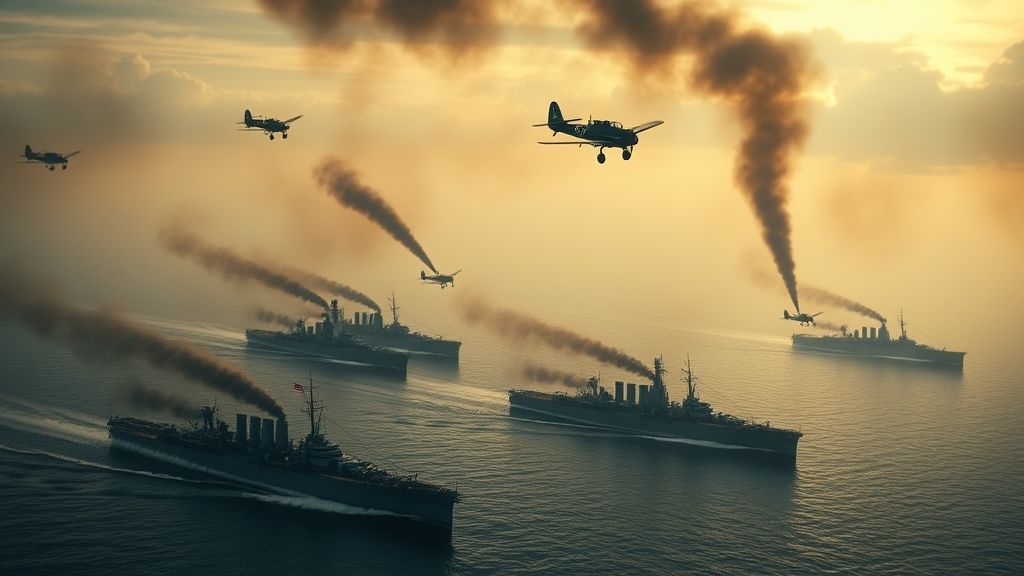
At 7:48 a.m., radar stations picked up unidentified aircraft, but the warnings were delayed and dismissed; the planes were presumed to be American B-17s arriving. Then, shortly after, clouds darkened the sky as the first wave of 183 Japanese warplanes descended — torpedo bombers, dive-bombers, and fighters.
Explosions rocked the base. Battleships erupted in flames; hangars were shredded; airfields turned into battlefields. The meticulous strike aimed at cratering the American fleet, igniting fuel storage, and wrecking aircraft on the tarmac.
Chaos and Courage: Stories from the Battleship Row
One after another, the battleships along Battleship Row bore the brunt of the assault. The USS Arizona, in particular, was catastrophically hit; a massive explosion tore through her magazine, sending her to a watery grave with over 1,100 men lost.
Yet amid devastating destruction, tales of heroism leapt forward. Sailors manned anti-aircraft guns under fire, medics tended to the wounded in collapsing buildings, and efforts to save ships and crew never ceased. These moments of courage flickered like beacons in a sea of destruction.
The Attack Unfolds: Aircraft Carriers, Battleships, and Airfields
Not all went according to plan for the Japanese. Their attack focused primarily on battleships and airfields; notably, aircraft carriers, which were to play pivotal roles later, were not in port and thus escaped destruction. This oversight would prove critical in the coming conflict.
The Oahu airfields—Ford Island, Wheeler Field, and others—were flooded with exploding bombs and strafing aircraft, crippling the island’s aerial defenses. In less than two hours, the attack, though relentless, concluded, leaving a trail of ruin and death.
Heroes Amidst Havoc: Acts of Valor in the Face of Catastrophe
Captain Mervyn Bennion of the USS West Virginia, despite mortal wounds, continued directing his crew to fight fires and control flooding. Doris "Dorie" Miller, a mess attendant with no formal gunnery training, took control of an anti-aircraft gun and shot down several enemy planes, becoming one of the first African American heroes in the war.
Such stories humanize the tragedy, bringing depth to the statistics — thousands of individuals caught in war’s crucible, answering with bravery and sacrifice.
Aftermath on the Water: Sinking Ships and Burning Oil
By the attack’s end, nearly 2,400 Americans were dead, 1,100 wounded, and battleships like the Arizona and Oklahoma had sunk. The harbor waters were stained red with oil and bodies, and massive fires continued to rage.
The physical costs were staggering: eight battleships, three cruisers, four destroyers damaged or destroyed, and more than 180 aircraft damaged or destroyed. The fleet was wounded but not broken—a critical fact that shaped the next phases of conflict.
Shockwaves Across America: Immediate Reactions and Emergency Orders
News of the bombardment raced across the United States like wildfire. For many Americans, the attack shattered illusions of distance from war. Shock gave way to outrage, grief, and resolve.
President Roosevelt addressed Congress the next day with the now-immortal words: "a date which will live in infamy." War was declared against Japan within hours, and the nation mobilized at a scale and speed unprecedented in peacetime history.
The Day That Changed the World: How Pearl Harbor Ended U.S. Isolationism
The attack swept away America’s isolationist stance in an instant. The country that had resisted war for decades found itself thrust into the heart of global conflict. Economic and military might were unleashed in support of an Allied cause.
Pearl Harbor demonstrated the vulnerability of even the mightiest powers and underscored the interconnectedness of global security. The United States was no longer an observer but a fulcrum of change.
Political Consequences: Roosevelt’s “Day of Infamy” Speech
Roosevelt’s address is a masterclass in rhetoric and leadership during crisis. His speech galvanized the nation, uniting divergent political factions behind a common purpose.
Congress’ overwhelming declaration of war reflected the simmering anger and the awareness that the United States faced an existential challenge. The speech and its aftermath also marked the transformation of Roosevelt into a wartime president, steering domestic and foreign priorities.
Japan’s Calculated Gamble: Successes and Strategic Failures
Japan’s surprise attack achieved tactical disaster for the U.S. fleet but was strategically a gamble. The failure to destroy American aircraft carriers and fuel depots left the Pacific Fleet’s backbone intact. Moreover, the attack united American public opinion decisively against Japan.
Historians debate whether the attack accelerated Japan’s eventual defeat by provoking a war with an industrial giant able to outproduce and outlast. Regardless, December 7 marked Japan’s fateful crossing of a point of no return.
The Global Ripple Effect: Allied Mobilization and Axis Response
Pearl Harbor intensified global conflict. Germany and Italy declared war on the United States shortly after, extending the battlefield to Europe and Africa. The Allied powers saw renewed hope with American engagement, while Axis powers faced fresh challenges.
This dynamic shifted the war’s momentum and set the stage for the long, brutal struggle that would last four more years.
Long-term Impact: Pearl Harbor’s Place in Collective Memory
Beyond the immediate, Pearl Harbor has settled deep into the world’s collective consciousness. It has become a symbol of vulnerability, sacrifice, and patriotism. Memorials and annual commemorations preserve the memory of those lost and remind future generations of the cost of war.
The event influenced military strategy, diplomacy, intelligence gathering, and the culture of remembrance in ways still apparent today.
Remembering December 7: Memorials, Museums, and Lessons
The USS Arizona Memorial, built above the sunken battleship, attracts millions, serving as a poignant site of reflection and peacekeeping. Museums on Oahu display artifacts and narratives that honor civilians and military personnel alike.
Educational programs ensure the lessons of Pearl Harbor — vigilance, unity, and humanity — continue to resonate.
Conclusion
Pearl Harbor is a profound chapter in the story of the twentieth century, a fusion of meticulous strategy, human error, and courageous response. It reveals how history hinges on moments of surprise and decision, and how nations respond to catastrophe shapes their identity.
The day’s tragic loss is forever matched by the resilience it inspired, turning horror into resolve and destruction into determination. Pearl Harbor reminds us that peace is fragile, that freedom demands vigilance, and that the human spirit shines brightest when faced with darkness.
FAQs
Q1: Why did Japan attack Pearl Harbor?
Japan sought to neutralize the Pacific Fleet to expand its empire unchallenged in Asia and the Pacific, especially given escalating tensions and economic sanctions imposed by the United States.
Q2: Could the attack on Pearl Harbor have been prevented?
While intelligence signs existed, failures in communication, interpretation, and readiness meant warnings were missed or underestimated, making prevention unlikely under the circumstances.
Q3: What was the immediate impact on the US Navy?
Eight battleships were damaged or sunk, over 180 aircraft destroyed, and approximately 2,400 personnel killed, causing a severe but not crippling blow to naval capability.
Q4: How did the American public react to the attack?
The attack unified the American people, quashing isolationism and sparking a surge of patriotism and support for entering World War II.
Q5: What role did the USS Arizona Memorial play?
It serves as a lasting tribute to those who died on the Arizona and is a focal point for remembrance and education about the attack’s human cost.
Q6: Did the attack affect the outcome of World War II?
It brought the US fully into the war, tipping the balance toward eventual Allied victory by unleashing American military and industrial power.
Q7: Were there any significant acts of heroism during the attack?
Yes, individuals like Doris Miller and Captain Bennion became iconic for their bravery under fire during the chaotic attack.
Q8: How is Pearl Harbor remembered today?
Through memorials, museums, ceremonies, and in popular culture, serving as a symbol of sacrifice and a cautionary tale about the costs of war.