Table of Contents
- The Dawn of a Long-Standing Conflict: The Avar Ring and Its Strategic Weight
- The Franks Under Charlemagne: A Kingdom Poised for Expansion
- Pannonia: The Crucible Where East Meets West
- The Avars: Masters of the Ring Fortifications and the Danube Frontier
- The Build-Up to War: Tensions Rising Between Franks and Avars
- 791: The First Frankish Forays into Avar Territory
- The Allies Join the Franks: A Coalition Forms
- Siege and Storm: The Frankish Assault on the Avar Ring
- The Tactics Behind the Siege: Innovation and Brutality
- The Fall of the Avar Ring: A Turning Point in Early Medieval Europe
- Resistance and Retreat: The Aftermath within Avar Ranks
- Carolingian Policies Post-Conquest: Integration and Control
- The Transformation of Pannonia: From Avar Stronghold to Frankish Province
- The Impact on the Danube Frontier and Eastern Europe
- Cultural and Societal Changes Triggered by the Conquest
- The Legacy of the Frankish-Avar Wars in Medieval History
- Charlemagne’s Vision Realized: The Making of a New European Order
- Anecdotes and Voices: Chroniclers’ Accounts of the Siege
- The Role of Technology and Siegecraft in the Campaign
- Economic Drives Behind the Campaign: Plunder, Tribute, and Control
- The Psychological Toll of the Storming: Human Stories from the Siege
- The Decline of the Avars: From Dominance to Dissolution
- The Broader Geopolitical Ripples Across Europe and Asia
- Reflection: Lessons from the Storming of the Avar Ring
- Conclusion: How the Siege Marked a New Chapter in European History
The Dawn of a Long-Standing Conflict: The Avar Ring and Its Strategic Weight
The late eighth century was a time of restless ambition and shifting boundaries. Stretching over the vast plains of the Pannonian Basin, the imposing Avar Ring fortifications loomed as both a formidable barrier and a symbol of power, harboring a fierce nomadic people—the Avars. These formidable earthworks, reinforced with timber and stone, had withstood the tests of time and war, guarding a hinterland rich with opportunity yet shrouded in the twilight of uncertainty.
Yet, in the turbulent dawn of the year 791, a coalition of forces under the Frankish king Charlemagne set their eyes firmly on this bastion. The campaign was not just a military endeavour but the manifestation of a broader clash of civilizations, ideologies, and visions for European dominion.
The Franks Under Charlemagne: A Kingdom Poised for Expansion
By the time Charlemagne assumed the Frankish throne, the kingdom was no stranger to warfare and conquest. The Carolingian dynasty had already established itself as the protector of Christendom, defending against external threats and weaving together disparate territories under a singular vision. But the Avars represented a unique challenge—a nomadic power deeply entrenched across the rich lands east of the Frankish realm, possessing both martial prowess and a cold cunning perfected over decades of tribal warfare.
For Charlemagne, the Avars were a threat—and an irresistible opportunity. Expansion into Pannonia promised not only territorial gain but access to lucrative trade routes and a chance to project Frankish influence deep into Central Europe. Yet, the path would be neither swift nor merciful.
Pannonia: The Crucible Where East Meets West
Pannonia, the sweeping basin straddling the Danube and today’s Hungary, was more than a mere geographic expanse; it was a cultural crossroads. The rivers whispered tales of Roman legacies, Slavic migrations, and the restless currents of nomadic tribes. The Avar Ring, a series of massive fortified earthworks, encircled vital strongholds that controlled the flow of trade, tribute, and armies.
Its fertile fields and strategic position had earned Pannonia a tumultuous history, and the fortress ring was the last line of defense for the Avars against encroachments from the West. The siege that unfolded here would decide not just who ruled the land, but which vision of Europe would prevail.
The Avars: Masters of the Ring Fortifications and the Danube Frontier
The Avars arrived in the Carpathian Basin in the late sixth century, swiftly establishing dominance through their mobility and ruthless raids. Their signature achievement lay in the construction of the “Ring Fortresses” – vast ditches and embankments reinforced with walls and watchtowers—designed to protect their capital and key settlements.
These fortifications were both military and symbolic, meant to intimidate neighboring peoples and safeguard the rigid Avar social order. Yet, encasing themselves within earthworks was also a sign of vulnerability: a shift from nomadic raiding to static defense.
As the Frankish tide approached, the Avar elites prepared themselves for what would become a siege like no other.
The Build-Up to War: Tensions Rising Between Franks and Avars
The late 8th century was rife with confrontations, predicated on cycles of raids and retaliations. The Avars frequently pressed into Frankish borderlands, plundering villages and rivaling local Slavic tribes for control. Charlemagne’s response was increasingly assertive, consolidated by a radical vision of a unified Christendom under Frankish hegemony.
The years preceding 791 witnessed mounting diplomatic friction, sporadic battles, and a careful orchestration of alliances. Notably, Charlemagne endeavored to unite Slavic and Bavarian allies—tribes long under Avar pressure—to bolster his campaign. The hour of reckoning loomed.
791: The First Frankish Forays into Avar Territory
In 791, the Frankish forces, bolstered by their newfound allies, crossed into Pannonia. The initial incursions were swift but cautious. Charlemagne employed a network of reconnaissance and scouts to map the formidable terrain, seeking weaknesses in the reputedly impregnable Avar ring.
This initial phase saw a series of raids and skirmishes meant to disorient and fracture Avar cohesion. Weathered warriors—some seasoned from campaigns in Saxony and Italy—brought a new style of warfare: disciplined formations, heavy cavalry charges, and siegecraft that were unfamiliar to the Avar horse archers.
The Allies Join the Franks: A Coalition Forms
Crucial to the Frankish success was the coalition of Bavarians, Slavs, and other tribal groups who had chafed under Avar dominance. These allies provided not just manpower but invaluable knowledge of the terrain and Avar tactics. For them, the Frankish campaign was a bid for liberation and retribution.
Weaving together these disparate forces required diplomatic skill and political promises from Charlemagne, including autonomy, spiritual protection, and protection from future raids. The unity of purpose among the Frankish-led coalition was a decisive factor as the siege preparations intensified.
Siege and Storm: The Frankish Assault on the Avar Ring
The spring of 795 marked the commencement of the prolonged siege of the Avar Ring. The Frankish armies surrounded the colossal earthworks with a sense of calculated inevitability. For weeks, they encamped, cutting supply routes and bombarding the walls with an array of siege engines—catapults, ballistae, and battering rams slowly eroded the fortifications.
Chroniclers of the time speak of tremendous exertion and suffering, both among besiegers and defenders. The Avars, outnumbered but fiercely determined, launched sorties, fiercely resisting the Frankish advances.
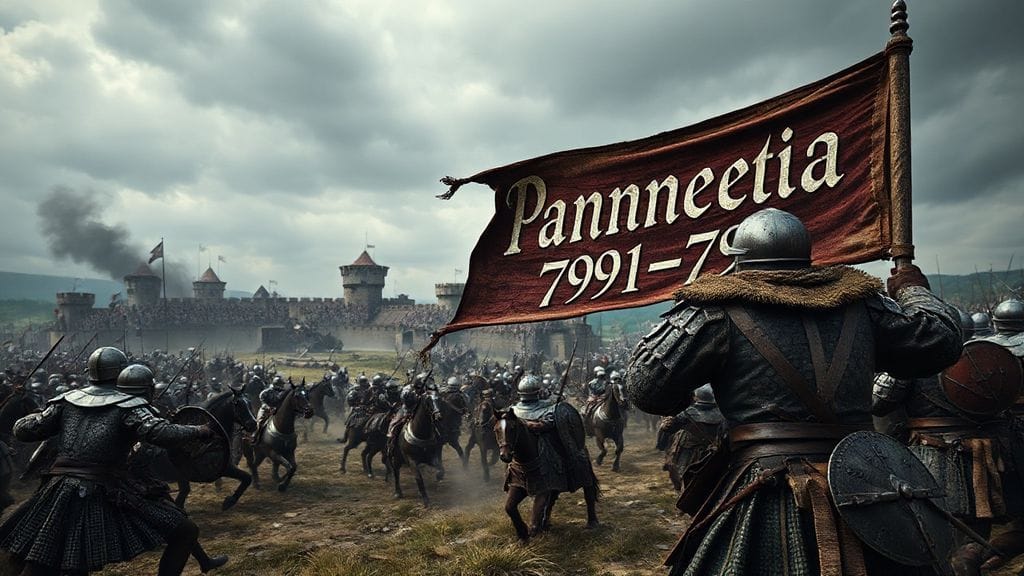
Then came the pivotal moment: a well-coordinated assault breached the defenses. The storming of the ring was brutal—hand-to-hand combat amid the ramparts, cries of anguish, and triumph wrenched the fortress from Avar hands.
The Tactics Behind the Siege: Innovation and Brutality
What set the Frankish success apart was a blend of adaptive tactics and relentless discipline. Previously accustomed to quick raids, the Avars found themselves facing a methodical siege strategy that included psychological tactics such as nocturnal attacks and feints.
The Frankish cavalry played a vital role, their heavily armored knights breaking Avar cavalry charges and dominating the open plains outside the ring. Inside, engineers built intricate siege works fashioned around the earthen ramparts, slowly undermining the bastion’s structural integrity.
The Avars countered with their own tricks—raids at night, poisonous arrows, and the use of local terrain to their advantage—but the tide had turned.
The Fall of the Avar Ring: A Turning Point in Early Medieval Europe
By 796, the Frankish siege had succeeded decisively. The fall of the Avar Ring was seismic, not only because of the military victory but because it marked the collapse of a power that had shaped the region for centuries.
This victory allowed Frankish forces to penetrate deeper into the Carpathian Basin, shattering Avar political structures and dispersing their people. For Charlemagne, it was a triumphant step toward unifying a volatile Europe under a Christian hegemony.
Resistance and Retreat: The Aftermath within Avar Ranks
Although the stronghold had fallen, the Avar resistance did not evaporate overnight. Pockets of warriors and chieftains fled to less accessible regions, trying to maintain their way of life in the face of expansionist forces.
The social fabric of the Avars began to unravel. With their leadership decimated and their lands occupied, many were assimilated, enslaved, or displaced. Medieval annals sometimes record desperate last stands and bitter betrayals, painting a saga of survival amid loss.
Carolingian Policies Post-Conquest: Integration and Control
Rather than simply annexing conquered lands, Charlemagne pursued a complex policy of integration. He established new counties and entrusted local governors to oversee the transition. Christian missionaries accompanied the armies, seeking to convert the Avars and their allies.
This approach smoothed the way for lasting Frankish control, blending military power with cultural and religious transformation—a hallmark of Carolingian statecraft.
The Transformation of Pannonia: From Avar Stronghold to Frankish Province
With the walls of the Avar Ring broken, Pannonia began a dramatic metamorphosis. Frankish law replaced customs, Latin became the language of administration, and new settlements emerged across the basin.
Trade blossomed under the protection of the Carolingian Empire, linking the region more tightly to Western Europe. The fusion of local traditions with Frankish governance laid foundations for medieval Hungary and the broader Central European identity.
The Impact on the Danube Frontier and Eastern Europe
The conquest reverberated far beyond Pannonia. Control of the Danube frontier gave the Franks strategic vantage points, allowing them to monitor and influence the Slavic tribes and even the rising Bulgarian Empire.
The collapse of Avar power created a power vacuum, encouraging migrations and shifting alliances that would reshape early medieval geopolitics for decades.
Cultural and Societal Changes Triggered by the Conquest
The imposing presence of Frankish culture altered the social landscape. Christianity spread rapidly, supplanting Avar shamanistic practices and pagan rites. The ring fortresses, symbols of Avar authority, gave way to ecclesiastical centers and Carolingian-style castles.
New trade networks, agricultural techniques, and crafts followed, accelerating the region’s integration into the medieval European fabric.
The Legacy of the Frankish-Avar Wars in Medieval History
The Frankish storming of the Avar Ring became a touchstone in medieval historiography. It symbolized the triumph of organized Christian monarchies over nomadic polities and heralded the dawn of the empire-building era.
Subsequent generations remembered the siege as a mixture of heroic conquest and tragic upheaval—a reminder of the complexity of power and identity in the medieval world.
Charlemagne’s Vision Realized: The Making of a New European Order
For Charlemagne, the campaign was more than territorial expansion; it was part of a grand design to unite Europe under Christian rule and a centralized polity. The victory over the Avars secured his eastern flank, allowing him to focus on further conquests and reforms.
The siege exemplified the emerging medieval state’s strength—blending military might, diplomacy, and religious authority into a pioneering imperial vision.
Anecdotes and Voices: Chroniclers’ Accounts of the Siege
Contemporary and near-contemporary sources, such as the Royal Frankish Annals, paint vivid portraits of the siege. They tell of fierce warriors, cunning generals, and the harrowing ordeal of siege warfare.
One chronicler recounts how a Frankish engineer, defying danger, led a mining operation beneath the ring walls, a feat that turned the tide of the battle. Another details the despair of Avar families trapped within, highlighting the human cost.
The Role of Technology and Siegecraft in the Campaign
The campaign witnessed a fusion of traditional Frankish cavalry and infantry with newly developed siege technologies. The use of pallisades, siege towers, and mining techniques signaled a shift in medieval warfare—one that could bring down fortified earthworks and disrupt nomadic mobility.
This blend of mobility and mechanical ingenuity proved decisive and influenced subsequent medieval military enterprises.
Economic Drives Behind the Campaign: Plunder, Tribute, and Control
Beyond strategic and religious motives, the campaign was fueled by economic incentives. The Avar lands were rich in resources, including fertile fields, animal husbandry, and control over trade routes connecting East and West.
The establishment of Frankish control facilitated tribute extraction and opened new markets, underpinning the Carolingian economy’s growth.
The Psychological Toll of the Storming: Human Stories from the Siege
Sieges are crucibles of human endurance and despair. Accounts reveal the siege’s brutal psychological impact on both sides—starvation, disease, and fear gnawed at the defenders, while exhaustion and relentless vigilance plagued the attackers.
The storming of the ring was not merely a military event but a profound human tragedy, the echoes of which shaped survivor narratives and oral traditions.
The Decline of the Avars: From Dominance to Dissolution
Once masters of Pannonia, the Avars’ defeat precipitated their decline. Over the coming decades, the remnants either assimilated into Slavic populations or were absorbed by the expanding Frankish realm.
This decline removed a significant player from the European chessboard, setting the stage for new powers and identities in Central Europe.
The Broader Geopolitical Ripples Across Europe and Asia
The attack on the Avar Ring sent shockwaves beyond Europe’s heartland. Neighboring empires and tribes eyed the shifting power dynamics warily, recalibrating alliances and enmities.
The Byzantine Empire, Bulgarians, and emerging Slavic states all adjusted strategies, while nomadic peoples in the Eurasian steppes watched the Frankish rise with equal parts apprehension and intrigue.
Reflection: Lessons from the Storming of the Avar Ring
The siege of the Avar Ring reminds us that the medieval period was an era of intense transformation—where old powers gave way to new orders. It highlights the entwining of culture, technology, politics, and human endeavor.
From this historic crucible emerged a Europe reshaped, a testament to the resilience and complexity of its peoples.
Conclusion
The storming of the Avar Ring between 791 and 796 was not merely a military conquest; it was a formative event that redrew the map of Europe and reshaped its destinies. Charlemagne’s vision collided with the resolute Avars in a brutal, epic confrontation—a saga of ambition, resilience, and transformation.
This campaign stands at the crossroads of history, illustrating how borders, cultures, and kingdoms evolve amid conflict and alliance. It tells us that the past is never just distant; it is a living story etched in battlefields and hearts alike.
Beyond the stones of the ring and the bloodshed of the siege lies a profound lesson: empires rise and fall, but the human spirit endures, crafting new worlds from the ruins of the old.
FAQs
Q1: Who were the Avars, and why were they significant?
The Avars were a nomadic people who established a powerful polity in the Carpathian Basin from the 6th to the 8th century. Their control of the region, fortified by the famous Avar Rings, made them a dominant military and political force in early medieval Central Europe.
Q2: What motivated Charlemagne to attack the Avar Ring?
Charlemagne aimed to secure his eastern borders, expand the Frankish realm, spread Christianity, and access the prosperous lands and trade routes of Pannonia controlled by the Avars.
Q3: How did the Frankish alliance with local tribes influence the campaign?
Allied support from Bavarians, Slavs, and other tribal groups provided critical manpower, regional knowledge, and strategic cooperation that undermined Avar dominance and contributed decisively to the siege success.
Q4: What technological innovations helped the Franks in the siege?
The Frankish forces employed siege engines like catapults and battering rams, mining operations beneath fortifications, and disciplined cavalry tactics, marking an evolution in siegecraft that outmatched traditional Avar defenses.
Q5: What were the consequences of the Avar Ring’s fall?
The defeat led to the collapse of Avar political power, incorporation of Pannonia into the Carolingian Empire, cultural and religious transformation, and significant shifts in Central European geopolitics.
Q6: How is the siege remembered in medieval chronicles?
Medieval chroniclers depicted the event as a heroic Frankish victory and a tragic downfall for the Avars, highlighting both the military prowess involved and the human suffering endured during the siege.
Q7: Did the conquest affect neighboring powers?
Yes. The weakening of the Avars affected Byzantine, Bulgarian, and Slavic realms, prompting new diplomatic and military maneuvering across Eastern Europe and the Eurasian steppes.
Q8: What legacy did Charlemagne’s campaign leave in Europe?
It set the stage for the Carolingian Empire’s dominance, spread Christianity deeper into Central Europe, and catalyzed the fusion of cultures that would define medieval European civilization.

