Table of Contents
- The Dawn of January 13, 1915: A Silent Threat Lurks
- Avezzano and Its Place in Early 20th Century Italy
- Geological Fault Lines: Italy’s Sleeping Giants
- The Morning of Catastrophe: Unfolding Disaster at 7:52 AM
- The Immediate Aftermath: Destruction, Panic, and Despair
- Human Stories in the Rubble: Survivors and Their Plight
- The Town of Avezzano: Reduced to Rubble
- Italy’s Response: Government, Military, and Aid Efforts
- International Reactions and Humanitarian Outreach
- Scientific Understanding: Seismology in the Age of Tragedy
- Rebuilding a City: Reconstruction Efforts and Urban Renewal
- Political Reverberations: Natural Disaster Amidst a Pre-War Europe
- The Toll of the Earthquake: Death, Displacement, and Demographic Changes
- Memory and Memorials: How Italy Remembers 1915’s Cataclysm
- The Earthquake’s Impact on Modern Seismic Policies in Italy
- The Avezzano Earthquake in Historical Perspective
- Lessons Learned: The Intersection of Nature, Society, and Preparedness
- Conclusion: Tragedy as Transformation
- FAQs: Unpacking the Avezzano Earthquake
- External Resource
- Internal Link
1. The Dawn of January 13, 1915: A Silent Threat Lurks
On the early morning of January 13, 1915, in the quiet plains of the Abruzzo region of central Italy, a silence as deep and heavy as the winter fog blanketed the town of Avezzano. The cold air was crisp, and life had yet to awaken fully to the promises of a new year. Unbeknownst to its inhabitants, a shadow was about to descend—a monstrous force lurking in the earth beneath their feet.
Suddenly, at precisely 7:52 AM, a violent tremor ripped through the landscape. In a matter of seconds that would stretch into eternal agony, the earth convulsed, swallowing homes, churches, and lives under collapsing stone and dust. The infamous Avezzano earthquake had begun—its catastrophic force would not only reshape the city but would remake the destiny of its region and ripple through the entire nation’s consciousness.
2. Avezzano and Its Place in Early 20th Century Italy
To understand what was lost that day in Avezzano, one must first envision the town itself. Nestled in the fertile Fucino plain—once a vast, drained lakebed—Avezzano was a vibrant center of agricultural prosperity. In the early 20th century, Italy was a country on the cusp of transformation. Industrialization was advancing, yet rural towns like Avezzano remained deeply tied to the rhythms of the land and local community structures.
With a population of roughly 11,000, Avezzano was a patchwork of stone homes, churches, and workshops, all interlaced by narrow streets and vibrant piazzas. It boasted a rich cultural heritage and a proud civic identity. Italy, meanwhile, was grappling with political instability, economic shifts, and looming global conflicts. In many ways, Avezzano’s fortune was symbolic of these broader national dynamics, straddling tradition and modernity.
3. Geological Fault Lines: Italy’s Sleeping Giants
Italy’s seismic activity is no stranger to history; the country straddles the complex collision zone between the African and Eurasian tectonic plates. This ongoing clash has fashioned not only mountainous landscapes like the Apennines but also set the stage for recurrent earthquakes.
The Fucino area rested on a network of faults, among which the Marsican fault stood deadly silent and poised. Despite centuries of occasional tremors, seismic science in 1915 remained in its infancy. Early warning systems, emergency preparedness, and building codes were rudimentary or nonexistent. The earth’s tension was accumulating below—a ticking bomb that many did not foresee or understand.
4. The Morning of Catastrophe: Unfolding Disaster at 7:52 AM
At 7:52 on that fateful January morning, the ground beneath Avezzano tore open violently. The shockwave radiated outward from the epicenter near the Fucino basin, shaking nearby towns with brutal intensity. The earthquake reached a magnitude of approximately 7.0 on the Richter scale, registering as a catastrophic event.
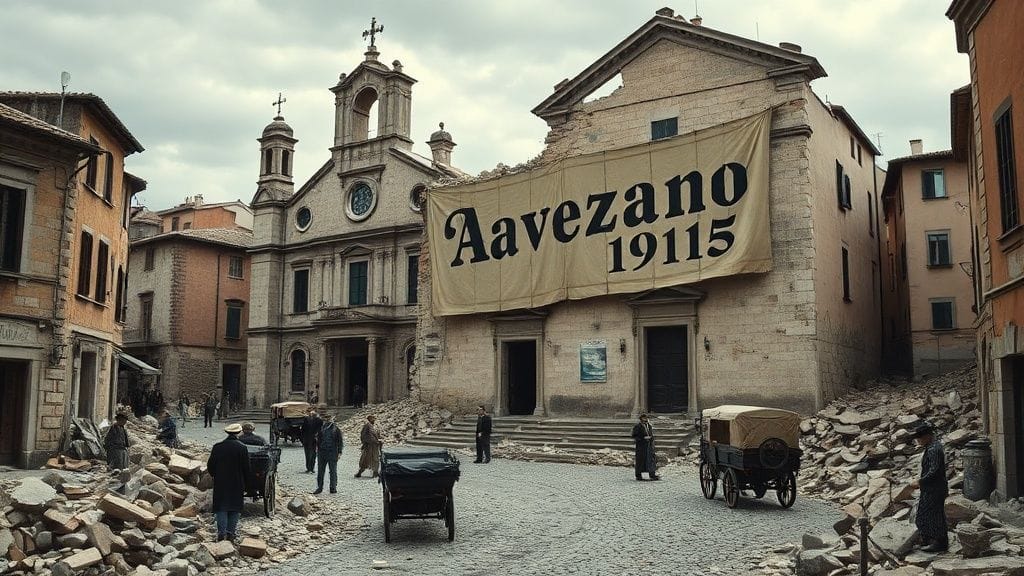
Buildings, many constructed of unreinforced masonry, collapsed instantly. The churches—pillars of communal and spiritual life—crumbled, their bell towers crashing down like giants felled in battle. Streets cracked and split, swallowing wooden carts, livestock, and terrified people alike.
Families were ripped apart in seconds. Teachers and students in schools perished under rubble. The deafening roar of collapsing stone and the screams of survivors created a nightmarish symphony.
5. The Immediate Aftermath: Destruction, Panic, and Despair
In the minutes and hours following the quake, the chaos was unimaginable. Survivors emerged, dazed and bloodied, from beneath the ruins. The air was thick with dust and smoke, mixing with the bitter cold of winter winds.
No water supplies were immediately accessible, and a freezing night was imminent with tens of thousands now homeless. Fires broke out in the debris, and aftershocks rattled the fragile remnants of the town. Communication lines were severed: telegraph wires were down, and many roads were impassable.
Disaster relief was slow to mobilize, hindered by damaged infrastructure and the scale of destruction. The full scope of casualties only gradually became apparent: approximately 30,000 perished, the vast majority within Avezzano itself, decimating nearly 90% of the town’s population.
6. Human Stories in the Rubble: Survivors and Their Plight
Amid the ruins, stories of survival illuminated the human spirit. Ellen Moretti, a local schoolteacher, recounted pulling children from under fallen desks. Soldiers from barracks nearby risked their lives to aid neighbors despite their own losses.
However, heartbreak was everywhere. Families lost entire generations in moments. Anecdotes speak of a midwife delivering babies under shattered walls, of an elderly couple clinging to life amid their collapsed home, and of displaced widows and orphans wandering the wreckage.
This human cost was staggering and profoundly personal, marking the community with scars that no reconstruction could erase.
7. The Town of Avezzano: Reduced to Rubble
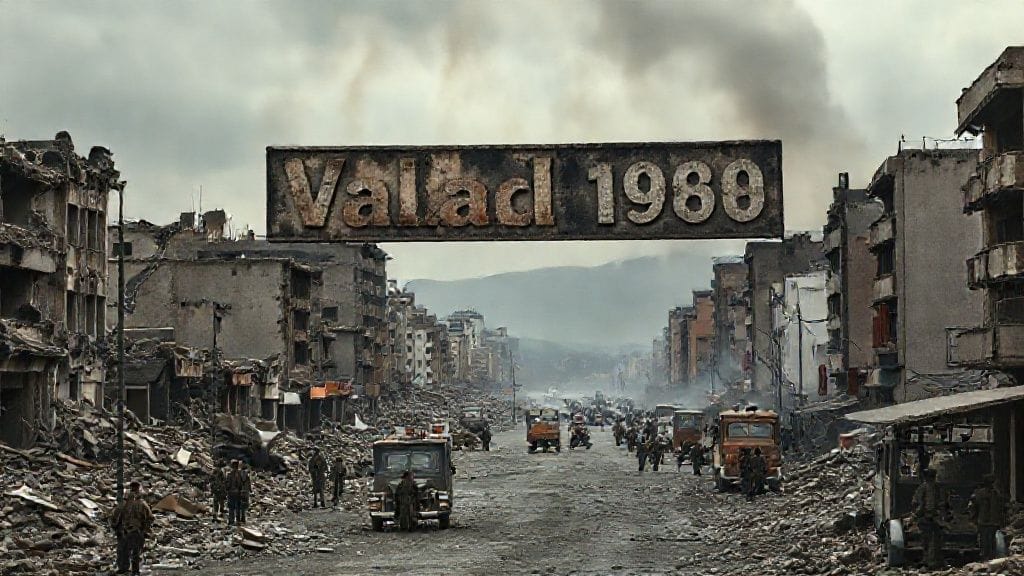
Once a bustling center, Avezzano lay almost entirely destroyed. Over 96% of its buildings had collapsed or were severely damaged. Its infrastructure—roads, bridges, churches, public buildings—was wiped out.
The physical ruins symbolized the emotional desolation. Decades of history, architecture, and cultural identity were buried beneath tons of debris. Efforts to clear the town began almost immediately but the scale of destruction was overwhelming.
Avezzano was a ghost town, a testament to nature’s indifferent power and the vulnerability of human endeavor.
8. Italy’s Response: Government, Military, and Aid Efforts
The Italian government faced an enormous challenge responding to the disaster while the country also confronted growing tensions preceding World War I. King Victor Emmanuel III personally ordered emergency aid, dispatching military units to help with rescue and relief.
Temporary hospitals were erected, and food and medical supplies rushed from Rome and other provinces. Yet logistical issues, harsh weather, and limited technology constrained rescue efforts.
Public officials learned painful lessons about disaster preparedness. The cracks in Italy’s emergency infrastructure were exposed as the nation mourned.
9. International Reactions and Humanitarian Outreach
News of the tragedy spread quickly across Europe and beyond. Governments, charitable organizations, and individuals sent donations and volunteers. The Red Cross coordinated much of the international relief effort.
Newspapers around the world ran harrowing accounts and photographs, arousing public sympathy. Italy’s predicament became a symbol of the vulnerability of peacetime societies to sudden natural calamity.
The disaster also stimulated early conversations about cross-national cooperation in humanitarian crises.
10. Scientific Understanding: Seismology in the Age of Tragedy
The Avezzano earthquake marked a turning point for seismology in Italy. Scientists meticulously studied the quake’s epicenter, aftershocks, and effects. It exposed gaps in the scientific community’s understanding of Italy’s complex faults.
Researchers like Giuseppe Mercalli refined their scales measuring earthquake intensity and pushed for improved monitoring. The tragedy underscored the urgent need for better predictive science and public safety measures to mitigate future disasters.
11. Rebuilding a City: Reconstruction Efforts and Urban Renewal
Rebuilding Avezzano was a monumental task. The government initiated reconstruction programs that would span years, involving modern urban planning and improved architectural standards designed to withstand earthquakes.
New infrastructure replaced the destroyed. Streets were widened, and seismic-resistant building techniques introduced. The rebirth of Avezzano was both a symbol of resilience and a technical innovation challenge.
Despite the immense losses, the rebuilt city sowed seeds of hope and renewal.
12. Political Reverberations: Natural Disaster Amidst a Pre-War Europe
The earthquake occurred in a Europe teetering on the brink of profound upheaval. Italy itself was soon drawn into World War I. The disaster’s timing complicated political dynamics, with emergency resources diverted and populations demoralized.
Some political factions blamed government inefficiency or neglect. The calamity exposed deeper social fractures—rural poverty, governmental centralization, and infrastructural weakness—that would echo through the coming decades.
13. The Toll of the Earthquake: Death, Displacement, and Demographic Changes
The immediate death toll of 30,000 souls was devastating for a small town and region. Entire families vanished in moments. The human and psychological impact extended to generations, as survivors grappled with loss, trauma, and displacement.
Many residents emigrated after the quake, reshaping local demographics and economies. The earthquake altered the Fucino basin’s peopling and socio-economic fabric permanently.
14. Memory and Memorials: How Italy Remembers 1915’s Cataclysm
In Avezzano and across Italy, the memory of the earthquake is preserved through monuments, museums, and annual commemorations. Public art and ceremonies honor victims and survivors alike.
Schools teach about the earthquake as a pivotal moment in Italian history. This collective remembrance reinforces a national narrative of overcoming adversity through solidarity and renewal.
15. The Earthquake’s Impact on Modern Seismic Policies in Italy
The destruction catalyzed reforms in Italy’s building codes and emergency planning. Greater emphasis was placed on seismic risk assessments, urban design, and public awareness.
The earthquake remains a reference point for policymakers, scientists, and emergency responders to this day. It helped shape Italy’s modern approach to disaster resilience, now crucial given the country’s ongoing seismic vulnerability.
16. The Avezzano Earthquake in Historical Perspective
Viewed in the broader sweep of history, the Avezzano earthquake stands as one of Italy’s deadliest natural disasters—not only for its tragic death toll but also for its profound societal impact.
It forces us to confront the frailty of human institutions before natural forces and the urgent necessity of preparedness. The event is an indelible chapter in the story of Italy’s 20th century, bridging tradition and modernity.
17. Lessons Learned: The Intersection of Nature, Society, and Preparedness
Avezzano offers timeless lessons: natural disasters are not only geological phenomena but deeply human tragedies. Scientific understanding, public policy, community solidarity, and memory all shape how societies weather adversity.
As climate change and urbanization alter risk landscapes globally, Avezzano’s story warns and inspires efforts to build resilient, informed communities.
18. Conclusion: Tragedy as Transformation
The scars left by the January 1915 earthquake are etched into the stones of Avezzano and into Italy’s collective memory. Yet from that devastation emerged renewal—of city, society, and scientific understanding.
This calamity reminds us of the fragile but unyielding bond between humans and the earth beneath them. In the trembling morning of that winter day, Avezzano was broken; but its story is ultimately one of resilience, hope, and humanity’s capacity to rise from the ruins.
19. FAQs: Unpacking the Avezzano Earthquake
Q1: What caused the 1915 Avezzano earthquake?
The earthquake was caused by a sudden movement along faults in the Fucino basin region, part of the tectonic convergence between the African and Eurasian plates.
Q2: How strong was the earthquake?
It registered an estimated magnitude of 7.0, with intense shaking that destroyed Avezzano and affected surrounding areas.
Q3: What was the death toll?
Approximately 30,000 people died, most of them in Avezzano, amounting to nearly 90% of the town’s population.
Q4: How did the Italian government respond?
The government mobilized military units, emergency services, and relief aid, though response was hampered by limited infrastructure and technology.
Q5: How did this earthquake influence seismic science?
It spurred advances in seismology and prompted reforms in monitoring, building codes, and public awareness about earthquake risks.
Q6: What lasting impact did the earthquake have on Avezzano?
The town was rebuilt with modern urban planning and seismic-safe construction, symbolizing resilience and innovation.
Q7: Are there memorials commemorating this disaster?
Yes, multiple monuments and annual ceremonies honor the victims, preserving collective memory in Avezzano and Italy.
Q8: How does the Avezzano earthquake inform contemporary disaster preparedness?
It serves as a historic warning, emphasizing the need for scientific readiness, infrastructure resilience, and community solidarity in seismic zones.