Table of Contents
- Introduction
- Childhood and Early Life in Bukhara
- Early Education and Prodigious Talent
- Mastery of Medicine at a Young Age
- Court Physician and Scholar
- Contributions to Philosophy
- The Canon of Medicine and Its Legacy
- Avicenna’s Influence on Europe
- Scientific Writings Beyond Medicine
- Political Intrigues and Wanderings
- The Scholar’s Character and Personality
- Teaching and Influence on Students
- Avicenna and Aristotelian Thought
- Relationship with Islamic Theology
- His Legacy in the Islamic World
- Avicenna’s Place in Western Philosophy
- Later Years and Death
- Memory and Cultural Recognition
- Why Avicenna Still Matters Today
- External Resource
- Internal Link
Introduction
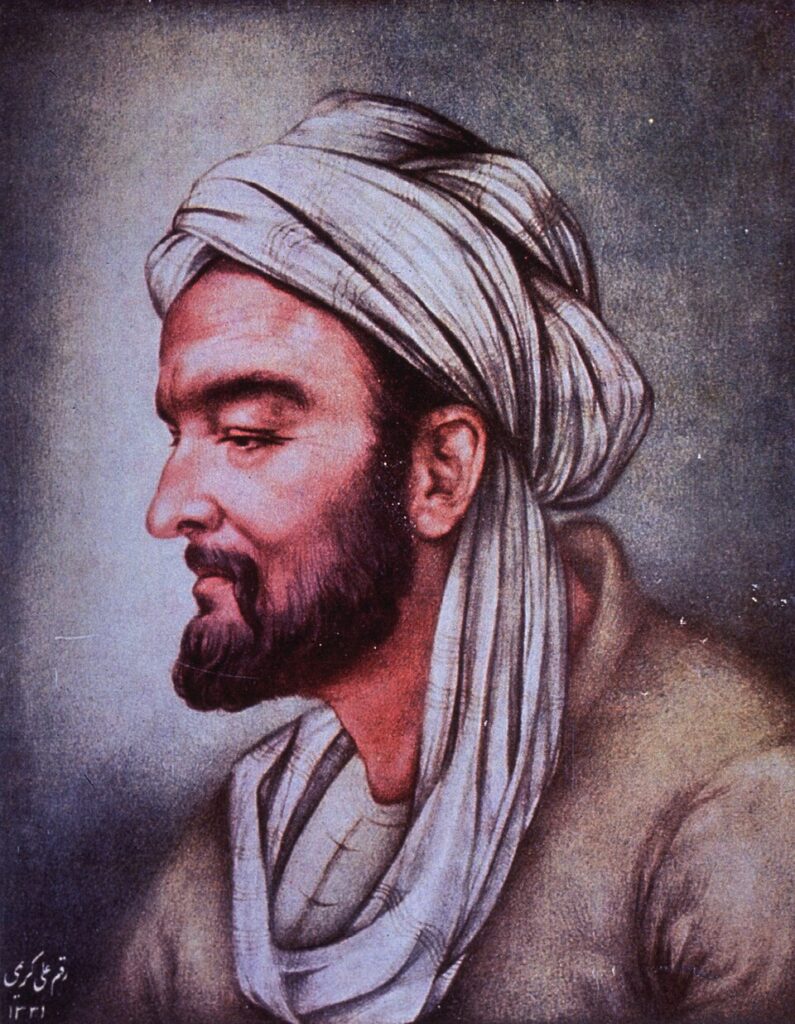
Avicenna (Ibn Sina), born on August 22, 980, in Bukhara (modern-day Uzbekistan), is one of the most influential thinkers of the Islamic Golden Age. A physician, philosopher, mathematician, and polymath, he wrote over 200 works covering medicine, metaphysics, astronomy, chemistry, and logic. His most famous text, The Canon of Medicine, remained a standard medical reference in Europe and the Islamic world for centuries.
Known as the “Prince of Physicians,” Avicenna combined Greek philosophy, Islamic thought, and empirical observation, creating a system of knowledge that bridged civilizations. His influence extended from medieval universities to Renaissance scholars, making him one of the most significant figures in intellectual history.
Childhood and Early Life in Bukhara
Avicenna was born into a family of scholars in Bukhara. His father, a respected official, encouraged his son’s education, and young Ibn Sina quickly revealed a voracious intellect, memorizing the Quran by age ten and mastering arithmetic, geometry, and logic before adolescence.
Early Education and Prodigious Talent
By his teenage years, Avicenna had already surpassed his teachers. He devoured works of philosophy and science, and at just 16, he turned his focus to medicine. His natural curiosity and methodical approach to learning allowed him to make discoveries that astonished seasoned physicians.
Mastery of Medicine at a Young Age
Avicenna claimed that medicine was “not hard,” and by 18 he had become a practicing physician. His reputation spread quickly, and his ability to diagnose and cure difficult cases won him fame. He treated royals and commoners alike, often refusing payment.
Court Physician and Scholar
His skill earned him a place at the court of the Samanid rulers, where he gained access to the royal library. Immersed in rare manuscripts, he expanded his knowledge and began composing his own works.
Contributions to Philosophy
Avicenna built upon Aristotle’s ideas but infused them with Islamic metaphysics, developing his own system of thought. He addressed questions of existence, the soul, and God’s nature, influencing both Islamic and Christian scholastic philosophy.
The Canon of Medicine and Its Legacy
His monumental Canon of Medicine (Al-Qanun fi al-Tibb) systematically organized medical knowledge. It described diseases, treatments, and pharmacology in an encyclopedic manner. Translated into Latin in the 12th century, it became a primary textbook in European medical schools for over 500 years.
Avicenna’s Influence on Europe
Through translations into Latin, Avicenna became one of the most cited authorities in medieval European universities. His writings shaped medical practice, philosophy, and theology, inspiring figures such as Thomas Aquinas.
Scientific Writings Beyond Medicine
Avicenna also wrote on astronomy, geology, mathematics, and music. He discussed concepts of motion and force that foreshadowed later developments in physics.
Political Intrigues and Wanderings
Avicenna’s career was not without turbulence. Political upheavals forced him to move between courts, sometimes living as a fugitive, other times serving as a trusted advisor. Despite instability, he continued writing prolifically.
The Scholar’s Character and Personality
Accounts describe Avicenna as energetic, ambitious, and confident. He enjoyed debate, music, and poetry, and was known for his persistence in solving problems, often working late into the night.
Teaching and Influence on Students
Avicenna trained many disciples, passing on his methods of rational inquiry and empirical observation. His influence spread through both personal instruction and his extensive writings.
Avicenna and Aristotelian Thought
He reinterpreted Aristotle’s philosophy within an Islamic framework, producing new insights into metaphysics and logic that bridged cultures.
Relationship with Islamic Theology
While Avicenna’s rationalist views sometimes clashed with orthodox theology, his integration of reason and faith inspired centuries of debate among Muslim scholars.
His Legacy in the Islamic World
In Persia and beyond, Avicenna became a symbol of intellectual brilliance. His works were copied, studied, and revered, and he was celebrated as one of the great masters of science and philosophy.
Avicenna’s Place in Western Philosophy
Through translations, Avicenna shaped European thought. His metaphysical ideas about essence and existence influenced scholastic philosophy and the works of Aquinas.
Later Years and Death
Avicenna spent his later years in Isfahan, where he continued teaching and writing. He died in 1037 at the age of 57, leaving behind a vast intellectual legacy.
Memory and Cultural Recognition
Today, Avicenna is honored in Iran, Uzbekistan, and across the Islamic world. His name graces universities, hospitals, and research institutions. Statues and memorials celebrate his enduring contributions to knowledge.
Why Avicenna Still Matters Today
Avicenna’s works remind us of the power of intellectual curiosity and cross-cultural exchange. His synthesis of science, philosophy, and medicine continues to inspire scholars worldwide.