Table of Contents
- The Spark of a New Era: Founding Baghdad in 762
- The Abbasid Revolution and the Birth of a Dynasty
- Selecting the Site: Why the Tigris River?
- Al-Mansur’s Vision: Crafting an Imperial Capital
- The Architectural Marvel: Planning the Round City
- The Builders and Artisans: Crafting Baghdad’s Identity
- Baghdad as a Political and Cultural Hub
- The Role of Baghdad in Islamic Governance
- Intellectual Blossoming: Baghdad’s Rise as a Center of Learning
- The House of Wisdom: A Beacon of Knowledge
- Baghdad’s Multi-Ethnic and Religious Mosaic
- Commerce and the Global Trade Networks
- Challenges and Dangers: The Early Years of Baghdad
- The Legacy of Baghdad’s Founding on the Islamic World
- Baghdad Through the Centuries: From Glory to Decline
- The Enduring Myth and Cultural Memory of Baghdad
- Conclusion: Baghdad’s Eternal Pulse in Human History
- FAQs: Understanding the Birth and Impact of Baghdad
- External Resource
- Internal Link
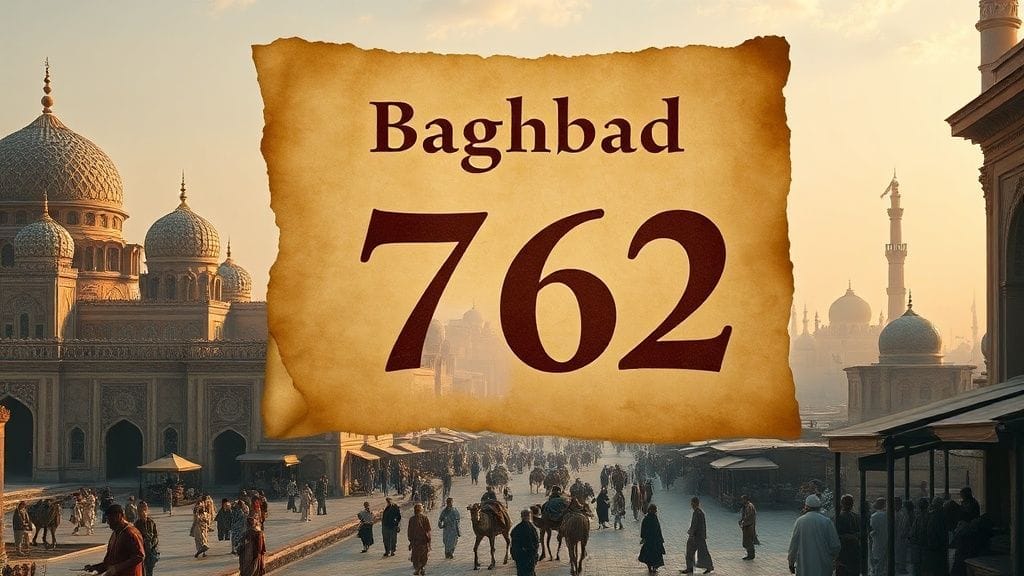
From the scorching summers of the Iraqi plains, where the Euphrates and Tigris wove their ancient coursing paths, a city unlike any other was born in the year 762. It began with the beating heart of ambition thrumming in the chest of one man: Caliph Al-Mansur. The founding of Baghdad was not just an act of urban construction; it was the birth of a symbol, a new imperial voice in the Islamic world—a city designed to embody the power, knowledge, and cosmopolitan spirit of a rising civilization.
The sun had barely dawned over the flatlands when the first stones were laid, marking a departure from old capitals and dynastic tradition. Baghdad arose steadfastly from dust and dreams, quickly weaving its name into the tapestry of history. As the "Round City" began to take shape, so too did a narrative of empire, intellect, and exchange, which would echo down the centuries as a beacon of civilization. But this was only the beginning…
The Spark of a New Era: Founding Baghdad in 762
The mid-8th century was a period of upheaval and transformation within the vast territories of the Islamic caliphate. The rise of the Abbasids had signaled a seismic shift in power from the Umayyads of Damascus to new hands rooted closer to the heart of Persia and Mesopotamia. The establishment of Baghdad as the imperial capital was both a strategic masterstroke and a visionary statement—a conscious break from the past and a seed for an unprecedented future.
To understand Baghdad's founding is to understand the context of vast ideological, political, and cultural currents that converged at that moment: one empire in flux, a new elite asserting dominance, and a world hungry for stability and grandeur. Baghdad was designed not just as a capital; it was destined to be a formidable cultural crucible.
The Abbasid Revolution and the Birth of a Dynasty
Before Baghdad crowned the Tigris banks, the Abbasid Caliphate was born in the blood and fire of revolution. The Abbasids claimed descent from Abbas ibn Abd al-Muttalib, the uncle of Prophet Muhammad, positioning themselves as rightful heirs against the perceived decadence and Arab-centric rule of the Umayyads.
Their uprising culminated in 750 with the overthrow of the Umayyad dynasty. Yet, power is more than conquest—it demands consolidation. For Caliph Abu Ja'far al-Mansur, the second Abbasid caliph, this meant building a new seat strong enough to project authority yet flexible for the new empire’s multi-ethnic reality. Baghdad was the answer.
Selecting the Site: Why the Tigris River?
Choosing the location was itself a statement. The site lay 30 kilometers north of the ancient city of Ctesiphon, once the grand imperial capital of the Sasanian Persian Empire. This was no accident. By founding the city near Ctesiphon, the Abbasids positioned themselves as heirs not only to Islamic tradition but also to the rich, layered imperial history of Mesopotamia—a land fertile in ideas, commerce, and power.
The Tigris provided essential water routes and trade arteries, while the flat plains allowed for grand designs beyond the cramped confines of older cities. Thus, Baghdad was set on a crossroads linking the East and West, encircled by the nourishing waters of two great rivers.
Al-Mansur’s Vision: Crafting an Imperial Capital
Caliph al-Mansur envisioned Baghdad as a city that could equal, if not eclipse, the grandeur of Roman Constantinople or Persian Ctesiphon. Yet, his vision was deeply pragmatic as well as symbolic. He commissioned the construction of a perfectly circular city, an architectural feat aimed to symbolize cosmic order and political unity.
This “Round City” was built with imposing walls stretching approximately 2 kilometers in diameter, fortified with massive gates facing the four cardinal directions. At its heart lay the caliph’s palace and the great mosque, symbolizing the fusion of state and religion in Abbasid governance.
It is said that al-Mansur walked daily through the walls of his new city, pride and expectation in his eyes—a ruler aware he was forging more than brick and mortar but the pulse of a civilization's heart.
The Architectural Marvel: Planning the Round City
The city’s geometric perfection was not an aesthete’s whim. The circular plan served defensive purposes and reflected the Abbasid aspiration for unity beneath heaven’s gaze. The layout created concentric control—from the caliph’s court outward to the merchants and craftsmen.
Craftsmen, architects, and engineers converged from across the empire—Persians, Arabs, and beyond—to labor on this vision. The walls, over 80 feet high, and the towers were reinforced with brick and baked clay, able to withstand siege and time.
Inside, the streets radiated like spokes from a central hub, facilitating administration and surveillance, but also the circulation of ideas, goods, and people—a tangible metaphor for the Abbasid Caliphate’s intended political and cultural order.
The Builders and Artisans: Crafting Baghdad’s Identity
Baghdad’s builders were a cosmopolitan mix—skilled Persian engineers blending Sasanian influences with Islamic tradition; Arab masons wielding knowledge passed through the desert; craftsmen from distant lands adding their crafts and colors.
Legend holds that the famous architect Naubakht, a Persian astrologer-engineer, was instrumental in aligning the city and the caliph’s palace with celestial forces—a blend of science and belief that underscored Abbasid ambition.
It was this mix of talents and backgrounds which seeded Baghdad’s later emergence as a melting pot—a city proud of its diversity, weaving identity through tolerance and innovation.
Baghdad as a Political and Cultural Hub
Soon after its foundation, Baghdad became the undeniable seat of power. The caliphs ruled with unprecedented centralized authority, their courts demanding loyalty and administering justice across vast territories reaching from North Africa to the Indian subcontinent.
But Baghdad was far more than politics. Its markets hummed with life; poets, philosophers, merchants, and theologians mingled alongside courtiers and soldiers. The city was a microcosm of the empire: diverse, dynamic, and ambitious.
Caliphs invested in infrastructure—irrigation systems, bridges, roadways, and public buildings—all designed to sustain the swelling urban population and to embody imperial grandeur.
The Role of Baghdad in Islamic Governance
Baghdad’s founding signified a shift from Arab tribal predominance to a more inclusive imperial model embracing Persian bureaucratic techniques and cosmopolitan governance. The city’s administrative system grew sophisticated: viziers managed affairs, courts administered law, tax officials recorded revenues.
This bureaucracy was supported by scribes fluent in multiple languages, reflecting the empire’s vastness and complexity. The city's centrality in the Islamic world also made it a focal point of religious authority, with leading scholars defining Islamic jurisprudence and theology under the caliphal patronage.
Intellectual Blossoming: Baghdad’s Rise as a Center of Learning
Few capitals have claimed the mantle of world knowledge as Baghdad did in subsequent centuries. Even in its infancy, the city attracted scholars of diverse disciplines—medicine, astronomy, mathematics, literature.
The Abbasids actively sponsored intellectual inquiry, collecting books and hosting debates. This appetite grew into the establishment of institutions that would bear the name “Bayt al-Hikmah” (House of Wisdom)—an academy and library unmatched for its time.
The knowledge preserved and developed in Baghdad fueled advances that resonated through medieval Europe and the Islamic world alike.
The House of Wisdom: A Beacon of Knowledge
The House of Wisdom became Baghdad’s most enduring symbol of enlightenment. Founded under Caliph al-Ma’mun in the 9th century but rooted in the city’s intellectual ferment from its earliest days, it gathered scholars from Greek, Persian, Indian, and Arab traditions.
Here, texts were translated, scientific principles studied, and original works composed. The legacy of Baghdad as a melting pot of philosophy, science, and literature rests partly in this grand institution’s shadow.
This chapter of Baghdad’s history helped preserve ancient knowledge, transform it, and disseminate it across continents.
Baghdad’s Multi-Ethnic and Religious Mosaic
Baghdad quickly transcended ethnic and religious divisions. Arabs, Persians, Kurds, Turks, Jews, Christians, and others made the city their home. While predominantly Muslim, Baghdad was also a place where Christian scholars thrived, Jewish poets wrote works of brilliance, and Zoroastrian remnants persisted.
The caliphal policies generally supported this pluralism as a method of governance and prosperity, though tensions and conflicts were never absent. This vibrant mosaic contributed richness and complexity to Baghdad’s cultural and social fabric.
Commerce and the Global Trade Networks
Strategically perched between Asia, Africa, and Europe, Baghdad soon became a hub on the Silk Road and vital trade routes linking the Indian Ocean to the Mediterranean.
Merchants dealt in textiles, spices, precious metals, and ideas. Massive markets and caravanserais flourished. The city’s wealth grew alongside its intellectual and political influence, supported by a financial system including early banking practices and complex contracts.
Baghdad truly became a node in a vibrant global network, sustaining its population and supporting imperial ambitions.
Challenges and Dangers: The Early Years of Baghdad
Despite grandeur, Baghdad’s growth carried risks. The Tigris floods threatened the city; political intrigue within the Abbasid court endangered stability. There were rebellions on the empire’s edges and internal power struggles between military factions and bureaucrats.
Despite such turmoil, Baghdad’s foundations endured, bolstered by pragmatic governance and infrastructural investments.
The city’s resilience was a testament to the vision of its founders and the spirit of its inhabitants.
The Legacy of Baghdad’s Founding on the Islamic World
Baghdad’s founding marked a turning point not only locally but also across the Islamic world. It established a new imperial identity—one defined by intellectual curiosity, bureaucratic sophistication, and cultural pluralism.
Future cities would emulate its blend of political authority and cultural vitality. The Abbasid capital shaped the identity of Islamic civilization’s golden age, setting standards still echoed in urban centers around the world today.
Baghdad Through the Centuries: From Glory to Decline
Though Baghdad’s founding launched an era of prosperity, centuries would bring challenges from Mongol invasions, shifting trade routes, and political fragmentation.
The city suffered destruction in 1258 during the Mongol sack—an event that stunned the medieval world. Yet, Baghdad revived repeatedly, a phoenix-city resonant with lost glory but enduring cultural relevance.
The Enduring Myth and Cultural Memory of Baghdad
Baghdad’s story transcends its physical walls. It has become a symbol of knowledge, cosmopolitanism, and human achievement—a city immortalized in tales like “One Thousand and One Nights,” and in the dreams of scholars and travelers.
Today, despite suffering modern hardships, Baghdad’s historical legacy continues to inspire generations with the promise of human creativity and resilience.
Conclusion
Baghdad was born not simply as a city of stone and sand, but as a living idea—a vision of empire where power met knowledge in a harmonious embrace. Its founding in 762 was a declaration of a new order, one that sought to unite diverse peoples under the banner of culture, scholarship, and governance.
The mark left by Baghdad on history is immense. It stands as a testament to civilization’s capacity to dream, build, and rebuild, even when faced with destruction and despair. From its elegant circular walls to its bustling souks and hallowed halls of learning, Baghdad’s pulse echoes the timeless human yearning for connection and understanding.
As we reflect on Baghdad’s birth and its centuries-long story, we glimpse the interwoven threads making up the fabric of human history—complex, fragile, and profoundly beautiful.
FAQs
1. Why was Baghdad founded as the Abbasid imperial capital?
Baghdad was founded to establish a new seat of power for the Abbasid Caliphate, strategically located near former Persian capitals to symbolize a new era of imperial authority and cultural synthesis.
2. Who was responsible for the founding of Baghdad?
Caliph Abu Ja’far al-Mansur (ruling from 754-775) was the mastermind behind Baghdad’s founding, commissioning the construction of the Round City to serve as the Abbasid capital.
3. What was unique about Baghdad’s architecture?
Baghdad’s Round City was unique for its perfect circular design with concentric walls, symbolizing cosmic order and political unity, and for combining Persian and Islamic architectural influences.
4. How did Baghdad contribute to science and knowledge?
Baghdad was home to the House of Wisdom, a major intellectual center where scholars translated, preserved, and expanded upon the world’s corpus of knowledge, fostering advances in medicine, astronomy, mathematics, and philosophy.
5. What role did Baghdad play in trade?
Baghdad became a critical hub in global commerce, connecting merchants along the Silk Road and trade routes spanning Asia, Africa, and Europe, facilitating exchange of goods, ideas, and cultures.
6. How did Baghdad’s multi-ethnic population influence its development?
The city’s diverse population fostered cultural and intellectual pluralism, making it a melting pot where multiple languages, religions, and traditions coexisted and enriched Baghdad’s social and cultural life.
7. What led to Baghdad’s decline?
Repeated destruction, notably the Mongol sack in 1258, changing trade dynamics, and internal political strife contributed to Baghdad’s decline, though the city has endured in varying forms up to the present day.
8. Why is Baghdad’s founding still important today?
Baghdad’s founding represents a monumental moment in human history, showcasing early urban planning, cross-cultural exchange, and the pursuit of knowledge—a legacy that continues to inspire understanding and unity.

