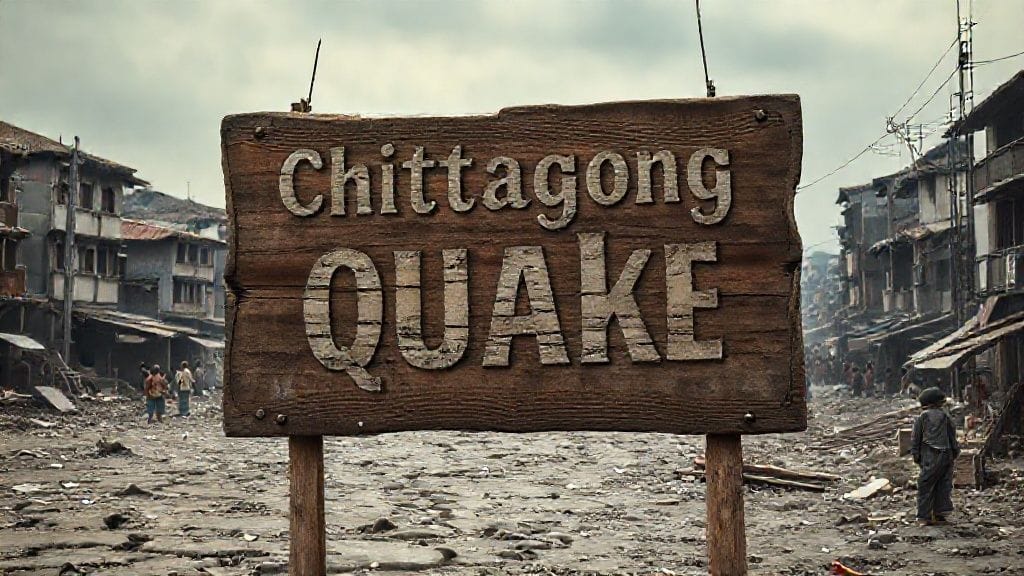
Table of Contents
- The Shattering Dawn: April 2, 1762
- The Historical Landscape of Bengal in the 18th Century
- Geological Origins: The Fury Beneath the Earth
- Humankind Ignored: Socio-Political Underpinnings of Vulnerability
- The Earth Trembles: The First Rumblings at Chittagong
- The Cataclysm Unfolds: A Chronology of April 2, 1762
- Ground Split and Tides Raised: The Physical Devastation
- Eyewitness Voices: Tales of Survival and Loss
- The Death Toll: Human Cost of the Disaster
- Economic Turmoil: The Impact on Bengal’s Wealth and Trade
- The Colonial Powers’ Response: British East India Company and Disaster Management
- Religion, Superstition, and Mythology: Interpretations of the Earthquake
- Environmental Consequences: Landscape and Ecology After the Quake
- The Ghosts of 1762: How the Earthquake Shaped Local Memory and Culture
- Seismic Lessons: Scientific Understanding in a Pre-Modern Era
- The 1762 Earthquake in Modern Seismology
- Comparative Catastrophes: The 1762 Event in the Global History of Earthquakes
- Preservation and Historical Records: Challenges in Documenting the Disaster
- The Long Shadow: How the Earthquake Influenced Future Policies in Bengal
- Conclusion: The Tremor That Echoed Through Centuries
- FAQs about the 1762 Bangladesh (Chittagong) Earthquake
- External Resource: Learn More on Wikipedia
- Internal Link: Visit History Sphere
The Shattering Dawn: April 2, 1762
The early morning air in the bustling port city of Chittagong was thick with the usual clamor of merchants and fishermen as dawn’s rosy fingers painted the horizon. Suddenly, the earth groaned beneath their feet—a sound so deep and terrible it seemed as if the world itself was breaking apart. Buildings shuddered violently; the river swelled unnaturally. In an instant, life was changed forever. This was no ordinary earthquake. It was the devastating Bengal earthquake of April 2, 1762, a calamity so ferocious that it left an indelible mark on the historical and geological memory of the region now known as Bangladesh.
The chaos, the terror, the destruction that unfolded that day unraveled a tragic tale of nature’s raw power intersecting with human vulnerability—a story long buried beneath the sediment of time, now resurrected to understand the magnitude of what occurred nearly three centuries ago.
The Historical Landscape of Bengal in the 18th Century
To truly grasp the significance of the 1762 earthquake, one must step back into the historical fabric of mid-18th century Bengal. This vast region, comprising present-day Bangladesh and parts of India, was a vibrant center of wealth, culture, and trade. Chittagong, strategically perched on the Bay of Bengal's coastline, served as a critical maritime hub connecting Southeast Asia with the Indian subcontinent.
The mid-1700s were a period of immense change. The Dutch, Portuguese, French, and British colonial presences jockeyed for control over trade routes. The British East India Company was rapidly expanding its dominance after the decisive Battle of Plassey in 1757, quietly consolidating power over Bengal, often at the expense of local rulers and indigenous authority.
Amidst this flux, the population and infrastructure of Bengal were ill-prepared to face natural disasters. Villages clustered close to rivers and coastal areas, dependent on fragile agriculture and the rhythms of monsoon cycles. Traditional belief systems entwined with emerging colonial influences created a complex socio-cultural landscape.
But the ground beneath them was shifting—both metaphorically in power, and literally beneath their feet.
Geological Origins: The Fury Beneath the Earth
Beneath the surface of Bengal lies an intricate and volatile confluence of tectonic plates—primarily the Indian Plate pushing northward against the Eurasian Plate. This ongoing collision has forged the majestic Himalayas and continues to cause substantial seismic activity in the region.
The Chittagong area sits near the boundary of the Burmese Arc, a tectonic juncture known for its instability. Historical seismic records and modern geological analysis reveal that the April 2, 1762, earthquake originated from a significant rupture in the deep fault lines threading through this zone, likely involving the Dauki fault system.
Scientists estimate the earthquake’s magnitude to be between 8.0 and 8.5 on the Richter scale—a colossal event by any standard, especially in an 18th-century context when vast urban centers existed but lacked modern structural resilience.
Humankind Ignored: Socio-Political Underpinnings of Vulnerability
In 1762, Bengal’s society was structurally unprepared for a disaster on this scale. The colonial administration had limited mechanisms for disaster management; local rulers were often overshadowed by mercantile interests. More damagingly, the population density in vulnerable areas was growing without urban planning, reinforcing exposure to natural hazards.
Peasant farmers tilled lands along riverbanks prone to flooding and erosion. The port city of Chittagong, built on deltaic alluvium, lacked foundations capable of withstanding any substantial shaking. Furthermore, superstitious and religious interpretations of natural phenomena often hindered pragmatic responses.
The British East India Company, embroiled in expanding trade and military conflicts, largely neglected the needs of the local populace in disaster preparedness. Their focus lay in political leverage, leaving a gap that nature was cruel enough to exploit brutally in the spring of 1762.
The Earth Trembles: The First Rumblings at Chittagong
It began with a subtle tremor, barely perceptible in the early morning twilight. Fishermen on the Karnaphuli River noticed ripples where the water should have been calm. A dozen heartbeats later, the earth’s convulsions deepened abruptly and violently.
Eyewitnesses described a thunderous roar, “like the heavens ripping apart” and the ground buckling uncontrollably. Well-rooted trees swayed with an unnatural lurch before splintering like kindling. Houses, many constructed from bamboo and mud, collapsed instantly.
In the streets, animals panicked and fled. A thick cloud of dust and debris hung over the city, blocking the rising sun and plunging the survivors into a surreal half-light.
The Cataclysm Unfolds: A Chronology of April 2, 1762
The earthquake did not merely strike once. Over the course of several minutes—possibly up to ten—seismic waves battered the landscape from Chittagong to the wider Bengal delta. Each tremor seemed more insistent than the last.
Reports speak of great fissures opening in the earth, swallowing homes and altering the courses of rivers. The Karnaphuli River surged backward temporarily; tidal waves—tsunamis in all but name—crashed against the shore, drowning coastal inhabitants.
Villages vanished overnight. The city’s densely packed docks were leveled, disrupting trade permanently in some quarters. Survivors wandered dazed among ruins as aftershocks shook the ground erratically for days.
Ground Split and Tides Raised: The Physical Devastation
Geologists have reconstructed the devastating physical impacts from historical accounts and sediment studies. An estimated 21 kilometers of ground ruptured along the Dauki fault line near Chittagong, causing vertical displacements between 4 to 11 meters in some locations.
Coastal subsidence—where land sank beneath sea level—was observed, leading to permanent flooding in parts of the delta. The sudden uplift of the seafloor displaced massive volumes of water, triggering tidal waves that raced inland, compounding human and material losses.
Villages buried in mudslides, bridges destroyed, and the fertile delta left scarred and unproductive: the very foundations of survival were shaken both literally and figuratively.
Eyewitness Voices: Tales of Survival and Loss
Among the trembling earth and howling winds, human stories emerged—small, personal accounts etched in the memory of survivors.
One merchant’s journal, discovered years later, spoke of clutching his family in the open market square, feeling the ground fold beneath him. “The river swallowed our boats like they were twigs,” he wrote, voice trembling. Others told of miraculous survivals—narrow escapes from collapsing homes, being pulled from beneath debris after hours.
But more commonly echoed the despair of the lost: entire families wiped out, helpless cries drowning in the chaos. “It was as if the sky had fallen,” a woman recounted. “No prayers could still the earth.”
These resonant human fragments bring poignancy to the scale of devastation.
The Death Toll: Human Cost of the Disaster
Estimating fatalities from the 1762 earthquake is a challenge shrouded in time’s haze. Contemporary sources note death tolls ranging from tens of thousands to upward of 300,000—an extraordinary figure reflecting not just the initial quake but the secondary effects like famine and disease.
Chittagong, densely populated and poorly constructed, suffered disproportionately. Meanwhile, rural areas faced devastation with fewer records but undoubtedly catastrophically.
The disaster represents one of the deadliest seismic events in South Asia’s history—a grim reminder of nature’s capacity to overwhelm even the most resourceful societies.
Economic Turmoil: The Impact on Bengal’s Wealth and Trade
Bengal’s prosperity was built on fertile lands and vibrant commerce. The earthquake fractured these carefully woven systems.
Trade routes faltered as port infrastructure collapsed. Agricultural production plummeted as fields were inundated or buried. The British East India Company, reliant on Bengal’s revenues, noted pronounced drops in tax income and commodity supply disruptions.
Merchant families, many of whom had invested in the port economy, found their fortunes shattered. For the millions of subsistence farmers and laborers, famine loomed after crops failed under altered landscapes.
This earthquake not only killed but crippled the region’s economic lifeblood.
The Colonial Powers’ Response: British East India Company and Disaster Management
In the aftermath, the British East India Company’s response was conspicuously limited. The Company’s primary aim was maintaining political and economic control, not providing humanitarian relief.
Records show some assessments were made, and limited funds allocated for rebuilding key ports—but the broader population suffered with little aid. The East India Company’s bureaucracies proved ill-equipped for large-scale disaster management.
Local rulers, religious leaders, and communities endeavored to fill the void, relying on traditional support systems rather than colonial aid.
Religion, Superstition, and Mythology: Interpretations of the Earthquake
In a time when scientific understanding of earthquakes was embryonic, many turned to religion and superstition for meaning.
Across Bengal, the quake was seen by some as divine wrath. Stories circulated that the gods were punishing the land for moral failings. Temples and shrines were reconstructed in earnest, and rituals intensified to placate spirits.
These interpretations influenced social behavior and the cultural memory of the event, coloring it with both fear and reverence.
Environmental Consequences: Landscape and Ecology After the Quake
Beyond human loss, the earthquake profoundly reshaped Bengal’s environment.
The shifting land altered river courses, including parts of the mighty Ganges-Brahmaputra delta system. Swamps expanded where land subsided, changing settlement patterns.
Vegetation zones shifted as salinity increased in some flooded areas. Fish populations in the coastal and riverine ecosystems also fluctuated, impacting fishing communities reliant on steady catches.
The ecological scars left a legacy still discernible centuries later.
The Ghosts of 1762: How the Earthquake Shaped Local Memory and Culture
Though centuries have passed, the 1762 earthquake resonates in local folklore and oral traditions.
Songs, stories, and festivals occasionally reference the trembling earth and the heroic survival of ancestors. In some villages, stone markers or memorial ponds serve as vague reminders of lost hamlets swallowed by the quake.
This cultural memory preserves a collective trauma—an inherited understanding of nature’s caprice that remains embedded in the region’s identity.
Seismic Lessons: Scientific Understanding in a Pre-Modern Era
In 1762, the science of seismology was virtually nonexistent. The event, however, provided valuable if tragically learned lessons for subsequent observers.
Natural philosophers and early geologists took note of the scale and effects, beginning a slow process of systematically studying earthquakes. Although scientific theories would evolve centuries later, the 1762 quake stands as a crucial historical data point.
It challenged scholars to consider the power of tectonics in the Indian subcontinent and contributed indirectly to modern seismic hazard evaluations.
The 1762 Earthquake in Modern Seismology
Today, the Bangladesh earthquake of April 2, 1762 stands as one of the most significant seismic events in South Asia’s recorded history.
Modern geologists use it as a case study to understand regional seismic risk and tectonic behavior along the Burmese and Himalayan arcs. Paleo-seismological research—analyses of sediment layers and fault activity—correlates with historical reports to estimate the quake’s magnitude and consequences.
This blending of history and geology reveals the enduring importance of the event for both science and policy.
Comparative Catastrophes: The 1762 Event in the Global History of Earthquakes
The Bengal earthquake ranks among the deadliest pre-modern earthquakes worldwide, comparable to the 1556 Shaanxi earthquake in China or the 1906 San Francisco quake in terms of fatalities and urban impact.
Understanding 1762 within this global context underscores the universality of seismic risk in human history, especially in regions where dense populations dwell precariously near fault lines.
Its lessons echo globally: the need for preparedness, resilient infrastructure, and attentive governance.
Preservation and Historical Records: Challenges in Documenting the Disaster
Documenting the 1762 earthquake is no simple task. Colonial paperwork, indigenous chronicles, folk memory, and geological evidence provide fragmented windows into the event.
Language barriers, loss of records, and biases in colonial documentation have all complicated the reconstruction of a cohesive narrative.
Nevertheless, historians and geologists collaborate to assemble the pieces, honoring the memory of the disaster while extracting insights for future generations.
The Long Shadow: How the Earthquake Influenced Future Policies in Bengal
Though the immediate responses were minimal, the earthquake eventually influenced administrative awareness of natural disasters.
Over time, colonial authorities began to recognize the strategic importance of disaster preparedness, particularly for protecting trade hubs. Infrastructure was eventually rebuilt with some improved standards, and early forms of hazard mapping emerged.
The quake, therefore, served as a harsh tutor, shaping later policies that balanced economic interests with human safety.
Conclusion: The Tremor That Echoed Through Centuries
The Bangladesh (Chittagong) earthquake of April 2, 1762, was far more than a geological event—it was a defining rupture that shook the physical landscape, the economic vitality, and the very spirit of its people.
Its tremors reverberated through history, shaping colonial policies, scientific thought, and cultural memory. The human stories of loss, resilience, and hope that arose amid the rubble create a timeless narrative about humanity’s complex dance with nature’s indomitable forces.
In understanding this disaster, we not only honor those who lived and perished but also acknowledge the enduring necessity to heed the restless earth beneath our feet.
FAQs about the 1762 Bangladesh (Chittagong) Earthquake
Q1: What caused the 1762 Bangladesh earthquake?
A1: It was caused by tectonic movements along the Dauki fault system near the boundary of the Indian and Eurasian plates, where the Indian Plate pushes northward, creating significant seismic pressure.
Q2: How strong was the earthquake?
A2: Modern estimates place its magnitude between 8.0 and 8.5 on the Richter scale, making it a profoundly powerful earthquake.
Q3: What were the main effects on the population?
A3: Thousands to possibly hundreds of thousands died, homes and infrastructure were destroyed, and the economic systems of Bengal, especially around Chittagong, faced severe disruption.
Q4: How did the British East India Company respond?
A4: Their response was limited and primarily focused on assessing damage to trade infrastructure, with little direct aid to the affected population.
Q5: Did the earthquake influence scientific understanding of seismic events?
A5: Yes, it became a crucial early case for natural philosophers studying large earthquakes in the region, contributing to the incremental development of seismology.
Q6: Has the earthquake’s impact persisted into modern times?
A6: The disaster’s environmental, social, and cultural legacies remain embedded in Bengal’s landscape and memory, and it informs current seismic hazard assessments.
Q7: Are there still physical traces of the 1762 earthquake?
A7: Geological studies have identified fault ruptures and land subsidence consistent with the quake, though urban expansion has altered some evidence.
Q8: How is the 1762 earthquake remembered culturally?
A8: Through oral traditions, folklore, and occasional memorial markers, especially in villages near Chittagong, the earthquake remains a significant chapter in local heritage.
External Resource: Learn More on Wikipedia
1762 Arakan earthquake – Wikipedia (Note: The earthquake is sometimes referred to as the 1762 Arakan earthquake encompassing the Chittagong region.)