Table of Contents
- Whispers Over a Ruined Land: Setting the Stage in Judea, 135 CE
- From Ashes of the Second Temple to Embers of Revolt
- Hadrian’s Grand Designs and the Seeds of Catastrophe
- The Rise of Bar Kokhba: From Obscurity to Messianic Hope
- A Judean State Reborn in War: Coins, Laws, and Dreams
- Rome Strikes Back: Legions, Generals, and a War Without Mercy
- The Long Siege of Betar: Blood on the Hilltop Fortress
- The Bar Kokhba Revolt End: Silence After the Last Cry
- Erasing Judea: Aelia Capitolina and the Banning of a People
- Scars on the Soul: Religious and Cultural Aftershocks
- Demography and Diaspora: From Homeland to Worldwide Exile
- Memory Under Censorship: Roman Sources, Rabbinic Whispers
- Heroes, Heretics, or Tragic Fools? The Many Faces of Bar Kokhba
- Archaeology of a Lost Revolt: Caves, Documents, and Human Traces
- From Ruin to Ritual: How Later Generations Mourned 135 CE
- Echoes in Modern Identity: Zionism, Nationhood, and Historical Lessons
- What the Bar Kokhba Revolt End Teaches About Empire and Resistance
- Conclusion
- FAQs
- External Resource
- Internal Link
Article Summary: In the late summer of 135 CE, the bar kokhba revolt end marked one of the most traumatic turning points in Judean and Jewish history. This article traces the long arc from the ruins of the Second Temple to the final, terrible fall of Betar, where the last defenders of the revolt died in a storm of Roman steel. It explores how imperial policies, religious hopes, and the desperate desire for autonomy collided to create a conflict that neither Rome nor Judea could easily abandon. Through narrative, analysis, and archaeological evidence, we follow Simon bar Kokhba’s meteoric rise and the brutal repression that followed his defeat. The story then widens to examine how the bar kokhba revolt end reshaped the land itself, as Judea became “Syria Palaestina” and Jerusalem was refounded as the pagan city Aelia Capitolina. Emotional and political consequences intertwined, pushing Jewish life into a more dispersed, text-centered form that would endure for centuries. Even as memory of the events flickered under censorship and trauma, later generations reimagined Bar Kokhba as hero, cautionary tale, and symbol. Ultimately, this article shows how the bar kokhba revolt end still speaks powerfully to questions of empire, resistance, and the cost of national dreams.
Whispers Over a Ruined Land: Setting the Stage in Judea, 135 CE
By the year 135 CE, Judea was no longer merely a province of the Roman Empire; it was a landscape of ghosts. Olive groves had been trampled under legionary sandals, terraces collapsed under siege engines, and villages that once rang with children’s shouts lay flattened, their stones scattered like the bones beneath them. Smoke still rose from some valleys, faint but persistent, a reminder that fires of resistance had only recently been extinguished. In the hill country southwest of Jerusalem, the ground around the ruined fortress of Betar was said to be so soaked with blood that, for years, vineyards would not grow. Whether this is literal truth or the later language of grief, it captures the mood of a province that had gambled everything and lost.
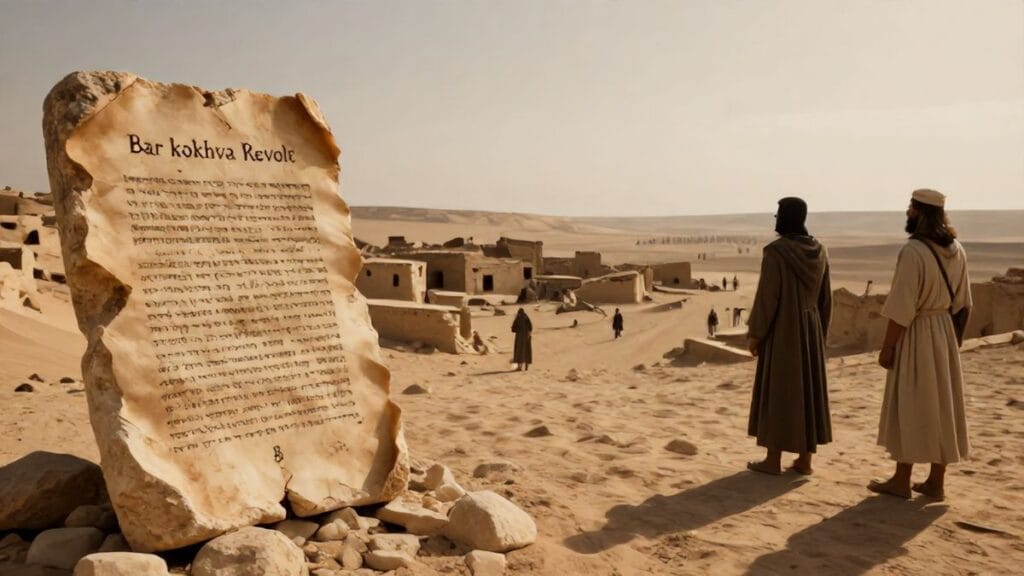
Roman soldiers marched along newly fortified roads, their armor glinting in the harsh Levantine sun. Detachments guarded bridges, crossroads, and the gates of a city that had once been called Jerusalem, but which now bore a different name—Aelia Capitolina. Jews were banned from its precincts except on one day of the year, Tisha B’Av, when they were allowed in to mourn the destruction of their Temple, paying for the bitter privilege. A sense of eerie quiet had fallen across Judea, a quiet that comes not from peace but from exhaustion. This was the stillness after the storm, the silence where the bar kokhba revolt end had left only a trail of absence.
In caves along the Dead Sea and the Judean desert, families hid scraps of parchment—contracts, letters, fragments of biblical scrolls—that testify to their desperate attempts to hold on to normal life amid the chaos. Some of these documents, excavated almost two thousand years later, bear mundane details: the rental of a palm grove, a dispute over a loan, the price of wheat. Between the lines, however, is the shadow of war. Names of men who served under the rebel leader, Simon bar Kokhba, appear with titles of command. Scribes date contracts according to “the year of the freedom of Israel,” bold words in a land increasingly encircled by Roman legions.
But in 135, such phrases had become dangerous relics. The imperial victory was nearly total. Hundreds of thousands were dead, if we believe Cassius Dio’s grim tallies, and many more sold into slavery. The social and religious elite of Judea had been decimated, villages leveled, and survivors scattered. The bar kokhba revolt end had not simply closed a chapter of resistance; it had rewritten the future of an entire people. To understand how this devastating end came to be, one must go back, not just to the first sparks of rebellion, but to the smoldering ruins of an earlier catastrophe: the destruction of the Second Temple in 70 CE.
From Ashes of the Second Temple to Embers of Revolt
Sixty-five years before the last cries at Betar, another flame had consumed Jerusalem. In 70 CE, during the First Jewish–Roman War, the forces of Titus—future emperor and son of Vespasian—had breached the city’s defenses and demolished the Second Temple. Its white stones toppled, its gold plundered, its sacred precinct burned. The trauma imprinted itself deeply on Jewish memory; Tisha B’Av, the ninth of Av, became forever associated with loss and fire. Judea survived as a province, but its spiritual heart had been torn out.
In the decades after 70 CE, Roman authorities imposed heavy taxes and stationed more troops in the region, wary of renewed insurrection. Yet they also allowed a measure of religious and communal life to continue. The center of Jewish scholarship shifted to Yavneh, and later to Usha and other Galilean towns, where rabbis attempted to reorganize Jewish life without the Temple, emphasizing prayer, study, and law. For many, the path forward lay in accommodation—keeping faith alive within the constraints of imperial rule.
But beneath this cautious adaptation lay currents of anger and hope that would not fully subside. The memory of the Temple’s grandeur and the longing for its restoration haunted prayers and songs. Apocalyptic texts circulated, envisioning divine intervention and the arrival of a messiah who would liberate Israel. Stories of the Maccabees, who had thrown off Seleucid rule two centuries earlier, were retold with fresh urgency. The land of Judea, though scarred by the earlier war, still nurtured the possibility that revolt could succeed again, under the right leader, at the right moment.
The Roman Empire, too, was changing. The Flavian dynasty that had overseen the destruction of Jerusalem gave way to new emperors. Some, like Trajan, embarked on ambitious eastern campaigns that stretched Roman power to its limits. During Trajan’s reign (98–117 CE), a series of Jewish uprisings broke out across the diaspora—from Cyrenaica to Cyprus to Mesopotamia—known as the Kitos War. These revolts were brutally crushed, leaving additional layers of tension between Rome and Jewish communities throughout the empire. By the time Hadrian ascended the imperial throne in 117 CE, the relationship was strained, precarious, and charged with the potential for further disaster.
Hadrian, a complex and intellectually inclined ruler, initially signaled a desire for conciliation. He reportedly considered allowing the Jews to rebuild the Temple, or at least entertained diplomacy with Judean leaders. For a brief moment, there was a fragile hope that the catastrophic path might be averted. But as the empire’s priorities shifted and Hadrian’s own ideological commitments hardened—especially his devotion to the Roman pantheon and the ideal of a uniform, Hellenized empire—these early possibilities gave way to decisions that would ignite the next great conflagration.
Hadrian’s Grand Designs and the Seeds of Catastrophe
Hadrian was not a crude tyrant; he was, in many ways, an architect of visions. He traveled widely, inspected provinces, and left behind a trail of monumental building projects. He loved Greek culture, philosophy, and the idea of a cohesive empire united not only by force of arms but by shared civic and religious forms. His reign saw the construction of temples, theaters, and cities that bore his own name—Aelia—like stamps of imperial identity pressed into local soils.
In Judea, this impulse to reshape the landscape and its loyalties took an especially fateful form. Plans emerged to refound Jerusalem, destroyed and partially abandoned since 70 CE, as a Roman colony called Aelia Capitolina. This new city would be dedicated to Jupiter Capitolinus, crowned by a temple to the emperor’s gods. For Hadrian, this was orderly and rational: a ruined provincial capital reborn as a loyal Roman polis. For many Jews, it was an act of sacrilege, a deliberate desecration of their holiest city and erasure of its sacred history.
At roughly the same time, Hadrian issued or enforced a ban on circumcision, framing it as a barbaric mutilation inconsistent with Roman notions of bodily integrity. Circumcision, however, lay at the very core of Jewish religious identity—a physical sign of the covenant between God and Abraham, renewed with each generation. To outlaw it was more than a regulatory measure; it was an assault on the possibility of raising Jewish sons in accordance with ancestral law. Cassius Dio, the Roman historian, would later summarize the effect in a terse, chilling line: “At this time the Jews began war, because they were forbidden to mutilate their genitals.”
These decisions were not made in a vacuum. Hadrian likely perceived Judea as a troublesome region with a history of rebellion and an ideology that resisted assimilation. By tightening the grip—replacing Jerusalem with a Roman city, suppressing distinctive practices—he hoped to neutralize future threats. But his policies had the opposite effect. They transformed simmering resentment into combustible rage. Rumors of the new city and the ban on circumcision spread through villages and synagogues. Rebukes that had once been whispered about Rome’s rule took on a sharper tone. Prayers for deliverance gained an almost palpable urgency.
In the shadows of this mounting crisis, figures were already taking shape: local leaders, military organizers, religious authorities who believed the time for another uprising had come. Among them, a relatively obscure man from the Judean hill country would soon step into the role of a lifetime—one that his followers would interpret in messianic terms. His name was Simon ben Kosiba. History would remember him by another name: Bar Kokhba, “Son of the Star.”
The Rise of Bar Kokhba: From Obscurity to Messianic Hope
Simon ben Kosiba did not begin as a legend. He likely grew up in the rugged terrain of Judea, a region of terraces and stone dwellings, where endurance was a daily necessity. The sources are frustratingly sparse on his early life, but his later career suggests a man of unusual charisma, organizational ability, and steely resolve. In the desperate political climate of the 120s and early 130s, such qualities would prove magnetic.
By the time the revolt broke out around 132 CE, Bar Kosiba had forged alliances with local leaders and, crucially, gained the backing—or at least the initial endorsement—of important rabbinic figures. The most famous among them was Rabbi Akiva, one of the greatest sages of his generation, who, according to later rabbinic tradition, hailed Bar Kosiba as the potential messiah, applying to him the verse from Numbers, “A star shall come out of Jacob.” Hence the name Bar Kokhba, “Son of the Star,” a title shimmering with apocalyptic expectation.
The messianic aura surrounding Bar Kokhba was not a mere poetic flourish; it was a political engine. In a society where prophecy, scripture, and national destiny intertwined, being named a possible messiah lent Bar Kokhba a near-sacred authority. Men and women were more likely to sacrifice everything—not just for an able commander, but for the one who might finally fulfill the ancient promise of redemption. It is astonishing, isn’t it, how a name can become a banner and a prophecy at once?
Even Roman sources, though hostile, acknowledge the formidable leadership of Bar Kokhba. Cassius Dio notes that he “had unusual strength and renown,” suggesting a figure who impressed even his enemies. Letters discovered in the Judean desert, written in his own name, reveal a hard, demanding leader concerned with discipline, supply, and absolute loyalty. One letter famously orders subordinates to send palm branches and citrons for the festival of Sukkot—on pain of being “punished” if they fail to comply. In this short command, we see a man who insists on maintaining religious rituals even amid war, and who tolerates no laxity.
When the revolt finally erupted, it did so with stunning coordination. Roman garrisons were attacked, roads cut, communications disrupted. Judean forces seized control of significant territory, including strategic strongholds. For the first time since 70 CE, it seemed that Judea might not only resist Rome but briefly reclaim something like independence. Bar Kokhba emerged from this chaos not as a rebel among many, but as the central figure of a newly resurrected polity—a ruler in everything but name, ruling in defiance of the greatest empire on earth.
A Judean State Reborn in War: Coins, Laws, and Dreams
Revolts often leave behind only ruins. The Bar Kokhba uprising, however, left something more: evidence of an attempted state. One of the most striking legacies of this short-lived Judean independence is its coinage. Rebels took existing Roman coins and overstruck them with new designs and inscriptions. Instead of imperial portraits, they stamped images of the Temple façade, lyres, palm branches, and the words “For the Freedom of Jerusalem” or “For the Freedom of Israel.” These coins are tiny declarations of sovereignty, defiant counter-arguments to the image of Caesar.
Such coinage serves not just as currency but as propaganda. Each piece that passed from hand to hand told a story of liberation, of a people who refused to accept Rome’s version of reality. It proclaimed: Judea lives, Jerusalem will rise again. The nerve it took to mint such tokens, while Roman legions maneuvered nearby, speaks volumes about the confidence—or desperation—of the rebel leadership. For a fleeting moment, the rebels wielded enough power to enforce their will on everyday exchanges, to make the symbol of revolt an object nestled in every purse.
In the hinterlands and fortified towns, Bar Kokhba’s administration collected taxes, issued orders, and tried to keep agriculture running. Letters from the caves reveal a concern with grain, wine, oil, and the provisioning of troops. Underneath the drama of battles, there was a bureaucratic struggle: to keep fields tilled, to ensure that festivals were observed, to maintain Jewish law even in wartime. If this was a messianic age, it was one conducted through ration lists, supply routes, and strict directives.
Socially, the revolt drew recruits from across Judean society: peasants and artisans, former soldiers and village leaders, idealists and pragmatists. Women appear in the documentary record as landowners and litigants, active participants in the economic life that undergirded the resistance. The borders between civilian and fighter blurred. A farmer by day might be part of a guerrilla unit by night. Caves and hideouts in the rocky cliffs became temporary homes and arsenals, as entire families prepared for the possibility that they would need to vanish belowground at short notice.
Yet behind the celebrations of autonomy lay shadows of fear. Everyone understood that Rome would not simply accept the loss of a province. The empire, humiliated by a people it had once crushed, would come back with overwhelming force. The question that hung over every village and fortified town was not whether Rome would return, but when, and with how many legions. The dream of independence was vivid and intoxicating—but it was also precarious, perched on the edge of a coming storm.
Rome Strikes Back: Legions, Generals, and a War Without Mercy
Rome was slow to react, but when it did, it reacted like a wounded beast. Early attempts to suppress the revolt met with unexpected resistance; Judean forces knew the terrain intimately and had fortified key positions. The embarrassment of these setbacks stung the imperial pride. Hadrian understood that this was not a minor disturbance. It was an existential challenge to Roman authority, in a region where the empire could not afford to appear weak.
To crush the uprising, Hadrian deployed some of the empire’s best legions and commanders. The most notable among them was Sextus Julius Severus, recalled from governing Britain, where he had dealt with fierce tribal resistance. If a man could subdue the wilds of Britannia, the emperor reasoned, perhaps he could pacify Judea. Severus did not rush into pitched battle. Instead, he adopted tactics of attrition—systematically isolating rebel strongholds, cutting supply lines, and starving Bar Kokhba’s forces of resources and safe havens.
Ancient sources suggest that as many as twelve legions and numerous auxiliaries took part in the campaign, an astonishing concentration of military might for a relatively small province. Cassius Dio paints a picture of a war so brutal that Hadrian, in his report to the Senate, omitted the traditional formula “I and the legions are well,” an almost unthinkable break with protocol. Roman losses were clearly heavy. Judea’s defenders fought ferociously, with nothing left to lose.
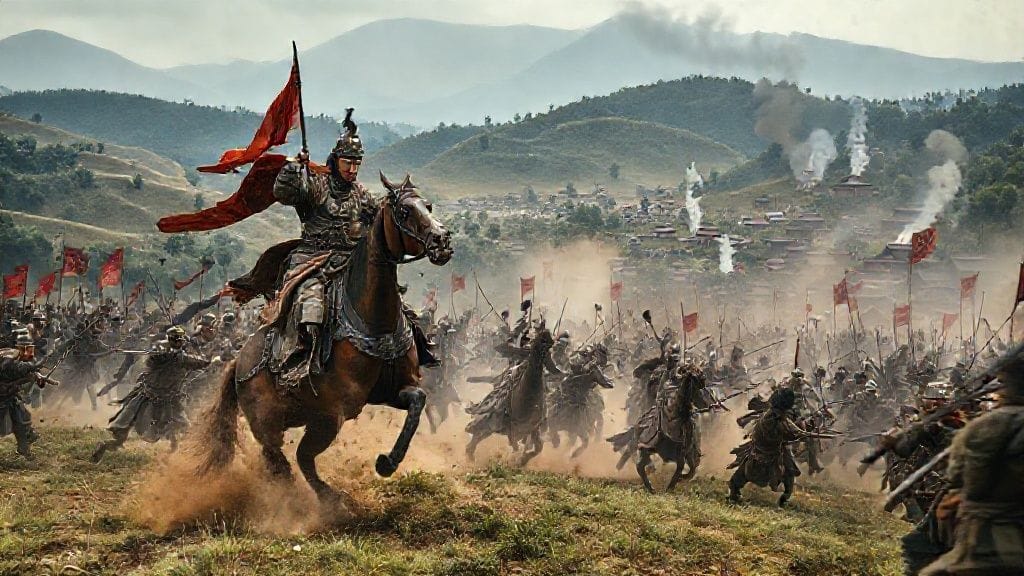
This was a war without mercy. Villages suspected of aiding the rebels were razed. Fields were burned, wells polluted, orchards cut down. The Romans understood that the revolt was sustained not only by armed men but by the civilian population that harbored and fed them. Consequently, repression targeted both fighters and noncombatants. Archaeological evidence of destruction layers—burned houses, collapsed walls, mass graves—speaks to the sheer scale of devastation. The countryside bled alongside the hill forts.
As the noose tightened, refugees poured into fortified cities and remote hideouts. Stories would later tell of entire communities moving into caves, bringing with them contracts, jewelry, children’s toys, and religious scrolls. In some of these caves, excavators centuries later found skeletons, sometimes with braids of hair miraculously preserved, a hauntingly intimate reminder that behind every statistic was a life abruptly cut short. Slowly, relentlessly, Roman pressure drove Bar Kokhba and his surviving forces toward a final, desperate stand.
The Long Siege of Betar: Blood on the Hilltop Fortress
Betar, situated southwest of Jerusalem, became the beating heart of the revolt’s final phase. Perched on a hill and surrounded by ravines, it was a naturally defensible site, bolstered with walls and towers. As Roman forces advanced, Betar filled with soldiers, refugees, religious leaders, and families who believed that here, if anywhere, the tide might turn. If Bar Kokhba was truly the star prophesied to rise from Jacob, then perhaps Betar would be his Bethlehem and his battlefield.
The siege of Betar is sparsely described in Roman accounts, but Jewish traditions, recorded later in sources like the Jerusalem Talmud and Lamentations Rabbah, dwell on its horror. They speak of a city so crowded that people stood on rooftops and walls, of assault after assault, of defenders hurling back Roman attacks with desperate courage. One tradition claims that the city fell on Tisha B’Av, the same mournful date as the destruction of the First and Second Temples, weaving the catastrophe into an already dense tapestry of national grief.
We do not know precisely how long the siege lasted, but it was long enough to exhaust supplies and hope. Hunger and disease must have stalked the packed streets. Inside the walls, Bar Kokhba faced mounting pressure. Letters from earlier in the revolt show him as demanding and confident; by the time of Betar, he was a leader under siege on every level—military, political, spiritual. Allegiances frayed. Rumors circulated that one of the great sages, Rabbi Eleazar of Modiin, had been killed amid internal tensions, although the historicity of this story is debated. Whether fact or legend, it captures a poignant truth: unity is hardest to maintain when the sky is falling.
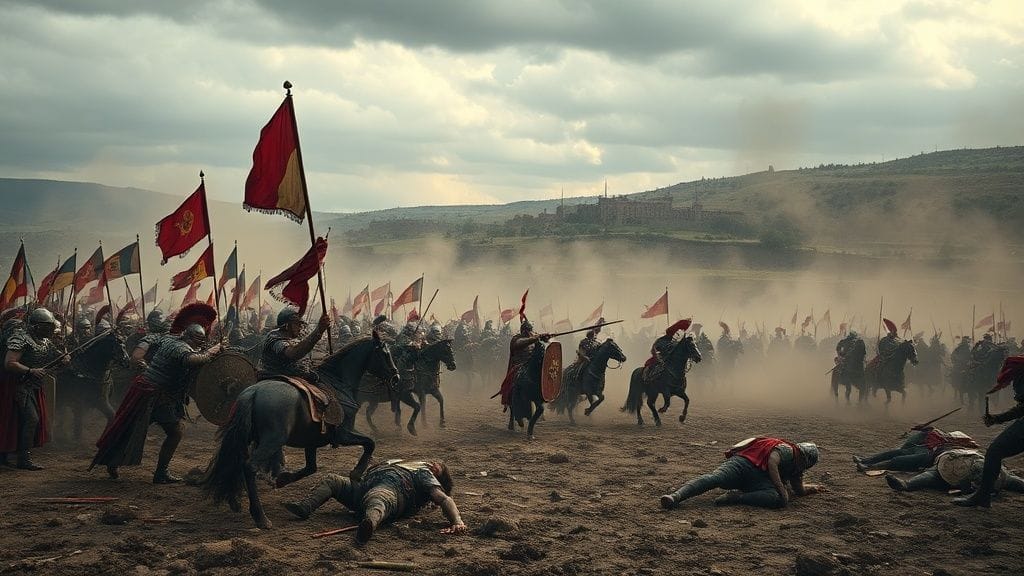
When the Romans finally breached Betar’s defenses, they unleashed a fury honed by years of grueling war. Ancient traditions speak of rivers of blood, of bodies stacked like cords of wood, of such vast slaughter that horses waded in gore. These are images from the language of lamentation, vivid and likely hyperbolic, yet they convey something essential about how survivors experienced the event. In their minds, Betar was not merely a military defeat; it was an apocalypse compressed into a single day.
Bar Kokhba himself died in the onslaught. Later rabbinic sources, now more critical than admiring, call him “Bar Koziba,” a pun meaning “Son of the Lie,” implying that his messianic claims had deceived the people. However he fell—whether in the thick of battle or in a final, doomed attempt to escape—his body on the battlefield symbolized the collapse of all those incandescent hopes kindled just a few years earlier. With Betar’s fall, the organized resistance crumbled. The hilltop fortress, once a beacon, became a grave.
The Bar Kokhba Revolt End: Silence After the Last Cry
In the immediate aftermath of Betar’s destruction, a terrible quiet descended over Judea. There were still pockets of resistance, scattered fighters clinging to caves and remote refuges, but the coordinated rebellion was over. This was the bar kokhba revolt end in the starkest, most brutal sense: the moment when the dream of an independent Judean state was crushed under Roman boots and buried beneath fallen stones.
The bar kokhba revolt end was more than a military endpoint; it was a psychological and spiritual breaking point. Survivors emerged from hiding to find not a wounded homeland but something closer to a shattered one. Fields lay fallow or burned, terraced hills eroded, entire villages emptied. Family networks were torn apart by death, enslavement, and forced displacement. Many who had believed that they were living in messianic times now found themselves confronting what felt like divine abandonment.
For the Romans, the victory was both costly and absolute. Hadrian, according to later sources, forbade mourning outwardly for the fallen Jews and celebrated the suppression of what he portrayed as a barbarous uprising. Yet even in Rome, the scale of the conflict left its mark. Cassius Dio’s description emphasizes the enormity of the slaughter: he claims that 580,000 Jews were killed in battle, with countless more dying from famine and disease. Modern scholars treat such numbers cautiously, but the broad picture of staggering human loss is widely accepted.
The bar kokhba revolt end also marked a turning point in how Rome governed Judea. No longer would this province be treated as a troublesome yet integral part of the imperial system, capable of limited autonomy under local leadership. Instead, it would be reorganized, renamed, and subjected to a more thorough and punitive Romanization. The very words “Judea” and “Jerusalem” would be pushed to the margins of official discourse, as though by altering names the empire could erase both memory and possibility.
In the collective consciousness of the Jewish people, the bar kokhba revolt end joined the destruction of the Temples as a trauma of epochal magnitude. It closed the door, for many centuries, on the idea of violent national revolt in the ancestral land. The price had been too high, the devastation too total. From the ruins of 135 CE, Jewish history would take a different path—less about armies and fortresses, more about texts, communities, and a portable identity that could survive far from the hills of Judea.
Erasing Judea: Aelia Capitolina and the Banning of a People
Once the last embers of revolt had been stamped out, Hadrian turned from warlord back to architect. But now his plans for Judea bore the harsh imprint of vengeance. The province was renamed Syria Palaestina, a designation that fused the old Roman province of Syria with a term derived from “Philistia,” the land of Israel’s ancient coastal rivals. The old name, Judea, laden with memories of kings and prophets and temples, was pushed aside. It was a cartographic act of punishment, an attempt to sever the link between land and people.
Over the ruins of Jerusalem, the city of Aelia Capitolina rose in controlled, classical lines. Roman engineers laid out a grid, built a forum, and crowned the hill of the former Temple with a shrine to Jupiter. Statues of the emperor and pagan gods occupied spaces once reserved for monotheistic worship. Colonnaded streets mapped out a new civic identity for a place whose very stones had testified to another story. This was not just urban development; it was an ideological palimpsest, writing imperial Rome over biblical Zion.
Hadrian’s measures went beyond rebuilding. Jews were forbidden from entering Aelia Capitolina on pain of death, allowed only one exception: a single day each year, when they could purchase the right to weep amid the ruins. Imagine the bitter procession—families approaching the city that had once been theirs, paying Roman officials for access, walking past pagan altars to stand at a distance from the spot where their Temple had been. It was mourning turned into humiliation, grief taxed and regulated.
Other restrictions further constricted Jewish life. Religious practices were monitored, communal authority weakened, elite families decimated. The ban on circumcision—if it continued in force after the revolt—would have compounded the erosion of identity, though the exact legal details remain debated by scholars. What is clear is that the fabric of Judean Jewish society was torn, its threads scattered across other provinces and lands.
This erasure, however, was not total. People continued to refer to Jerusalem in prayers and texts; rabbinic literature persisted in calling the land Eretz Yisrael, the Land of Israel. Rome could rename provinces and rebuild cities, but it could not fully control the geography of the mind. Even so, daily life in what had been Judea was irrevocably altered. The old structures of temple, priesthood, and centralized worship had already fallen in 70 CE. Now, in 135, even the possibility of political autonomy in the homeland seemed to vanish under the shadow of Aelia Capitolina’s walls.
Scars on the Soul: Religious and Cultural Aftershocks
The bar kokhba revolt end forced Jewish religious thought into a period of intense self-examination. Why had this catastrophe occurred? How should it be interpreted in relation to God’s covenant and promises? These were not abstract questions. They were the anguished cries of communities trying to make sense of burned fields and empty homes. The answers that emerged would shape Judaism for centuries.
One line of interpretation emphasized sin and divine punishment. Just as prophets had once explained the Babylonian conquest as a result of Israel’s failures, some rabbis framed the new disaster in similar terms. Perhaps the people had placed too much faith in a human leader, mistaking Bar Kokhba for the true messiah. Perhaps, as later critics suggested, militarized messianism was itself a form of idolatry, substituting swords for repentance.
Rabbinic texts present a complex and sometimes contradictory picture. In one tradition, Rabbi Akiva hails Bar Kokhba as messiah; in another, later sages denounce him as a false redeemer whose arrogance doomed the people. The name shift from Bar Kokhba (“Son of the Star”) to Bar Koziba (“Son of the Lie”) encapsulates this reassessment. As time passed, the initial fervor faded, replaced by a more cautious, sometimes skeptical, stance toward claims of imminent redemption.
At the same time, the rabbis redoubled their efforts to build a religious life independent of the Temple and, now, of any realistic hope for political sovereignty. Study of Torah and halakha (law) became central. Prayer services acquired fixed forms and times, with the Amidah and Shema recited daily, anchoring a portable spiritual world that did not depend on geography. The synagogue, already important, expanded its role as a house of study, assembly, and communal worship.
The liturgical calendar also absorbed elements of the catastrophe. Tisha B’Av, already marked for earlier destructions, took on associations with the fall of Betar and the bar kokhba revolt end. Kinnot—dirges and lamentations—were composed, some of which would be recited for centuries. In these poems, the horrors of 135 merged with other persecutions and exiles, forming a layered memory in which specific events blurred but the emotional core remained painfully sharp.
This shift did not mean that longing for the land or for restoration vanished. On the contrary, prayers for the rebuilding of Jerusalem and the coming of the messiah intensified. But they were now channeled through quieter, more introspective forms. The sword, for the time being, was set aside. The pen, the scroll, and the spoken word became the primary tools of survival and hope.
Demography and Diaspora: From Homeland to Worldwide Exile
The demographic impact of the revolt was profound. Whole regions of Judea that had been densely populated by Jews before 66 and even after 70 now saw a sharp decline in Jewish presence. Archaeological surveys reveal abandoned villages, repurposed estates, and shifts in settlement patterns that suggest large-scale depopulation. While some Jews remained in rural Judea and the Galilee, the center of gravity of Jewish life began to tilt more decisively toward the diaspora.
Many captives were sold as slaves, transported to markets across the empire—from Egypt to Italy, from Asia Minor to North Africa. In distant ports and bustling urban neighborhoods, Judean accents mingled with older diaspora communities, bringing fresh memories of resistance and ruin. Some former rebels, now enslaved, may have become the ancestors of families later known only as “Jews of Rome” or “Jews of Alexandria,” their origins in the hills of Judea forgotten but not entirely lost in ritual and story.
Even where Jews remained in the land, the social landscape changed. Large estates, sometimes owned by non-Jewish landlords loyal to Rome, altered patterns of agriculture and tenancy. Urban centers like Tiberias and Sepphoris in the Galilee grew in importance as hubs of Jewish learning and culture, partly because access to Jerusalem and Judea’s heartland had been so violently curtailed. This geographic reorientation would influence the compilation of the Mishnah in the early third century and the later development of the Jerusalem Talmud.
The diaspora, once a complement to life in the land of Israel, increasingly became the norm. Babylonian Jewish communities, for instance, would rise to great prominence, eventually producing the Babylonian Talmud, one of the foundational texts of rabbinic Judaism. In this sense, the bar kokhba revolt end accelerated processes already underway, pushing Jewish life into a more fully transnational mode. The people that had once been centrally tied to one strip of earth now became expert at building homes, synagogues, and academies along trade routes and rivers, from Mesopotamia to the Rhine.
This dispersal came at a terrible cost in blood and loss, but it also demonstrated an extraordinary resilience. Unlike many conquered peoples whose identities dissolved within a few generations, Jews developed mechanisms—legal, liturgical, educational—that allowed them to maintain a coherent sense of self over vast distances. The wound of 135 remained open, but around its edges, new forms of continuity were woven.
Memory Under Censorship: Roman Sources, Rabbinic Whispers
Reconstructing the story of the revolt and its end is a challenge partly because the victors and the vanquished remembered it in such different ways—and with such different levels of explicitness. Roman historians like Cassius Dio mention the conflict, but often in brief, formulaic summaries. Dio’s account survives only in an epitome, a condensed form that strips away much detail. He notes the scale of destruction and names Bar Kokhba but provides few tactical or emotional nuances. For the Roman elite, the war was significant but ultimately one of many provincial conflicts filed under the vast heading of “imperial affairs.”
Jewish sources, meanwhile, treat the revolt gingerly. Rabbis of later generations mentioned it obliquely, often through allegories or scattered anecdotes. In the Jerusalem Talmud and Midrashim, we catch glimpses: a story of a sage killed at Betar, a lament for children who died in sanctification of God’s name, an allusion to Hadrian’s decrees. Yet there is no unified, extended narrative of the conflict in rabbinic literature. Some scholars argue that the trauma was so deep—and the political consequences of open discussion so dangerous—that it became safer to encase the memory in fragments and laments rather than in a direct history.
This fragmentary memorialization has forced modern historians and archaeologists to act as detectives. Caves in the Judean desert, such as those at Nahal Hever, have yielded letters from Bar Kokhba’s administration, including orders and correspondence with subordinates. These documents, preserved by extreme dryness, give us a rare, unfiltered glimpse into the mechanics of the revolt: how leaders thought about logistics, discipline, and law. They complement the terse lines of Dio and the evocative but often legendary rabbinic tales.
Citation from a modern historian underscores the point. The scholar Peter Schäfer has written that the Bar Kokhba revolt “marks a turning point of the first order in the history of Judaism,” precisely because its memory is both omnipresent in its consequences and strangely muted in its explicit telling. The silence, the half-said, becomes itself a kind of evidence—a sign of something too painful and politically dangerous to speak of fully, yet impossible to forget.
Thus, the bar kokhba revolt end exists in the historical record like a dark star: we infer its mass and impact from the distortions it leaves, from the sudden bends in legal traditions, liturgical forms, and demographic patterns. Only in the last century and a half, with systematic archaeology and critical scholarship, have we begun to piece together a fuller narrative from the scattered shards left behind.
Heroes, Heretics, or Tragic Fools? The Many Faces of Bar Kokhba
Simon bar Kokhba himself stands at the center of this history like a contested monument, interpreted and reinterpreted according to the needs and fears of each age. To his contemporaries who joined the revolt, he was likely a heroic figure—strong, decisive, perhaps even divinely anointed. The endorsement of Rabbi Akiva, if historically accurate, would have encased him in a mantle of sanctity difficult to resist.
Later rabbinic texts, however, are far more ambivalent. Some portray Bar Kokhba as a tyrannical leader whose brutality toward his own people invited divine wrath. One story claims that he tested the loyalty of his soldiers by ordering them to sever a finger, discarding those who refused. Another says that he believed he could defeat God Himself, suggesting an arrogance that crossed into blasphemy. These tales, however historically dubious, reflect a deep theological unease: how could a man hailed as potential messiah have led the people into such annihilation?
Christian authors in late antiquity saw the revolt—and its failure—as validation of their own theological narrative. For them, the bar kokhba revolt end proved that Jewish hopes for a political messiah were misguided, and that the destruction of Judean resistance signaled a divine rejection in favor of the Christian church. This interpretive framework colored Christian attitudes toward Jews for centuries, often with deadly consequences.
In the modern period, yet another image of Bar Kokhba emerged. Zionist thinkers in the late nineteenth and early twentieth centuries, seeking heroic role models of Jewish physical courage and national aspiration, revisited the revolt with fresh eyes. Bar Kokhba was resurrected as a symbol of defiant self-assertion, a Jewish warrior who had dared to stand against empire. Youth movements adopted his name; songs and plays celebrated his struggle. In this retelling, he was no longer the “Son of the Lie,” but a tragic patriot whose defeat nevertheless embodied a noble ideal.
Between these poles—messiah, madman, martyr, nationalist hero—lies the more complex, human Bar Kokhba, a man navigating impossible choices in a time of extreme crisis. He mobilized a people desperate for hope, made bold strategic gains, and then faced an adversary whose resources dwarfed his own. Whether his revolt was doomed from the start or might have succeeded under slightly different conditions remains a debate among historians. What is not in doubt is that his rise and fall left an indelible mark on Jewish and Roman history alike.
Archaeology of a Lost Revolt: Caves, Documents, and Human Traces
For centuries, much of what was known about the revolt came from literary sources, many written long after the events. That changed dramatically in the twentieth century, when archaeologists began to uncover direct physical evidence of the conflict. The caves of the Judean desert, inaccessible and harsh, proved to be inadvertent time capsules.
In the so-called “Cave of Letters” at Nahal Hever, excavations led by Yigael Yadin in the 1960s unearthed a trove of documents and artifacts associated with the revolt. Among them were papyri bearing Bar Kokhba’s own name and seal, correspondence between rebel leaders, legal contracts, and personal property of families who had sought refuge there. We find letters in which Bar Kokhba orders the arrest of individuals, demands supplies, and insists on religious observance. Each fragment bridges the centuries, transforming Bar Kokhba from a distant symbol into a working administrator, concerned with wool, taxes, and ritual items.
Alongside these official documents, there are poignant personal items: a woman’s cosmetics, sandals, keys, and clothing. One bundle contained a woman’s archive of legal papers, documenting her property rights and family affairs—evidence of a complex social life abruptly interrupted. These everyday details, frozen in time, reveal the fabric of a society that did not see itself as living in “ancient history” but in a present that it hoped to secure and pass on.
Elsewhere, in sites such as Betar, Khirbet el-Yahud, and burned village layers, archaeologists have found arrowheads, ballista stones, makeshift fortifications, and evidence of sudden destruction by fire. Coins overstruck with Bar Kokhba-era designs surface in hoards, suggesting hurried attempts to hide wealth before flight or capture. Skeletal remains, sometimes showing signs of violent death, bear silent testimony to the brutality of the conflict.
These archaeological discoveries have allowed scholars to challenge or corroborate literary accounts. For example, the presence of formal legal documents in caves aligns with rabbinic and later references to Jewish commitment to law and contract even amid chaos. The scale of destruction in certain regions lends weight to Cassius Dio’s grim statements about widespread devastation. At the same time, the pattern of survival and reconstruction in Galilee adds nuance: not all Jewish life in the land was extinguished.
In this way, spades and trowels have become tools of historical recovery, helping us to see the bar kokhba revolt end not merely as a notebook entry in imperial annals, but as a lived experience, full of human texture, captured in ink, fabric, and bone.
From Ruin to Ritual: How Later Generations Mourned 135 CE
The raw experiences of 132–135 CE gradually cooled into memory, and memory into ritual. As direct survivors passed away, their children and grandchildren inherited stories that blended fact and metaphor. The fall of Betar, the renaming of Judea, the banning from Jerusalem—these events fused with earlier and later tragedies, forming a continuous thread of lamentation that stretched across centuries.
Tisha B’Av, the ninth of Av, became the primary vessel for this grief. Already associated with the destruction of both Temples and other calamities, it absorbed the sorrow of the bar kokhba revolt end as well. On that day, Jews fasted, sat on low stools or the floor, and recited the Book of Lamentations, a text originally composed for the Babylonian destruction of Jerusalem but now heard anew through the lens of Roman devastation.
Over time, new kinnot—liturgical poems of mourning—were composed. Some explicitly referenced Betar and Hadrian’s decrees; others spoke more generally of slain communities and desecrated sanctuaries, allowing listeners to project whatever current or historical tragedy they carried. In this ritual layering, 135 CE was never fully isolated. It became part of a long, sorrowful rhythm in which different generations could hear echoes of their own sufferings.
Yet mourning was not only about tears. It also involved subtle acts of defiance. By continuing to name Jerusalem in prayer and to speak of Zion’s restoration, Jews preserved an alternative geography alongside the imperial map. When they turned toward Jerusalem during the Amidah, they oriented themselves not toward Aelia Capitolina but toward the city that had been and, in faith, still somehow existed beyond Roman stone. This spiritual cartography kept alive a claim that no edict could fully abolish.
In some communities, stories of Bar Kokhba circulated in children’s tales and learned discussions, often in heavily moralized forms. The message varied: for some, he was a warning against embracing false messiahs or trusting in military might; for others, a brave but tragic figure who had dared to do what many only dreamed of. Either way, the name “Bar Kokhba” marked the boundary between hope and catastrophe, a name spoken with a mixture of awe, regret, and unresolved questions.
Echoes in Modern Identity: Zionism, Nationhood, and Historical Lessons
The modern era, with its revolutions, national awakenings, and new states, cast fresh light on old uprisings. As Jewish thinkers in Europe grappled with emancipation, anti-Semitism, and the idea of reclaiming a national home, the story of Bar Kokhba seemed suddenly contemporary. Here was an ancient example of Jews taking their fate into their own hands, organizing an army, minting coins, and asserting sovereignty in the land of their ancestors.
Zionist leaders and educators seized on this image. In the early twentieth century, youth movements staged plays about Bar Kokhba, sang songs praising his bravery, and marched under his name. The narrative often emphasized heroic resistance and downplayed the scale of the ultimate disaster. After centuries of portraying Jews primarily as scholars, merchants, or victims, there was a hunger for models of physical courage and military leadership. Bar Kokhba, reimagined, fit the need.
At the same time, some historians and thinkers urged caution. The bar kokhba revolt end was, after all, a lesson in the devastating cost of misjudging the balance of power. The revolt’s failure had led to massacres, exile, and the near-erasure of Judea as a Jewish homeland. For these critics, uncritical glorification risked repeating the same tragic pattern—allowing romantic nationalism to override sober strategic assessment. The history of 135 CE became a mirror in which modern leaders could see both inspiration and warning.
In the State of Israel, founded in 1948, the memory of Bar Kokhba occupies a complex place. Archaeological discoveries are celebrated in museums; coins and letters from the revolt are treated as national treasures. The story of resistance to Rome resonates in a country that has fought multiple wars for its own survival. Yet military and political leaders are acutely aware that courage alone is not enough; alliances, diplomacy, and realism matter as well. The ancient revolt is invoked selectively, sometimes as a symbol of valor, sometimes as a case study in the dangers of overreach.
This multiplicity of meanings underscores how history never remains fixed. The same events that once justified Christian supersessionist theology later fueled Jewish nationalist pride and now serve as a site of nuanced reflection on power, identity, and the ethics of resistance. The stones of Betar and the letters from the caves continue to speak, but what we hear in them depends, in part, on the questions we bring.
What the Bar Kokhba Revolt End Teaches About Empire and Resistance
Looking back across nearly two millennia, the bar kokhba revolt end offers more than a tragic story from a distant past. It illuminates patterns and dilemmas that recur whenever peoples under imperial rule wrestle with the choice between accommodation and revolt. Judea in 132 CE was not unique in facing an overwhelming empire; what makes its story resonant is the intensity with which religious identity, national aspiration, and imperial policy collided.
One lesson lies in the power of symbols. Hadrian’s decisions about circumcision and Aelia Capitolina were not simply administrative tweaks; they cut to the heart of Jewish self-understanding. By targeting practices and places that defined the community, Rome provoked a response that went far beyond normal political calculus. Empires that misunderstand or deliberately attack the sacred symbols of subject peoples often sow the seeds of bitter resistance.
Another lesson is about the double-edged nature of hope. The belief that Bar Kokhba might be the messiah galvanized extraordinary bravery and sacrifice. Yet when those expectations were shattered, the resulting disillusionment was correspondingly immense. Movements driven by absolute, transcendent hopes can sustain their followers through hardship, but they can also leave deep scars when reality fails to cooperate. In the wake of the bar kokhba revolt end, Jewish religious thought turned toward more inward, less overtly political expressions of redemption, a shift that arguably helped sustain the people through long centuries of statelessness.
A third lesson concerns the costs of total war. Rome’s determination to crush the revolt resulted in devastation that permanently altered the demography and culture of the region. Judea’s landscape and people were transformed, and the consequences rippled outward into the diaspora and through time. Modern observers, aware of the destructive power of state violence, can see in this ancient example a stark warning about what happens when conflicts escalate to the point where compromise is no longer imaginable.
Yet amid the devastation, the aftermath also reveals remarkable resilience. Jewish communities, deprived of temple, land, and political autonomy, reinvented themselves around texts, communal structures, and rituals. They refused to let the defeat define the end of their story. In this sense, the bar kokhba revolt end was not an end at all, but a brutal transition—a doorway through which Jewish history passed into a new, more diasporic and textual phase.
Empires rise and fall, but the questions raised by Judea’s last great revolt—about identity under domination, about the ethics of resistance, about the relationship between faith and power—remain disturbingly current. To walk among the ruins of ancient Judean fortresses or to hold a Bar Kokhba coin today is to feel those questions pressing silently from the past, asking how we, in our own age, will answer them.
Conclusion
The end of the Bar Kokhba revolt in 135 CE was at once a crushing finality and the beginning of a new chapter. With the fall of Betar and the reconfiguration of Judea into Syria Palaestina, Rome believed it had solved its “Judean problem” through force, renaming, and cultural overwriting. On the surface, it succeeded: the political map changed, Jewish presence in much of the province shrank, and a pagan city rose where the Temple had once stood. Yet beneath that imperial veneer, a different continuity persisted—one carried in prayers, legal traditions, memories, and the stubborn refusal to forget Jerusalem.
For the Jewish people, the bar kokhba revolt end was a trauma that reshaped religious thought, communal organization, and geographical dispersion. It closed the door, for a long time, on armed national revolt in the land, channeling energies instead into study, ritual, and the cultivation of portable forms of identity. The transformation was not a simple story of defeat and withdrawal; it was a creative, if painful, adaptation that allowed Jewish life to survive and even flourish in exile.
Historically, the revolt serves as a concentrated lens on the dynamics of empire and resistance. It shows how policies that disregard the deepest symbols of a people’s identity can trigger explosive backlash, how charismatic leadership can inspire both unparalleled courage and catastrophic risk, and how the aftermath of conflict extends far beyond the battlefield into demography, law, and memory. The archaeological finds of the last century have enriched this picture, grounding literary accounts in tangible human remnants—letters, coins, bones, and household goods that speak eloquently across time.
Today, as modern nations grapple with questions of sovereignty, minority rights, and the legacy of colonialism, the story of Judea in 135 CE feels less like ancient dust and more like a mirror, held at an oblique angle. It invites reflection on when resistance is necessary, how it should be waged, and what costs societies are willing to bear in pursuit of their deepest convictions. Above all, it reminds us that even in the wake of apparent annihilation, cultures can find ways to endure, adapt, and remember. The star that shone over Bar Kokhba’s brief state may have fallen, but its light, refracted through centuries of history and interpretation, has never completely gone out.
FAQs
- What was the Bar Kokhba revolt?
The Bar Kokhba revolt was a major Jewish uprising against the Roman Empire, centered in Judea and occurring roughly between 132 and 135 CE. Led by Simon bar Kokhba, the rebels briefly established a de facto independent Judean state, minting their own coins and controlling significant territory before being brutally crushed by Roman legions. - What caused the revolt to break out?
The causes were multiple and intertwined: long-standing resentment from the destruction of the Second Temple in 70 CE, heavy taxation, and memories of earlier conflicts combined with new provocations under Emperor Hadrian. Plans to rebuild Jerusalem as a Roman pagan city called Aelia Capitolina, along with a ban on circumcision, struck at core Jewish religious and national symbols, triggering widespread anger and a decision by many to take up arms. - Who was Simon bar Kokhba?
Simon bar Kokhba, originally Simon ben Kosiba, was the leader of the revolt. Revered by some contemporaries, especially Rabbi Akiva, as a potential messiah, he commanded Judean forces and oversaw an emergent wartime administration. Roman and later Jewish sources portray him as a formidable but controversial figure, alternately celebrated as a hero and criticized as a false messiah whose revolt ended in disaster. - How did the Bar Kokhba revolt end?
The revolt ended with the Roman capture and destruction of the fortress city of Betar around 135 CE, where Bar Kokhba and many of his followers were killed. Roman forces, led by the general Sextus Julius Severus, had waged a prolonged campaign of attrition, surrounding rebel strongholds, devastating the countryside, and eventually overwhelming the last centers of resistance. - What were the consequences for Judea and its Jewish population?
The consequences were catastrophic. Large numbers of Jews were killed, enslaved, or displaced, many villages were destroyed, and the province was reorganized and renamed Syria Palaestina. Jerusalem was refounded as the Roman city Aelia Capitolina, with a pagan temple on the Temple Mount, and Jews were largely barred from entering. These changes accelerated the shift of Jewish life toward the diaspora and the Galilee, contributing to a long period in which Jews had little political power in their ancestral land. - How did the revolt influence later Jewish religion and culture?
The failure of the revolt reinforced a move away from Temple-centered worship and toward rabbinic Judaism, focused on law, study, and prayer. Messianic expectations became more guarded, and overtly political or militarized messianism was often viewed with suspicion. Rituals of mourning, especially on Tisha B’Av, absorbed the memory of the revolt’s disasters, while daily prayers continued to express longing for Jerusalem and eventual redemption. - What evidence do historians use to study the revolt?
Historians draw on a combination of Roman literary sources such as Cassius Dio, rabbinic texts that contain fragmentary references, and a rich body of archaeological evidence. The latter includes coins overstruck with Bar Kokhba-era inscriptions, destroyed settlement layers, fortifications, and crucially, desert cave discoveries containing letters, legal documents, and personal belongings from people involved in or affected by the revolt. - Why did the Romans rename Judea as Syria Palaestina?
The renaming was likely intended as a punitive and political measure, aiming to weaken the connection between the Jewish people and the land historically known as Judea. By folding Judea into a larger province called Syria Palaestina and promoting the new name, the Roman administration attempted to diminish Jewish territorial identity and assert a more thoroughly Romanized order. - How is Bar Kokhba remembered today?
Bar Kokhba’s memory is complex and contested. In religious Jewish traditions, he is sometimes seen with suspicion as a failed messianic figure whose revolt brought great suffering. In modern nationalist narratives, especially within early Zionism, he was often celebrated as a symbol of Jewish courage and self-assertion. Contemporary historians tend to view him as a powerful but ultimately tragic leader operating within impossible constraints. - What lessons does the Bar Kokhba revolt hold for the modern world?
The revolt highlights the dangers that arise when empires attempt to suppress core cultural and religious practices, the double-edged power of messianic or nationalist hope, and the devastating human costs of total war. At the same time, its aftermath shows how communities can adapt creatively to catastrophic loss, reshaping their identity and institutions to survive far beyond the fall of fortresses and the changing of imperial maps.
External Resource
Internal Link
Other Resources
- Encyclopaedia Britannica – general search for the exact subject
- Google Scholar – academic search for the exact subject
- Internet Archive – digital library search for the exact subject