Table of Contents
- A Twilight of Empires: The Dawn of Basil II’s Bulgarian Campaigns
- The Byzantine-Bulgarian Struggle: Rooted in Rivalry and Power
- Basil II: The Emperor Known as the “Bulgar-Slayer” Emerges
- Bulgaria at the Crossroads: Political Turmoil and Fragile Alliances
- First Clashes: The Early Campaigns Around Strumitsa
- Strumitsa: A City Under Siege and Symbol of Resistance
- The March Toward Sredets: Strategy, Deception, and Bloodshed
- The Siege of Sredets: The Heart of Bulgarian Resistance
- War Tactics of Basil II: The Art of Persistence and Psychological Warfare
- Bulgarian Counterattacks: The Struggle Against the Crushing Byzantine Advance
- Alliances and Betrayals: The Role of Neighboring Powers
- The Aftermath of the Campaigns: Bulgaria’s Waning Strength
- The Human Toll: Soldiers, Civilians, and the Destruction of a Nation
- Basil II’s Legacy: From Military Triumph to Lasting Empire
- Bulgaria’s Decline and The Path to Byzantine Annexation
- The Cultural Reverberations: How the Campaigns Shaped Regional Identity
- Historical Perspectives: Chroniclers’ Views on Basil II and Bulgaria
- Modern Reflections: The Campaign’s Place in Balkan Memory
- Conclusion: The End of an Era and the Birth of a New Order
- Frequently Asked Questions
- External Resource
- Internal Link
A Twilight of Empires: The Dawn of Basil II’s Bulgarian Campaigns
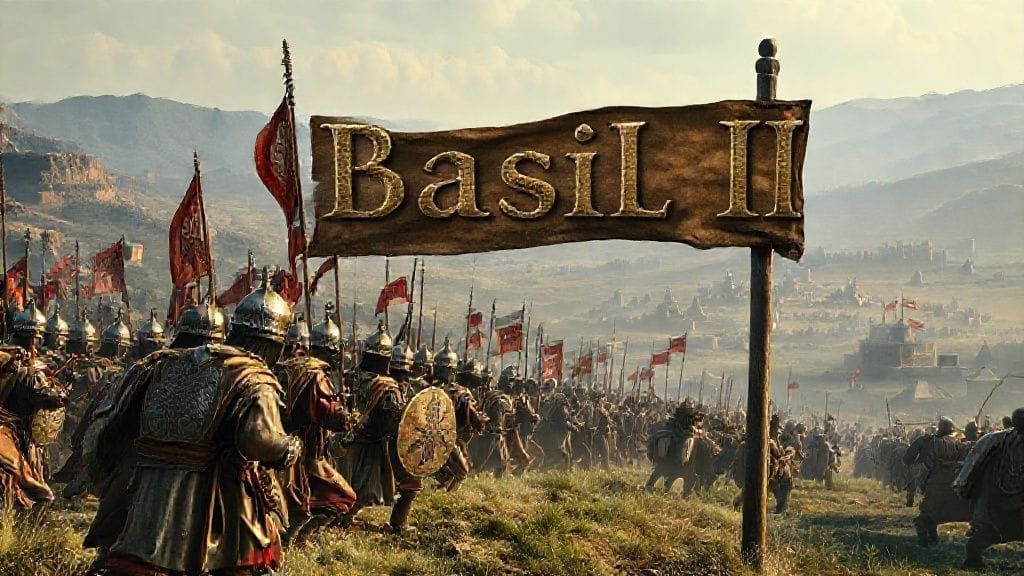
The low winter light filtered dimly through the mists curling over the rugged hills around Strumitsa. Cold, unforgiving, the Balkan chill seeped into the bones of the weary Byzantine infantry. Emperor Basil II, known to his soldiers both for his unyielding resolve and grim demeanor, stood surveying the distant outline of fortified walls that guarded the Bulgarian town. This was more than just another military target—it was the gateway to Sofia, the capital then known as Sredets. In this late autumn of the 990s, as the leaves dropped mournfully, a decisive struggle was unfolding, one that was to change the fate of the Bulgarian Empire and the Byzantine world forever.
The clash between Basil II’s Byzantine forces and the Bulgarian defenders was not only a brutal contest of arms but also a saga of pride, persistence, and the shifting sands of empire. The distant drums of war bore a somber melody, echoing decades of enmity, ambition, and the thirst for domination in the volatile Balkans. In those cold days, both sides knew that this campaign was more than a military expedition—it was a battle for survival.
The Byzantine-Bulgarian Struggle: Rooted in Rivalry and Power
To understand the gravity of Basil II’s campaigns, one must trace back to the complex knot of rivalry that had bound and divided Byzantium and Bulgaria for centuries. The First Bulgarian Empire, born in the late 7th century, had rapidly risen as a potent political and military force, often contesting the expansive ambitions of Byzantium.
Throughout the 9th and early 10th centuries, the two empires had clashed repeatedly. Bulgaria’s Christianization, under Boris I, repositioned the realm as not merely a pagan foe but a legitimate political competitor with its rich traditions and growing influence. By the late 10th century, tensions brewed anew, as the Byzantine Empire under Basil II confronted internal strife and external threats, while Bulgaria flirted with alliances that threatened Constantinople’s dominance in the Balkans.
The ambitions of Basil II intersected violently with those of the Bulgarian Tsar Samuel. Both leaders embodied fierce determination to expand their realms and consolidate power. The ensuing campaigns in the 990s, marked notably by battles near Strumitsa and the siege of Sredets, grew out of this swirling cauldron of political intrigue, ambition, and vendetta.
Basil II: The Emperor Known as the “Bulgar-Slayer” Emerges
Born in 958, Basil II was groomed from childhood for the throne but inherited an empire fraught with challenges. His early years as emperor saw revolts, aristocratic power struggles, and external threats stretching from the Arabs to the Bulgarians. Through a combination of shrewd politics, relentless military training, and sheer willpower, Basil emerged as a determined, often ruthless ruler.
His epithet, “Bulgar-Slayer” (Bulgaroktonos), was earned not out of mere legend but from brutal campaigns during which tens of thousands of Bulgarian prisoners were reputedly blinded and marched home—a grim testament to the merciless strategy he pursued. Yet, this ruthless image also overshadowed a brilliance in statecraft and army discipline that forged the Byzantine Empire into an unparalleled regional power.
Bulgaria at the Crossroads: Political Turmoil and Fragile Alliances
The Bulgarian Empire of the late 10th century was far from the monolithic power it had once been. Tsar Samuel, a capable but beleaguered leader, struggled to keep a patchwork of semi-independent nobles and wavering alliances together. Internal dissent, economic pressures, and relentless Byzantine pressure strained the empire’s foundations.
While Bulgarian resistance was spirited and often effective, divisions within the aristocracy and growing external isolation weakened their cohesion. The campaigns around Strumitsa and Sredets, instead of rallying the nation’s defenders, exposed cracks that Basil would exploit relentlessly.
First Clashes: The Early Campaigns Around Strumitsa
Strumitsa, a fortified city nestled near the modern-day border of North Macedonia and Bulgaria, became an early arena of confrontation. Basil II recognized its strategic importance: controlling Strumitsa meant opening a direct path to the heart of Bulgaria.
The battles here were characterized by haunting night raids, ambushes in the dense forests, and grueling sieges. Byzantine forces leveraged their superior logistics and disciplined infantry, but met fierce resistance from Bulgarian defenders who knew the terrain intimately. This was a war not only fought by armies but by wills—each side striving to outlast the other in the bleak autumnal cold.
Strumitsa: A City Under Siege and Symbol of Resistance
For the inhabitants of Strumitsa, the layered siege was a trial of endurance and horror. Chroniclers record how food dwindled, hope faltered, yet the city stood defiant. The siege tactics employed by Basil II combined relentless assault with psychological warfare. He sought not just to break walls but to break spirits.
Citizens and soldiers alike lived under constant threat of death, disease, and starvation. Tales tell of desperate sorties, secret negotiations, and the haunting sight of households reduced to ashes. Yet Strumitsa’s fall would signal the beginning of the end for Bulgarian resistance in this critical region.
The March Toward Sredets: Strategy, Deception, and Bloodshed
Following the victory in Strumitsa, Basil II turned his attention toward Sredets—modern-day Sofia—Bulgaria’s political and spiritual heart. Each step forward was a mix of martial strategy and cunning diplomacy. Basil’s forces cut supply lines, infiltrated local allegiances, and manipulated border clans to weaken Bulgarian defenses.
The march was littered with skirmishes, brutal reprisals, and tense truces. For Basil, capturing Sredets was crucial—a symbol that would demonstrate Byzantine supremacy in the Balkans. For Bulgarians, defending Sredets was existential, a fight to preserve identity and sovereignty.
The Siege of Sredets: The Heart of Bulgarian Resistance
Sredets was not just a city but a fortress. Basil’s siege lasted months, pushing both attacker and defender to their physical and emotional limits. Chroniclers describe treacherous winter rains, disease running through the camps, and nights of bitter cold.
Inside the city, the population barely clung to life, with cold and hunger gnawing at morale. Basil’s persistence and impatience with prolonged sieges pushed his commanders to innovate—tunnels, trebuchets, and psychological intimidation were all deployed. The eventual fall of Sredets was a shattering blow to the Bulgarian cause and a crowning achievement for Basil’s campaigns.
War Tactics of Basil II: The Art of Persistence and Psychological Warfare
What set Basil II apart was his mastery of a prolonged war strategy—one that combined sheer military might with patience. Instead of seeking quick and bloody battles, Basil wore down his foes strategically, cutting off reinforcements, exploiting internal discord, and showing little mercy to sow fear.
His infamous tactics included blinding prisoners and publicly humiliating defeated nobles, intended to send a chilling message across the Bulgarian lands. Yet behind this ruthless image stood a commander keenly aware of the limits of his forces and the importance of local support in a region fraught with shifting loyalties.
Bulgarian Counterattacks: The Struggle Against the Crushing Byzantine Advance
Despite mounting setbacks, Bulgarian commanders remained fiercely defiant. Guerrilla strikes, surprise raids, and counteroffensives challenged Byzantine supply lines and morale. Tsar Samuel’s leadership, though faltering, inspired continued resistance.
The exhausting back-and-forth of the campaigns exposed the profound will of the Bulgarian people not to surrender their independence lightly. Yet, the incremental losses across Strumitsa, Sredets, and beyond steadily eroded the capacity of Bulgarian armies, preparing the stage for eventual capitulation.
Alliances and Betrayals: The Role of Neighboring Powers
The political landscape of the Balkans was never static. Basil II’s campaigns occurred in a web of shifting alliances involving Hungary, Kievan Rus’, and smaller Slavic and Albanian clans. Some sought to side with Byzantium for protection, others with Bulgaria out of shared cultural or political interests.
Intrigue ran deep. Bulgarian nobles occasionally wavered or betrayed their cause, while Basil adeptly co-opted or intimidated potential foes. These dynamics not only influenced battlefield outcomes but shaped the future political map of southeastern Europe.
The Aftermath of the Campaigns: Bulgaria’s Waning Strength
By the end of his campaigns in the 990s, Basil II had dealt a significant blow to the Bulgarian Empire. The loss of key cities, the erosion of nobility power, and shattered morale left Bulgaria a shadow of its former self.
Although not yet fully conquered, Bulgaria’s fracture was clear and irreversible. The balance of power had decisively shifted, setting in motion the eventual Byzantine annexation of Bulgaria in the early 11th century—a transformation that would reshape the region’s cultural and political fabric.
The Human Toll: Soldiers, Civilians, and the Destruction of a Nation
The campaigns were brutal on all fronts. Thousands of soldiers fell in combat; countless civilians suffered famine, displacement, and violence. The destruction of towns and agricultural lands plunged parts of the region into economic hardship lasting decades.
Chroniclers recount heart-wrenching stories—families torn apart, young conscripts marching into bloody ambushes, elderly villagers abandoned to siege’s ravages. These human tragedies emphasize war’s cruelty beyond military grand strategy.
Basil II’s Legacy: From Military Triumph to Lasting Empire
Basil II’s victory over Bulgaria cemented his reputation as one of Byzantium's greatest military rulers. His campaigns unified the Balkans under Byzantine rule for a time, restoring imperial prestige and extending territorial control.
Yet his legacy is complex. The harshness of his tactics and the deep scars left on Bulgarian society endure in historical memory and folklore. Still, the emperor’s achievements contributed to a flourishing Byzantine Golden Age, influencing governance, warfare, and diplomacy for generations.
Bulgaria’s Decline and The Path to Byzantine Annexation
The campaigns of the 990s accelerated Bulgaria’s decline, but it was not immediate. Over the next decade, intermittent resistance continued, yet the infrastructure for autonomous statehood eroded.
By 1018, under Basil II’s steady pursuit, Bulgaria formally succumbed to Byzantine control, becoming a theme (province) within the empire. The absorption reshaped political boundaries but also planted seeds of cultural synthesis influencing Balkan history deeply.
The Cultural Reverberations: How the Campaigns Shaped Regional Identity
The Byzantine conquest influenced art, architecture, religious practices, and literary traditions in the Balkans. Yet Bulgarian identity persisted fiercely through oral history, church autonomy, and later national revivals.
The campaigns thus represent a poignant juxtaposition of destruction and cultural endurance—how empires impose order yet cannot easily erase deeply rooted identities.
Historical Perspectives: Chroniclers’ Views on Basil II and Bulgaria
Byzantine chroniclers lauded Basil II’s campaigns as righteous and necessary, emphasizing order and imperial glory. Bulgarian historians mourned the loss but celebrated the valiant resistance and national spirit.
Later historians debate the ethics and pragmatics of Basil’s approach, balancing his military genius with the costs to human life and cultural fragmentation.
Modern Reflections: The Campaign’s Place in Balkan Memory
Today, the Basil II campaigns remain a pivotal chapter taught in schools and remembered in local folklore and scholarly discourse. In Bulgaria, the epic resistance of Tsar Samuel contrasts with Byzantine narratives of conquest.
The resonance of this period continues to inform national identities in the Balkans, evoking themes of resilience, sacrifice, and historical complexity.
Conclusion: The End of an Era and the Birth of a New Order
Basil II’s campaigns against Bulgaria in the 990s were more than a military confrontation: they marked a paradigm shift in southeastern Europe’s balance of power. Through blood, strategy, and unrelenting will, an empire subdued its rival to forge a new political and cultural epoch.
But for all the imperial triumph, the story remains human at its core—a tale of cities besieged, of soldiers and civilians caught in the crucible of history, of pride and perseverance clashing in the twilight of empires. This confrontation between Basil the “Bulgar-Slayer” and the resilient Bulgarians echoes still, a chapter written in both stone and memory, illuminating the fragile, fiery nature of empires and nations.
Frequently Asked Questions
Q1: What motivated Basil II’s campaigns against Bulgaria?
A: Basil II aimed to secure Byzantine dominance over the Balkans, end the persistent Bulgarian threat to imperial borders, and consolidate his empire’s northern frontier after years of internal strife and external pressure.
Q2: Why was Strumitsa strategically important?
A: Strumitsa controlled key routes into the Bulgarian interior and served as a vital stronghold protecting Sredets. Its capture would open pathways for Byzantine forces deeper into Bulgaria.
Q3: How did Basil II earn the nickname “Bulgar-Slayer”?
A: Following victories, Basil II reportedly blinded tens of thousands of Bulgarian prisoners in a brutal psychological tactic, cementing his fearsome reputation despite controversies around the veracity of some accounts.
Q4: What was the impact of the campaigns on Bulgarian society?
A: The campaigns caused widespread destruction, population displacement, economic hardship, and political fragmentation, leaving Bulgaria weakened and vulnerable to future Byzantine annexation.
Q5: Did Bulgaria completely fall after the campaigns in the 990s?
A: No, Bulgaria retained some resistance and autonomy but its power was severely diminished. Full incorporation into the Byzantine Empire occurred around 1018.
Q6: How are these campaigns remembered in modern Balkan history?
A: They remain a symbol of national struggle and resilience in Bulgaria, while Byzantine successes are noted for imperial consolidation. The campaigns influence regional identities and historical narratives to this day.
Q7: What role did neighboring powers play during these campaigns?
A: Neighboring states and clans sometimes allied with either side based on political advantage, contributing to the complex and shifting dynamics of the conflict.
Q8: How did Basil II’s military tactics differ from previous Byzantine leaders?
A: Basil emphasized persistence, psychological warfare, strict discipline, and tactical patience rather than quick, decisive battles, enabling him to wear down his adversaries effectively.

