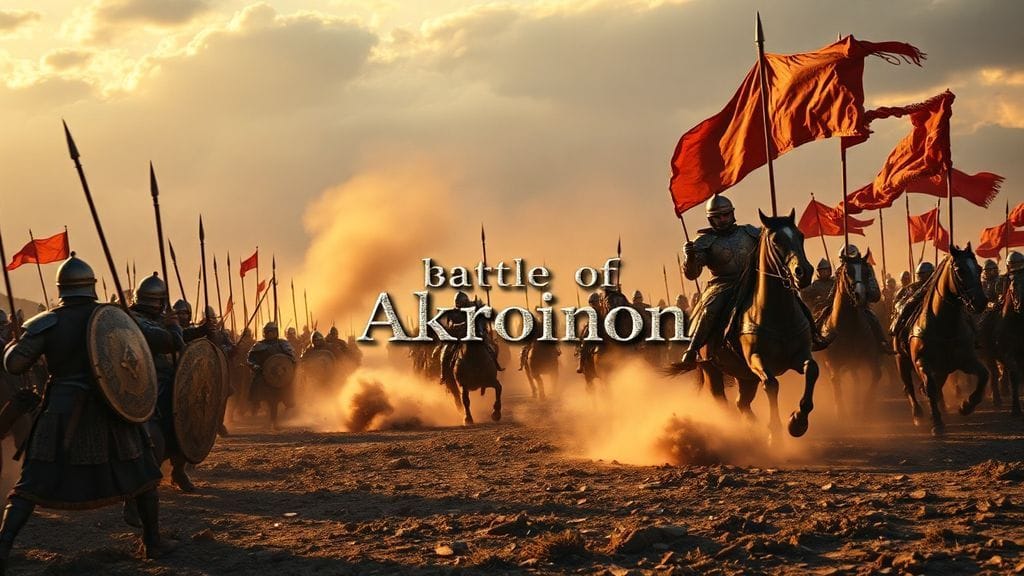
Table of Contents
- The Breaking Dawn Before the Battle: Anatolia on the Brink
- The Rise of Two Titans: Byzantium and the Umayyad Caliphate
- Tensions Mount: Religious Zealotry and Imperial Ambitions
- The Strategic Importance of Phrygia and Akroinon
- The Commanders: Leo III and Sulayman ibn Hisham
- Maneuvers Before the Clash: Troop Movements and Intelligence
- The Battlefield at Akroinon: Terrain and Tactical Advantages
- The Battle Unfolds: Surprise, Strength, and Stalwart Defense
- The Turning Point: How Byzantines Seized Victory
- Casualties and Immediate Aftermath of the Clash
- The Psychological Impact: Morale and Propaganda Waves
- Political Repercussions in Constantinople and Damascus
- The Umayyad Caliphate’s Military Retrenchment
- The Consolidation of Byzantine Power in Anatolia
- Akroinon and the Larger Context of the Arab-Byzantine Wars
- The Role of Religion and Identity in the Conflict
- Personal Stories from the Battlefield: Voices from Both Armies
- Akroinon in Later Historiography: Myth and Memory
- The Legacy of Akroinon for Byzantine Military Tactics
- Cultural Reverberations: Art, Literature, and Collective Memory
- How Akroinon Shaped the Balance of Power in the Medieval Mediterranean
- Conclusion: Victory at Akroinon as a Pivotal Moment in History
- FAQs: Understanding the Battle and Its Legacy
- External Resource
- Internal Link
The Breaking Dawn Before the Battle: Anatolia on the Brink
In the humid summer haze of 740 CE, the landscapes of Phrygia—ancient Anatolia's heartland—were more than a mosaic of rugged plains and dense forests; they were on the cusp of transformation. Clouds of dust stirred under converging legions, horses pawed the ground with impatience, and commanders paced warily, sensing that history would be forged under the relentless Anatolian sun. This was no ordinary day of maneuvering at the empire's edge: it was the prelude to the Battle of Akroinon, where the Byzantine Empire and the Umayyad Caliphate would collide in a confrontation that would shape centuries to come.
The air was thick with tension—not simply because of the approaching clash of armies—but due to the existential stakes underpinning the conflict. The invincible caliphate’s soldiers stood poised to penetrate deeper into Byzantine lands, while the empire’s defenders, scarred by years of near-constant Arab raids, braced to repel an enemy that had thundered at their gates time and again. For Byzantines, Akroinon was more than a battlefield; it was the front line of survival.
The Rise of Two Titans: Byzantium and the Umayyad Caliphate
By the early 8th century, two colossal political and religious forces spanned the Eastern Mediterranean.
The Byzantine Empire—a Roman heir crowned with centuries of imperial legacy—was at once a bastion of Orthodox Christianity and a melting pot of cultures and traditions. It was an empire fighting to preserve both territory and identity amidst a fracturing world.
Opposite stood the Umayyad Caliphate, an Islamic powerhouse. Born from the Arabian Peninsula, it expanded with astonishing speed, reaching from Spain in the west to the Indigo River in the east. By 740 CE, its armies were seasoned, confident, and hungry for further territory.
Yet beneath this grand narrative were the complexities of leadership, regional loyalties, and the simmering religious fervor that drove men to fight with fierce conviction. The clash at Akroinon was thus steeped not only in politics and ambition but in the deeper currents of cultural identity and ideological struggle.
Tensions Mount: Religious Zealotry and Imperial Ambitions
The competition between Byzantium and the Umayyads was never merely territorial; it was—a historian might argue—a struggle for the soul of the Mediterranean world.
For the Byzantines, defending their lands was inseparable from defending Orthodox Christianity. The Umayyads, convinced of their own divine mandate, viewed conquest as a sacred duty to spread Islam. Years of raids, skirmishes, and sieges etched deep scars on each side’s psyche.
The empire was also dealing with internal strains—contending with religious controversies like iconoclasm initiated earlier by Emperor Leo III, which divided society even as the external threat loomed larger. The Umayyads too faced pressure, balancing the demands of expanding an empire with managing restive provinces.
Into this cauldron of tension marched the armies, each bearing not just arms, but the hopes and fears of their respective peoples.
The Strategic Importance of Phrygia and Akroinon
Phrygia, in central Anatolia, had long been a vital crossroads—both geographically and symbolically.
Straddling the empire’s eastern frontier, control over regions like Akroinon could open routes deep into Byzantine territory or serve as a shield against incursions. For invaders like the Umayyads, penetrating Phrygia meant potentially destabilizing the empire’s heartland; for defenders, steady control was crucial to maintaining imperial integrity.
This battle was not just about territory—it was about maintaining the delicate balance between survival and collapse in a region marked by rugged landscapes that could favor defenders familiar with the land.
The Commanders: Leo III and Sulayman ibn Hisham
The stage was set between two compelling figures embodying their realms’ fortunes.
From Byzantium’s side came Emperor Leo III, the same strong leader who earlier quelled iconoclastic dissent and implemented significant military reforms. His strategic acumen had been tested repeatedly—and his resolve to defend the empire was unwavering.
At the helm of the Umayyad forces stood Sulayman ibn Hisham, a prince and general reputed for both his aggression and tactical brilliance. His leadership symbolized the Caliphate’s determination to pierce deeper into Byzantine lands, asserting dominance over their historic rival.
Their confrontation at Akroinon was as much a contest of wills and leadership as it was of steel and strategy.
Maneuvers Before the Clash: Troop Movements and Intelligence
In the weeks preceding the battle, scouts and messengers crisscrossed the Anatolian hills. Byzantine spies sought to uncover Umayyad intentions, while Arab cavalry tested defensive lines along the border.
Leo III dispatched his trusted generals to fortify positions, harnessing local knowledge and guerrilla tactics learned from decades of frontier warfare.
Sulayman ibn Hisham, aware of the empire’s vulnerabilities, hoped to exploit speed and surprise, pushing deep into Anatolian territory before Byzantine forces could coalesce.
The chessboard of Phrygia was set, pieces moving silently—seeking the upper hand before battle’s cacophony.
The Battlefield at Akroinon: Terrain and Tactical Advantages
When the sun finally rose over Akroinon, the fighters faced a dramatic tableau.
Surrounded by high hills and rugged plains, the terrain favored defenders familiar with every crevice and pass. Water sources, hills, and narrow corridors would play a decisive role.
Byzantine commanders deployed their forces to maximize these natural defenses, using heavily armored cataphracts and disciplined infantry in concert.
The Umayyads, relying on swift cavalry charges and archers, hoped to break the lines before becoming bogged down.
Such environmental details were crucial—turning the battle into a physical and psychological struggle.
The Battle Unfolds: Surprise, Strength, and Stalwart Defense
The clash erupted with thunderous noise—horses’ hooves pounding, steel flashing under the Anatolian sun, and battle cries echoing across the hills.
Initially, the Umayyad cavalry charged fiercely, seeking to destabilize Byzantine formations with sheer momentum. Yet the Byzantines held firm, their shield walls absorbing impact while counterattacks unfolded with precise timing.
Caught in unfamiliar terrain and faced with unexpectedly stiff resistance, Umayyad lines began to falter. Leo III’s emphasis on discipline and cohesion bore fruit.
The battle became a grinding contest of endurance, bravery, and command ruthlessness—the clash between two cultures, each refusing to yield.
The Turning Point: How Byzantines Seized Victory
As the sun rose higher, Byzantine commanders seized a critical moment.
Exploiting gaps created by Umayyad overextension, Byzantine cataphracts launched a decisive counter-charge, breaking the enemy’s cohesion.
Simultaneously, infantry pushed forward with tactical precision, encircling and cutting off retreat routes.
The combined effect was stunning: Umayyad forces were routed, suffering heavy losses and forced into a disorganized retreat.
This was not merely a battlefield victory; it was a proof of Byzantine resilience and renewed martial vigor.
Casualties and Immediate Aftermath of the Clash
The cost was steep on both sides—historians estimate thousands perished—but it was the Umayyads who bore the sharper blow in terms of lost men and morale.
Many high-ranking Arab commanders fell or were captured, delivering a crucial psychological victory to the Byzantines.
News of the triumph spread swiftly through Constantinople, sparking celebrations and renewed confidence in imperial defenses.
For the Umayyad Caliphate, the defeat at Akroinon marked a painful setback, forcing strategic reassessments.
The Psychological Impact: Morale and Propaganda Waves
This defeat sent shockwaves through the Arab world and galvanized Byzantine resolve.
Emperor Leo III leveraged the victory for propaganda, portraying it as a divine vindication of his iconoclast policies and military reforms.
Poets and chroniclers extolled the bravery of the empire’s warriors, while sermons described Akroinon as a battle blessed by Providence.
Conversely, the Umayyad leadership struggled to contain dismay and dissent, confronting internal criticism and regional unrest in the wake of the loss.
Political Repercussions in Constantinople and Damascus
The ripple effects of Akroinon extended deeply into the political arena.
In Constantinople, Leo III’s position was strengthened—his reforms now widely associated with preserving the empire’s survival.
The victory helped unify fractious factions around a shared cause, bolstering the emperor’s authority for years ahead.
Damascus, however, wrestled with broader implications: the defeat underscored limitations in the Caliphate’s expansionist policies, contributing to growing internal pressures that would eventually lead to its decline.
The Umayyad Caliphate’s Military Retrenchment
Following Akroinon, the Caliphate scaled back aggressive incursions into Byzantine Anatolia.
Resources were diverted to address revolts and administrative challenges elsewhere, notably in North Africa and the eastern provinces.
The battle exposed vulnerabilities in Umayyad military logistics and command, prompting key tactical reforms and a more cautious stance in frontier warfare.
This strategic pause marked a turning point in the centuries-long Arab-Byzantine military saga.
The Consolidation of Byzantine Power in Anatolia
The triumph at Akroinon enabled Byzantium to consolidate control over central Anatolia.
Strong defensive lines were fortified, local militias empowered, and military infrastructure expanded.
This secure hinterland provided a crucial base for future campaigns and safeguarded the empire’s agricultural heartlands.
Moreover, the battle surged pride and loyalty among Anatolian populations, knitting them closer to the imperial center.
Akroinon and the Larger Context of the Arab-Byzantine Wars
The Arab-Byzantine conflict was neither brief nor episodic—it stretched over centuries, shaped by broader geopolitical shifts.
Akroinon stands as a rare moment of decisive Byzantine success in an otherwise fluctuating frontier war.
It exemplified how local geography, leadership, and morale could tilt the balance, revealing the complex and ongoing nature of the “Long War” between these two civilizations.
The Role of Religion and Identity in the Conflict
Religion permeated every aspect of the struggle—cloaking the battle in sacred meaning.
Byzantines fought not only to defend territory but the Christian world’s last bastion in Anatolia.
The Umayyads saw their march as jihad, a divine mandate to extend Islam’s reach.
This spiritual dimension intensified commitment and deepened the enmity—fuelling narratives of heroism and martyrdom that resonate through history.
Personal Stories from the Battlefield: Voices from Both Armies
Though grand strategy dominates history books, battlefield moments were shaped by ordinary soldiers’ courage and fear.
A Byzantine cataphract recalled in later chronicles how he charged alone to break an Umayyad cavalry column, a deed that turned the tide.
From the Arab side, letters preserved speak of men weary after years of campaigning but resolute in fighting for faith and empire.
These voices humanize the colossal conflict—reminding us of the lives and sacrifices beneath historic events.
Akroinon in Later Historiography: Myth and Memory
Over centuries, Akroinon’s memory grew mythic.
Byzantine chroniclers celebrated it as a symbol of divine favor and imperial endurance.
Later historians debated the scale and significance, sometimes inflating casualty figures or glorifying leaders.
Nonetheless, the battle’s place in both Byzantine and Islamic historiography cemented it as a landmark moment—a touchstone of medieval struggle.
The Legacy of Akroinon for Byzantine Military Tactics
Akroinon inspired subsequent Byzantine military thought.
The battle demonstrated the effectiveness of combined arms operation, integrating heavy cavalry with infantry and local militia.
Leo III’s reforms—partly validated here—influenced later emperors’ strategies in defending frontiers and dealing with new threats.
This fusion of tradition and adaptation became the hallmark of Byzantine resilience.
Cultural Reverberations: Art, Literature, and Collective Memory
Beyond military history, Akroinon stimulated cultural reflections.
Icons and mosaics invoked the victory, equating it with divine protection.
Poetry and song in Greek and Arabic preserved the memory, sometimes with starkly different interpretations.
Even today, it evokes the layered identities and contested histories of Anatolia’s peoples.
How Akroinon Shaped the Balance of Power in the Medieval Mediterranean
The battle’s ripple effects contributed to shaping medieval Mediterranean geopolitics.
It marked a halt to Umayyad expansion into Asia Minor and set precedents for Byzantine resilience against multiple foes.
By securing Anatolia, Byzantium maintained its role as a vital cultural and economic bridge between East and West—a legacy felt across centuries.
Conclusion: Victory at Akroinon as a Pivotal Moment in History
The Battle of Akroinon was not merely a military engagement; it was an epochal crossroad. Against a backdrop of exhaustion and uncertainty, Byzantine forces delivered a victory that redefined the balance of power in Anatolia and the wider Mediterranean world.
It underscored the complex interplay of faith, identity, strategy, and sheer human will. The echoes of that summer day in Phrygia continue to resonate—reminding us that history is shaped not by inevitability but by moments when courage, leadership, and terrain converge to change destinies.
Through Akroinon, the Byzantine Empire found renewed strength to face the future, while the Umayyad Caliphate began to confront the limits of its imperial reach. This battle captures the essence of historical force and fragility—a lesson in the perpetual contest between empires, ideas, and the human spirit.
FAQs
1. What were the main causes of the Battle of Akroinon?
The battle emerged from ongoing Arab-Byzantine conflicts rooted in territorial ambitions, religious fervor, and centuries-long frontier skirmishes. The Umayyads sought further expansion into Anatolia, while Byzantines aimed to defend their heartland and Orthodox Christian identity.
2. Who were the primary commanders involved, and what were their backgrounds?
Byzantine Emperor Leo III, a reformer and veteran strategist, led the Byzantine forces. The Umayyad troops were commanded by Sulayman ibn Hisham, a prince and skilled general intent on securing territorial gains.
3. How did the geography of Akroinon influence the battle’s outcome?
Phrygia’s rugged terrain, with hills and narrow passes, favored the Byzantine defenders. Their familiarity with the land allowed them to deploy troops effectively, blunting the Umayyad cavalry’s typical advantage in mobility.
4. What were the immediate consequences of the Byzantine victory at Akroinon?
The victory boosted Byzantine morale, stabilized Anatolia’s defenses, and forced the Umayyad Caliphate to temporarily abandon large-scale incursions into the region, leading to strategic recalibration.
5. In what ways did religion shape the motivations and narratives of the battle?
Religious conviction was central—Byzantines viewed the fight as a defense of Christianity, while the Umayyads framed it as jihad. These beliefs intensified commitment and influenced subsequent propaganda portraying the battle as divinely sanctioned.
6. How is the Battle of Akroinon remembered in later historical traditions?
It is commemorated as a pivotal Byzantine triumph in both Christian and Islamic historiographies, though with differing interpretations. Byzantine sources emphasize divine favor and imperial endurance, while Arab chronicles often highlight the broader context of ongoing conflict.
7. What long-term impact did the battle have on the Arab-Byzantine Wars?
Akroinon marked a strategic turning point, slowing Umayyad expansion and validating Byzantine military reforms. It helped secure Anatolia and influenced the trajectory of the protracted frontier wars that shaped medieval Eurasian geopolitics.
8. Did the battle inspire changes in military tactics or technology?
Yes, the successful integration of infantry and cavalry and emphasis on defensive positioning reinforced military doctrines under Leo III, shaping Byzantine tactics for future conflicts.

