Table of Contents
- The Dawn of a New Epoch: Setting the Stage in 636
- The Majestic yet Falconing Sasanian Empire
- A Rising Tide: The Early Islamic Caliphate
- Political and Religious Undercurrents before al-Qādisiyyah
- The March to al-Qādisiyyah: Clashing Ambitions
- The Battlefield near Hilla: Geography and Strategy
- The Five Days of Fierce Combat: A Day-by-Day Narrative
- Key Commanders: Rostam, Sa’d, and the Faces of War
- Turning Points: Moments that Shattered the Sasanian Might
- The Role of Cavalry and War Elephants: Ancient Warfare in Action
- The Psychological Warfare: Morale, Faith, and Propaganda
- The Collapse and Aftermath on the Field
- The Flight of Rostam and the Death Toll
- Immediate Political Consequences for Persia and the Caliphate
- The Fall of Ctesiphon: Al-Qādisiyyah’s Ripple Effects
- Cultural and Religious Shifts Following the Victory
- The Spread of Islam into Mesopotamia: From Battlefield to Civilization
- Legacy and Memory: How al-Qādisiyyah Reshaped History
- Modern Interpretations and Nationalist Narratives
- The Battle’s Place in the Great Narrative of the Islamic Conquests
- Lessons in Strategy and Leadership Enduring to Our Times
- The Human Cost: Stories of Valor and Tragedy
- Conclusion: The Turning of an Age in the Sands of Al-Qādisiyyah
- FAQs: Demystifying the Battle of al-Qādisiyyah
- External Resource
- Internal Link
1. The Dawn of a New Epoch: Setting the Stage in 636
The sun dipped low over the broad plains near the Euphrates, casting long shadows onto a field soon to be soaked with blood and history. It was the year 636 CE, a moment pregnant with promise and peril, where two empires—ancient and emergent—poised on the edge of decisive collision. The Battle of al-Qādisiyyah, fought near the modern town of Hilla in Iraq, was no mere military engagement: it was the fulcrum upon which the future of the Middle East would pivot, heralding not only the fall of the Sasanian Empire but also the rise of Islamic civilization.
This was an epic confrontation, where faith met imperial ambition, where swords clashed amidst the roar of elephants and the cries of warriors, where destinies were forged in dying gasps and triumphant cries. To appreciate fully this watershed moment, one must dive beneath the parched soil and the dust-laden winds to explore the stories, hopes, and fears of those who stood on opposite sides of history’s making.
2. The Majestic yet Falconing Sasanian Empire
At its zenith, the Sasanian Empire was the jewel of antiquity, a bulwark of Zoroastrian culture and Persian identity stretching from the Indus to the Levant. For over four centuries, the Sasanians had resisted Roman—and later Byzantine—intrusions, cultivating a formidable military and a rich civilization renowned for its art, architecture, and learning.
Yet by the early 7th century, cracks had begun to show. Internal political rivalries eroded centralized authority. Successive rulers grappled with court intrigues and revolts in distant provinces. The devastating Byzantine-Sasanian wars (602–628) exhausted the empire’s resources, leaving it vulnerable to external challenges. King Yazdegerd III, a monarch ascending the throne as a teenager, faced the monumental task of defending a fractious and overstretched empire against an unlikely foe rising from the Arabian deserts.
3. A Rising Tide: The Early Islamic Caliphate
Meanwhile, to the south, a dynamic and fervent force began to reshape the world with breathtaking speed. The Islamic Caliphate, born from the teachings of the Prophet Muhammad and energized by a zealous community, had expelled the Byzantines from the Arabian Peninsula within a generation. Under the leadership of Caliph Abu Bakr and later Umar ibn al-Khattab, the Muslim armies pushed northwards, united by religious conviction and a vision of uniting the ummah under Islam.
The Arab armies, though smaller in number, were disciplined, motivated by a unifying ideology, and adept at mobility and surprise. Their commanders fostered a fierce esprit de corps bolstered by faith and the promise of paradise. The stage was set for these two powerful entities to meet.
4. Political and Religious Undercurrents before al-Qādisiyyah
The war that culminated at al-Qādisiyyah was far more than a mere clash of armies. Beneath the surface, religious tensions simmered. Zoroastrianism, the official religion of the Sasanians, was being challenged by the spread of Christianity in Mesopotamia and Persian Armenia, as well as by the rapidly expanding Islam.
Political fractures further weakened Sasanian unity. Many local governors and nobility were ambivalent or openly hostile to Yazdegerd III, suffering from decades of war fatigue and corruption. Some even may have welcomed or tolerated the Muslim advance as a lesser evil compared to internal despotism.
On the Muslim side, the conflict was framed as a jihad, a sacred struggle against the power of unbelief and tyranny, galvanizing troops with spiritual zeal.
5. The March to al-Qādisiyyah: Clashing Ambitions
The Muslim armies’ northward push was methodical and relentless. After securing Basra and Kufa, Arab forces under Sa’d ibn Abi Waqqas advanced towards the strategic Sasanian stronghold of al-Qādisiyyah. The city controlled vital communication and supply routes to Ctesiphon, the Sasanian capital.
Intelligence networks, tribal alliances, and local knowledge helped the Muslim forces navigate the difficult terrain and anticipate Sasanian maneuvers. The Sasanians, aware of these threats, gathered an army near al-Qādisiyyah, bolstered by war elephants and heavy cavalry, determined to check the invaders.
The stage was now set like a grand chessboard, each side deploying pieces with divergent aims—survive and expand, defeat and repel.
6. The Battlefield near Hilla: Geography and Strategy
The landscape near modern-day Hilla was a flat expanse marked by proximity to the Euphrates River, providing water and mobility but also vulnerabilities. The choice of battlefield was critical; the Sasanians favored set-piece battles where their elephants and armored cavalry could dominate open spaces.
They hoped their numbers (estimates range from 30,000 to possibly 100,000, though exact figures are debated) and heavy equipment would overwhelm the lighter, faster Arab forces, likely numbering a third of that. However, the Arabs benefited from their tactical flexibility and knowledge of desert warfare.
7. The Five Days of Fierce Combat: A Day-by-Day Narrative
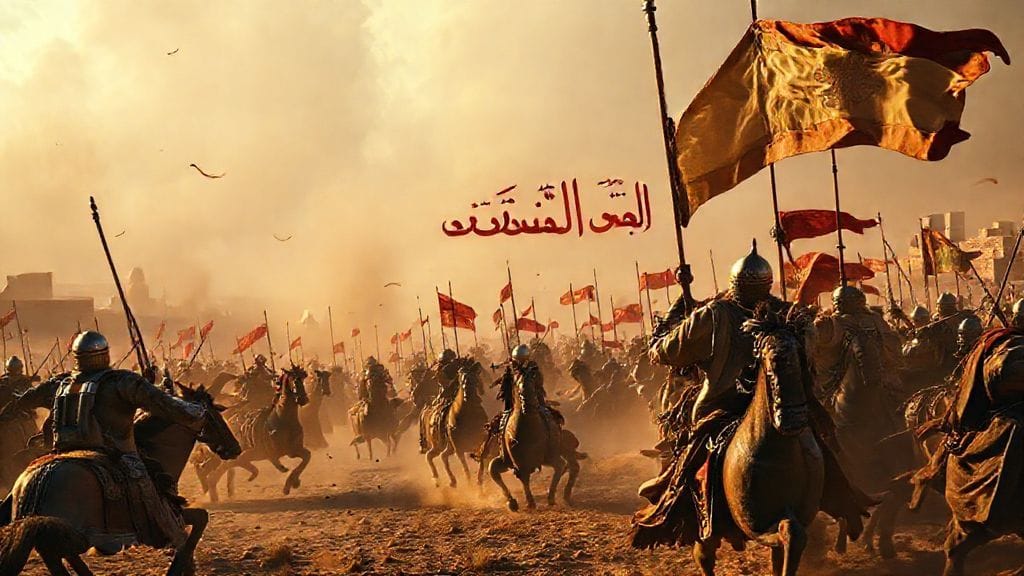
The battle lasted for five harrowing days in late November or early December 636, each day marked by a barrage of charging cavalry, devastating elephant assaults, and waves of infantry clashing in brutal hand-to-hand combat.
- Day One: Both sides tested defenses; skirmishes revealed Sasanian reliance on elephants. The Arabs endured initial shocks but adapted quickly.
- Day Two: The Sasanians launched fierce elephant charges; Arab archers and spearmen caused some injuries but suffered heavy casualties.
- Day Three: The fighting intensified; casualties mounted. The Muslim forces targeted elephant riders, attempting to unsettle the animals and break the line.
- Day Four: The Allies (including Christian Arab contingents) fought alongside the Muslim army, turning the tide by harrying Sasanian flanks.
- Day Five: The climax. A critical misjudgment led to the death of Rostam Farrokhzad, the Sasanian commander, causing chaos. Arab forces exploited this to break through the Sasanian lines.
8. Key Commanders: Rostam, Sa’d, and the Faces of War
The battle is inseparable from the names of two giants: Rostam Farrokhzad, the valiant but outmatched Sasanian general, and Sa’d ibn Abi Waqqas, the caliphate’s commander whose tactical acumen and leadership inspired his troops.
Rostam, burdened by the weight of a crumbling empire, personally spearheaded charges atop elephants, embodying Persian resistance. His death shattered Sasanian morale.
Sa’d, known for his calm under pressure and strict discipline, masterfully coordinated his forces, adapting to battlefield chaos. His victory would earn him lasting reverence in Islamic historiography.
9. Turning Points: Moments that Shattered the Sasanian Might
The death of Rostam was undoubtedly the pivotal moment. As he fell from his elephant—some say slain, others suggest wounded and abandoned—panic rippled across Sasanian ranks. The elephants became uncontrollable, causing confusion. The heavy cavalry faltered.
Simultaneously, Muslim cavalry exploited gaps, executed flank attacks, and ultimately dismantled the cohesion of the Sasanian forces, transforming what had seemed an evenly poised battle into a rout.
10. The Role of Cavalry and War Elephants: Ancient Warfare in Action
The Sasanian army’s traditional reliance on war elephants represented both strength and Achilles’ heel. Majestic and terrifying, these beasts could trample infantry and sow havoc. But they were vulnerable to targeted attacks and panic.
Muslim forces adapted by focusing on disabling elephants early, using archers and spearmen to cause disarray.
Sasanian heavy cavalry, armored and formidable, were designed for shock tactics, yet the Arab light cavalry’s mobility and endurance frustrated conventional set-piece tactics.
11. The Psychological Warfare: Morale, Faith, and Propaganda
Faith permeated every sword stroke; Muslim warriors believed divine favor flowed from their just cause, while Sasanians clung to imperial honor and Zoroastrian zeal.
Rumors spread rapidly—stories of angelic support on the Muslim side, of Rostam’s death, of the impending doom of Persia.
Leaders on both sides used sermons, poetry, and symbols to sustain morale. When Rostam died, the Sasanian chain of command fractured, testimony to how psychological factors can determine outcomes as much as steel.
12. The Collapse and Aftermath on the Field
With the line broken, surviving Persians were slaughtered, captured, or scattered. The Muslim army secured the battlefield but also buried thousands, both friend and foe. The wreckage of elephants littered the terrain.
Sa’d’s leadership ensured discipline post-victory; prisoners were treated with relative mercy compared to ancient standards, sowing seeds for future expansions.
13. The Flight of Rostam and the Death Toll
While many accounts describe Rostam’s death in the fury of battle, some chronicles suggest he attempted flight before succumbing. Regardless, his demise symbolized the end of an era.
Casualty estimates vary: some ancient sources claim up to 30,000 dead; modern historians suggest more conservative figures, but it was undeniably devastating.
Families, villages, and entire communities would feel the aftershocks.
14. Immediate Political Consequences for Persia and the Caliphate
The defeat at al-Qādisiyyah shattered the Sasanian frontiers. Ctesiphon, the imperial capital, fell within months. The central government lost control, and provinces began to capitulate or rebel.
For the Caliphate, victory unlocked the gates of Persia, initiating rapid conquests and the spread of Islam into fertile Mesopotamian lands.
15. The Fall of Ctesiphon: Al-Qādisiyyah’s Ripple Effects
Capturing Ctesiphon, a city of splendor and tradition, was both symbolic and strategic. It severed the last major Sasanian lifeline and projected new Muslim authority.
It marked the beginning of the end for the ancient Persian empire and the dawn of Islamic dominance.
16. Cultural and Religious Shifts Following the Victory
As Muslim rule extended, Zoroastrianism’s grip weakened, and Islamic religious, legal, and cultural norms gradually infused society.
Yet the legacy of Persia was not obliterated; it enriched Islamic civilization, melding traditions, scholarship, and art in dynamic new forms.
17. The Spread of Islam into Mesopotamia: From Battlefield to Civilization
With al-Qādisiyyah a foot in the door, Islam advanced through Mesopotamia, attracting converts and reshaping demographics.
The region became a vibrant center of scholarship and trade, blending Arab and Persian elements.
18. Legacy and Memory: How al-Qādisiyyah Reshaped History
For Muslims, al-Qādisiyyah is remembered as a divine victory, a testament to faith and destiny.
For Iranians, it represents tragedy and loss but also the crucible from which later Persian cultural renaissance emerged.
19. Modern Interpretations and Nationalist Narratives
Contemporary Iran often evokes al-Qādisiyyah as a symbol of resistance and cultural identity, a moment of loss but also of enduring spirit.
Arab nations commemorate it for establishing Islamic civilization.
Scholars analyze it through lenses of imperial decline and revolutionary change.
20. The Battle’s Place in the Great Narrative of the Islamic Conquests
Al-Qādisiyyah stands among the defining battles—like Yarmouk later against Byzantines—cementing the early Caliphate’s rapid expansion.
It illustrates the interplay of military strategy, religious fervor, and empire-building.
21. Lessons in Strategy and Leadership Enduring to Our Times
The battle underscores the importance of adaptability, command cohesion, and morale.
It also reveals how belief systems can galvanize societies to overcome greater forces.
22. The Human Cost: Stories of Valor and Tragedy
Behind the grand sweep of history lie countless personal stories: mothers losing sons, warriors dying alongside brethren, civilians caught in the storm.
These human dimensions remind us that history is born of lived experience and sacrifice.
23. Conclusion: The Turning of an Age in the Sands of Al-Qādisiyyah
The dust settled after those five days near Hilla, but the reverberations echoed through centuries. The Battle of al-Qādisiyyah was more than a moment of war; it was a crucible of transformation. It dismantled an ancient order and paved the path for the crescent’s rise over Persia’s once mighty empire.
History’s tides, propelled by faith, ambition, and courage, moved inexorably forward—reminding all who study this pageant of human destiny that empires fall, but ideas endure.
Conclusion
The Battle of al-Qādisiyyah stands as a compelling testament to the power of belief, the complexities of empire, and the unforeseen consequences of conflict. It was a clash where tradition met transformation, where ancient splendor bowed to nascent fervor. Beyond the decisive military victory lay a profound cultural and religious metamorphosis that shaped the Middle East for millennia.
Yet, its story is not merely one of kings and generals but of countless souls caught in the whirlwinds of history—men who fought, died, triumphed, and set the foundations for new worlds. Understanding this battle is to grasp a pivotal chapter in humanity’s ongoing saga, where the forces of change ripple endlessly through time.
FAQs
Q1: What were the main causes of the Battle of al-Qādisiyyah?
The battle stemmed mainly from the rapid expansion of the Islamic Caliphate into Sasanian territory, compounded by the Sasanian Empire’s internal strife, recent exhaustion from wars with Byzantium, religious tensions, and contested control over Mesopotamia.
Q2: Who were the key figures in the battle?
The central commanders were Rostam Farrokhzad for the Sasanians and Sa’d ibn Abi Waqqas for the Muslims. Both played crucial roles in strategy and leadership.
Q3: How did war elephants influence the battle’s outcome?
War elephants initially gave the Sasanians an advantage causing chaos among enemy ranks, but the Muslim forces developed tactics to injure or scare them, eventually neutralizing their impact. The uncontrolled panic of elephants also caused disarray in Sasanian lines.
Q4: What were the immediate consequences for the Sasanian Empire?
The defeat led to the collapse of Sasanian control in Mesopotamia, the fall of Ctesiphon, and ultimately contributed to the empire’s demise, ushering in Muslim dominance in the region.
Q5: How is the battle remembered differently in Islamic and Persian historiography?
Islamic tradition venerates it as a divinely guided victory and pivotal in spreading Islam. Persian memory often views it as a tragic loss that marked the end of an empire but also as a foundational moment of cultural resilience.
Q6: What long-term cultural impacts did the battle have?
It facilitated the spread of Islam and Arabic language while preserving and transforming Persian culture, which later influenced Islamic art, science, and governance.
Q7: How does the battle reflect the larger narrative of the Islamic conquests?
Al-Qādisiyyah exemplifies the military prowess and religious zeal driving the early Caliphate’s expansion, setting a pattern for subsequent conquests over Byzantium, Egypt, and beyond.
Q8: Are there any surviving eyewitness accounts of the battle?
Direct contemporary eyewitness accounts are scarce, but later Muslim historians such as al-Tabari and al-Baladhuri chronicled the battle based on oral traditions and earlier records. Persian sources also provide narratives, although often with mythologizing elements.

