Table of Contents
- The Dawn of a Clash: Setting the Stage for the Battle of Anzen
- The Byzantine-Arab Frontiers: An Anatolian Cauldron
- Emperor Theophilos: The Man Behind the Empire’s Struggle
- The Abbasid Caliphate: The Rising Tide from Baghdad
- The Road to Anzen: The Campaign of 838
- Dazimon: The Haunted Battlefield in Anatolia
- The Clash of Armies: Strategies and Forces at Play
- The Turning Point: The Defeat of Theophilos
- Captured and Contested: The Fate of the Emperor
- The Immediate Aftermath: Shockwaves Through Byzantium
- The Abbasid Triumph: Political and Military Consequences
- The Battle’s Place in the Protracted Arab-Byzantine Wars
- The Military Lessons and Tactical Evolutions Post-Anzen
- Human Stories of Courage, Betrayal, and Survival
- The Long Shadow over Byzantine Anatolia
- The Battle’s Impact on Byzantine Identity and Cohesion
- The Abbasid Perspective: From Victory to Consolidation
- Chroniclers and Historians: How Anzen Was Remembered
- The Archaeology of Anzen: Searching for the Battlefield
- Anzen and Its Legacy in Medieval Warfare
- Revisiting Anzen through Modern Scholarship
- Conclusion: The Battle That Shaped Anatolia’s Destiny
- FAQs: Unraveling the Mysteries of Anzen
- External Resource: Battle of Anzen on Wikipedia
- Internal Link: Visit History Sphere → https://historysphere.com/
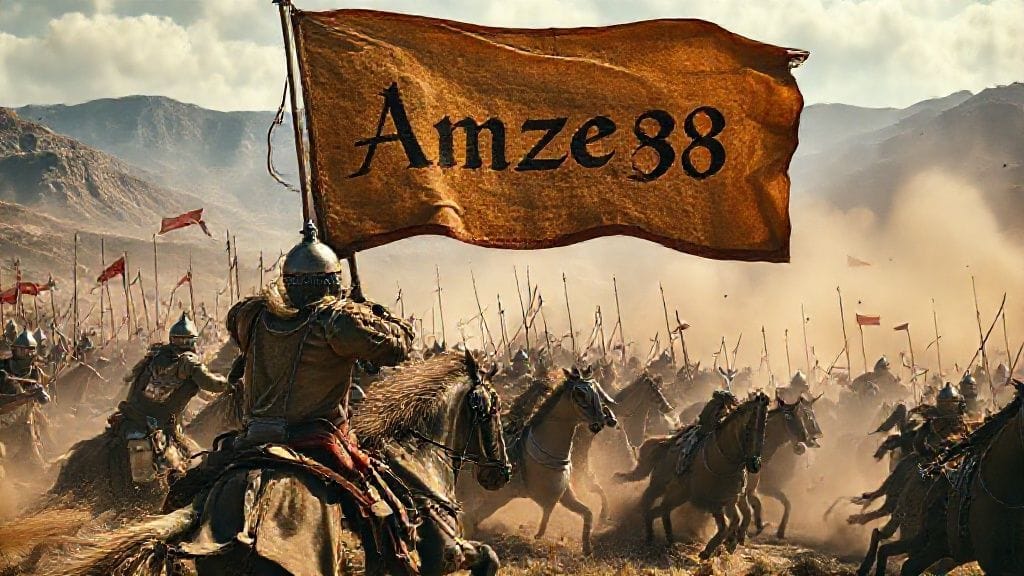
The summer sun cast a merciless glare upon the rugged heights of Anatolia, where, amid rocky ridges and parched earth, destinies would intertwine in a maelstrom of blood and strategy. The year was 838, and the air was thick with anticipation and dread. Emperor Theophilos, resolute and proud, led his Byzantine forces against the advancing Abbasids, a sprawling empire radiating from Baghdad with ambitions as vast as the deserts that surrounded it. Their confrontation near the fortress of Dazimon, known simply as the Battle of Anzen, was not merely a contest of arms—it was a collision of civilizations bristling with faith, honor, revenge, and survival. Little did the soldiers know, this would mark one of the most defining moments in the annals of medieval warfare in Anatolia, forever altering the course of the Middle East and Byzantine resilience.
From the east, the Abbasids swept like a relentless wave beneath the banner of Islam and caliphal power, their generals seasoned from decades of frontier skirmishes and internal conflicts. From the west, Byzantium stood as the remaining bastion of the Roman legacy, its emperor wielding the dual mantle of secular ruler and spiritual defender of Orthodox Christianity. Yet beneath this grand narrative, personal ambitions, internal intrigues, and the brutal geography of frontier warfare shaped the outcome in ways both tragic and instructive.
The Battle of Anzen was thus far more than a clash of armies; it was a convergence of epochal forces pressing against the rugged land of Anatolia, a bulwark between worlds. To understand this fateful encounter, one must first delve into the complex historical tapestry of the Arab-Byzantine conflicts, the man behind the imperial throne, and the relentless drive of the Abbasid Caliphate, before walking slowly into the swirling dust of the battlefield itself.
The Dawn of a Clash: Setting the Stage for the Battle of Anzen
By the early ninth century, the Byzantine Empire was wrestling with threats on many fronts, but none was more persistent or dangerous than the Abbasid Caliphate’s determined advances into Asia Minor. The borderlands in Anatolia had long simmered with conflict—fortresses and towns fortified and raided in turn, shifting allegiances and fierce skirmishes across mountain passes and river valleys. The year 838 emerged from this turbulent backdrop as one of revolutionary choice: Theophilos, young and ambitious, sought to strike decisively into hostile territory to halt the Abbasid incursions once and for all.
But the Abbasids were no mere raiders; from Baghdad, their armies moved under the guidance of generals with clear political and military objectives, intending to weaken Byzantium’s hold on Anatolia and assert Islamic dominion more firmly along the frontier.
The Byzantine-Arab Frontiers: An Anatolian Cauldron
Anatolia, the splendid peninsula bridging Asia and Europe, was a theater of relentless war for centuries, carved into a patchwork of Byzantine fortresses and contested Arab raids. The frontier zones, known as thughur, bore the scars of continuous conflict. Villages burned, harvests abandoned, and soldiers—both professional and levied—were permanently poised on the edge of extinction.
These harsh conditions created hardened warriors and a rigid frontier society. The empire’s eastern strategy had long been defensive, aiming to absorb and repel arabe incursions rather than aggressive territorial expansion. Yet the status quo was fragile, and the vulnerable ridges near Dazimon were among the most exposed and fiercely contested.
Emperor Theophilos: The Man Behind the Empire’s Struggle
Ascended to the Byzantine throne in 829, Emperor Theophilos embodied the martial vigor his empire so desperately needed. A patron of the arts and fervent Orthodox believer, he was also a seasoned commander, personally involved in military campaigns against the Abbasids.
His reign was marked by continuous conflict, but also cultural flourishing—Theophilos championed iconoclasm and sought to restore imperial prestige through both spiritual reform and military success. His ambition to deliver a crushing blow to the Abbasids in 838 reflected his drive to secure the eastern provinces and cement his legacy as a warrior emperor.
The Abbasid Caliphate: The Rising Tide from Baghdad
The Abbasids, descendants of a powerful family that had claimed the caliphate in 750, ruled from Baghdad—a city vibrant with commerce, scholarship, and religious authority. Their western borders near Byzantium were incessantly challenged, yet their military was adaptable and formidable.
In 838, under the command of Afshin, a general of Central Asian origin, the Abbasids marshaled a well-equipped, multi-ethnic army. Their objective was clear: penetrate Byzantine defenses, capture or disrupt eastern Anatolian fortresses, and thereby pressure the empire into submission or negotiation.
The Road to Anzen: The Campaign of 838
Theophilos mobilized an imposing force, hopeful of exploiting Abbasid weakness after years of border skirmishes. Advancing deep into Anatolia, he aimed to surprise the Abbasids before they could consolidate their positions. The campaign’s success, however, depended on precise coordination and the loyalty of local allies—a precarious prospect in the shifting alliances typical of border warfare.
Meanwhile, Afshin’s forces prepared to confront the Byzantines with equal resolve, fortified by intelligence and experience from previous engagements.
Dazimon: The Haunted Battlefield in Anatolia
Located near the modern Turkish town of Kalecik, the area around Dazimon was unforgiving. Rugged hills and narrow passes funneled armies into deadly encounters. The land itself demanded resilience and offered few reprieves for exhausted soldiers.
This terrain would prove decisive in both the tactics employed and the battle’s violent crescendo, as the Byzantine forces struggled to maintain cohesion amid treacherous geography and relentless enemy assault.
The Clash of Armies: Strategies and Forces at Play
As the armies converged near Anzen, the Byzantine battle plan sought to leverage heavily armored cavalry and disciplined infantry formations. Theophilos trusted in his army’s superior training and command structure, yet underestimated the Abbasids' adaptability.
Afshin countered with agile horse archers, skilled in feigned retreats and hit-and-run attacks, tactics honed over centuries of steppe and desert warfare. The battle quickly became a brutal contest not only of strength but of endurance and nerve.
The Turning Point: The Defeat of Theophilos
Despite early advantages, the Byzantine lines faltered when Abbasid forces exploited weaknesses exposed by treacherous terrain and internal disorder. Reports speak of confusion, surprise maneuvers, and a sudden collapse in morale as Theophilos’ troops were encircled and overwhelmed.
The emperor himself narrowly escaped capture but suffered a debilitating wound. The defeat was as symbolic as it was strategic—a stunning reversal in a long struggle.
Captured and Contested: The Fate of the Emperor
Though grievously injured, Theophilos’ life was spared. His retreat marked a bitter humiliation for Byzantium and disrupted imperial plans for dominance in Anatolia. The Abbasids paraded their victory as a testament to caliphal strength, while Theophilos worked to rebuild fractured defenses.
This period saw a fragile ceasefire punctuated by mutual raids but no decisive peace.
The Immediate Aftermath: Shockwaves Through Byzantium
News of the defeat at Anzen rippled through Constantinople with alarm and disbelief. The emperor’s critics sharpened their tongues, while generals and officials scrambled to reestablish control over vulnerable territories.
The empire faced economic strain, military exhaustion, and psychological blows. Yet Theophilos’ determination remained unshaken, as he sought to restore pride and safeguard the empire’s eastern horizons.
The Abbasid Triumph: Political and Military Consequences
The decisive victory at Anzen reinforced Abbasid prestige and secured temporary control over key positions in Anatolia. It bolstered the caliphate's standing among Muslim allies and rival kingdoms, while sending a clear message to Byzantium and its enemies.
However, the empire’s inner complexities and the Abbasids’ own internal tensions tempered the long-term impact, setting the stage for further conflict.
The Battle’s Place in the Protracted Arab-Byzantine Wars
Anzen was neither the beginning nor the end of Arab-Byzantine hostilities, but it marked a pivotal episode capturing the brutal, grinding nature of frontier warfare. Decades of raids, battles, and uneasy truces characterized this era, with Anzen standing out as a high-water mark for Abbasid military success.
The Military Lessons and Tactical Evolutions Post-Anzen
Byzantine commanders adapted their approaches following the defeat, incorporating lessons in combined arms tactics, reconnaissance, and fortress defense. Similarly, the Abbasids refined their mobility and supply strategies to better exploit Anatolia’s challenging environment.
These evolutions contributed to an arms race of sorts, influencing the medieval military landscape well beyond the region.
Human Stories of Courage, Betrayal, and Survival
Beyond grand strategy, Anzen was shaped by the courage of foot soldiers, the choices of local leaders caught between empires, and acts of betrayal that tilted the scales of fate. Personal accounts, though scarce, reveal soldiers’ endurance under fire and civilians’ tribulations during pillaging and displacement.
The Long Shadow over Byzantine Anatolia
Anzen’s defeat intensified Byzantine insecurity in Anatolia, accelerating shifts in demographic patterns as populations fled or fortified themselves against future incursions. The loss also catalyzed administrative reforms aimed at strengthening provincial governance and military readiness.
The Battle’s Impact on Byzantine Identity and Cohesion
For Byzantine society, the battle was a stark reminder of vulnerabilities and the existential threat posed by the Abbasids. It deepened the resolve to preserve Orthodox Christianity and imperial unity amid external pressure and internal debate.
The Abbasid Perspective: From Victory to Consolidation
From Baghdad, Anzen was celebrated as a testament to caliphal might and the success of Abbasid military reforms. Yet the caliphate balanced these victories with internal governance challenges, ensuring that conquest had to be matched by sustainable control.
Chroniclers and Historians: How Anzen Was Remembered
Byzantine and Arabic chroniclers portrayed Anzen through differing lenses: Byzantine sources lamented the defeat with calls to repentance and renewal, while Arabic texts extolled Abbasid valor. The diverse narratives shaped the political memory and historiography of the period.
The Archaeology of Anzen: Searching for the Battlefield
Modern scholarship and archaeology have sought to pinpoint Anzen’s location and uncover artifacts from the conflict. Though terrain and time have obscured much, ongoing studies continue to enhance understanding of medieval Anatolian warfare and settlement patterns.
Anzen and Its Legacy in Medieval Warfare
The battle exemplifies the shifting tactics and cultural interactions of medieval warfare—where horse archers met heavy cavalry, frontier raids blurred into pitched battles, and empires tested their limits. Its legacy informs the study of military history and geopolitical struggles in the medieval Mediterranean.
Revisiting Anzen through Modern Scholarship
Recent historiographical trends emphasize multi-perspective analysis, incorporating Byzantine, Arabic, and material evidence. This enriches appreciation of the battle’s complexity and its role within broader patterns of medieval empire confrontations.
Conclusion
The Battle of Anzen pulses in history not merely as a tale of defeat but as an intricate human story of ambition, clash, endurance, and transformation. In the dust and blood of Anatolia’s rugged slopes, two great civilizations grappled over identity and survival, leaving echoes that resonate beyond the immediate victory or loss.
Emperor Theophilos’ defeat was a sobering reminder that empires rise and fall on the fragile alchemy of leadership, terrain, strategy, and the indomitable will of peoples caught amid the storms of their age. Yet, from this crucible emerged lessons that shaped Byzantine resilience and Abbasid self-understanding—both destined to navigate the turbulent waters of history with renewed purpose.
Anzen was thus a turning point, a human drama writ large, where faith, empire, and the unforgiving land met in a moment forever etched in the annals of medieval confrontation.
FAQs
Q1: What were the main causes of the Battle of Anzen?
A1: The battle was primarily sparked by ongoing Arab-Byzantine frontier conflicts. Theophilos aimed to counter Abbasid incursions into Anatolia, seeking to defend and reclaim imperial territory from Abbasid expansion.
Q2: Who was Emperor Theophilos, and what role did he play?
A2: Theophilos was the Byzantine emperor from 829 to 842, a warrior ruler invested in both military campaigns and religious reforms. He personally led the army at Anzen and symbolized Byzantine resistance.
Q3: How did the Abbasid Caliphate manage to defeat the Byzantines at Anzen?
A3: The Abbasids used superior mobility, tactical feints, and knowledge of local terrain. Their commanders exploited Byzantine disarray and difficult geography to rout Theophilos’ forces.
Q4: What were the military consequences for Byzantium after the battle?
A4: Byzantium faced temporary territorial losses and had to restructure its defenses in Anatolia, learning vital lessons in military coordination and frontier warfare.
Q5: Did the Battle of Anzen end the Arab-Byzantine conflicts?
A5: No, it was a significant episode but hostilities continued intermittently for decades. The battle influenced subsequent military and diplomatic engagements.
Q6: How is the battle remembered in Byzantine and Arab histories?
A6: Byzantine accounts often frame it as a tragic setback requiring imperial renewal; Arab historians celebrate it as an Abbasid triumph validating caliphal power.
Q7: Where exactly did the battle take place?
A7: The battle occurred near Dazimon in Anatolia, though the exact site remains a matter of scholarly investigation.
Q8: What is the modern significance of studying the Battle of Anzen?
A8: It offers insights into medieval warfare, empire dynamics, and the interplay of cultures along a volatile frontier, illuminating broader historical processes shaping Eurasia.

